
Emergency rooms busy with Medi-Cal patients
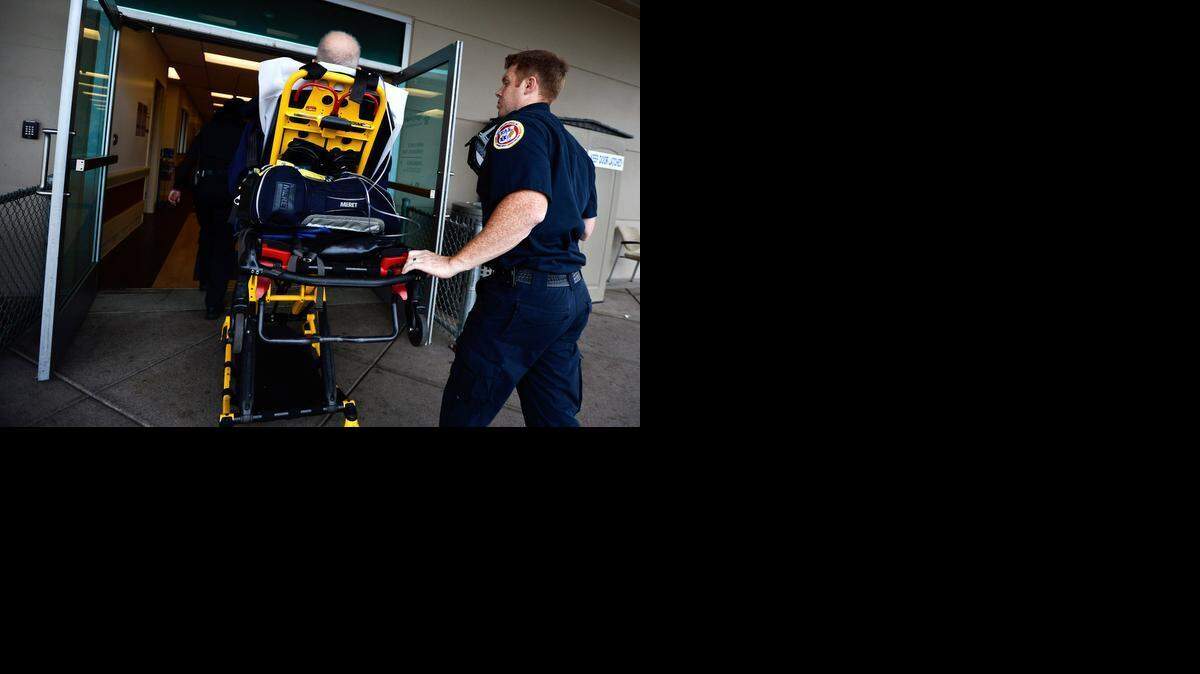
Mercy Medical Center in Merced almost hit its record number of emergency room patients seen in 24 hours on Tuesday.
It saw 270 patients. The record is 273, and the daily average usually is a little under 200. According to Mercy staff, this surge in the number of patients in the hospital’s ER is a trend that began last year.
One of the selling points for the Affordable Care Act, which has enrolled millions of Californians in Medi-Cal and Covered California health plans, was that patients with insurance would have primary care doctors to take care of them and less reason to use expensive and overcrowded hospital emergency rooms.
As the second year of the health care law unfolds, emergency rooms in the central San Joaquin Valley are busier than in previous years seeing patients – most of whom have insurance.
Obamacare, as the health law is called, delivered on its promise to get people coverage, but its shortfall has been a dearth of doctors in the community, health officials say.
A doctor shortage has long been a problem in the central San Joaquin Valley and made more so now by an influx of 139,000 Medi-Cal patients. The state-federal program for people with lower incomes now insures more than 850,000 in the Valley, nearly 43 percent of them children and adults.
California and Valley doctors have long been reluctant to accept Medi-Cal – California’s version of Medicaid – because the state has among the lowest reimbursement rates in the country. A likely cut in Medi-Cal payments this year could further erode doctor participation in the program, health officials say.
Meanwhile, ER records at Valley hospitals show more Medi-Cal patients are filling seats in ER waiting rooms.
Here are some examples:
▪ Mercy Medical Center had 33,118 ER visits between July and December 2014. That’s 1,433 more visits than in the same period in 2013. Of the total visits last year, 19,358, or 58 percent, were made by Medi-Cal patients compared with 13,941, or 44 percent, in 2013. According to staff calculations, that’s an increase of about 30 Medi-Cal patients per day.
▪ Memorial Hospital Los Banos saw a 20 percent increase in visits to the ER from 2013 to 2014. In 2013, about 50 percent of the patients were on Medi-Cal. That figure increased to nearly 60 percent in 2014.
▪ Saint Agnes Medical Center in northeast Fresno saw 34,436 ER patients from July to November 2014, about 4,000 more than in the same period in 2013. Fifty-two percent of the patients were on Medi-Cal in 2014 compared with 39 percent the year before.
▪ Community Regional Medical Center had 110,600 ER visits in 2014, up from 107,015 in 2013. At Clovis Community Medical Center, there were 50,449 visits in 2014, an increase from 46,250 visits in 2013. Medi-Cal patients were 53.4 percent of the cases at Community Regional in 2014 compared with 40.2 percent in 2013. At Clovis, 34.4 percent were Medi-Cal patients in 2014 compared with 29.8 percent in 2013.
▪ Kaweah Delta Medical Center in Visalia saw 89,584 patients in 2014 compared with 86,948 in 2013. Medi-Cal patient volume increased from 44 percent to 47.7 percent.
Robert McLaughlin, a spokesman for Mercy Medical Center, said hospital officials did anticipate some increase in visits to the ER as more people obtained coverage, but the growth exceeded their expectations.
The problem, McLaughin explained, is that many patients, even those with insurance, are still using the emergency rooms as a primary-care source. “We are still seeing cases that could have been resolved at a doctor’s office,” he said.
McLaughlin did point out, however, that the number of self-pay patients in Mercy’s ER has dropped from 4.4 percent to 2.1 percent after the rollout of the Affordable Care Act.
To accommodate for the increasing stream of patients at emergency rooms, hospitals have increased medical staff and adopted new methodologies to improve patient flow.
“We work really hard to staff appropriately and add physicians at peak hours,” McLaughlin said. Peak hours at Mercy are usually between 3 p.m. and midnight, he said.
Dr. Ash Gokli, CEO at Memorial Hospital Los Banos, said it has adopted a new process improvement tactic known as “Lean.” According to staff, Lean helps eliminate waste or unnecessary steps in health care delivery to help speed waiting times.
“Recently, our emergency department conducted several Lean projects to streamline patient flows and that has helped us deal with the increase in patients,” Gokli said in a statement.
Some hospitals are also trying to educate Medi-Cal patients about alternatives to ER care.
Kaweah Delta in Visalia, for example, has two prompt-care centers, an urgent-care center and another proposed urgent care to take the stress off its ER. All are busier this year than last and wait times in the ER have gone up slightly.
There are also new concerns that the doctors who now accept Medi-Cal could stop doing so this year. State and federal funds that covered an enhanced Medi-Cal reimbursement rate for health-care providers may not be budgeted.
Gov. Jerry Brown’s proposed Medi-Cal budget does not include funds to maintain the boost in pay, and there also appears to be little support in Congress to approve ongoing funding.
Under the enhanced payment, Medi-Cal participating doctors were reimbursed at the higher Medicare rates. The California Department of Health Care Services estimates maintaining the enhanced payment would cost $18 billion, of which $700 million would be the state’s responsibility.
Medi-Cal already accounts for two-thirds of overall health and human services spending in the state.
No one knows how doctors will react to a payment decrease, but Fresno health care providers said it’s likely to push some out of the program and keep new doctors from signing up.
Dr. Ajit Khaira, a Fresno internist, accepts Medi-Cal and intends to continue seeing patients in his office, but said: “I am as frustrated as any other M.D.” Under the enhanced payment, Khaira said he got about $80 for a regular Medi-Cal patient visit. The amount now drops to $22 or $23 a visit, he said. “It’s a big-time loss.”
Medi-Cal patients often tell Dr. Gene Kallsen at Community Regional’s ER that they are at the hospital instead of a doctor’s office because they’re unable to find a primary-care doctor or specialist or get appointments in a reasonable time. He expects complaints will escalate.
“I’m sure a lot of those patients are going to find their doctors are no longer going to accept their card in the primary-care business and the specialty business,” he said.
As for new doctors joining the Medi-Cal program, Kallsen said: “Nobody can come up with a business plan where they would enter this market with Medi-Cal rates – not without losing their shirt.”
Sun-Star staff writer Ana B. Ibarra can be reached at (209) 385-2486 or aibarra@mercedsunstar.com.
Who’s seeing Medi-Cal patients?
A study of California doctors’ participation in Medi-Cal found:
▪ About one-third of doctors saw 80 percent of the patients.
▪ Doctors at community health centers and clinics see most (92 percent) of the state’s Medi-Cal patients.
▪ Just 62 percent of California doctors say they accept new Medi-Cal patients compared with 75 percent taking new Medicare patients.
Medi-Cal enrollment
County | 2014 | 2013 |
Fresno | 409,136 | 338,912 |
Kings | 47,710 | 39,825 |
Madera | 60,990 | 50,371 |
Merced | 118,448 | 95,337 |
Tulare | 213,978 | 186,890 |
Statewide | 12 million | 8.6 million |
Source: California Department of Health Care Services |
This story was originally published January 23, 2015 at 7:19 PM with the headline "Emergency rooms busy with Medi-Cal patients."