Exotic micro-crops shore up small Central Valley farms. Some harvests might surprise you
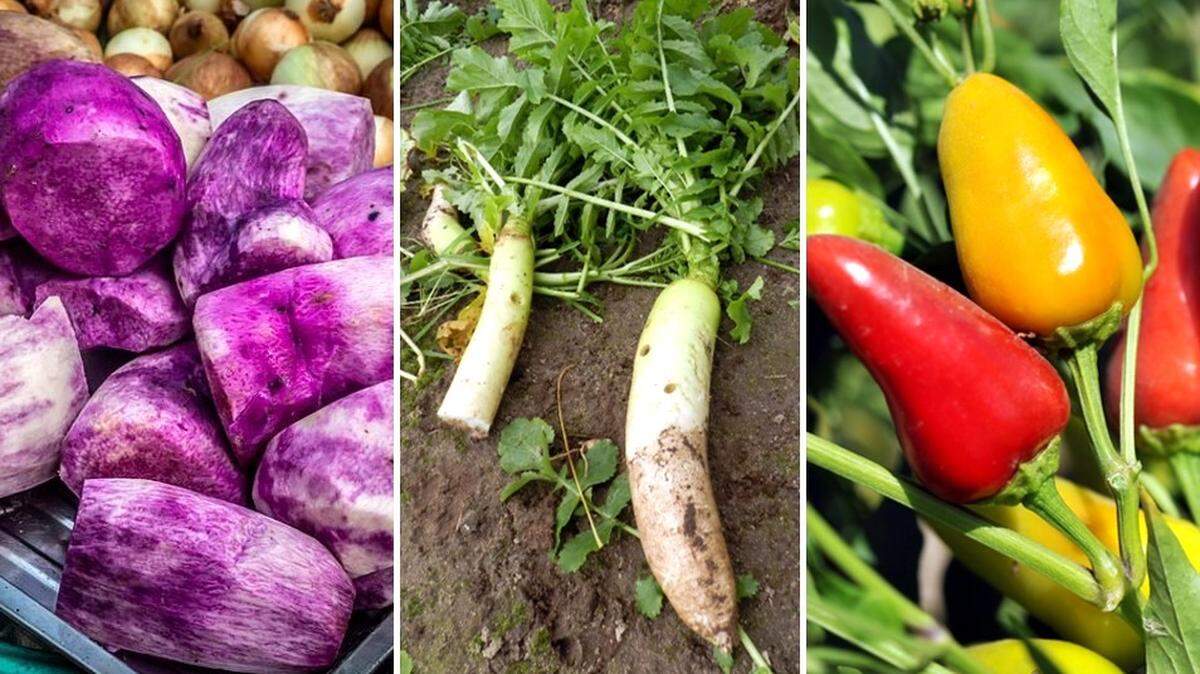
Agriculture throughout the San Joaquin Valley is dominated by big-acreage crops, from sprawling orchards of almonds and pistachios to rows upon rows of grapevines, to broad expanses of corn for livestock feed and tomatoes for processing into sauces and canned foods.
But tucked away on much smaller plots of land across the eight-county region – sometimes an acre or less – are myriad other types of produce that many people might not think about in the region: crops like taro, daikon, watercress and fresh herbs, among others.
Taro, for example, might be more familiar to Valley residents who have traveled to Hawaii and experienced poi – the starchy, purple-ish/blue-ish paste made from the cooked and mashed tuber or corm of the taro plant and served as a side dish at tourist luaus and traditional family gatherings.
In 2022, the U.S. Department of Agriculture’s Census of Agriculture reported that taro was grown by five farming operations totaling one acre in Fresno County. Merced and San Joaquin counties also produced a small volume of taro – two producers in Merced County and one in San Joaquin County – but the acreages were not disclosed to avoid releasing data that would identify a particular farmer.
In addition to being pounded into poi, taro root can be sliced thin and fried to make crispy chips; ground into flour for use in baked goods; or processed into soups, stews, smoothies or boba drinks. In some cuisines, taro is mashed and deep fried into balls, pressed into dumplings, or cubed and simmered in curries.
The broad leaves of the taro plant are also used, sometimes steamed as a wrapping for meat slow-cooked in an underground oven at luaus and other gatherings, or stewed to be served as greens.
Either way, both the taro root and the leaves contain calcium oxalate, an toxic, irritating compound that must be destroyed by cooking before taro can be eaten.
Taro is used in limited amounts in the U.S. but is popular elsewhere around the world, particularly in Asia, the Pacific islands and the Caribbean islands.
A slew of small-scale farmers, including Hmong and other Southeast Asian growers, are producing a variety of Asian vegetables and other specialty crops that, while the acreages are relatively small, still add up to a considerable value.
In Fresno County, for example, those lesser-known vegetables include a choy, amaranth, bitter melon (fruit and leaf) , bok choy , chayote (fruit and leaf), curry leaf tree, daikon, doan qua, gai choy, gailon, ginger (root & leaf), lambsquarter, lemon grass, lo bok, malabar, mizuna, methi, moqua, mora, moringa (fruit and leaf), nagaimo, napa cabbage, ong choy, opo, saluyote, sinqua, sour leaf, sugar cane, taro (root and leaf), tatsoi, tong ho, yam (root and leaves), yu choy.
Crops identified in the 2022 Census of Agriculture totaling three acres or less by Valley county include:
Fresno County
- Collard greens: Two producers totaling one acre.
- Watercress: Four producers totaling one acre.
- Ginger root: Four producers totaling two acres.
- Potatoes: Six producers totaling two acres.
- Turnips: Five producers totaling two acres.
- Turnip greens: Five producers totaling two acres.
- Chicory: Four producers totaling three acres.
- Kale: 13 producers totaling three acres.
Kern County
- Cucumbers: Five producers totaling one acre.
- Fresh-cut herbs: Seven producers totaling one acre.
Kings County
- No crops disclosed of three or fewer acres in the 2022 Census of Agriculture.
Madera County
- Carrots: Four producers totaling one acre.
- Garlic: Four producers totaling three acres.
Merced County
- Chinese cabbage: Four producers totaling one acre.
- Mustard greens: Three producers totaling one acre.
- Kale: Four producers totaling two acres.
- Eggplant: Seven producers totaling two acres.
- Snap beans: Four producers totaling two acres.
- Sweet corn: Three producers totaling three acres.
San Joaquin County
- Lima beans, fresh: Five producers totaling one acre.
- Cabbage, mustard: Five producers totaling one acre.
- Daikon: Five producers totaling one acre.
- Gourds: Five producers totaling one acre.
- Green onions: Four producers totaling two acres.
- Cauliflower: Six producers totaling two acres.
- Green peas: Four producers totaling two acres.
- Beets: Six producers totaling three acres.
Stanislaus County
- Bell peppers: Nine producers totaling two acres.
Tulare County
- Cauliflower: Five producers totaling one acre.
- Romaine lettuce: Four producers totaling one acre.
- Parsley: Four producers totaling one acre.
- Chili peppers: Six producers totaling one acre.
- Sweet potatoes: Four producers totaling one acre.
- Eggplant: Six producers totaling two acres.
- Fresh-cut herbs: Five producers totaling two acres.
- Leaf lettuce: Five producers totaling two acres.
- Squash: 13 producers totaling two acres.
- Head lettuce: Five producers totaling three acres.
This story was originally published September 8, 2024 at 10:00 AM with the headline "Exotic micro-crops shore up small Central Valley farms. Some harvests might surprise you."