
A tale of dark and light
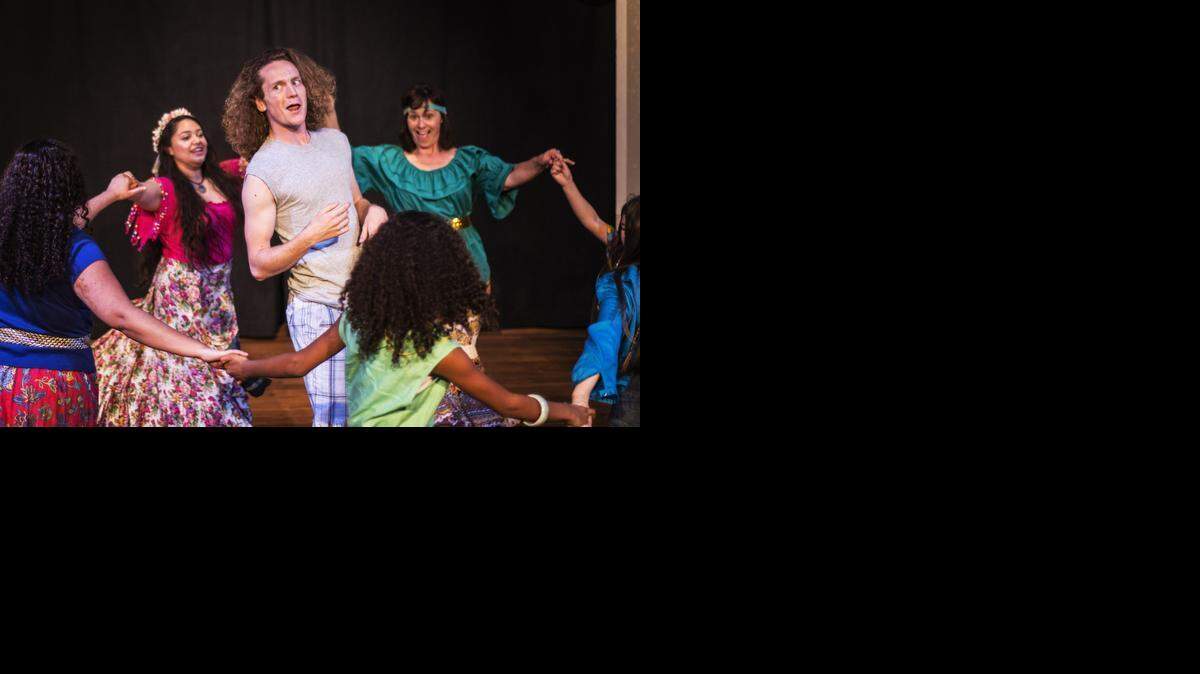
Shakespeare’s “The Winter’s Tale” is getting a new twist as director Katherine Brokaw sets the theatrical production in the 1950s and 1960s for Merced Shakespearefest’s 14th season.
“We have replaced the many songs Shakespeare indicates for the latter half of the play with late 1960s folk rock and soul,” Brokaw said. “And our costumer has done a brilliant job of portraying the contrast between the wintery, tragic scenes we set in the 1950s and the explosion of youth and springtime energy that will be seen and heard in our production’s final acts.”
Brokaw is an assistant professor at UC Merced’s School of Social Sciences, Humanities and the Arts. “The Winter’s Tale” is her favorite Shakespeare play.
“I am so grateful that producer Heike Hambley allowed me to direct this play for Merced Shakespearefest,” she said. “It’s already been thrilling to watch it start to come to life here in Merced.”
“Shakespeare’s masterful late play will bring to life unforgettable characters, dramatic plot turns, poetic language, and the magic of forgiveness,” producer Heike Hambley said. “This is truly community theater, bringing together folks of all ages and experience levels to create a memorable, touching piece.”
The production is filled with live music, dancing and the talents of more than two dozen cast members, which includes community members, UC Merced faculty and students, and several children.
Hambley plays the role of Mother Time who has a monologue that transitions over 16 years. “Our director chose the ’50s as the time of the harsh trespass, and the colorful, musical ’60s as the time of reconciliation,” Hambley said. “This also works visually very well. As we are going from the ’50s to the ’60s I look like a hippie mama in bright colors and love it.”
The story begins with a brutal tragedy about a tyrannical, jealous husband whose actions result in the deaths of his wife, son and baby daughter.
“There are several moments in ‘The Winter’s Tale’ that bring me to tears, without fail, every time,” Brokaw said. “The Old Shepherd’s line to his son when he finds the baby Perdita, moments after her savior, Antigonus, is killed by a bear, is my favorite line in all of Shakespeare: ‘Thou met’st with things dying, I with things newborn.’ It’s the turning point for the whole play.”
The play’s initial tragedy is replaced by joy as music and dance and children fill the stage.
“The final scene is about the miracle of forgiveness,” Dr. Brokaw said, “and the fragile harmonies that can be created even among people who have wronged each other greatly.”
Hambley is equally moved by the transition from tragedy to reconciliation.
“I love how the Bard shows how a family can be reunited against all odds,” Hambley said, “and love and forgiveness are ruling in the end.”
‘The Winter’s Tale’
Merced Shakespearefest is scheduled to present “The Winter’s Tale” tonight through Sunday, and Feb. 27 through March 1 at the Merced Multicultural Arts Center, 645 W. Main St. in Merced. Performances are Friday and Saturday at 7:30 p.m., Sunday at 2 p.m. Tickets are $12; $8 for students. Tickets can be purchased at the door at the Arts Center during business hours or be reserved by calling (209) 723-3265. For more information, visit www.mercedshakespearefest.org.
This story was originally published February 19, 2015 at 10:00 AM with the headline "A tale of dark and light."