
Ingram-Thurston: Los Banos history is all around us — and you don’t have to look far
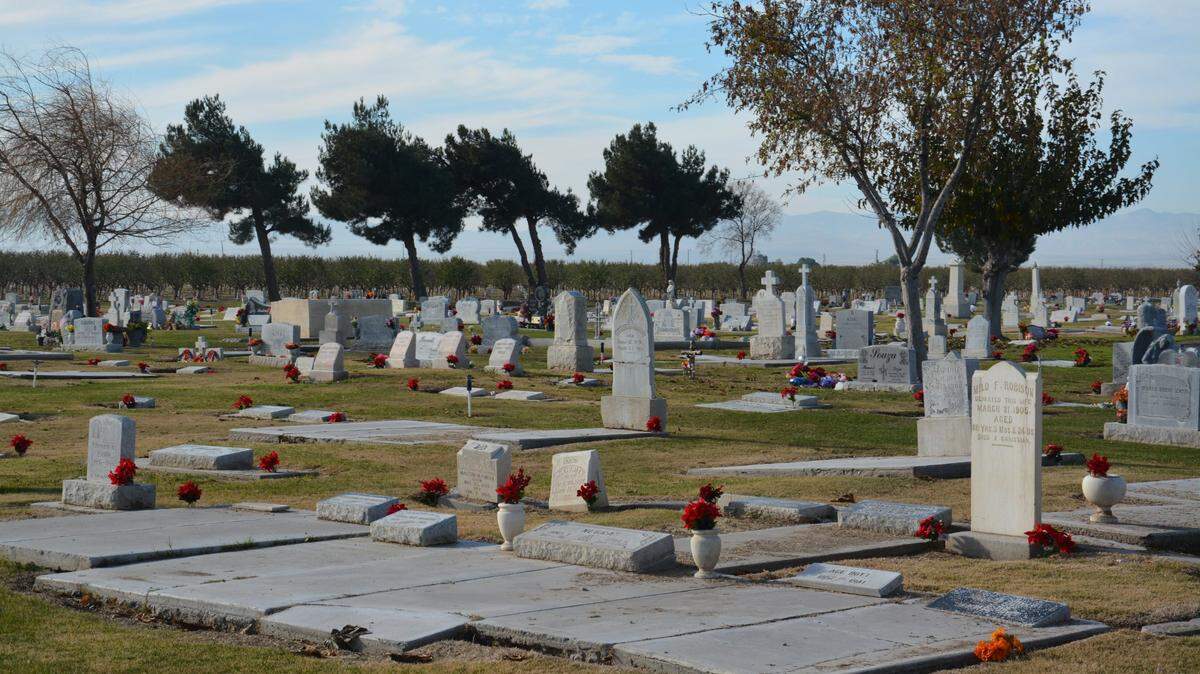
When I was a child in Michigan I lived near a very old cemetery.
It was one of the first history lessons I made through personal exploration. Walking amongst the crumbling, aged monuments I read of people who were killed by Indians, their whole families wiped out.
I could not believe all that happened right where I lived. It made me want to look into the history of the area, and it was then that I got hooked. When I would move to a new state or city, I made a point to visit their oldest cemetery. There I always found clues that led me on the path to learning about the roots of the community.
Those who visit our cemetery on Center Avenue can find clues as soon as you walk through the main gate. They tell of a time when two of the largest groups of immigrants in Los Banos refused to even be buried next to each other, no less intermarried!
Like many periods in any city’s history, things change, as commonality is found. Still many remember the tension between the Italians and the Portuguese. These strong, independent people left their country and all they knew and to make a long , hard voyage fueled by their faith in a better future.
They, like the Basques, came to Los Banos, willing to sacrifice, and taught their families determination. The result of these immigrants’ efforts brought so much to our country. And to Los Banos. They worked as dairy farmers, sheep farmers, and grew anything that would allow them to make a future for their family.
Their efforts still are alive if you touch our soil. You still see the sheep that helps to feed and dress. To know Los Banos you must look around you. Look at the fields they worked, or visit Milliken Museum to learn about the history that made us.
These original family names are still heard. They speak of our roots, of the leaders, educators, craftsmen, farmers, doctors, and landowners who helped build our community’s foundation. The founders of the feast so to speak.
When I first moved to Los Banos the population was less than 13,000 (I know many who recall 5,000).
I was blessed to be invited to dinners with the Sons Of Italy, to many festas at the DES Hall, and I learned of the wonders of Portuguese food. Ah sopas! June and Emil Ereca took me to the Basque Festival every year at the fairgrounds. I learned of the Basque culture and watched people dance on filled wine glasses.
All of this, and so much more, is part of our rich culture. While many of our old buildings are gone, you can still see history in our downtown. I miss our old train depot and tracks that told of the time when trains came through town creating a host of history in themselves.
As you drive around, look at the names on our streets and you will learn about the families who once owned land before it was transformed by developers.
I smile every time I drive by Rhoda Avenue, named after my good friend Rhoda Toscano Garica. Driving down 152 you can see Cozzi Road, Hillyer Road, Boc Car Road, just a few who represent great stories.
Recently I was rereading my copy of the 100th anniversary tribute to Los Banos High school 1897 to 1997. It is now history in itself. Names shouted out to me from the past; Joe Cox principle 1969-1982, Sam Benedittino 1965-1069, Caryl Loftin 1954-1955, Leon Martin 1982-1989.
I read about school bus drivers such as Tony Borellue. Joe Jorge, Ben D’ambrosio and Frank Germino. Did you know that our first school bus was called the Chicken Coup, a coveted mail truck in 1920? I didn’t. Or that our first Westside Union President High school Board president was Dr. C F Wade back in 1897.
Or that Charleston elementary school was opened in 1882 with 16 pupils. Or thar Central Point school stood on Ortigalita and Pioneer Roads from 1870-1886. That school printed the first school paper, “Little Midget,’“ in 1881 .
One of our great historians, and a beloved man, we lost some years ago, Charles Sawyer, edited a wonderful book called “One Man Show: Henry Miller in the San Joaquin,” which has a lot of fascinating history and great pictures.
Try to look at a copy. A great source of information, and books you may not find elsewhere, can be found at Phoenix Books on 6th Street. It saddens me to think how many sources of knowledge and local history we have lost since I moved here some three decades ago. I was blessed.
So many people welcomed me into their homes and shared so many stories. In the future I hope to share more of them. Their names are legion.
There is a great power in repeating names of our past. It helps to keep their memory alive. Reading or learning about our past helps us to understand and appreciate what our present represents.
The older I get the more I appreciate family and national legacies. When we do not value and honor our past loved ones, and the past efforts of those who came before us, we help to diminish not only them, but ourselves. For we will all be history someday.
On a personal note. I will be away from The Enterprise for a month or so as I recover from surgery at Stanford, scheduled for August 26. I will miss you, but hope to meet with you again here soon, in the Enterprise.