
Urgent care sites: too many patients, not enough doctors
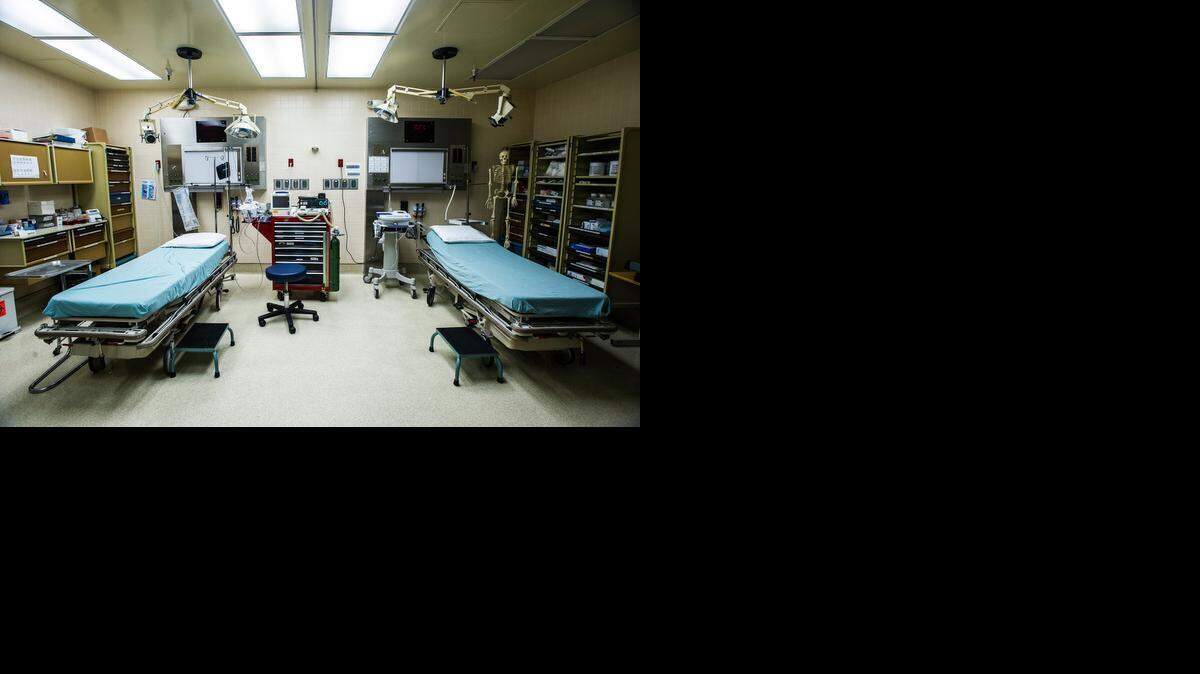
Urgent care sites are supposed to make access to health care easier.
They provide walk-in medical care and, unlike most clinics, are open later hours and on weekends. Ideally, these sites would help alleviate congestion in emergency rooms, treating conditions such as colds and minor cuts.
But as Merced County residents walk into urgent care facilities, quick and easy medical attention isn’t always what they find. Instead, they discover long wait times or that they can’t be seen because there aren’t enough providers available.
In the past few weeks, the Merced Sun-Star has heard from patients who were not able to receive treatment at different urgent care sites.
A Merced resident, who asked not to be identified, said that last month she took her granddaughter, who had been feeling sick and vomiting, to Castle Family Health Centers’ urgent care in Atwater. According to the woman, she was told by staff that there were no nurses or doctors there.
Ed Lujano, chief executive officer at Castle Family Health Centers, said this particular example could have been a misunderstanding because medical providers stay on site until the urgent care closes. However, clinicians know their limits and will take only as many patients as they know they can handle, he said.
He explained that if the clinicians who are on duty feel they have too many patients to deal with, others who come in are advised to go elsewhere.
“We are not a hospital that has to see them; we have limits,” Lujano said. “It’s not that we want to refuse care, but we have to assess ... and at some point our doctors have to decide when to stop taking patients”
On the weekends, when urgent care is the busiest, Lujano estimates that a provider can see between 40 to 50 patients in a day.
Wait times have spiked, forcing patients to sit around for an hour or two before being seen. Wait times at urgent care, however, still do not compare to those in hospitals. Lujano said patients have reported waiting up to four hours at emergency rooms.
Castle Family Health Centers has 23 clinicians in its three-clinic system, including physicians and nurse-practitioners. But usually only one or two at its urgent care site, and some of these providers are contracted, meaning they also work elsewhere.
Lana Selby, a family nurse-practitioner at Castle, is one example. Selby also works at urgent care facilities in Sonora and said that crowded waiting rooms are not unique to Merced County.
“The demand for health care is incredibly great, here and there,” she said.
The influx of patients has been most noticeable this past year, Lujano said, who has been with Castle for 10 years.
He explained that a big part of this is due to the large number of people newly insured under the Affordable Care Act. Since the rollout of the ACA, Castle’s clinic system has seen a 15 percent increase in patients, according to Lujano.
“There is simply not enough medical support and help for all the new patients,” he said. “We’re glad they’re insured, but that also means we have more people coming in.”
According to a September 2014 report by Pacific Health Consulting Group, 50,700 uninsured residents in Merced County became newly eligible for expanded health insurance coverage, including access to Covered California plans and expanded eligibility for Medi-Cal.
Between January and June 2014, nearly 14,000 newly eligible adults enrolled in Medi-Cal. It is Medi-Cal patients that Castle clinics and urgent care mainly see.
To properly care for all the newly insured, Lujano estimates that Merced County would need at a minimum 10 new physicians.
But finding doctors willing to work in Merced is not easy, said Peter Mojarras, chief operational officer at Castle Family Health Centers.
Mojarras said Castle has worked with hiring agencies and attended recruitment fairs to find primary care doctors willing to work in Merced but hasn’t had much luck.
“Not everyone wants to work with the underserved and that’s the population we work with here,” Mojarras said.
New doctors, he explained, are usually faced with having to pay off large medical school loans and are attracted to larger markets that can offer larger salaries.
The solution, according to Mojarras, lies in education, encouraging local children and teens to pursue a career in medicine and return to their communities. A more immediate solution, he said, would be growing local residency programs.
Brandy Ramos Nikaido, director of the UC Merced-Fresno Center, said doctors do tend to stay near the area where they train.
Up to 40 percent of physicians who train at the UCSF-Fresno medical residency program, for example, stay in the San Joaquin Valley, she said.
The shortage of doctors is not unique to the Valley. According to 2014 data from the Association of American Medical Colleges, the nation will face a shortage of more than 90,000 physicians by 2020, especially with one-third of the country’s doctors expected to retire in the next decade.
“But in California, the San Joaquin Valley and the Inland Empire do face more physician shortages than other parts of the state,” Nikaido said.
The shortage of physicians, she explained, is linked to the availability of residency training. Funding to grow residency programs has remained the same since 1997.
“Federal funding of residency programs is important to addressing physician shortages,” Nikaido said.
Physicians can’t practice medicine unless they complete a residency training program, but with limited positions, not all medical students are placed in one of these programs.
The association’s data also showed that several hundred U.S. medical students did not match a first-year residency training program in 2014. If medical students can’t get the necessary training, that contributes to a shortage of providers, she explained.
Although a medical school at UC Merced may still be a long way off, faculty have gathered to discuss the future of medical education at the campus. The university is part of the San Joaquin Valley Program in Medical Education in collaboration with the University of California Davis School of Medicine and UCSF-Fresno, which together aim to train future Valley physicians.
“There are a lot of moving parts,” Nikaido said, “but medical students and residency programs together are essential to supplying physicians and meeting health care needs.”
In the meanwhile, staff at urgent care facilities like Castle’s don’t have much of a choice but to continue to try to improve efficiency, Mojarras said.
Urgent care sites, however, are still a good option for people, especially financially. “Hospital costs are really high; urgent care sites are more affordable,” he said.
“We wish we could see everyone that walks in here,” Mojarras added. “But we can’t compromise quality.”
Sun-Star staff writer Ana B. Ibarra can be reached at (209) 385-2486 or aibarra@mercedsunstar.com.
This story was originally published March 20, 2015 at 8:41 PM with the headline "Urgent care sites: too many patients, not enough doctors."