
Debbie Croft: Growing uses for Mariposa loofas
The loofa is known by many spellings: luffa, loufa, loofa and loofah.
It's commonly referred to as the washrag gourd.
Linda Dahl owns a loofa farm in Mariposa, and is on a mission to discover 101 uses for her natural sponges. Besides using them in the bath to invigorate the skin, they can be used to clean the tub afterward. In the kitchen, Dahl's loofas scrub vegetables and wash dishes. Her husband, Chris, uses them to wash the car. And a small loofa can become the filter for a fish tank or computer.
This natural sponge, not to be confused with a sea sponge and member of the animal kingdom, can handle tough cleaning jobs in and around the home, and will scrub away hard callouses on elbows and feet. But it's also gentle enough to use on Teflon-coated cookware and sensitive skin.
(Because of its porous nature it isn't good for mopping.)
Toss it into the washing machine with a load of laundry and let it air dry, and it will last for months. When it's time for replacement, loofas are biodegradable.
Loofas that are imported here must be fumigated with a chemical wash and are then dried in high heat, which makes them hard, says Dahl.
Her loofas are surprisingly soft.
She's been growing them for more than 30 years. A professor in college gave her class an assignment: to grow an unusual, marketable crop.
She was handed loofa seeds, she says, and the rest is history.
A tropical plant that grows at sea level in places such as New Zealand and the Caribbean, Dahl and a close friend had an easy time growing loofas while living in Nipomo on California's coast.
She operated an interior landscape business in the Bay Area for 20 years. Then when she and her husband retired and moved to Mariposa five years ago, she had to learn how to grow loofas in the arid climate of California's mountains.
Two greenhouses make up her farm.
Even with some trial and error, she's been successful every year. Weather conditions are a huge factor in the size of the gourds and the number harvested, but she keeps moving forward.
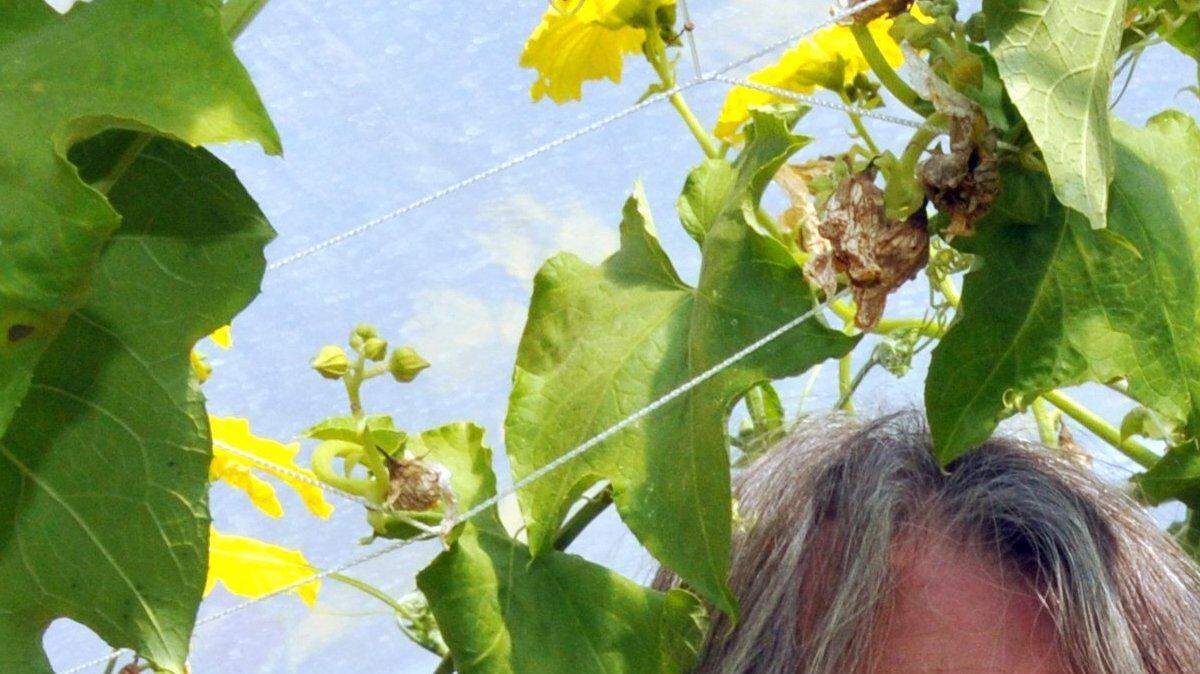
Dahl calls the tiny loofas her babies as she walks under the vines checking their progress. She germinates her own seeds and hand-pollinates the flowers.
The blossoms open in the morning and drop off once pollination has occurred, she explains.
Each day she devotes three to four hours to the plants, making sure they have enough water, and unwrapping any tendrils that have wound themselves around a baby gourd instead of along the trellis.
It's her labor of love, she says.
Loofa plants prefer temperatures no lower than 50 or 60 degrees at night, and in the right conditions vines will grow 2-3 feet in length each day, with gourds growing 2-3 inches in the same amount of time. Harvesting takes place before winter sets in, and one sturdy vine will produce 10 to 12 loofas.
The gourd resembles a zucchini and may be eaten as long as the skin is green.
As the gourd dries and turns yellow, brown or a lighter shade of green, the skin becomes thinner and the fleshy inside part loosens its grip on the outer shell. After peeling back the skin and removing the seeds, the fibrous loofa sponge can be pulled out.
Following a simple process of washing and drying, the loofa is ready for use, in any number of ways.
Dahl is environmentally conscious, recycling and reusing whatever she can. Marigolds provide beautiful color behind the rows of vines, discouraging pests naturally without the need for harmful pesticides.
Both she and her husband, Chris, are cancer survivors.
She attributes their current health in part to her research and work with herbs and natural remedies. Dahl also makes her own lotions and soaps.
The Mariposa loofa farm is open for free public tours on the weekends from 1 to 5 p.m., September through November. Private or group tours may be arranged for weekdays with advance notice. For more information, call (209) 966-4471, or visit the website: www.MariposaLoofa.com.
Debbie Croft writes about life in the foothill communities. She can be reached at composed@tds.net, or at her Sun-Star blog: City Girl, Country Life.
This story was originally published September 4, 2010 at 1:55 AM with the headline "Debbie Croft: Growing uses for Mariposa loofas."