
Lim: Looking back on Merced County’s election, a century ago
.jpeg "George H. Whitworth served as County Supervisor for District 4 from 1900 until his death in 1923. His last reelection in 1920 was one of the biggest comebacks in Merced County history.")
Merced County voters followed the national trend and gave the GOP a landslide victory in the election of 1920.
Republican presidential candidate Senator Warren Harding ran a successful “Return to Normalcy” campaign and carried California Republican challenger, Samuel Shortridge, to the U.S. Senate.
Although Senator James Phelan lost his reelection bid, his “Keep California White” campaign led to the passage of the 1920 Alien Land Law which was legislated to curb growing Japanese immigration and farming operations in the state.
While the majority of Merced County voters embraced isolationism and restrictive immigration policies, their choices of local office holders often had no political bearing and were based on friendship and loyalty as seen in the county supervisor races.
When Thomas H. Scandrett resigned from his position as District 1 supervisor, his retirement opened an opportunity for politically aspiring individuals.
John R. Graham, appointed by Gov. William Stephens in February 1920 to fill Scandrett’s remainder term, was eager to win the race in his own right.
Graham was a well-known businessman and leader in Merced whose public service included being the captain of Merced’s first National Guard and leading the successful “We Want Good Roads” campaign during the 1918 influenza epidemic.
In addition to Graham, three others declared their candidacies. O. H. Eastin jumped into the race in May. A Merced farmer, Eastin assisted the organization of Madera County by serving as county commissioner while residing there. W. S. Richey, a former resident and pioneer farmer of El Nido, announced his candidacy next. Less than seven weeks before the primary, Dr. Frank R. Henderson of Snelling was the last to enter the race.
The primary campaign season appeared to be quiet as the most noticeable activity was publishing their political cards in the Merced Express. On the day of election (Aug. 31), the light vote gave Graham the edge in the race with 333 votes while the second place with 286 votes was tied by Eastin and Henderson.
According to the county election law, in case of a tie vote, the winner would be determined by drawing lots within five days after the votes were canvassed.
So Eastin and Henderson appeared before the Board of Supervisors in the courthouse Wednesday, Sept. 8.
Placed in a hat were 20 slips of paper numbered from 1 to 20, and the one who drew the higher total, after 10 rounds, would be the winner. With the total of 121, Henderson, whose slips were drawn by Supervisor C. S. Cothran, won the lot and entered a runoff with Graham in November.
Like the primary, the campaign for the general election was not covered by the news outlets other than the paid advertisements. Henderson appeared to have stronger campaign coffers as he placed his political card in the Merced Express on Sept. 18, three weeks earlier than Graham.
Graham was counting on his support from the Merced constituents.
District 1 encompassed Bradley (rural Merced), Hopeton, Madison (part of Livingston, Cressey, Turlock and Amsterdam), Merced Falls, Merced No. 1, 2, 4, and 5 (half of Merced’s precincts), Snelling, and Yosemite (part of Merced, Planada, and Le Grand).
The race came down to voter turnout. With 1,429 votes cast, Henderson defeated Graham by 99 votes. He swept most of the votes from his home base (Snelling-Merced Falls-Hopeton), won Bradley, Madison, and Yosemite precincts, and gained substantial support from his opponent’s stronghold: Merced.
One advantage Henderson had was name recognition in the Merced Community where his father Laughlin Henderson served as a city trustee and mayor and brother Frederick W. Henderson was city attorney.
Graham graciously conceded the election and pledged full cooperation by stating, “I shall hold up the hands of Dr. Henderson in his efforts for the good of the county at all times.”
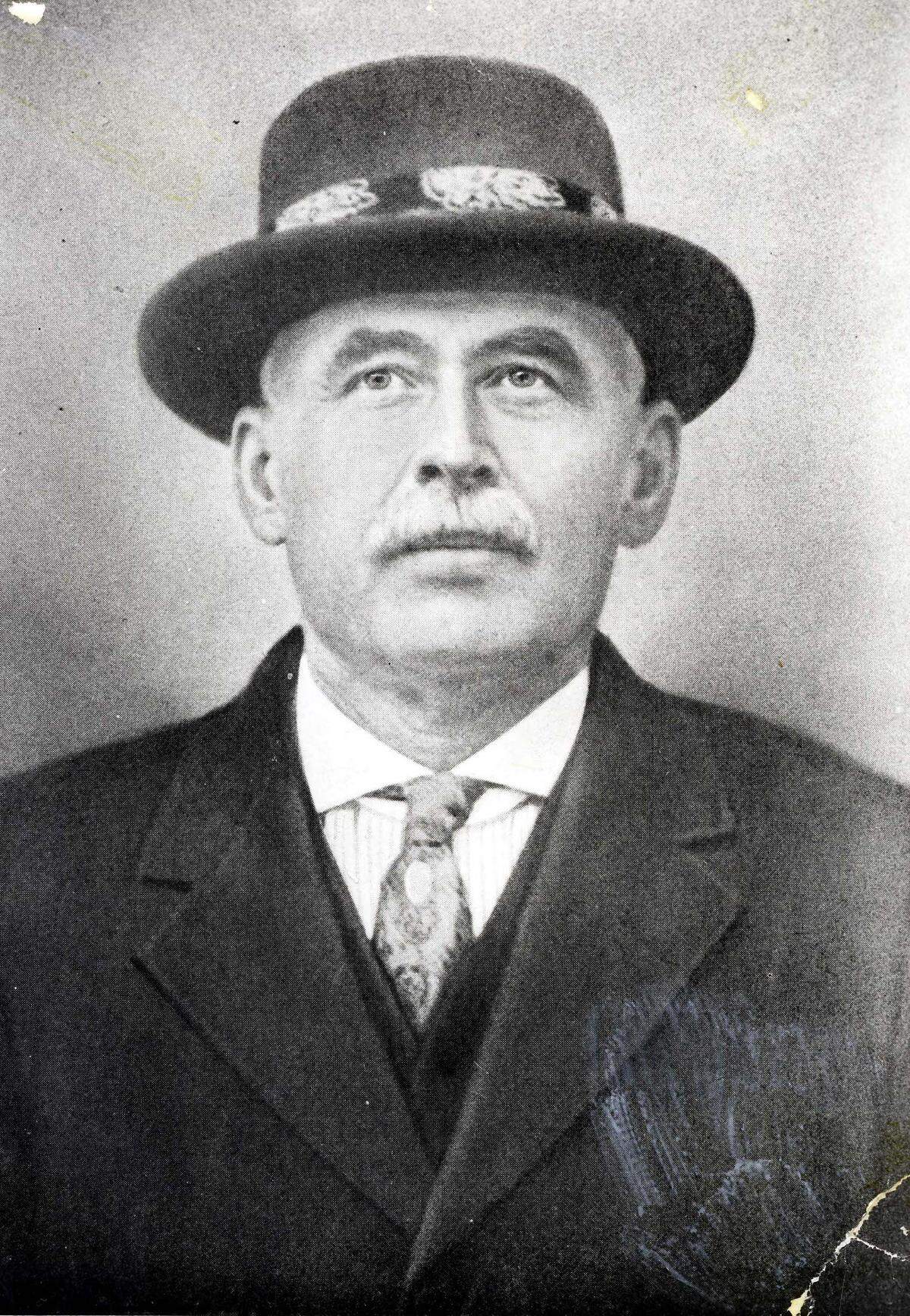
Like Henderson whose supporters put him over the top, District 4 supervisorial incumbent, George H. Whitworth, was saved by his friends. District 4 included Gustine, Cottonwood, New Era, Fairview, Irwin, Santa Rita, and Turners. In the primary, Whitworth was defeated by challenger A. A. Anderson of Fairview by 74 votes in a three-way race.
First elected to office in 1900, Whitworth cruised to victory in the previous elections until this one. What happened was that his friends were so confident in his reelection prospect that they were away on vacations during the primary.
This would have been the end of Whitworth’s tenure in the county government; however, his friends redeemed themselves by organizing a write-in campaign and worked diligently to deliver him one of the most extraordinary comeback victories in Merced County history that November. Whitworth beat Anderson by 19 votes.
The 1920 election again proved that grassroots mobilization is the key to a successful campaign. But this election season is like no other as the coronavirus poses a threat to our democratic process. Now, more than ever, we need to safeguard our democracy by exercising our voting rights and casting our ballots safely.