
Sarah Lim: The story behind Merced’s ‘Little Snelling’ and other historic neighborhoods
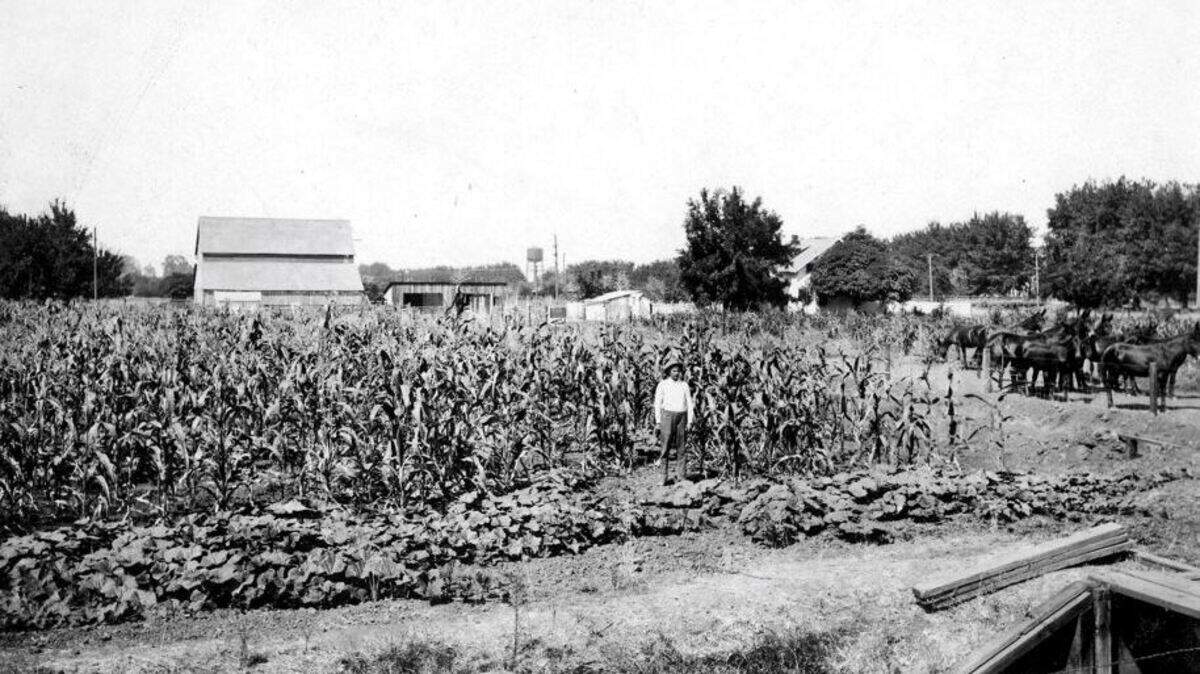
As the weather is getting warmer and the days are getting longer, it is a great time to be outdoors to explore Merced’s historic neighborhoods.
While one will be delighted at the sight of a stately Victorian home or a cute California bungalow, one will surely be intrigued by the disappearance of Merced’s first neighborhood.
“Little Snelling” was the first neighborhood established in the new town of Merced shortly after Merced defeated Snelling to become the new county seat in November 1872.
Many Snelling residents packed up their stuff, businesses, and, in some cases, entire houses to relocate to Merced. They decided to establish their homes in an area between 13th and 15th streets and M and O streets and called it “Little Snelling.”
According to Louise Norvell (1883-1973), a longtime Merced resident and educator, “The Southern Pacific Railroad divides the town, and the western part (south of the tracks) was to have been the aristocratic part. …. All those Snelling people came and established their homes over there, and they had some very nice homes. The Silmans and the Inglesbys [sic] and the Robertsons and the Smyths and the Meanys all came to that section.”
It was considered a very upscale neighborhood with merchants and officials. Lemuel Hampton Silman, a stagecoach operator, moved his house built circa 1865 from Snelling to 632 W. 15th Street. Then, there was Merced County Sheriff Anthony J. Meany who took up his residence on 14th Street in Little Snelling.
These “aristocrats” would never want to miss any action on their social calendar; therefore, living near the center of social activities — the magnificent El Capitan Hotel — was ideal.
In addition, it was very convenient for them to gather in the barroom of the El Capitan Hotel after work then walk across the tracks and be home for dinner in no time.
Today, Little Snelling would have been considered less desirable because it would have been south of the tracks. Little Snelling eventually lost its prestige to the neighborhoods in north Merced, and its dilapidated buildings were razed to make room for Highway 99 in the 1960s and then for senior housing in the 1990s.
If the Southern Pacific Railroad (formerly Central Pacific) and the El Capitan Hotel made Little Snelling the most desirable residential district for the city folks, then Bear Creek and G Street served as the boundaries for idyllic suburban living. The first two neighborhoods that were developed outside of Merced city limits were the Bradley Addition and Ragsdale Addition.
The Crocker-Huffman Land and Water Company set aside a tract of 4,000 acres just outside of Merced’s eastern limit on G Street. It was called “The Bradley Addition” in honor of J. D. Bradley, manager of the Crocker-Huffman Company.
The soil was exceptionally rich for farming. It was platted into 10 and 20-acre lots and put on the market at a price ranging from $60 to $85 per acre. Experienced colonizer A. Jernberg was hired to promote the settlement. Within the first year, 48 pieces of the tract had been sold. Some of the settlers such as Fred W. Yokum planted orchards and vineyards while others grew alfalfa, the most profitable crop.
Settlers in the Bradley Addition had many of the advantages of living in town since the city extended the electric-lighting system to the neighborhood as well as the waterworks. The Kocher house at 117 E. 21st Street, for example, was supplied with pipe water from G Street. It was built in 1903 for Carl E. Kocher, a prominent merchant who operated a tin and hardware store. He served as the Merced City Treasurer from 1896 to 1904. The house is set back from the street, and the property extends to 22nd Street. The Kocher house is one of the few remaining buildings of the original Bradley Addition.
The Ragsdale Addition was originally known as Lot 59 of the Bradley Addition. This 52-acre parcel located just east of G Street and south of Bear Creek was purchased by James Ragsdale, a horse dealer, in 1920. Ragsdale and his wife, Fannie, made their home there. A Missouri native, Ragsdale settled in Merced County with his family in 1902 and invested in livery stables in Merced. He continued expanding his business until he had three of the largest livery stables, including the El Capitan Stables, in the county.
Ragsdale got into real estate and platted Lot 59 for subdivision in 1923; thus, the Ragsdale Addition was born. When Ragsdale placed the subdivision on the market, he found that the demand for homes was unprecedented. The model home at 2490 2nd Avenue may be the oldest house in the Ragsdale Addition. It was built in 1927. According to the advertisement on October 20, 1928, “San Joaquin valley [sic] contractors who have already inspected the home pronounce it one of the finest in standpoint of construction, architecture and modern equipment ever built in this section.”
In 2017, the Ragsdale Addition was designated as Merced’s first official Honorary Historic Neighborhood District.
For more history about Merced’s historic neighborhoods such as Chinatown, Mexican Colony, Spaghetti Acres, and South Merced, please visit the “Settlement of Merced County: From Homestead to Colonization” exhibit at the Courthouse Museum. It is on display until February 20.
On a separate note: Due to the rise in COVID-19 cases, the Merced County Historical Society annual membership meeting on Feb. 6 has been postponed to March. For more information, please contact the Courthouse Museum office at (209) 723-2401.