
Who lived in Merced’s oldest homes? The history behind the city’s grand residences
The other night, I went to a dinner in support of the designation of Spaghetti Acres and Old Town as Honorary Historic Neighborhood Districts. Spearheaded by the Downtown Neighborhood Association (DNA), the Ragsdale Addition was the first neighborhood to acquire this honor from the city in 2017. Spaghetti Acres and Old Town will soon follow suit.
Merced has always been a very diverse community with settlers from different parts of the country and around the world. As its name implies, Spaghetti Acres was a colony established by Italian immigrants in the early 20th century who left poverty behind for a better life in America. Most of the Italian immigrants that settled in Merced County were from Piedmont and Tuscany because they realized Merced’s climate was very similar to their homeland for crop cultivation. Starting as truck farmers on a relatively small scale, Italian-American farmers today have become a dominant force in our agricultural industry.
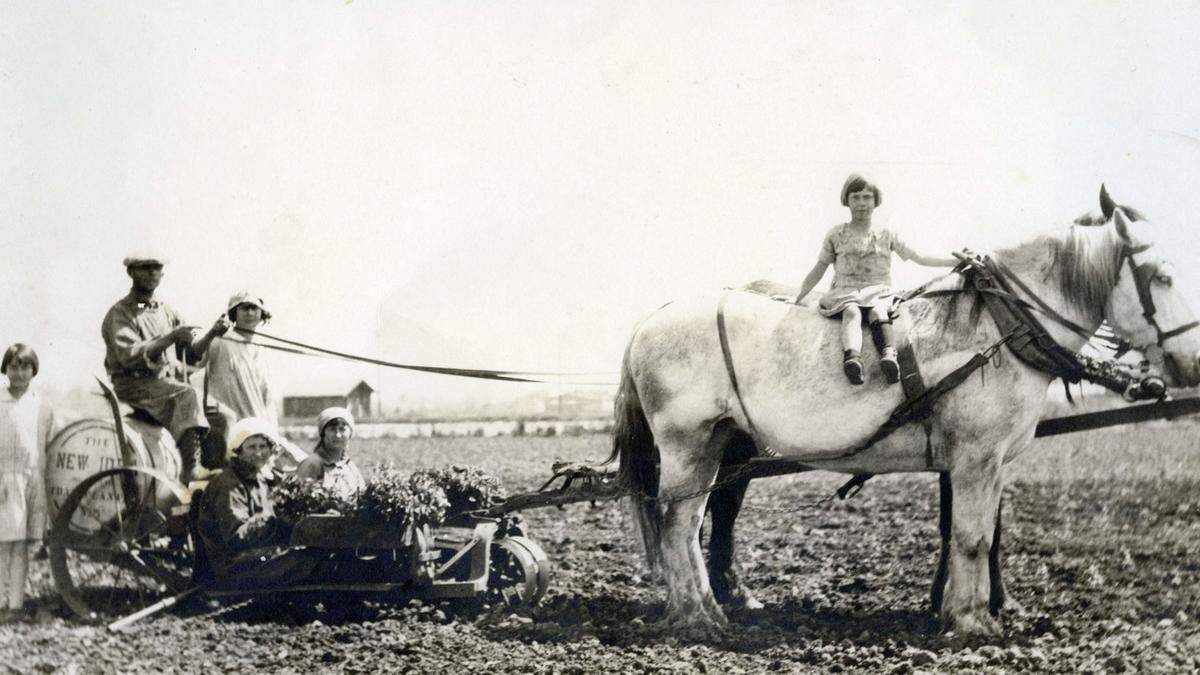
While farming was their main livelihood, building a close-knit community was a way to survive in a new country among strangers. These early settlers developed their ethnic enclave in an area from R and 16th streets to the banks of Bear Creek, which became known as Spaghetti Acres. The first families to live and farm in this area were the Pregno brothers, John and Pete, who married the Passarino sisters, Mary and Helen.
These two families – who lived across 20th Street from each other – ate together, worked together, played together, and worshiped together.
When the area was subdivided between the late 1940s and early 1950s and Fremont School and the Italo-American Lodge were built, Spaghetti Acres became a vibrant neighborhood. Maryellen Mazzei, the granddaughter of John and Mary Pregno, has many fond memories of growing up in Spaghetti Acres.
“When I was a little girl, new families bought those homes and began having children,” she said. “It was a great neighborhood. Kids were outside all the time. Then, at 5 o’clock, the moms would yell at their kids, ‘Come on, it’s time to eat,’ and we’d ride our bicycles home and eat.”
Times have changed, since not many current residents know the neighborhood’s past or its historic name. Spaghetti Acres was a relatively newer neighborhood in comparison to Old Town. This district, according to DNA, is bordered by G Street on the east, M Street on the west, the BNSF Railroad tracks on the north, and the Downtown Business District to the south.
Unlike “Little Snelling,” the first neighborhood in Merced that was razed to the ground for senior housing, Old Town continues to thrive with many historic homes, old churches, charming gardens, and stately palms which evoke the Victorian era.
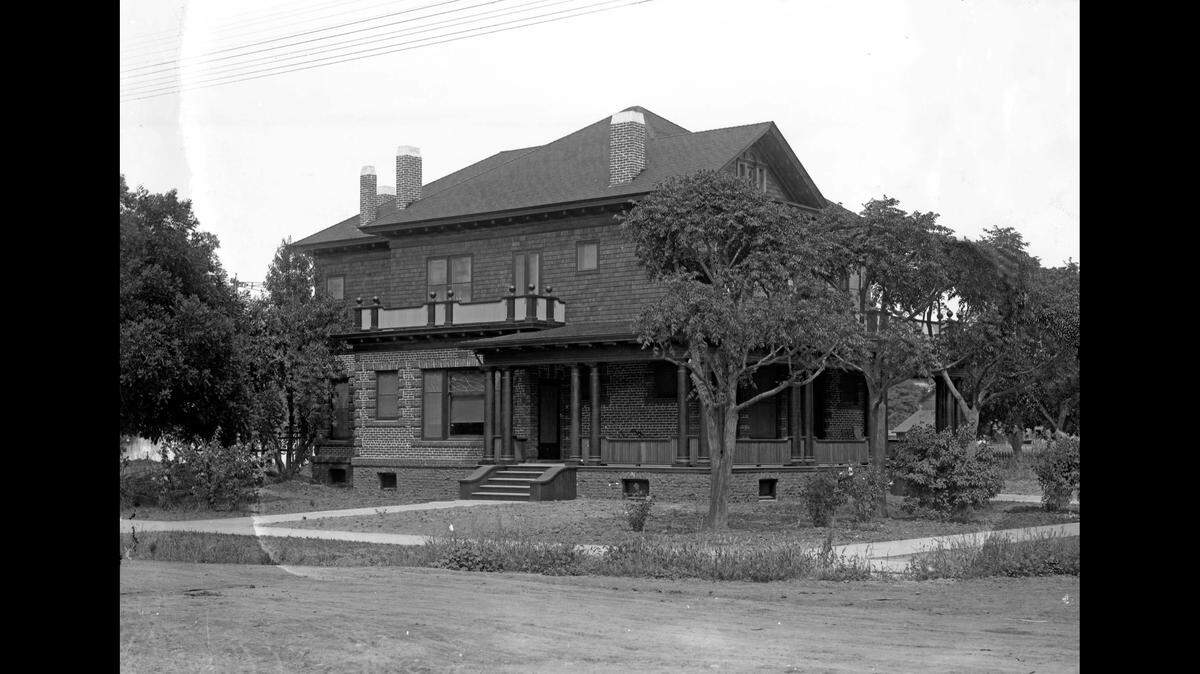
Many old-time families first built their homes in this area, and one of the oldest homes is found at 119 W. 18th Street. What makes these old homes interesting are their stories, predominately the story of Mirta Landram Baker, who lived her whole life in three houses on one city block. She grew up in the Landram House on 411 W. 20th Street, got married and lived in the Ruddle House on 436 W. 20th Street, and spent the rest of her life in her custom-built home on 455 W. 20th Street.
Mirta was born to Carter and Virginia Alice Landram in 1876 at 411 W. 20th Street. Carter Landram was a pioneer of Merced. In 1858, 19-year-old Carter joined the wagon train for California from St. Louis, Missouri. He came to Merced in 1873 to start a stationary and book business on 16th Street. After marrying Virginia Alice Kerr of Modesto, Carter built a Greek Revival-style house for his new bride in 1876. Their daughter, Mirta, was raised in this house. The Landram House was converted into a medical office in the 1980s.
Mirta was 22 years old when she married her cousin, John Landram, who was 17 years her senior. John, a nephew of Carter Landram, came to Merced in 1883 to start a lumber business. Two years later, he went back to Missouri and married his first wife, Martha King. Upon returning to California, they lived with Carter’s family while their house at 436 W. 20th Street was being built. Martha Landram died in 1891 at the age of 30. Mirta, daughter of Carter Landram, became John’s second wife in 1898.
Unfortunately, John died in 1901 and left Mirta a widow at the age of 25. She was later remarried and sold the house to John Ruddle (thus known as the Ruddle House).
Mirta’s second husband was Oscar Baker, who was actually her brother-in-law because Oscar Baker and John Landram’s first wives were sisters. Oscar Baker was born in Cairo, Missouri, and his family was a farming family. The Baker farm was near the King family farm, and Oscar went on to marry Susie King (sister of Martha King Landram) and moved to Merced in 1886.
Oscar went into the grocery business, then later joined John Landram (Mirta’s first husband) in the lumber business. After losing his wife to tuberculosis, he married Mirta Landram in 1905.
Oscar and Mirta had the Baker House built at 455 W. 20th Street in 1906. They hired the prestigious firm of Froetch and Boney to build the house.
Oscar insisted on the finest materials and workmanship in his house since he was in the lumber business. After Oscar died, Mirta continued to live in this house with Oscar’s daughters from his previous marriage. Mirta died in 1968 at the age of 91, and the home was sold after Oscar’s daughters passed away. The Baker House then was repurposed into a restaurant known as the Mansion House.
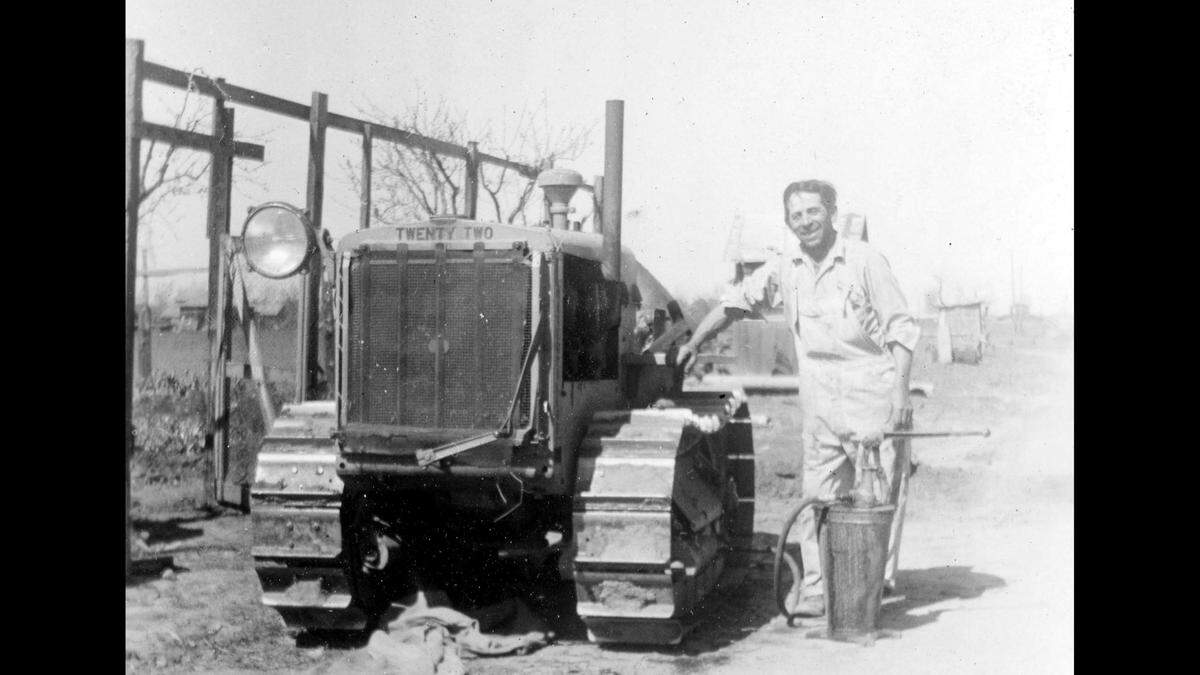
For more history about Merced’s old homes and historic neighborhoods, please check out the books in the Courthouse Museum gift shop. While at the museum, don’t forget to visit our current exhibit about tractor dealerships in Merced County. Finally, please support the Downtown Neighborhood Association’s efforts to preserve the history of our town.
This story was originally published May 15, 2022 at 6:35 AM.