Merced is a top agricultural county. Why aren’t fresh groceries accessible?
AI-generated summary reviewed by our newsroom.
- South Merced residents face grocery gaps; most stores lie north of Hwy 99.
- Local initiatives include farmers markets, pop-up pantries and school gardens.
- Zoning constraints, limited transit and time poverty drive food deserts and low access.
Merced has more than a dozen supermarkets, but only two of them are south of Highway 99, leaving many residents of South Merced far away from either one. As a result, parts of the city have been described as “food deserts,” by the county public health department.
Food deserts are neighborhoods where fresh, healthy groceries are hard to find due to a lack of grocery stores, high prices or poor access to transportation. A 2023 assessment by MCDPH found these neighborhoods were typically lower income with fewer public parks and an oversupply of fast food restaurants, which pose additional barriers to residents living healthier lives.
The county focuses on neighborhoods where more than half of residents are more than a mile away from any grocery store. In zip code 95431, around 80% of residents live more than a mile from a grocery store, in zip code 95348 it is about 57% and in zip code 95340 it is around 55% of residents, according to data MCDPH’s public health coordinator, Filiberto Delgado-Navarette.
“These numbers remind us that many people in our communities are still facing these gaps to accessing food, especially for residents who don’t drive or rely on public transportation.” Delgado-Navarette said.
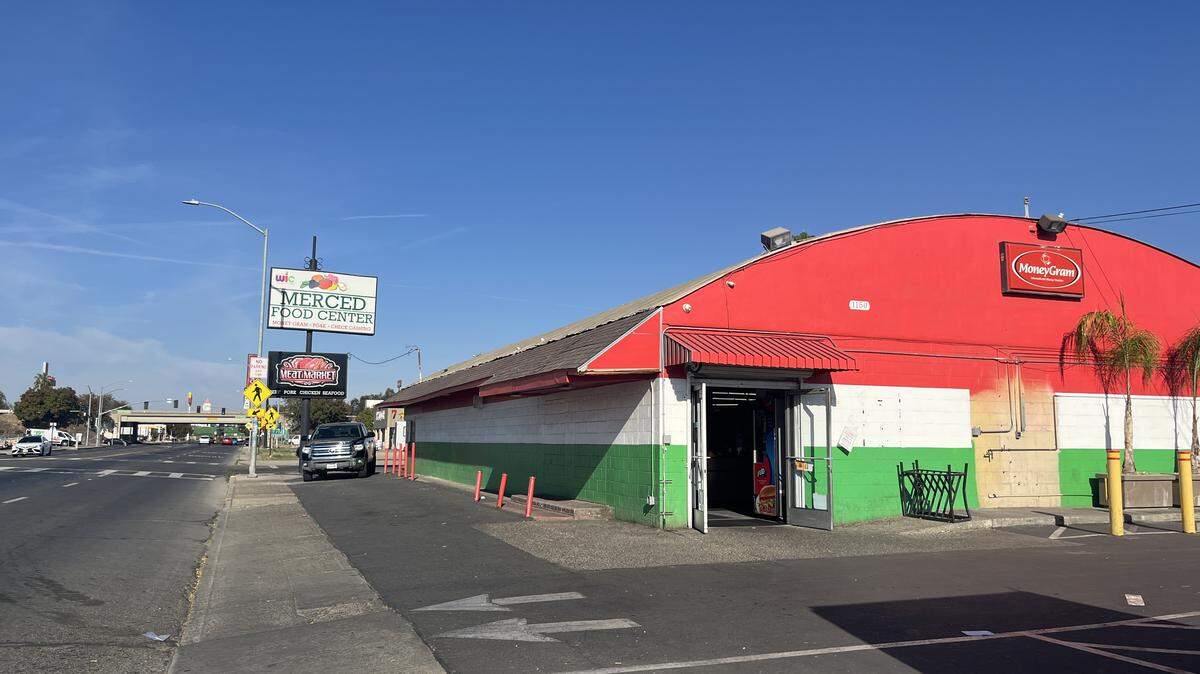
South Merced’s two grocery stores are the Dollar General Market on Highway 140 and the Merced Food Center on Martin Luther King Jr. Way. The Merced Food Center is a traditional grocery store with baked goods, fresh produce, and a butcher shop. The Dollar General Market sells groceries including fresh produce, but the majority of the store is filled with other household goods typically found at a dollar store.
Smaller convenience stores, markets, and corner stores are plentiful in South Merced and some of them offer fresh produce, but they generally have less variety and at higher prices.
It’s about zoning
According to UC Merced economist and social scientist Catherine Keske there are a number of factors that lead to food deserts, but a major component is almost always zoning.
Areas zoned for high density apartments often become food deserts in part because there are not enough retail areas where grocery stores could open, she said.
Keske also noted how lack of reliable transportation compounds food access problems for residents but added that an often overlooked barrier is lack of time. “There are a lot of people in [South] Merced who work very hard, and they don’t have the time to prepare the food… because they’re holding two or three jobs down,” she said.
There have been a number of efforts to improve access in South Merced. According to Delgado-Navarette one major development is the weekly farmers market which takes place from 8 a.m. to 11 a.m. on the corner of 16th and Canal streets. The MCDPH also established a coalition of local organizations to promote healthy eating and improve access to nutritious food. One of the key partners has been Community Initiatives for Collective Impact which encompasses Food Para Todos, a nonprofit that operates pop-up pantries and a community garden in Merced.
In terms of structural solutions, Keske said gleaning, the practice of collecting unharvested crops, and distributing that produce, can help supply more food locally and curb food waste. For children, school gardens are a good way to provide students with fresh vegetables.
Keske added that individual residents can take action to combat food insecurity in their communities. “This is sort of a triage approach,” she said, urging people to consider “picking up another $10 worth of things, or $5 worth of things, and donating it to a food bank.”
This story was originally published November 5, 2025 at 5:30 AM.