
California paying $2.1 million to settle state worker’s lawsuit over office chair
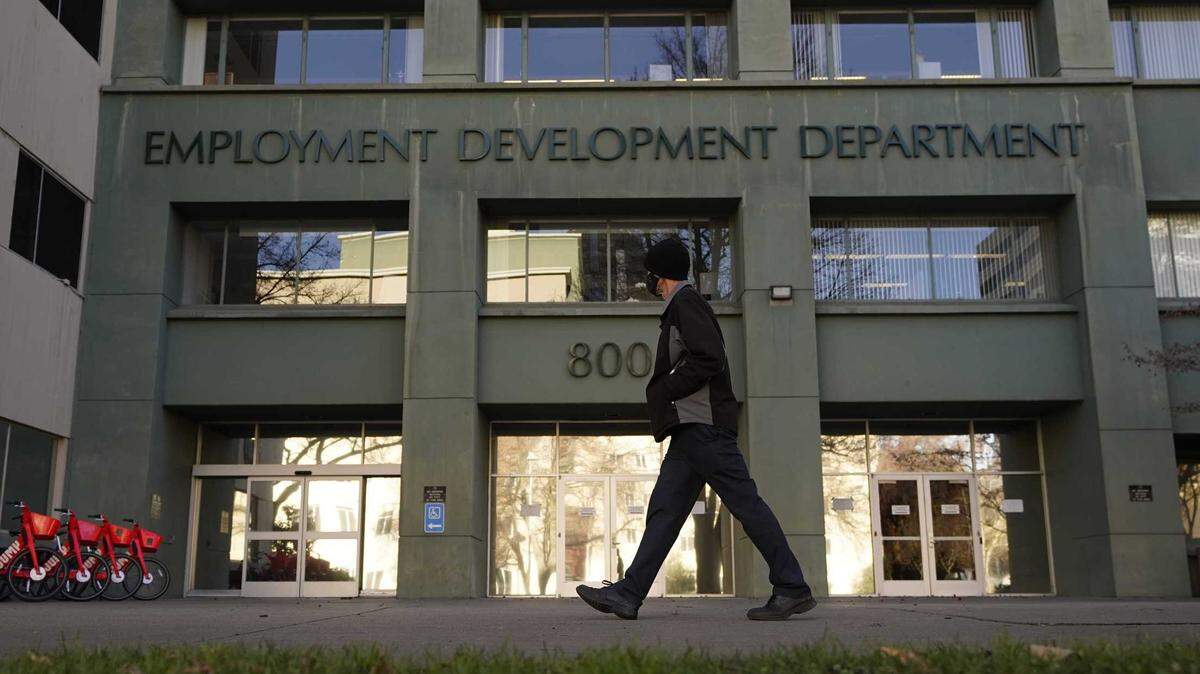
A dispute that began with a disabled state worker’s request for a $1,200 office chair ended Friday with the Employment Development Department agreeing to pay $2.1 million to settle the employee’s retaliation lawsuit.
The dispute started when Laura Torres, an office assistant in San Francisco, requested a specific chair — the Verte Model 22111 — after returning to work from a back surgery, according to legal documents filed in San Francisco County Superior Court.
Torres, now 52 and living in Van Nuys, had suffered from sometimes-excruciating back pain since she was 35, when she was diagnosed with spinal stenosis. Her father and grandmother had severe cases of the condition in their later years. Doctors told her bearing twins might have triggered it at a young age, she said in an interview.
She was hired under a special California state program for people with disabilities, called the Limited Examination and Appointment Program, in 2010.
Attorneys for the Employment Development Department said in court filings that the department tried to accommodate Torres, including by proposing cheaper alternative chairs and by providing her reduced hours and medical leave.
Department spokeswoman Loree Levy didn’t respond to additional questions Friday.
A jury sided with Torres in October 2019, awarding her $1,090,000 for past and future lost wages and emotional distress. A judge ordered the department to pay an additional $1.1 million in attorneys’ fees, said Gordon Kaupp, with San Francisco-based firm Kaupp & Feinberg. Kaupp, along with attorney Ryan Vlasak from firm Bracamontes & Vlasak, represented Torres in the lawsuit.
The department started appeal proceedings after the jury’s verdict, but then agreed to settle the lawsuit for $2.1 million on Friday, according to a copy of the settlement agreement.
“If they had just got her the chair in the very beginning, none of this would have happened,” Kaupp said.
Why she wanted the chair
The first day Torres returned to work after the surgery, in May 2011, she submitted a doctor’s note identifying the chair she needed, with the tail bone section cut out.
An online ad for the Verte chair says it features “springloaded joints that take an exact spine impression which can be locked in place at the touch of a lever.”
The department denied her request, suggesting a cheaper alternative. Torres, in an interview, said she had tried the chair the department suggested and knew it caused her pain.
When the department didn’t provide the requested chair, she went out on medical leave and filed a complaint with the Equal Employment Opportunity Commission, according to court records.
In court documents, department attorneys said followup notes from Torres’ doctors specified only that the chair be “ergonomic,” not that they provide the model Torres wanted.
The department finally bought the Verte chair in October 2011, and Torres returned to work for four hours per day, court records say.
She requested an additional accommodation that she be exempted from routing phone calls on the switchboard. Her condition caused incontinence, and after some close calls she expressed her worry that she might not make it to a bathroom in time, she said.
For a while the department accommodated that request without problems, Torres said. She filled in at another office helping process appeals.
Fasting to work
But then, in December 2012, the EEOC investigators showed up in the office. That’s when the retaliation started, she said in her lawsuit.
She was reassigned to the switchboard.
“I just immediately thought, ‘Oh God, I’m going to get stuck on the phone, and I’m not going to make it,’” she said. “I just remember pretty much crying every day on the drive from home to work.”
Then it happened.
“My worst fear came true,” she said. “Here I am, 42 years old, and I wet my pants at work.”
The department still wouldn’t accommodate her properly, she said, so she stopped eating and drinking liquids on weekdays except between the hours of 6 p.m. and 10 p.m.
In legal documents, the department’s attorneys said the switchboard duties weren’t retaliation. They said the duty was listed as an essential function for the position of office assistant, constituting 14% of her job, and the state’s accommodation rules don’t require an employer to exempt an employee from an essential function.
The attorneys said in the filing that Torres didn’t try solutions such as “wearing pads, discussing medical options with a specialist, or trying muscle-strengthening exercises.”
The department attempted to accommodate her by shortening her shifts on the switchboard and by moving her closer to the bathroom, according to the department’s filing.
After about nine months working the switchboard and not eating or drinking during the day, she had lost 50 pounds, Torres said.
In September 2013, the EEOC issued a decision in Torres’ favor on her initial complaint over the chair, determining “there is reasonable cause to believe (EDD) unreasonably delayed (Torres’) reasonable accommodation because of her disability, in violation of the statute,” according to a citation of the EEOC decision in the lawsuit.
Comfortable in new job
Torres went on medical leave the same month due to back pain, and was on and off leave until October 2016, when her supervisor, Robert Leeds, denied a leave extension, according to Torres’ lawsuit.
Torres didn’t return to work, effectively resigning under the state’s Absent Without Leave — or AWOL — statutes, according to her lawsuit.
She said her new job, at a private insurance company, accommodated her immediately after she started work, and she hasn’t had any problems.
In a written declaration submitted in the lawsuit, Leeds said the department granted Torres extended leave, provided an electric sit-stand workstation, a cordless headset, a modified work schedule and a relocation of her workstation closer to the bathroom. He said managers never told Torres she couldn’t put callers on hold if she needed to, to use the bathroom.
Leeds didn’t respond to voicemails Friday.
As for the chair, Leeds said in his 2019 declaration that it sat “unused at an empty cubicle” in the San Francisco office.
Torres said she bought one of her own and recommends it to friends.
“There’s nothing like this chair,” she said.
This story was originally published March 29, 2021 at 5:00 AM with the headline "California paying $$2.1 million to settle state worker’s lawsuit over office chair."