
California Latinos are behind in COVID-19 vaccinations. Here’s what is holding them back
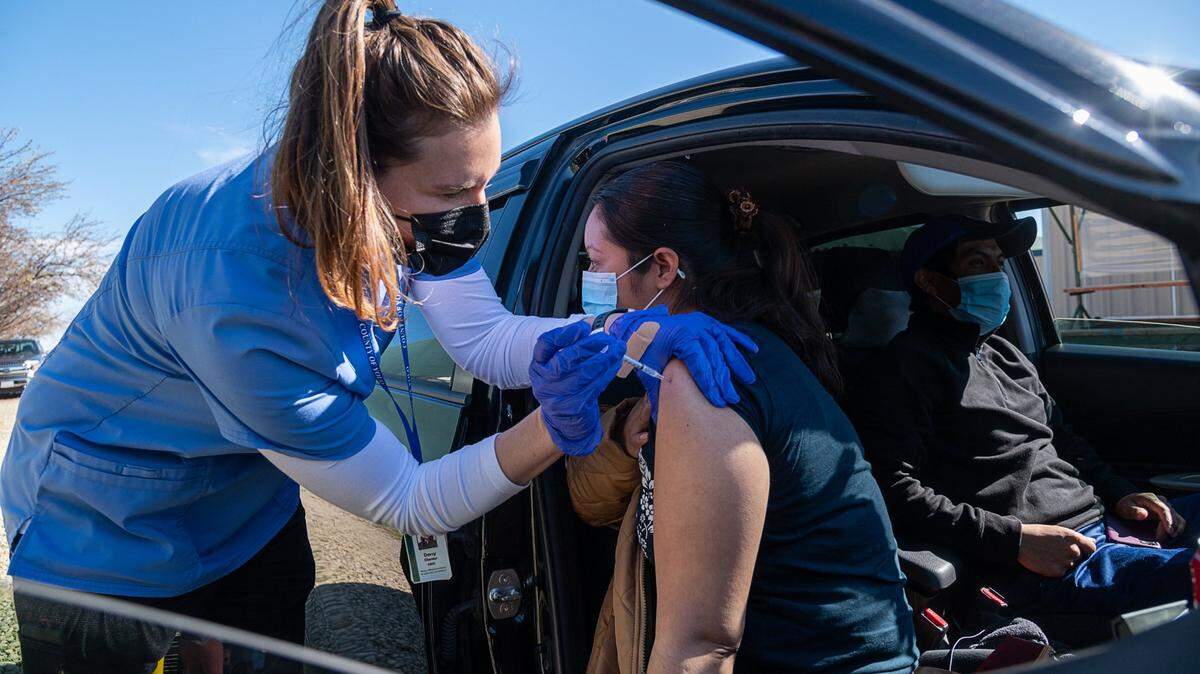
Latino adults who have not received a COVID-19 vaccine are twice as likely as white and Black adults to say they want one as soon as possible, according to a new national survey from the Kaiser Family Foundation COVID-19 Vaccine Monitor.
About 33% of unvaccinated Latinos told researchers that they want a shot as soon as they can get one, compared to 16% of unvaccinated white adults and 17% of unvaccinated Black adults.
Researchers gathered the data by surveying 2,097 U.S. adults, including 778 Latino adults, between April 15-29 of this year.
Data from the California Department of Public Health shows that Latinos, who account for 40% of the state’s population, make up just a quarter of Californians who have received at least one dose of the vaccine.
“This means that there’s a large group among the Latino population that is already convinced of the value of the vaccine and is ready to get it right away, but they may just be facing barriers in terms of access and information,“ said Liz Hamel, vice president and director of public opinion and survey research at the Kaiser Family Foundation.
Throughout the health crisis, Latinos in the U.S. have been disproportionately disadvantaged by the pandemic. The trend is especially true in California, where Latinos represent nearly half of the state’s COVID-19 cases and deaths.
The survey also found that Latinos are also more worried about contracting the disease than Black and white people.
About 41% of Latinos surveyed said they were very worried that they or someone in their family would contract the virus, compared to 30% of Black adults 10% of white adults.
Furthermore, 57% of permanent residents and 69% of “potentially” undocumented immigrants told researchers that they were even more likely to say they were very worried about them or someone in their family getting COVID-19.
The new survey gives a deeper look at the roadblocks preventing Latino communities from getting their shots at the same rate as other groups.
Among Latinos who remain unvaccinated, about 78% cited the possibility of experiencing serious side effects, 52% cited out-of-pocket costs and 49% cited missing work due to side effects as their main concerns, according to the survey.
The survey found that Latinos were more likely to get vaccinated at a community health clinic — when compared to whites and Blacks — and the least likely to get vaccines at a doctor’s office. Overall, of the Latinos who have been vaccinated, 35% were vaccinated at a large vaccination site, 22% at a community health clinic, 17% at a pharmacy, 14% at a hospital and 4% at a doctor’s office.
Latinos were also the least likely to sign up for a vaccine appointment online. Of those who did or tried to set up an appointment online, 42% were asked to provide a government-issued identification, 32% were asked to provide health insurance information and 14% were asked to provide a Social Security Number, despite federal guidelines advising that vaccines be made available to everyone, regardless of their immigration status.
“The vaccine distribution process has been an enormous challenge for Latino communities and especially those within the community who are Spanish-monolingual speakers, undocumented (and) mixed-status families,” said Jeffrey Reynoso, executive director of the Latino Coalition for a Healthy California, a statewide group that focuses on Latino health.
Reynoso said he’s been excited to see local, walk-up vaccine clinics that don’t require online appointments, making vaccines more accessible to Latino communities. In Mexico City, for example, he’s seen vaccine clinics include music and luchadores, also known as wrestlers, to entice more people to get their shots.
“Latinos still only represent 25% of those who have been vaccinated,” Reynoso said. “I think this is the time to start thinking more boldly.”
Arturo Vargas Bustamante, an associate professor of health policy and management at UCLA, said a Trump administration policy that dissuaded immigrants from seeking certain public benefits, like Medicaid, almost might have discouraged Latinos from seeking out COVID-19 vaccines.
The Biden administration ended the policy, known as the “public charge” rule, but Bustamante said it continues to have a “chilling effect” on immigrant communities.
“Immigrant communities, they just realize that someone like Trump, if not Trump, can come back ... and reimpose this type of public charge exclusion,” he said.
About a quarter of “potentially” undocumented Latinos said they or a family member did not participate in a government assistance program in the last three years in fear that it would negatively impact their immigration status, according to the survey.
This story was originally published May 25, 2021 at 5:25 AM with the headline "California Latinos are behind in COVID-19 vaccinations. Here’s what is holding them back."