
California homes cost more than ever. What are Gov. Newsom and lawmakers doing about it?
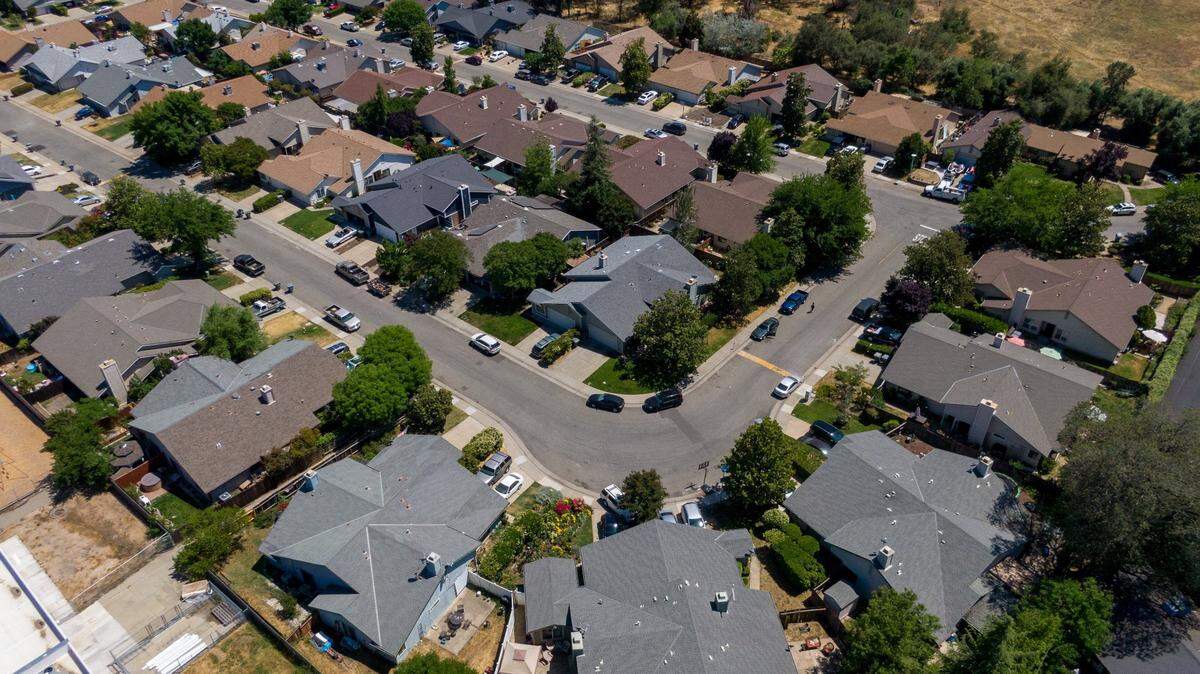
With $758,990, you can buy a median-priced house in California.
It’s a price tag that’s only getting more expensive.
The median single-family home in the Golden State sold for 23.9% more in March 2021 than it did a year ago, and 5.7% more since December, according to the state Department of Finance. The numbers underscore an increasingly exclusive housing market that’s squeezing middle- and low-income families out of California.
Local fees and environmental regulations complicate construction in California. And during the COVID-19 pandemic, wealthier Californians fleeing city centers for single-family neighborhoods helped incite jaw-dropping bidding wars that locals frequently lose.
Ninety percent of Californians are concerned about housing prices, according to a recent Public Policy Institute of California report, and 33% are considering moving to states with more affordable markets.
Little relief from the Capitol is on the way.
The Legislature hasn’t passed a significant housing production package since 2017. Ideas to reform zoning regulations to allow for more multi-family buildings and duplexes failed in 2019 and 2020. This year, similar proposals face opposition from local governments and neighborhood associations with allies in the Capitol.
Newsom has also fallen short of his 2018 campaign pledge to build 3.5 million units by 2025. Housing advocates argue he’s largely failed to flex his executive influence over a Legislature lukewarm on ambitious housing bills.
While California for the first time since 2008 built more than 100,000 units in 2020, according to the finance department, it’s still falling woefully short of what’s needed to end the crisis.
California would need 500,000 new units annually to meet Newsom’s goals. Even using the more conservative California Housing and Community Development projection of a 1.8 million-unit shortage would require the state to construct tens of thousands of units more than its current average.
“We have kept our broken status quo and have not changed our approach to housing,” said San Francisco Democrat and Senate Housing Chair Scott Wiener. “Which means both the Legislature and governor need to move forward transformational pro-housing policies. And if we do that, over time we can end this debilitating shortage.”
Housing density bills fail
Change is anything but easy in the California Capitol, where bold housing proposals frequently go to die.
Pro-housing organizations lauded Senate Bill 50 in 2019 as the best legislative tool to mandate more construction. It would have forced cities to green light taller apartment buildings and multi-family homes near transit- and job-rich areas.
Bay Area and Los Angeles Democrats said that SB 50 would strip cities of local control, undermine the state’s environmental goals or exacerbate gentrification in certain neighborhoods.
Newsom and Senate President Pro Tem Toni Atkins, D-San Diego, then urged lawmakers to collaborate on a housing production plan that the governor could sign in 2020.
It didn’t happen.
A proposal to make it easier for cities to zone for buildings with up to 10 units was killed, as were bills to streamline the environmental review process for smaller projects, expand the state’s density bonus law for affordable housing and allow duplexes on single-family parcels and homes in commercial zones.
“There hasn’t been any momentum to break down the silos,” said David Garcia, policy director for the Terner Center for Housing Innovation at UC Berkeley.
Lisa Hershey, executive director of Housing California, which advocates for affordable access to homes, also said the state needs stronger accountability.
“We can’t afford to have another year where our solutions are thwarted by the zero-sum game, or the all-or-nothing mentality,” Hershey said. “Will policymakers seize the opportunity to invest in our problems? Where all people are guaranteed a safe, stable, affordable home, and everyone can thrive regardless of race, age, identity or zip code?”
Help from California budget surplus
Housing advocates say they have some reason to hope.
After announcing a $76 billion surplus in May, Newsom’s budget proposal includes $9.3 billion for housing and homelessness solutions. He set aside $1.75 billion for affordable housing projects, $100 million to help first-time homeowners make down payments and $3.5 billion to convert hotels and other buildings into homes for those experiencing or teetering on the edge of homelessness.
Dan Dunmoyer, president and CEO of the California Building Industry Association, said some lower-profile laws are making incremental change. He pointed to legislation like a 2019 law that makes it harder for cities to restrict new development.
It’s scheduled to sunset in 2025, but Sen. Nancy Skinner, D-Berkeley, introduced a new measure this year to extend that deadline until 2030.
Dunmoyer said more leadership is needed from Newsom and legislators to reduce other barriers, like development fees and regulations that make construction an expensively long process.
“We need to really look at this holistically, comprehensively,” Dunmoyer said. “We really need to make sure that we take all the necessary steps to address the housing crisis.”
Democratic senators have again introduced measures that died in 2020, including those to encourage duplexes, smaller apartment buildings and housing in areas traditionally zoned for strip malls or retail stores.
A proposal in the Assembly would also ban local governments from imposing parking requirements that the California Apartment Association contends would do away with burdensome mandates that stymie construction.
The Legislature still needs to pass “signature legislation that would pass that would address that huge shortfall,” Garcia said.
Jason Elliott, Newsom’s top adviser on housing and homelessness, agrees.
During a recent Capitol Weekly housing policy conference, Elliott also said it’s time to stop saying “no” to so many ideas, and start committing to innovative solutions.
“Fundamentally, I believe, the governor believes, that we have the wrong reflex when it comes to housing in this state,” Elliott said. “It’s really just a question of how do we turn it over, turn that assumption over? Let’s start with ‘yes.’”
This story was originally published June 8, 2021 at 6:15 AM with the headline "California homes cost more than ever. What are Gov. Newsom and lawmakers doing about it?."