
As pandemic fades, debate over freedom and responsibility persists on Independence Day
California essentially canceled July Fourth a year ago, urging people to skip the picnics as COVID-19 infections surged.
This year, Bridget Scheuffele is attending a birthday party for her nephew and then barbecuing. “It’s going to be a great day,” Scheuffele said.
In some respects, this Independence Day holiday takes on special meaning after more than a year of intermittent stay-at-home orders, mask mandates and other restrictions sparked by the global health crisis. Scheuffele, who works at Placerville Hardware in the heart of conservative El Dorado County, spent much of the past 16 months telling customers to put their masks on — a directive that seemed downright un-American to her.
“Instead of it being a choice, it was, ‘You have to wear a mask no matter what,’ ” she said. “It kind of took freedom away from people.”
Independence Day finds the COVID-19 pandemic in retreat and most Californians starting to get back to normal. But the emotional and sometimes nasty debate they’ve been having since March 2020 — about public health, individual freedom and community responsibility — is nowhere near over.
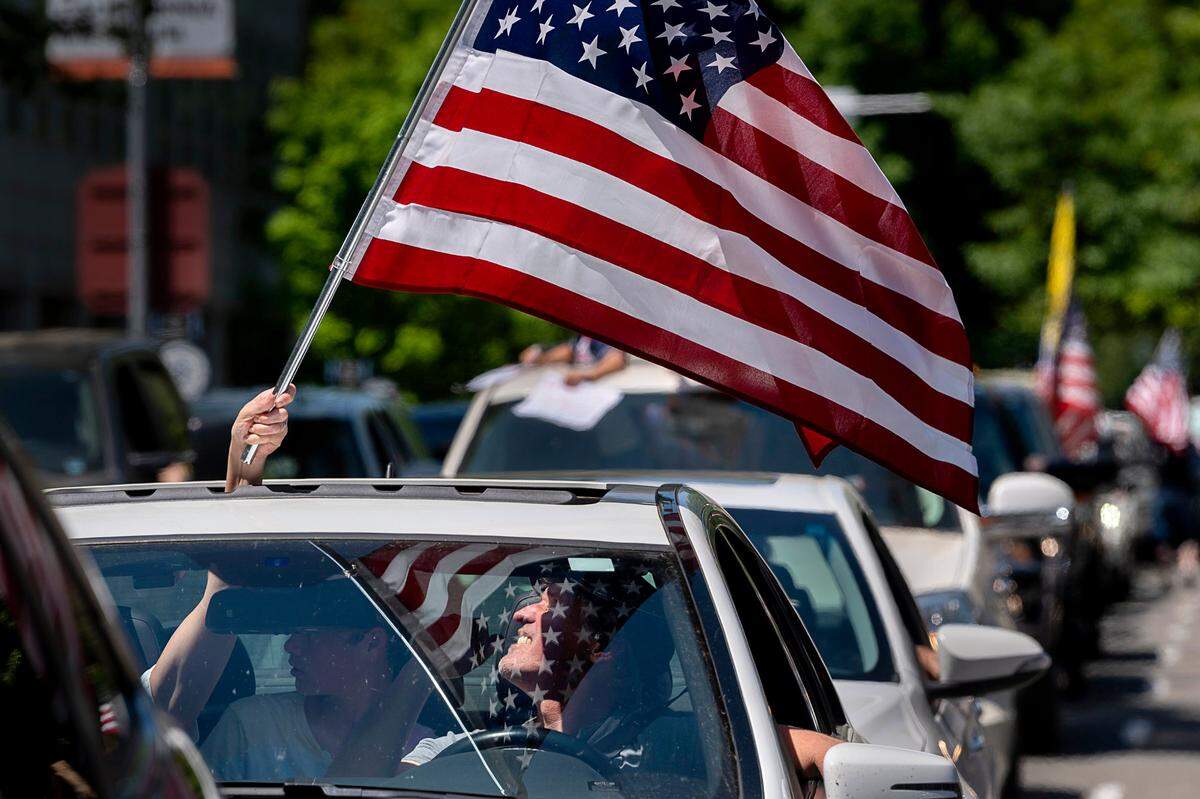
Gov. Gavin Newsom’s stay-at-home orders and other COVID-19 restrictions, like those in other states, raised profound questions about what it means to be free during a public health crisis — the answers to which continue to evolve.
The governor’s actions were met with protests and far-reaching constitutional lawsuits; ultimately, the U.S. Supreme Court rejected his ban on in-person church attendance. Long before his dinner party at the exclusive French Laundry restaurant solidified conservative anger at Newsom, his COVID-19 orders served as the original motivation behind the recall drive that goes to the ballot later this year.
Meanwhile, the arrival of COVID-19 vaccines may have tamed the coronavirus but not the legal fireworks: A trio of Chico State students just sued the California State University system over its requirement that students be vaccinated before returning to class this fall.
That many Californians pushed back on the state’s mandates probably shouldn’t be all that surprising. California was among the first states to shutter its restaurants and shopping malls and direct its residents to venture out only when absolutely necessary. Newsom plunged Californians into a new and unsettling world.
“We were living under restrictions that most of us haven’t had to live with before,” said Lisa Ikemoto, an expert on health care law at UC Davis’ School of Law.
Ikemoto and many other experts say Newsom’s restrictions, issued under the governor’s emergency powers, surely kept Californians safer — even if many residents felt he was violating their constitutional rights.
“There are just some people for whom individual liberties trump everything, no pun intended, and I just disagree,” said Andrew Noymer, an infectious disease expert at UC Irvine.
“Public health is about building trust and educating people that we’re all sort of stakeholders in this society together,” said Noymer, who sits on a World Health Organization advisory panel on COVID-19 mortality. “If I get infected, I can infect others, and if I don’t get vaccinated, I can infect others.”
The year July 4 got scrapped
There will be no shortage of Independence Day fireworks this year — unlike 2020, when most large celebrations were scrubbed and Californians were told to skip the picnics and stay home.
After relaxing his stay-at-home orders just a few weeks earlier, Newsom tightened his grip on the eve of last year’s holiday with a new round of restrictions covering about 70% of the state’s population. Movie theaters, bowling alleys and other businesses had to close again. The reason was a troubling new surge in COVID-19 infections.
“If we want to be independent from COVID-19, we have to be much more vigilant in terms of maintaining our physical distancing from others,” Newsom told reporters two days before the holiday.
If anything tested Californians’ patience — and prompted much of the litigation and protest — it was probably the roller-coaster quality to Newsom’s shutdown orders. As infections ebbed and flowed, the governor cracked down, relented and cracked down again, before lifting most of the restrictions once and for all June 15.
In the meantime, the economy suffered — unemployment peaked at 16% and now sits at 7.9% statewide — and businesses rebelled. An alliance of California health clubs sued the state in mid-September, challenging “the duration, breadth, and arbitrariness” of Newsom’s directives.
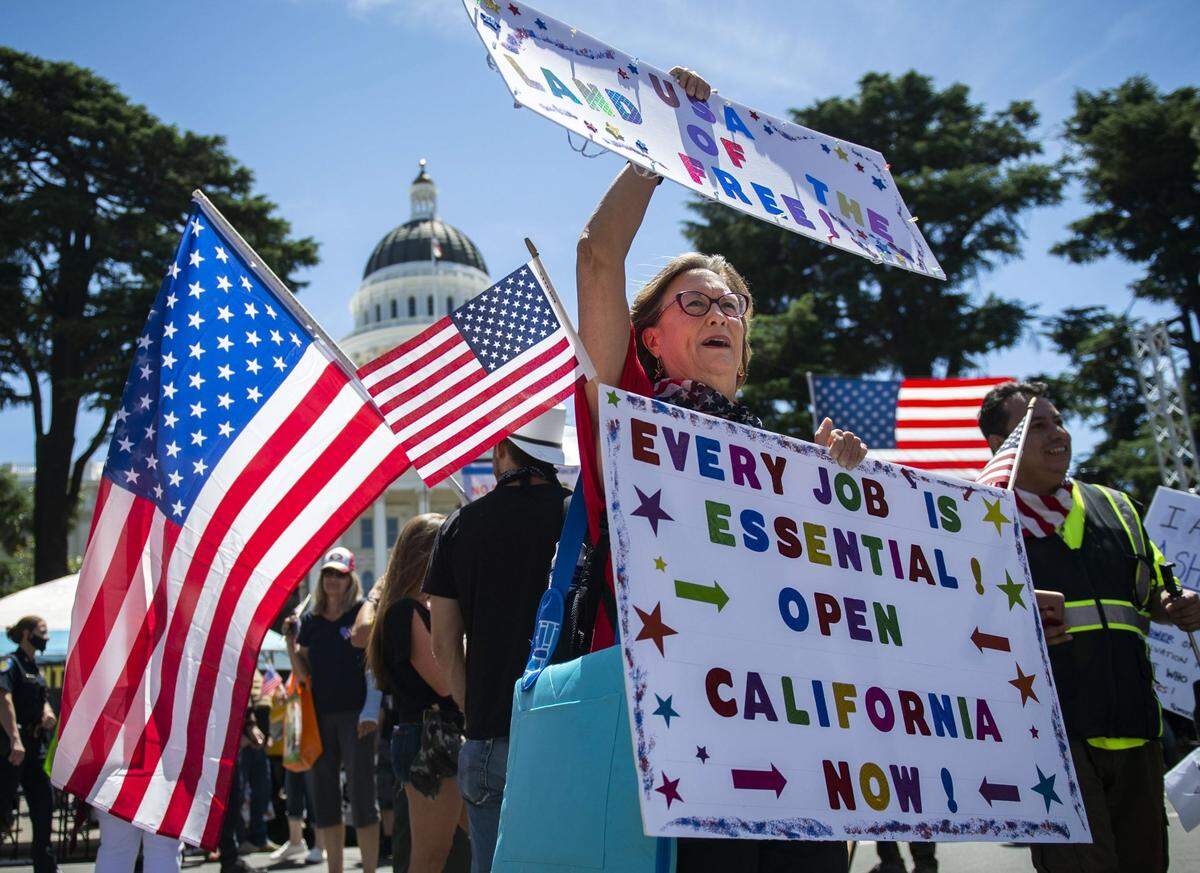
“Six weeks of lockdown are a reasonable limit on liberties,” said Dorit Reiss, a health care law expert at the UC Hastings College of Law in San Francisco. “But the other steps to stop the pandemic never happened, so the lockdowns lengthened.” She blames lapses by the federal government for California having to keep its mandates in place so long.
Many experts, even those supportive of Newsom’s actions, agree that there are only so many limits on their freedom that Californians could be expected to tolerate in the name of public health.
“I think overall California has done a good job of striking a balance,” Noymer said. “And there is a balance to be struck.”
The UC Irvine expert is worried about Los Angeles County’s recent appeal to residents to resume wearing face masks indoors, regardless of whether they’ve been vaccinated, because of concerns about the Delta variant. Noymer’s argument: It’s pointless to ask people to mask up when infection rates are still low.
“I’d rather keep our powder dry until the fall or winter, when we may need to ask people to mask up again,” Noymer said. “I’d rather combat the mask fatigue by giving people the summer off.”
How the churches beat Gavin Newsom in court
Greg Fairrington couldn’t have been happier.
For months, the pastor of Destiny Christian Church in Rocklin had been holding services in person in open defiance of Newsom’s stay-at-home orders. And when Fairrington learned the U.S. Supreme Court was sympathetic to his cause, his elation overflowed.
“We have a Biblical mandate and First Amendment rights!” he thundered in a raucous sermon in late November.
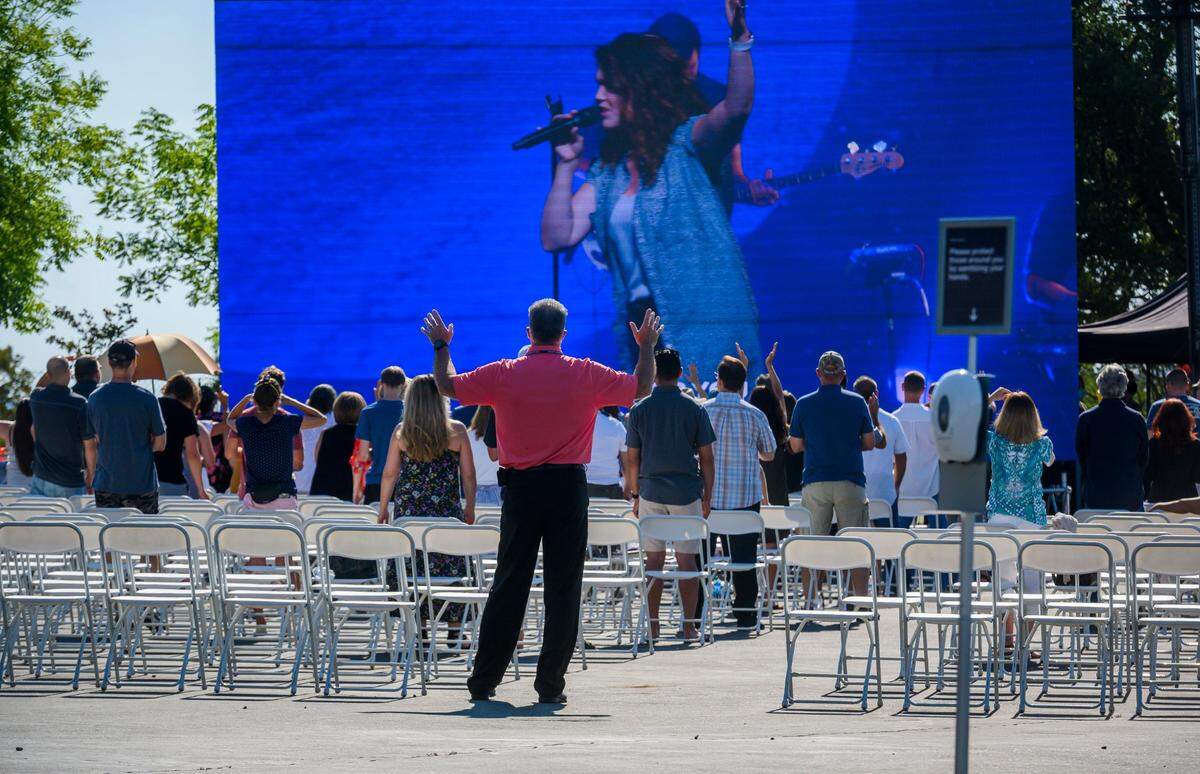
Of all the segments of society that endured shutdowns during the pandemic, the restrictions on in-person church services raised the most emotional outcry. Newsom ordered houses of worship to shut their doors. When he allowed them to reopen early last summer — with strict limits on the numbers who could attend — he banned singing and chanting on the grounds that it would exacerbate the risk of spreading the coronavirus.
Most churches, mosques, synagogues and other institutions went along with Newsom’s orders and live-streamed their services. But a few, mainly conservative churches flouted the governor’s directives or took him to court.
Their argument: Newsom’s shutdowns were a violation of their religious freedoms, as embodied in the First Amendment.
“Civil rights are not suspended by a virus,” said one lawsuit filed in federal court in Sacramento on behalf of a small Lodi church, Cross Culture Christian Center, whose Palm Sunday service in April 2020 was shut down by police.
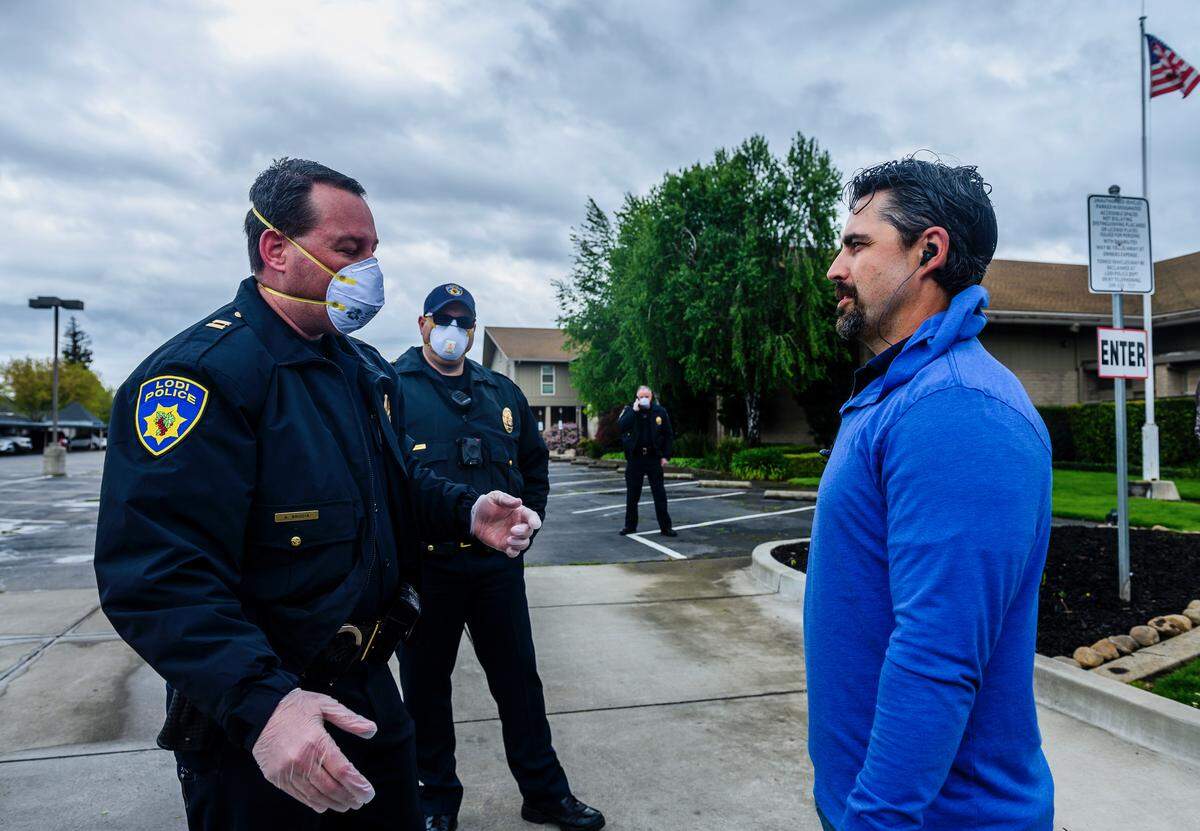
But the courts, for most of last year, sided with Newsom. Federal judges dismissed challenges brought by a handful of Southern California churches. The federal judge in Sacramento refused to grant Cross Culture a temporary restraining order that would have allowed in-person services to resume.
Instead of being unconstitutional, Newsom’s orders were a permissible use of his “emergency police powers,” wrote U.S. District Judge John Mendez in slapping down the Lodi church’s request.
Just before Thanksgiving, though, the tide turned. The U.S. Supreme Court struck down New York state’s restrictions on in-person services. The court said it was unconstitutional to curb attendance at churches and synagogues while stores and malls could throw their doors wide open.
It was a dramatic turnaround. Just a few months earlier, the Supreme Court had upheld California’s rules against a challenge brought by a church near San Diego.
What changed? Reiss and other legal scholars say the arrival of conservative Justice Amy Coney Barrett, following the death of liberal Justice Ruth Bader Ginsburg, firmed up the court’s conservative majority.
In February, the court ruled against Newsom. By this time, amid a winter surge in COVID-19 infections, churches had been closed again in most parts of California. But the court voted 6-3 to strike down California’s ban on indoor attendance.
The court did say California could continue to enforce limits on the number of worshippers in attendance. With the lifting of most restrictions on public gatherings last month, churches and other religious institutions in California can pack the pews as they see fit.
For those who’d resisted Newsom’s orders, the feeling is one of vindication.
“We will continue to stand up against injustices toward the family, speak out against tyrannical actions by Gov. Newsom toward the Church, and be a voice for the millions of Christians in California who have felt silenced and lied to,” Fairrington said in a statement released last week by the Rocklin church.
“We will continue to stand against such suppression. July 4th is a reminder to all of us the price of freedom. Our founding fathers understood the cost of such liberty, and they pledged their life, fortunes, and sacred honor for it. Would that be a lesson to us all.”
The latest fight over freedom: vaccines
Opposition to vaccine mandates can be fierce. In 2019, an anti-vaccine activist assaulted state Sen. Richard Pan after the senator introduced a bill limiting parents’ ability to opt out of the vaccine requirements imposed on schoolchildren. Later, an activist threw a container of menstrual blood on the floor of the Senate. Pan’s bill became law.
In the age of COVID-19, vaccines have been a contentious issue throughout the pandemic — even before vaccines became available.
Anti-vax protesters played a major role in the anti-Newsom demonstrations held last summer outside the Capitol, busing in hundreds of supporters from around the state.
Now, with 59% of the state’s population fully vaccinated, the issue of whether people can be required to get jabbed in the arm has landed in the courts.
In late June, three Chico State students — Austin Higley, Kyle Clark and Ryan Clark — sued leaders of the CSU system and federal health officials including Dr. Anthony Fauci — over the university’s directive that they get vaccinated as a condition for returning to in-person schooling. The UC system has announced a similar policy.
In the suit, filed in U.S. District Court in Sacramento, the three students say they contracted and recovered from COVID-19 in January 2020 — which would make them among the first in the United States to be infected.
The lawsuit argues that the university’s order violates a “historic liberty interest” protected by the Constitution — and, as COVID survivors, puts them at risk of suffering heart attacks, strokes and other serious maladies. The Centers for Disease Control and Prevention says most COVID-19 survivors should get vaccinated.
The students might face an uphill legal battle. In 1905, the U.S. Supreme Court ruled that states could compel smallpox vaccines, with limited exceptions. Just last year, the courts tossed out a lawsuit against the University of California’s flu-vaccine mandate.
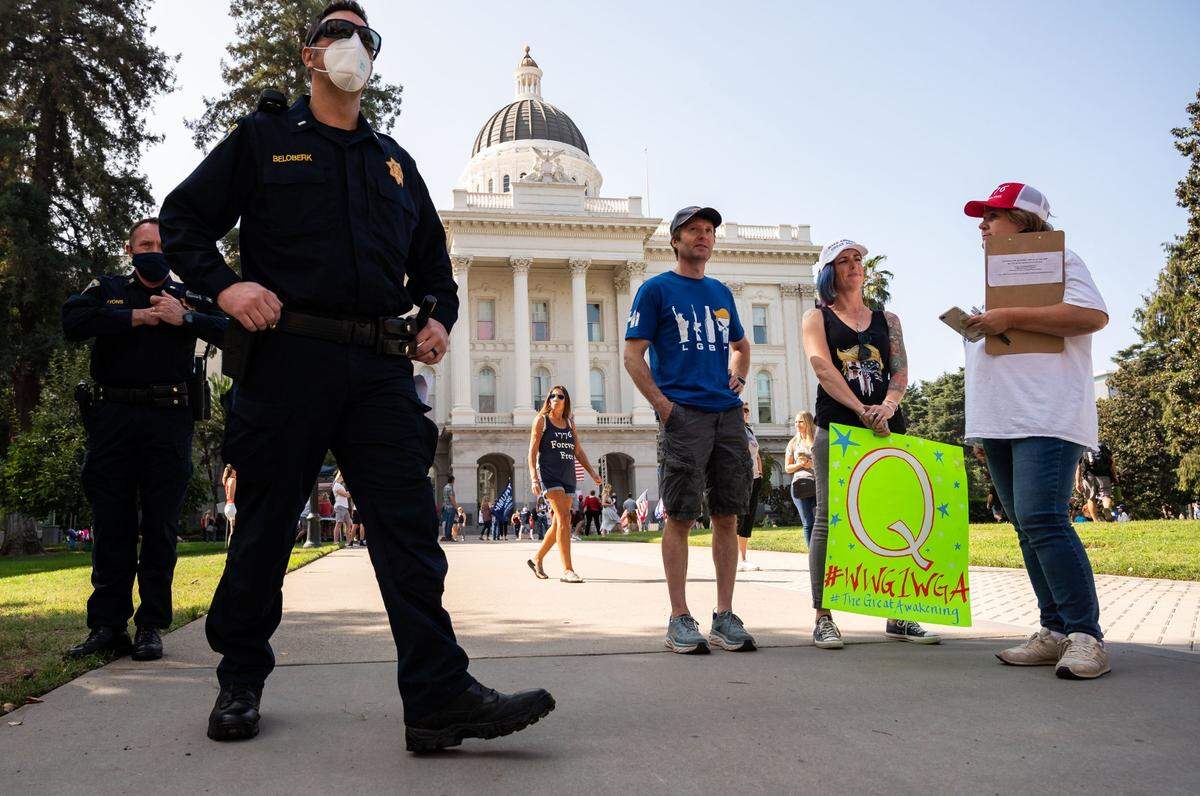
The law does have some gray area, though. Ikemoto, the UC Davis expert, said institutions generally can’t require someone to get vaccinated if the vaccine hasn’t been fully approved by the Food and Drug Administration. The COVID-19 vaccines are being administered under the FDA’s “emergency use authorization.”
But CSU has said it won’t enforce its mandate until the vaccines get full approval — a milestone that Ikemoto said is likely to occur before too long. Once that happens, the Chico students might have a harder time in court, she said.
CSU officials say they’re drafting policies that would allow exemptions under medical or religious grounds.
Meanwhile, public health experts say they support vaccination mandates of the sort instituted by the CSU system — but are wary of the government getting too heavy-handed.
“I don’t want the face of public health to be the sheriff’s deputy knocking on your door, with the vaccine man standing behind him saying ‘it’s time for your shot,’ ” Noymer said. “You just don’t build a lot of trust if you say, ‘Here’s your vaccine, it’s mandatory.’ ”
This story was originally published July 4, 2021 at 5:00 AM with the headline "As pandemic fades, debate over freedom and responsibility persists on Independence Day."