California could see more rattlesnakes in future due to climate change, new study says
As widespread drought continues to ravage the western United States, rattlesnake sightings are on the rise.
“They’re desperate for water,” explained Emily Taylor, a Cal Poly reptile biologist and rattlesnake expert.
“I get people (calling me) saying there’s a rattlesnake and I find it and it’s under a birdbath or curled up under the base of a plant,” said Taylor, who specializes in rattlesnake removal through her company, Central Coast Snake Services.
However, climate change may be a boon for rattlesnakes, according to a study conducted by Cal Poly researchers and others that was recently published in the science journal Ecology and Evolution.
Could climate change benefit rattlesnakes?
Rattlesnakes are cold-blooded, meaning that they rely on their surroundings to maintain their body temperature. They sun themselves to keep warm and hide away, tucked beneath rocks, to cool down.
How quickly snakes digest their food and how active they are depends on their body temperature and, therefore, the ambient temperature of their habitat. Snakes are more active in the daytime, especially during the summer months when conditions are more to their liking.
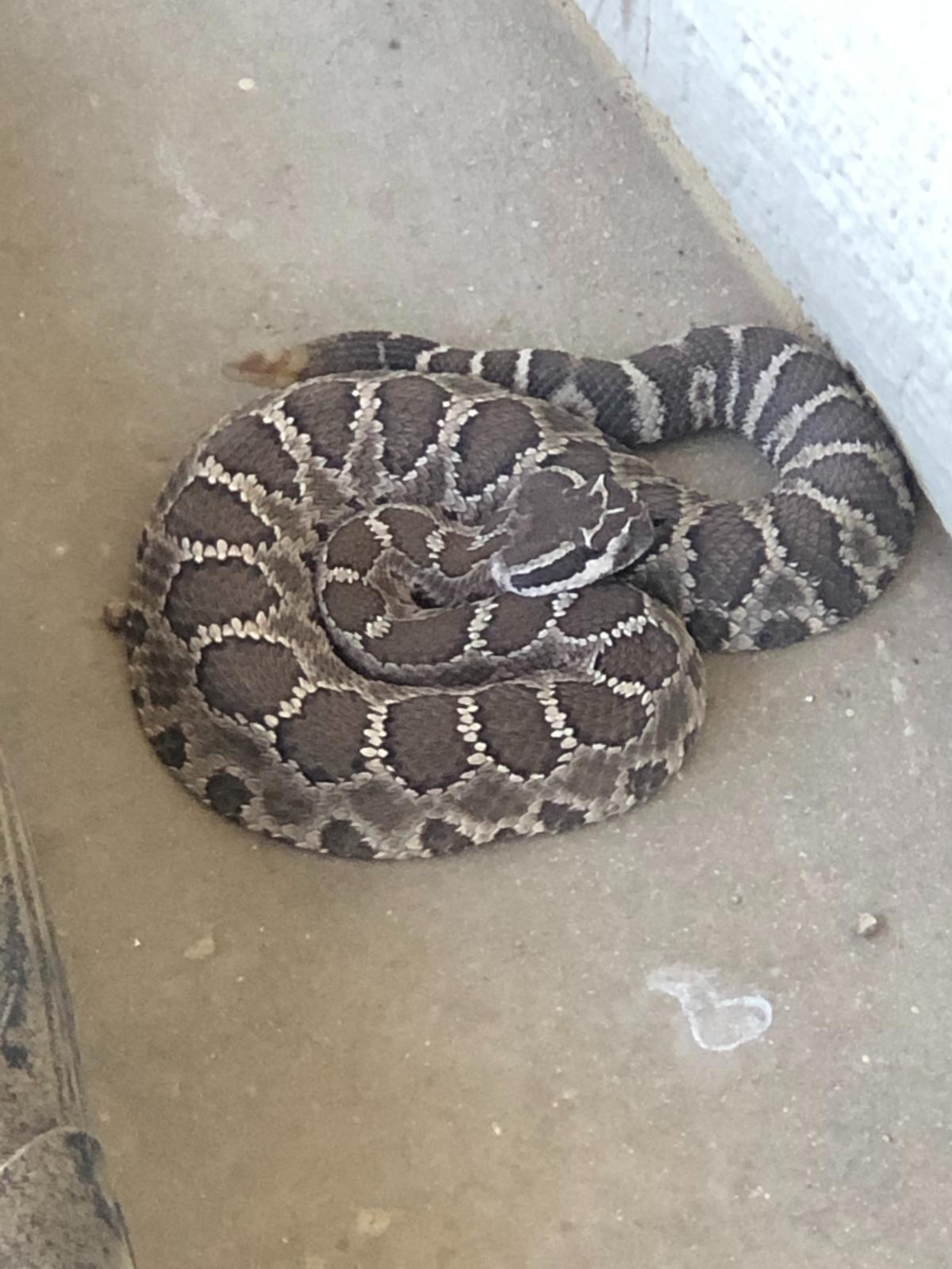
Rattlesnakes are at the mercy of their environment, said biologist Hayley Crowell, a former Cal Poly student and the lead author of the new study. Crowell is a doctoral student at the University of Michigan.
Still, the animals have adapted to their conditions, and need very little food to exist — only one or two ground squirrels a year, she said.
So what happens if temperatures go up?
California’s Central Coast, like much of the rest of the world, is likely to see major environmental changes in the coming decades.
San Luis Obispo County is expected to see a rise of about one degree Celsius — or, 1.8 degrees Fahrenheit — in annual average temperatures over the next few decades, according to the California Energy Commission.
The researchers wanted to figure out how snakes might handle this warming.
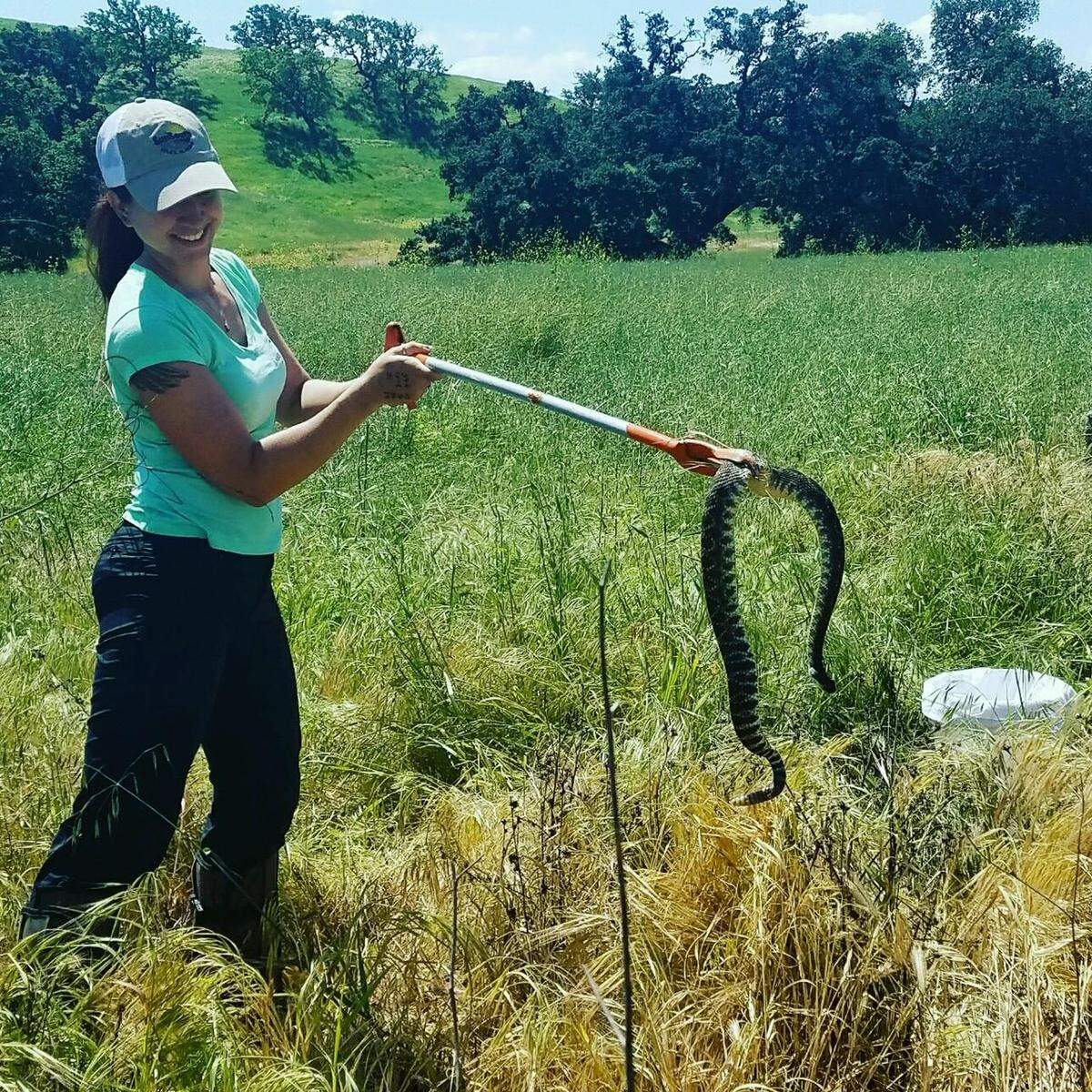
Cal Poly researchers study rattlers on Central Coast
As a Cal Poly graduate student, Crowell joined Taylor and a group of researchers from the San Luis Obispo university and other institutions to study rattlesnakes living in two different regions in San Luis Obispo and Santa Barbara counties.
Close to the coast, at Montaña de Oro State Park near Los Osos and Vandenberg Space Force Base near Lompoc, rattlesnakes live in relatively mild temperatures.
Farther inland, at Chimineas Ranch in Carrizo Plain Ecological Reserve in southeastern San Luis Obispo County and at the University of California’s Sedgwick Reserve near Santa Ynez, temperatures average several degrees warmer.
From June 2017 to June 2018, the researchers measured the temperature throughout the day at each of these sites, monitoring all the places snakes might hang out — including in burrows, in the open and in the grass.
They collected snakes from each study site and brought them back to the reptile laboratory at Cal Poly to figure out how warm the snakes would prefer to be.

In Cal Poly’s lab, there were no rocks for snakes to hide under or sun rays for the reptiles to soak up to reach their preferred body temperature.
Instead, the researchers put the snakes in a long cage that was cold on one end and warm on the other.
This gave the snakes a chance to physically indicate which temperature they prefer without having to worry about becoming another animal’s dinner, Crowell said.
The snakes positioned themselves in the part of the cage where they were most comfortable — at around 85 degrees Fahrenheit.
This is several degrees warmer than the average temperature rattlesnakes experience in their natural environment on the Central Coast, both in the coastal regions and those further inland, Crowell said.
“They’re not living at their preferred body temperature,” she said.
Unlike many other species that scientists warn will be adversely affected by rising temperatures caused by climate change, these rattlesnakes actually seem to prefer warmer weather, said Taylor, one of the authors of the study.
”They might like it a little bit toastier in the environment than what it actually is (today),” Crowell said.
This means that we might not have to worry as much about how rattlesnakes will fare with climate change, said Breanna Putman, a biologist at CSU San Bernadino.
“You could focus conservation efforts elsewhere,” she said.
More snakes in rattlesnake country
A slightly warmer climate could translate to more hours of the day when snakes are at their preferred temperature and more times in the year when snakes are active, Crowell said.
It also means a longer breeding season, Putman said, indicating more rattlesnakes could be born each year.
As an increasingly larger snake population seeks ever-scarcer water resources during more frequent droughts, California residents could see more snakes in the coming years.
“Rattlesnake country on the Central Coast is going to get more rattlesnakey,” said Taylor.
This story was originally published July 8, 2021 at 2:21 PM with the headline "California could see more rattlesnakes in future due to climate change, new study says."