
Water? Housing? Sewers? Debate over which Stanislaus pocket-area projects to fund
As Stanislaus creates a framework to spend millions of dollars on improving county islands and urban pockets, there’s disagreement among residents on how and where the money should be invested.
Some community leaders want housing to be the priority, others are desperate for water. A Latino leader says west Modesto should be first in line for annexation.
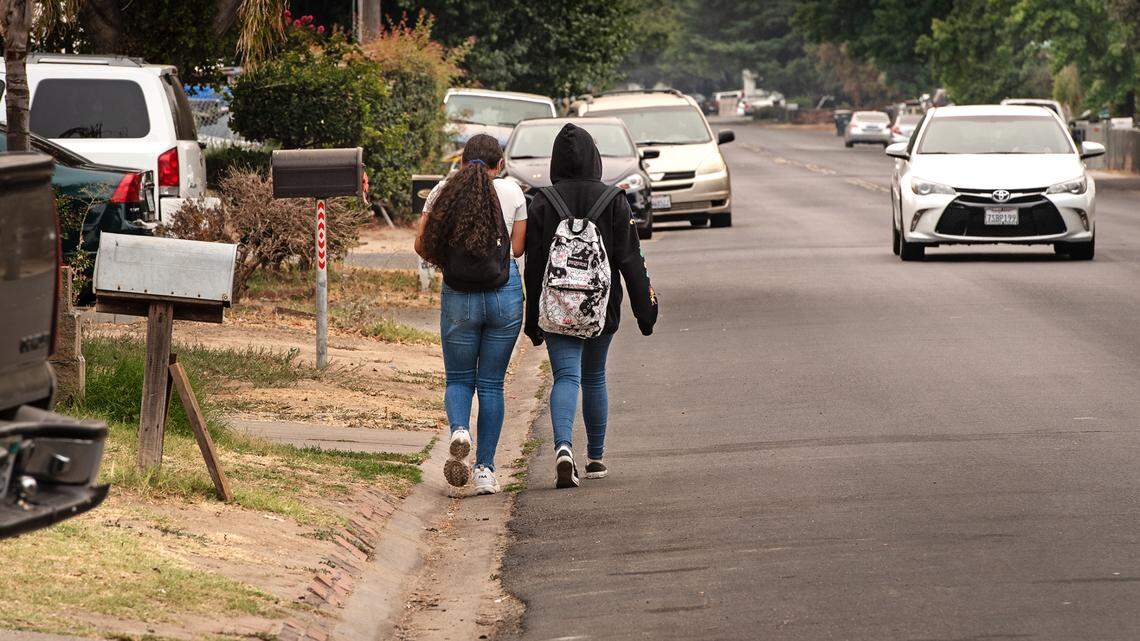
People living in unincorporated county islands in Stanislaus have long gone without basic needs. Dark streets, unpaved sidewalks, lack of sewer and potable water systems are everyday realities for many residents.
But funding from the American Rescue Plan Act will allow $50 million to be put toward bettering unincorporated neighborhoods in the region within the next few years, according to the county. It’s one of the biggest allocations toward community infrastructure the county has received in some time, yet Raul Mendez, assistant executive officer for Stanislaus County, said the money will make only a dent.
“If we fall short, it is still OK, because the infrastructure is going to be better,” he said. Mendez explained the funding may address only some needs, but that means future investments can go to improving other areas.
The county estimates improvements in urban pockets among Modesto, Turlock, Ceres and Riverbank total $453 million. That’s not including an additional $178 million needed to improve the 13 county communities, which include Cowan, Crows Landing, Del Rio, Denair, East Oakdale, Grayson, Hickman, Keyes, Knights Ferry, Monterey Park, Salida, Valley Home and Westley.
Mendez added that the ultimate goal is to bring these islands up to city standards so they can be incorporated into the cities. In 2011, the county Board of Supervisors determined that installation of sewer mainlines, potable water systems and storm drainage were top priorities.
While urban pockets and communities remain a focus, Mendez said the county is reassessing to determine if addressing those issues first is still the better approach. “We’re hoping to be able to utilize these funds in a way that serves our community best,” he said.
However, Miguel Donoso, Hispanic Task Force activist, feels the county is wasting time because leaders already know what residents have been asking for, citing a 2004 lawsuit filed by Latino residents against the city and county. “The Board of Supervisors act like they don’t remember what happened,” he said in Spanish.
In the lawsuit, residents claimed the city and county were discriminating against them by neglecting their communities. Donoso said it hurts to see that unincorporated residents continue to face neglect in their communities, despite repeated federal orders, such as Senate Bill 244 and Executive Order 13958, that call for equity among disadvantaged populations.
Housing shortage remains a concern
Latricia Beasley-Day, Faith in the Valley community organizer, said she’s glad the county is reassessing, because she feels building housing should take priority, given that the pandemic has exacerbated the crisis. “I understand the sewer (issue). I do want good water,” she said. “I’m not saying that shouldn’t be a priority, but when you’re reassessing, look at where we are today.”
Her colleague Anthony Arauza said he knows of a couple in Modesto who, even though employed, have to live in a motel because they can’t find housing. “We just want the people who are most often forgotten about … to be included on these plans,’ he said.
Perfecto Munoz, chief executive officer at West Modesto Collaborative, also agrees with the county’s reassessment, adding that affordable housing could result in real change for the region. “There are many families that are paying rent anywhere from $2,400 a month. … That’s a house payment,” he said.
Munoz said he hopes the county evaluates the resources it has before it invests, like partnering with Habitat for Humanity, which can help place resources in areas lacking infrastructure.
Aaron Anguiano, Latino Community Roundtable president, said he feels west Modesto should be the first to be annexed, given its proximity. “When you go around the city and see these pockets you think .... what happened? This is a different world,” he said.
As a landlord of a west Modesto home, Anguiano said he worries about the septic tank of the 1950 house failing. With the median household income being a little over $37,000 in west Modesto, according to Data USA, Anguiano said most residents probably wouldn’t be able to afford repairs.
Outer reaches left to suffer?
John Mataka, president of the Grayson Neighborhood Council, said his concern is that funds won’t reach the outer regions of the county and that those areas will continue to suffer. “For us … a fix on the water issue would mean a whole lot,” he said.
Although Grayson provides a water storage tank for its residents, Mataka said not many people use it because the water doesn’t taste right. He believes the water quality may be a result of old pipes, which often burst, causing road destruction, yet continue to be patched as an easy fix.
The substandard taste and a moratorium on the installation of new connections in Grayson force residents to buy from bottled water dispensers multiple times a week so they can drink and cook. Mataka said it also limits the region’s prosperity as it keeps low-income housing and new businesses from being built because of the lack of infrastructure.
All Rescue Act funds must be used no later than the end of December 2024 and Rescue Act-funded projects are required to be completed by the end of 2026, states the county. County officials will work with its cities, which have also received funds, to leverage resources and find areas of compromise that can help make the dollars stretch, Mendez said.
Over the next couple of months, the county will seek input from residents, municipal advisory councils, nonprofits, community service districts, school districts and other public entities throughout the county, before it brings its plan to the board for approval.
This story was originally published August 11, 2021 at 4:00 AM with the headline "Water? Housing? Sewers? Debate over which Stanislaus pocket-area projects to fund."
