
Wildfires, drought and blackouts: California’s climate change nightmare is already here
After last year’s historic wildfire season, two nights of blackouts and a dry winter that raised alarm bells about another drought, California knew a difficult summer lay head.
Then things really turned bad.
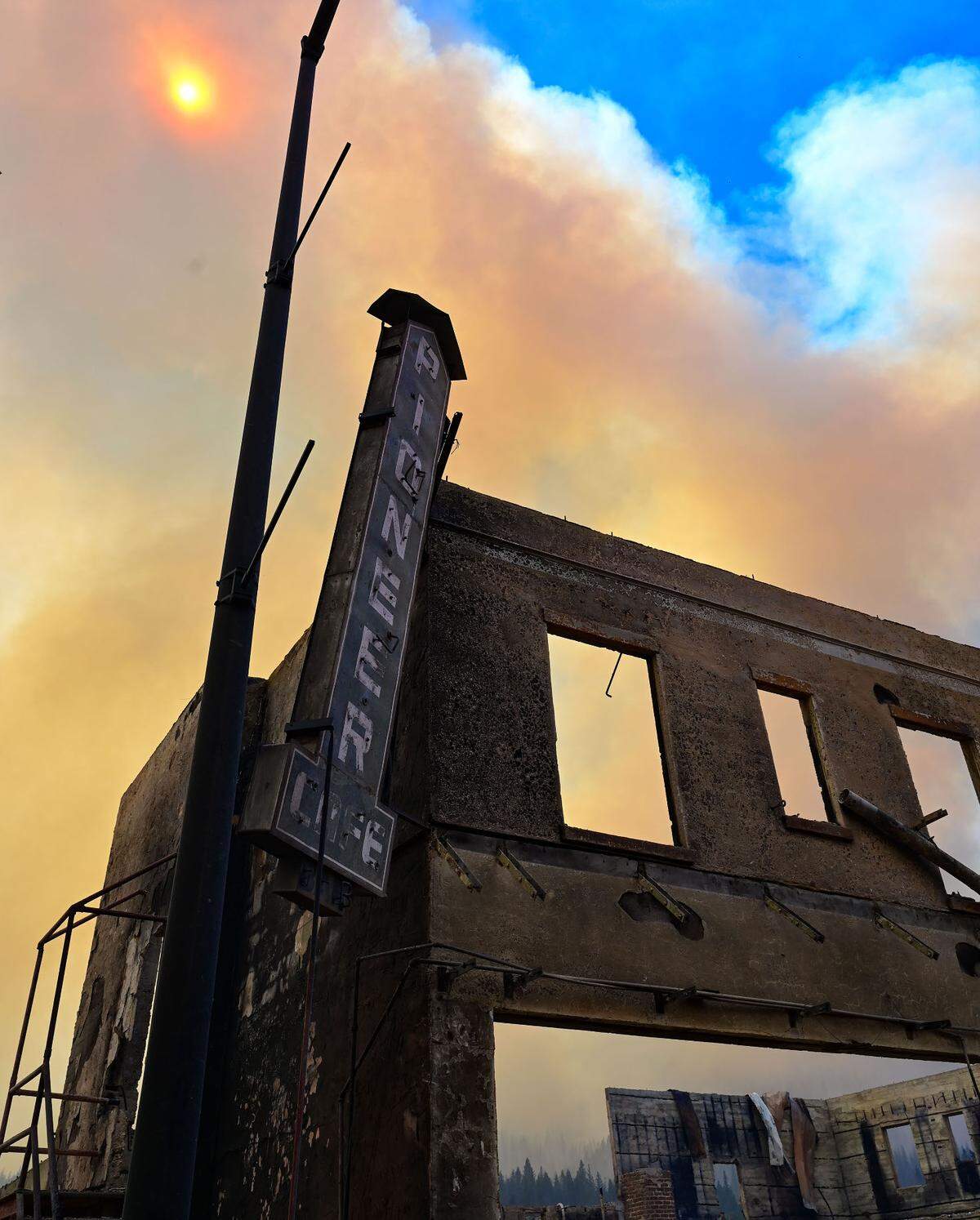
A spring heat wave dried up the snow in the Sierra Nevada, ushering in one of the worst droughts on record. Grasslands and forests burst into flames across Northern California, and the Dixie Fire — the second largest in California history — leveled most of the community of Greenville in Plumas County. The Caldor Fire in El Dorado County just recently wiped out the town of Grizzly Flats and forced the evacuation of Pollock Pines.
A series of 110-degree days nearly pushed the state into another round of blackouts.
Sometimes, the forces fed off each other. As the drought worsened and water levels plunged to historic lows at the state’s reservoirs, California officials took the unprecedented step of shutting down an important hydro power plant. That put additional stress on the state’s overtaxed electric grid.
Welcome to the summer of climate change.
No longer a distant phenomenon — something to worry about in a few decades — the consequence of a warming planet has arrived in a resounding fashion.
Most Californians probably didn’t need to read the recent doomsday report by the Intergovernmental Panel on Climate Change to know that their lives are being upended already by climate change. Now they must fret about their electricity being shut off, their faucets running dry and their houses catching fire. If they needed further convincing, Northern Californians could simply step outside last week and smell the smoke from the Caldor Fire.
“It’s becoming something that’s really visceral, that you can taste. It’s not polar bears in 2050,” said Michael Wara, a Stanford University legal expert who has advised the Legislature on climate, wildfires and energy issues.
The events and their meaning have become impossible to ignore — not with smoke from the worst fires in the West having blanketed the air as far away as New England. The changes in the atmosphere — the incremental rise in average temperatures — are finally being recognized on the ground.
“It’s not like it’s suddenly become true this year, but it’s suddenly become apparent to people,” said Daniel Swain, a climatologist at UCLA. “It’s an increasingly big part of the picture as to why the drought is as severe as it is, why the fires are behaving as extremely as they are. … We’re realizing it in spades now.”
Climate change and wildfires
Plumas County is in one of the most politically conservative parts of the state, a rural county where Joe Biden lost decisively last November to Donald Trump. The election came two months after then-President Trump, during a trip to Sacramento to discuss wildfires, stunned top California officials by claiming the Earth was cooling instead of warming.
Climate change? Not usually a big topic in Plumas County. “There’s a lot of folks who probably didn’t believe in it up here,” said Kevin Goss, a county supervisor.
Then the Dixie Fire destroyed most of tiny Greenville’s Gold Rush-era business district. Among the buildings destroyed was the one housing Goss’ pharmacy, and the disaster has opened plenty of people’s eyes.
“I’m not an expert on climate or weather, but I know this isn’t normal,” Goss said.
Climate change doesn’t start wildfires. The vast majority of fires are caused by human activity. Some of the worst fires in recent times in California were blamed on faulty PG&E Corp. equipment.
But climate change, by excessively drying out trees, chaparral and other vegetation, is setting the stage for more extreme fire behavior. PG&E says 15% of its service territory was considered highly vulnerable in 2012; that had grown to more than 50% by 2019.
And as California continues to build housing in rural, heavily forested areas, more of its residents are in harm’s way.
“We’re in a place where there’s zero margin for error … a situation that’s intolerant of even small mistakes,” Wara said.
The 2018 Carr Fire, which killed eight people in the Redding area, was started when a trailer tire blew out, the rim scraped against the pavement, and sparks flew into the dried-out brush. The Dixie Fire, while still under investigation, appears to have been caused by a healthy tree making contact with a PG&E power line.
Little wonder, then, that 10 of the 20 largest wildfires in modern California history have occurred in the past four years.
And in yet another example of how one factor leads to another, the state’s wildfires are adding copious amounts of carbon into the atmosphere, undermining California’s costly and longstanding efforts to reduce greenhouse gas emissions.
The California Air Resources Board estimated that last year’s record fires released 123 million tons of carbon into the air.
That was 10 times the usual annual volume of greenhouse gases created by fires. It was also nearly as much carbon as all the passenger vehicles in California generate in a normal year — and twice as much as all of the state’s electrical power plants produce.
‘Things are changing’
Getting a handle on this won’t come cheap.
Cal Fire’s budget is up to $2.8 billion in the current fiscal year. The federal government, which owns 57% of California’s forest lands, is vowing to ramp up its spending. Agriculture Secretary Tom Vilsack, touring California recently, said the Forest Service is in line for billions of additional dollars in President Biden’s infrastructure bill. PG&E and the other big California utilities are spending billions on wildfire safety measures every year now, with customers and shareholders splitting the tab under a plan laid out by the Legislature in 2019.
“This is going to be more expensive than it was 20 years ago,” Wara said. “That’s the cost of climate change. ... We’re in a much more challenging situation.”
The very nature of firefighting has been affected, too. Brian Rhodes, the Forest Service’s deputy director for fire and aviation management in California, said the agency’s firefighters used to be able to make a lot of progress at night, when the rate of a fire’s spread would naturally slow down.
Not with these dry conditions, though. The Dixie Fire, for example, “will sometimes burn more at night than during the daytime,” he said. “Things are changing.”
Wara said he’s encouraged that California policymakers are coming to grips with the problem — focusing, for instance, on “home hardening” programs to retrofit houses in dangerous areas with fire-resilient roofs.
But progress can be difficult, and climate change is making tamping down the risk harder.
Take forest management, for example. A broad consensus of fire scientists asserts that California’s fire-prone lands must be managed more aggressively by thinning out overgrown forests and conducting “prescribed” burns to remove flammable vegetation. But as fire seasons get worse, we have less time for those preventive projects.
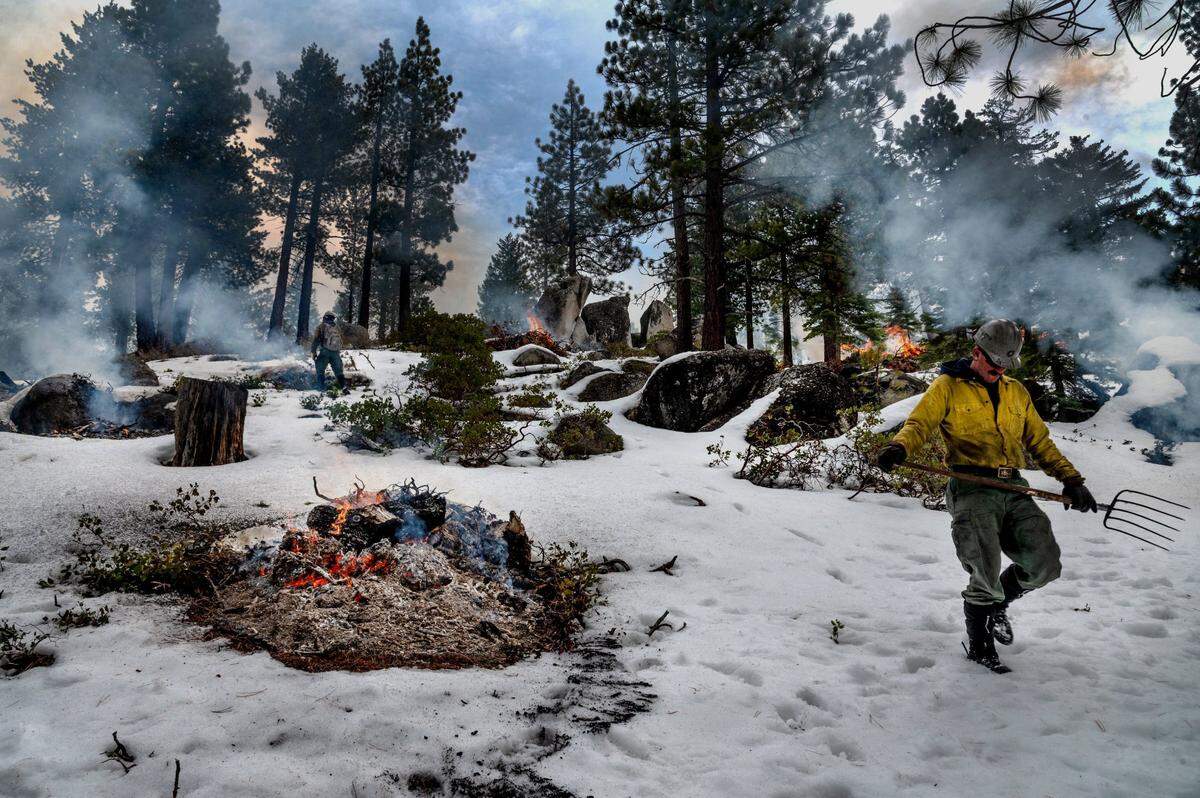
“With a roughly year-round fire season, those windows of opportunity are getting smaller,” said Anthony Scardina, the Forest Service’s chief forester in California.
To Swain, the UCLA climatologist, that means California won’t be able to attack the root cause of its fire problems.
“We’re at this crisis point,” Swain said. “We’re kind of stuck. We’re spending billions of dollars a year on suppression because we have to. The problem is getting bigger and bigger, and we’re putting Band-Aids on it, and the underlying condition is getting worse.”
Science shows effect on California
It was the quote heard around the world. Antonio Guterres, the secretary-general of the United Nations, brought a sense of apocalyptic doom to the release of a recent report by the U.N.-affiliated Intergovernmental Panel on Climate Change that argued many of the results of global warming are already irreversible.
Guterres called the report “a code red for humanity.”
So does that mean it’s too late to do anything about climate change?
No — far from it. But the rise in temperatures is reaching a point where the definition of success in the fight against climate change is becoming more and more limited.
Michael Goss — a Stanford researcher and no relation to the Plumas County supervisor — has been studying autumn weather patterns in California and the West and how they affect wildfire risks. His conclusion is that conditions are likely to worsen, but the severity could differ greatly.
According to his research, the number of “extreme fire weather days” could increase by more than 40% by the end of the 21st century if greenhouse gas emissions continue to soar. But if emissions can be reined in, the increase in extreme fire days would be less than 20%.
“Even if there’s some sort of built-in aspect of climate change that we’re not really going to be able to change by reducing emissions, there’s still some significant benefit to be had by reducing emissions and mitigating some of that enhanced risk,” Goss said.
Scientific studies of climate change have become an industry unto themselves — particularly in California. A slew of reports produced in the past year is demonstrating with astonishing clarity how rising temperatures are already making Californians less comfortable — and more vulnerable — than ever.
The dismal effects start in winter, when California should be enjoying months of rain and snow. Climate change is fouling up the calendar.
The start of the rainy season has been progressively delayed in California since the 1960s, causing the season to become “shorter and sharper,” according to a recent study published in the journal Geophysical Research Letters. Lead author Jelena Luković, a geographer, said the postponement adds up to an average of 27 days and has implications for drought and fire.
“The later start of the rainy season means that the fire season is getting longer, and drought season is then prolonging,” said Luković, a former visiting scholar at the University of California Berkeley who teaches at the University of Belgrade in Serbia.
Robbing California’s climate of humidity
Also contributing to the worsening fire seasons: plummeting humidity levels. Fire scientists say California summers have been getting progressively drier, making grasslands and forests increasingly flammable.
Karen McKinnon, a UCLA climatologist, can tell you just how much drier it’s gotten: Humidity levels on the hottest and driest summer days have fallen 22% since 1973 in California and elsewhere in the American Southwest.
McKinnon led a team of researchers studying data from 28 weather stations across the Southwest. When they limited their calculations to California and Nevada, the results were even more distressing: a 33% drop in humidity on the hottest days.
It’s a prescription for disaster.
“Fire weather is worst when you have high temperatures and low humidity,” said McKinnon, who wrote about the phenomenon in a recent study in the journal Nature.
It also puts more pressure on California’s water supplies. The drier the weather, the more water evaporates from the reservoirs, she said.
McKinnon believes the actual rate of growth in temperatures is progressing at the predicted pace. But people are feeling the effects more quickly than predicted, including the heat waves and poor air quality due to wildfire smoke.
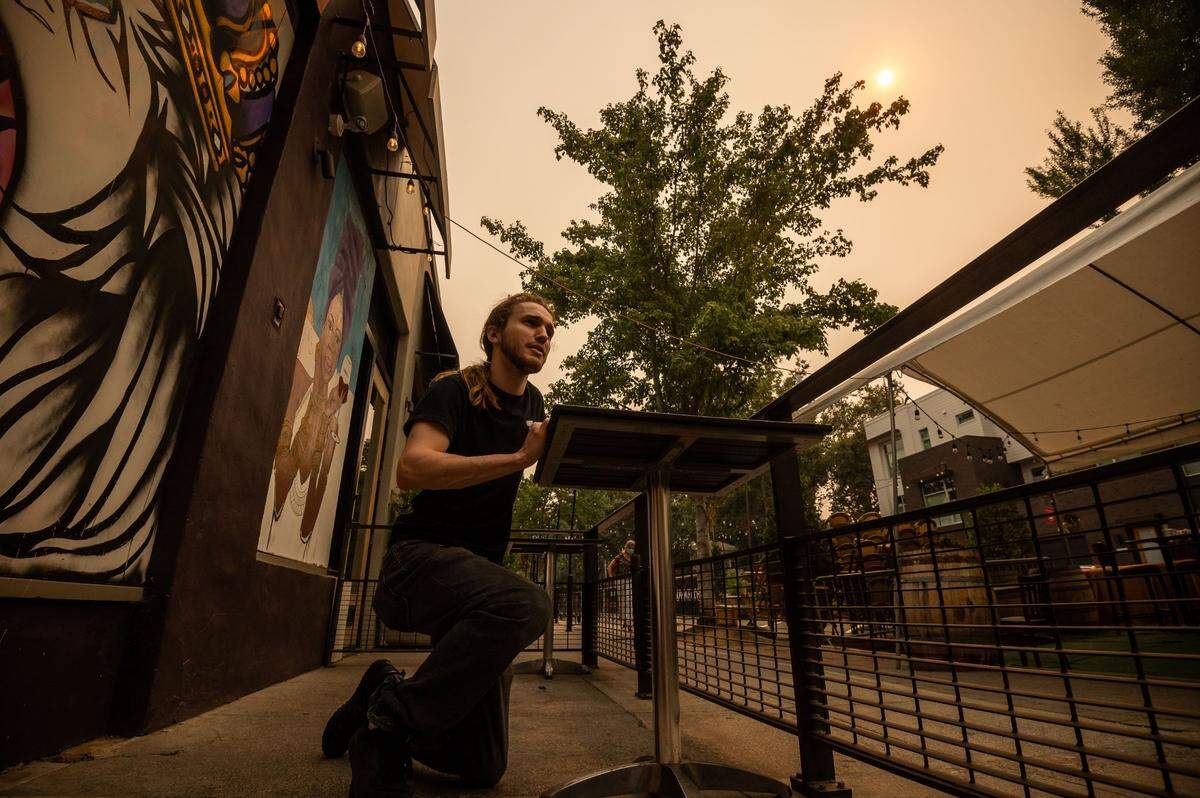
“I don’t think that the pace of climate change is faster than anticipated, but I do think that people are starting to very viscerally understand how this pace of climate change maps on to what they experienced in their everyday life,” McKinnon said.
And if you think the summer’s been bad, just wait a few weeks.
Goss, the Stanford researcher, recently led a team that examined temperatures, wind speeds and humidity levels in California. Their results, published last year in the journal Environmental Research Letters, showed the frequency of autumn days with extreme fire-hazard weather in California has more than doubled during the past 40 years.
Goss said the culprit is clear.
“Climate change has increased the number of high-risk wildfire days in multiple locations in California,” Goss said.
How the drought suddenly worsened
The snowpack atop the Sierra Nevada is a crucial piece of California’s water system, acting like an auxiliary reservoir that can provide a third of the state’s water supply in a good year.
This year, despite a second straight dry winter — one of the driest on record — the snowpack didn’t appear to be in terrible shape. In the Northern Sierra, for instance, the state’s measurements showed that snow levels were 34% below average in early April.
Bad, certainly, but not awful.
And then the warm weather came: a few weeks of temperatures well above average.
By early May, the snowpack had practically disappeared. Instead of delivering water into the reservoirs, as it normally does, much of it evaporated or trickled into forest land soils that had been cheated two winters in a row.
Before water reaches the reservoirs, “the forests get first dibs,” said Roger Bales, a hydrology expert at UC Merced.
.JPG "SAC_DJI_0728 (1).JPG")
The Department of Water Resources says California’s reservoirs lost an estimated 800,000 acre-feet of water, nearly enough to fill Folsom Lake.
And suddenly, the drought was here — a very bad one, in all likelihood worse than the drought that was declared over in 2017.
Scientists say global warming isn’t responsible for droughts. But it intensifies them. The disappearance of the snowpack wrecks the state’s carefully laid scheme for replenishing its reservoirs. This latest drought is further evidence that climate change is bearing down more quickly than previously imagined.
“This is kind of what we think a 2040 drought would look like,” said Jeffrey Mount, a geologist and water analyst at the Public Policy Institute of California.
The ramifications of the drought are arriving about as quickly as the drought itself did.
Most California farmers are losing all or almost all of their “surface water” — the supplies tapped directly from rivers or delivered via reservoir and canal by the State Water Project or the federal Central Valley Project. The Department of Fish and Wildlife has warned that “nearly all” of an already endangered salmon species’ juveniles could be cooked to death in the too-warm waters of the Sacramento River this year. Gov. Gavin Newsom — having declared drought emergencies in 50 of the state’s 58 counties — has urged urban Californians to voluntarily cut water use by 15%.
And, as if to rub it in, the drought forced state officials to shut down the big hydropower plant at Lake Oroville in early August. It was the first time that had ever happened because of low water levels.
All told, the state has lost an estimated 1,000 megawatts of hydropower to the drought — enough electricity to serve 750,000 homes.
Blackout risk rises on fragile power grid
A month before the Oroville hydro plant closed, California appeared to be heading toward a power crisis.
On the weekend of July 10, temperatures soared past 110 degrees in much of California, ramping up demand for electricity. Billowing smoke from a massive wildfire in Oregon, the Bootleg Fire, was interfering with transmission lines designed to bring electricity south to California — depriving the state’s power grid of an estimated 5,500 megawatts.
It looked like a return to August 2020, when a heat wave engulfing the West forced two nights of rolling blackouts in California. The Independent System Operator, which runs California’s grid, declared a Stage 2 emergency — the last step before ordering blackouts. Even the Sacramento Municipal Utility District, whose power supplies are generally more secure than California’s as a whole, was losing electricity to the Bootleg Fire and called on customers to turn their thermostats up to 80 degrees.
Ultimately, the system held. Californians conserved enough energy — barely — to avoid blackouts. But climate change is straining the grid as never before, in the form of punishing 110-degree days.
Even if there’s plenty of power, climate change can turn the lights out, as when utilities impose “public safety power shutoffs” when wildfire dangers intensify.
PG&E blacked out vast swaths of its service territory during the October 2019 windstorms and instituted seven more shutoffs last year. This year, PG&E cut off electricity to 371,000 customers in January, when the drought was already turning the rainy season dry. And customers in 18 counties were subjected to another power shutoff last week.
These wildfire-safety outages are different from the rolling blackouts that occur when demand outstrips supply, although the results are the same.
In a sense, the state’s response to climate change is complicating the reliability of its electricity supply and making California more vulnerable to the rolling blackouts.
California gets about one-third of its electricity from solar, wind and other renewable energy sources. That’s about as much as it gets from natural gas-fired generating stations. The Legislature has decreed that California’s grid must be 100% renewable by 2045.
Trouble comes on extremely hot days, in the few hours after the sun goes down but before the temperatures drop. The solar power dissipates quickly, and the state is left vulnerable.
California’s dependence on solar power wasn’t the only reason for last summer’s blackouts; the unexpected shutdown of some gas-fired plants contributed to the debacle. But state officials are rushing to deal with the perils associated with a transition to an all-green electricity system. They’re encouraging the installation of industrial-sized batteries that can store the excess energy produced by solar panels.
While some “battery farms” have opened already, the state still faces the potential for more tight squeezes this year.
Severin Borenstein, an Independent System Operator board member, said it’s going to take a while to develop the battery infrastructure needed to secure the grid. The same is true for the type of pricing mechanisms required to give Californians an incentive to reduce energy consumption when it counts.
“The challenge came up much faster than anyone thought,” said Borenstein, a UC Berkeley energy economist. “It’s going to be touch and go for the next few years.”
And sometimes that means compromise. In late July, to stabilize the power grid, Newsom ordered a temporary relaxation of air-quality standards to allow for more backup generators to spring into action when necessary.
Last week, the California Energy Commission, invoking Newsom’s order, approved the rapid deployment of five small, temporary gas-fired power plants that are being purchased by the Department of Water Resources. They’re expected to be available this fall. “We are in an emergency situation,” Energy Commission member Siva Gunda said.
Should California compromise on climate?
As a rule, when it comes to climate change, Newsom doesn’t like a compromise.
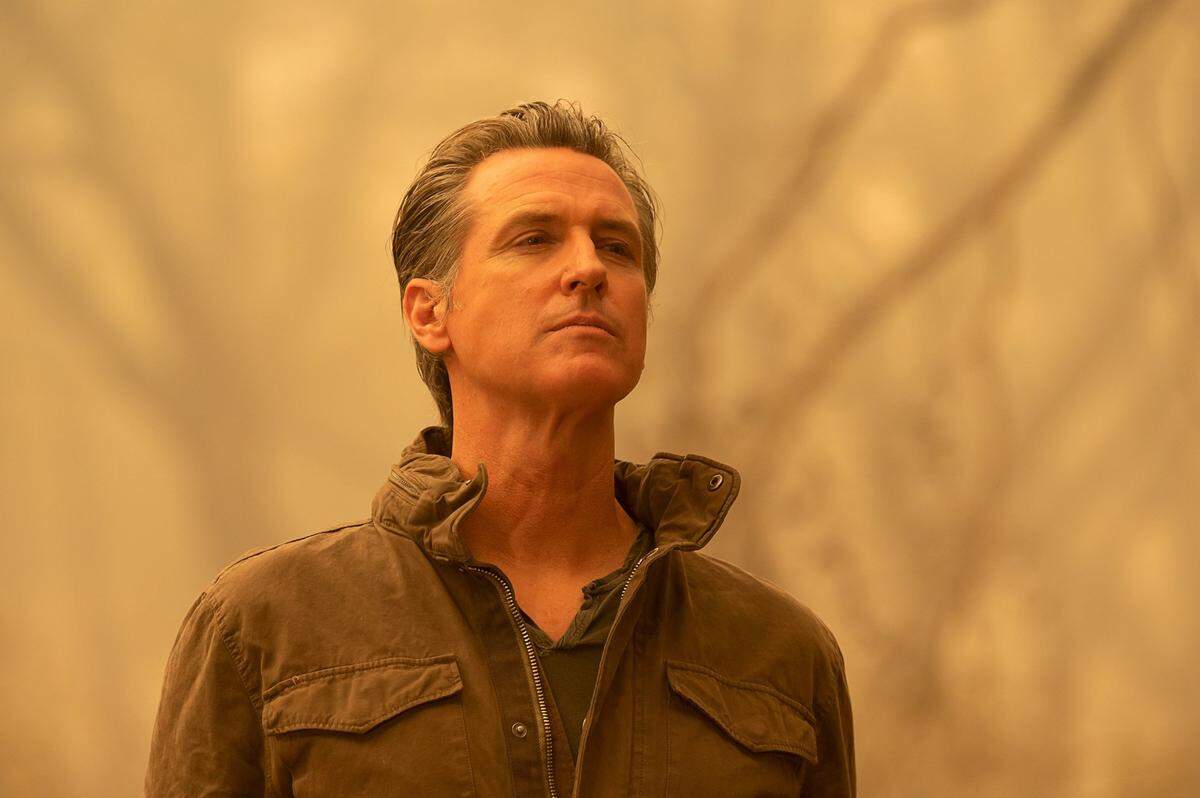
Last September, the governor visited Lake Oroville to see the damage done by the North Complex Fire, which had just killed 15 people in nearby Berry Creek. He was irate that day, venting his anger against those who would deny the realities of climate change. He vowed to turn California’s power grid all-renewable, well before the mandate set by the Legislature.
“I think 2045’s too late,” he said, ash from the fire drifting in the air all around him.
But then a reporter asked him about a decision the State Water Resources Control Board had just made.
A decade ago, the board ordered the shutdown of a fleet of aging power plants — known for polluting the air and killing marine life by sucking in billions of gallons of ocean water to cool themselves down — at the end of 2020. Shortly after the August blackouts, however, the board agreed to postpone the closures of several of the plants until the end of 2023.
Newsom said he agreed with the decision as a way of fortifying the power grid. He called it a “small step back” on climate change.
Now, the state is being asked to take another step back.
Earlier this year, an advisory panel urged the water board to make another postponement. The panel said a Redondo Beach power plant, which was given a partial reprieve last fall but is due to be closed this December, should stay open until 2023.
The reason, once again, is the fragility of the power grid; the plant has a generating capacity of 834 megawatts, enough for 625,000 homes. The state water board is likely to vote on the deferral in October.
The possibility of another reprieve for the plant, operated by Virginia-based AES Corp., has city officials fuming. They say the plant is a clunker that needs to go.
“It’s polluting a very densely populated area of the coast,” said Redondo Beach Mayor Bill Brand.
Brand said he understands the need to keep the lights on. But he said it would be insane to prolong the life of a power plant that he says is notoriously unreliable and at the same time is a source of greenhouse gases. And he said the state should have planned better for the retirement of the Redondo Beach plant.
“The state is saying the entire system is reliant on one 70-year-old power plant,” the mayor said. “We don’t see how operating a 70-year-old plant … is either going to maintain grid reliability or advance our climate goals.”
This story was originally published August 22, 2021 at 5:00 AM with the headline "Wildfires, drought and blackouts: California’s climate change nightmare is already here."