
Exclusive: California correctional officer alleged cover-ups in prison killings before his death
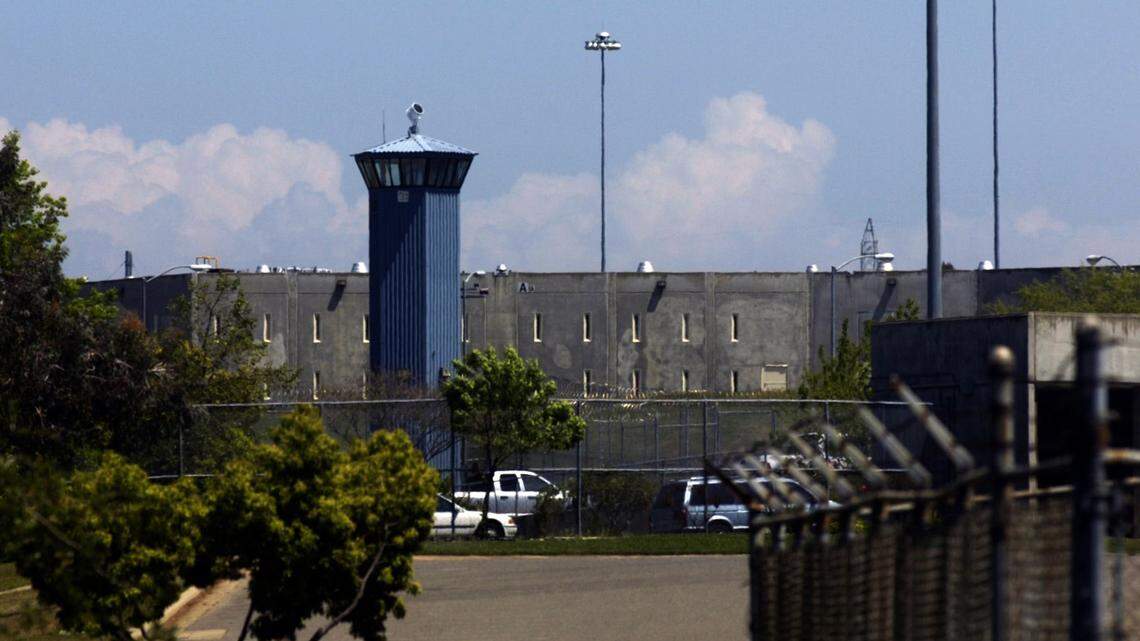
A correctional sergeant who worked at a state prison outside Sacramento killed himself this summer after reporting corruption, harassment and cover-ups to prison officials and attorneys.
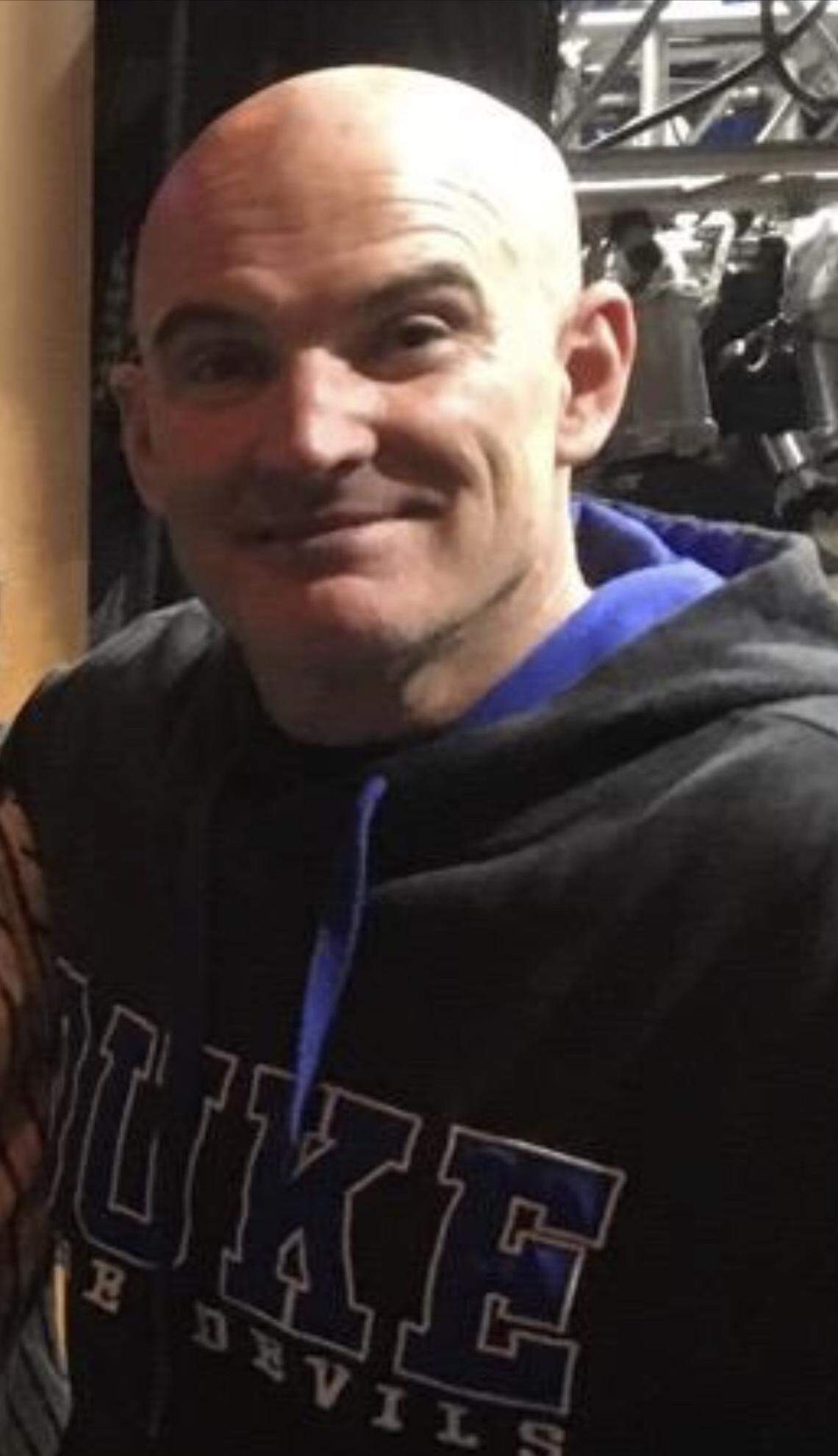
Sgt. Kevin Steele, 56, a member of an in-house detective unit at California State Prison, Sacramento, was found dead Aug. 20 on the grounds of a home in Miller County, Missouri. The county’s coroner ruled his death a suicide.
Early this year, Steele wrote memos to the prison’s warden and the state corrections secretary in which he relayed allegations that officers in his unit had planted weapons and drugs, falsified documents and played video games at work. The Sacramento Bee obtained the memos after his death.
Steele, at the time of his death, was secretly coordinating with attorneys in two lawsuits against the corrections department in cases where he believed evidence had been suppressed or faked, according to two lawyers.
His was the second recent death within the prison’s Investigative Services Unit, an elite group that investigates crimes committed inside the institution. Valentino Rodriguez, 30, a member of the same unit, died of an accidental fentanyl overdose at his home in West Sacramento a year ago.
Both men were harassed, threatened and mistreated by other officers in the unit, ultimately driving the men from their jobs and damaging their mental health, according to Steele’s memos and texts and notes Rodriguez left on his phone.
The allegations in Steele’s memos, and his previously confidential statements to attorneys, paint a broader picture of misconduct inside the prison known as New Folsom than has been reported.
The prison is a violent, maximum-security institution whose inmate population is segregated by gang affiliation and includes a group of offenders with severe mental illnesses considered too dangerous for the state’s mental hospitals.
The institution is facing scrutiny both from the FBI and from the state Department of Corrections and Rehabilitation, which have open investigations into alleged officer misconduct.
The FBI cases center on allegations that officers covered up their roles in at least two inmate deaths. Steele played a role in drawing attention to one of the deaths, in which an inmate who was handcuffed to a chair was stabbed to death, according to a January memo he wrote to New Folsom warden Jeffrey Lynch.
The state, meanwhile, is investigating members of Steele and Rodriguez’s former unit. Ten officers from the unit are facing discipline in an inquiry related to Rodriguez’s death, CDCR spokeswoman Dana Simas said in an email, and the entire unit has been replaced. The agency declined to provide further information.
“We do take every allegation of misconduct by staff very seriously, and work hard to ensure there is accountability when allegations are sustained,” Simas said.
Steele, as the investigative unit’s criminal prosecution coordinator, worked with outside agencies including the Sacramento County District Attorney’s Office to build cases against inmates accused of in-prison crimes. He also led evidence training courses for new cadets.
Four officers who worked with him, who spoke with The Bee anonymously for fear of retaliation, described Steele as a meticulous professional who was generous with his time and expertise.
Steele became friends with Rodriguez’s father, Valentino Rodriguez Sr., after meeting him at the younger officer’s funeral. Steele helped the elder Rodriguez get through a time of intense grief.
“He was just always there to help me in any way he could,” Rodriguez said. “Him and other people from the prison. But of all the people, he was the one who was just there for me in so many ways.”
The harassment suffered from other members of the Investigative Services Unit took a toll, Steele wrote in a Jan. 4 memo to New Folsom Warden Lynch.
He wrote that a colleague called him a “snake” and other co-workers ostracized him after he raised concerns about improper management of evidence stored on CDs, and the mistreatment intensified after Rodriguez’s death.
He wrote a second memo, dated Feb. 8 and addressed to CDCR Secretary Kathleen Allison, accusing prison leaders of responding with “indifference” to his reports of misconduct and to the “victimization” of Rodriguez.
He left the Sacramento area for Missouri the same month. He was out on leave, said Rodriguez and officers who knew him, while remaining employed by the corrections department.
On Feb. 12, the prison banned him from its premises. A memo posted to the prison gate did not say why.
Employees at the prison assumed prison officials banned Steele to retaliate against him, according to two officers who spoke with The Bee anonymously.
Simas, the department spokeswoman, said in an email that Steele was banned due to a misconduct investigation of him. She said the department “disputes any allegations that this safety and security action was the result of whistleblower retaliation.”
At the end of his February memo, Steele, an Air Force veteran, said he had a clean service record and was committed to integrity.
“I am NOT a disgruntled employee seeking vengeance,” Steele wrote. “Instead, I was a witness to an ISU which became engulfed in corruption and watched as integrity was forced to cower in terror and fear of retaliation!”
‘Rogue officers at CSP-Sacramento’
Investigations have been expanding at the prison since at least last fall.
In November, federal prosecutors charged two New Folsom correctional officers with falsifying records in connection with the 2016 death of a 65-year-old inmate who allegedly was tripped by one of the officers while walking with his hands cuffed behind his back.
The FBI has been investigating claims that officers helped arrange the brutal 2019 stabbing of an inmate who was cuffed to a chair, law enforcement sources have confirmed to The Bee. They allegedly allowed inmates to conduct a “practice run” a week before the killing, according to federal court filings from a defense lawyer.
Attorney John Balazs, who is representing a member of a white supremacist prison gang in a racketeering case, confirmed to The Bee that Steele was the “confidential source” described in federal court documents he has filed. Balazs cited his source — Steele — in claims related to the practice-run killing.
In his January memo, Steele suggested he brought “inconsistencies” related to the initial account of that slaying to the attention of supervisors, supported with recorded interviews.
Balazs has been arguing that the prison isn’t safe for his client, Brant Daniel.
Among other things, Daniel faces allegations that he planned to kill a guard using a shank that was found in his cell. Those allegations are false, Balazs said in court filings, citing the confidential source that he says was Steele.
An April filing from Balazs and another attorney expanded on Steele’s allegations, citing him as “CS.”
“The CS has advised that rogue officers at CSP-Sacramento have planted weapons and drugs in inmates’ cells in order to obtain more overtime, have spread false rumors and relayed confidential information from inmates’ files to other inmates in violation of CDCR policy, and on at least two occasions have been directly involved in the killing of a CSP-Sacramento inmate,” the filing said.
Simas, the corrections department spokeswoman, didn’t directly respond to questions about the allegations in Daniel’s case. Prosecutors have downplayed the accusations, calling much of the confidential source’s information second-hand.
Taped and written confession
In a separate civil lawsuit, Steele as a confidential source told an attorney that critical evidence had been suppressed related to an inmate’s death, according to Beverly Hills lawyer Steve Glickman.
CDCR has said inmate Milton Beverly, 29, who was serving a 75-year-to-life sentence for conspiracy to commit murder, killed himself in his cell on Nov. 29, 2016. Glickman has been litigating a wrongful death lawsuit on behalf of Beverly’s family in Sacramento Superior Court.
Steele told him another inmate confessed on video and in writing to killing Beverly after a fight over Beverly’s phone usage, Glickman said.
Steele’s job included transmitting evidence to the attorney, but when he was looking through the materials to hand over, he noticed the confessions were missing, Glickman said.
“Steele said that he went to the warden and reported that the material was missing,” Glickman said.
Steele told the attorneys he was willing to publicly testify, and was scheduled to do so June 18. But the hearing was delayed after the state Attorney General’s Office told Glickman they needed to provide alternative counsel for the deposition.
The deposition was in the process of being rescheduled when Glickman learned from a Bee reporter Sept. 2 that Steele was dead.
Glickman said his wrongful death lawsuit was originally focused on the family’s allegations that the corrections department didn’t provide adequate medical care to Beverly given his previous suicide attempts.
But Steele’s allegations changed the focus of the case. “It kind of opened up a whole new door of investigation,” he said.
Simas didn’t directly respond to questions about the allegations in Beverly’s case.
The corrections department’s report on Beverly’s death said he was found with a white bedsheet around his neck and tied to a bedpost of the upper bunk and that “a suicide note was found in his property posthumously.”
The report, dated Jan. 11, 2017, said Beverly had asked his cellmate four weeks before his death to help him hang himself, and notes that the night before his death his wife told him in a phone call that she was ending their relationship.
An autopsy conducted by the Sacramento County Coroner’s Office concluded that the “decedent hanged himself in his cell” and that he “was alone in the cell when the incident occurred.”
“No evidence of foul play or a struggle was noted on scene,” the report said.
Officer’s memos allege retaliation
Steele started his correctional career as an officer at San Quentin State Prison in 2001, according to CDCR. He earned a promotion to sergeant and transferred to New Folsom in 2008, where he joined the Investigative Services Unit in 2015.
Steele said in the memos that he always alerted his supervisors to misconduct before going up the chain or outside the agency.
“At every single juncture where I discovered something that resembled corruption, wrongdoing, exploitation, fraudulency and/or breeches of trust, I ALWAYS alerted supervisory staff and institutional leadership, as that is what I thought was the desire of both the administrative staff and the Department of Corrections and Rehabilitation,” he said in the January memo. “However, it would appear that is NOT the desire of either entity.”
In the memo, Steele said he noticed in September 2019 that some Investigative Services Unit officers were handling video evidence in a way that could be considered “fraudulent and potentially criminal.”
The problems revolved around officers inaccurately reporting who had been handling and duplicating CDs with evidence on them, according to the memo. The divergence from protocol could compromise cases, he wrote. He discussed the problems with the officers, according to the memo.
The other officers ostracized him afterward, he wrote. They greeted one another in the mornings but pointedly ignored him when he entered the office, and they talked about him behind his back, Steele said in the memo.
Steele called Rodriguez his friend and “real-life superhero” in the memo. He said Rodriguez told him some ISU officers were planting drugs and weapons on inmates. Officers planted the items late in the afternoons “in an effort to have to work overtime hours to finish the reports,” Steele said in the memo, citing Rodriguez.
Rodriguez died Oct. 21, 2020. Steele met with Lynch the next day, according to his February memo to Allison, the corrections secretary.
“Warden Lynch wanted to know what CO Rodriguez had discussed with me in our phone and text messages,” Steele said in the memo. “I was forthcoming in sharing explicit details of the abuse and torment experienced by CO V. Rodriguez while both employed in ISU and which continued even after he had departed.”
Steele maintained near-daily contact with the elder Rodriguez after moving to Missouri, sharing memes and quotes from the Bible, and was a source of comfort, Rodriguez said.
After his son died, Rodriguez pored over the texts and notes left on his son’s phone, trying to piece together the events leading to his death.
Lately, he’s been reviewing texts and communications with Steele. And he’s missing his friend.
“In some sense I feel like I lost my son over again,” he said.
This story was originally published October 6, 2021 at 5:25 AM with the headline "Exclusive: California correctional officer alleged cover-ups in prison killings before his death."