
Sacramento grocery store owner charged in cocaine ring feds say is linked to Mexican cartel
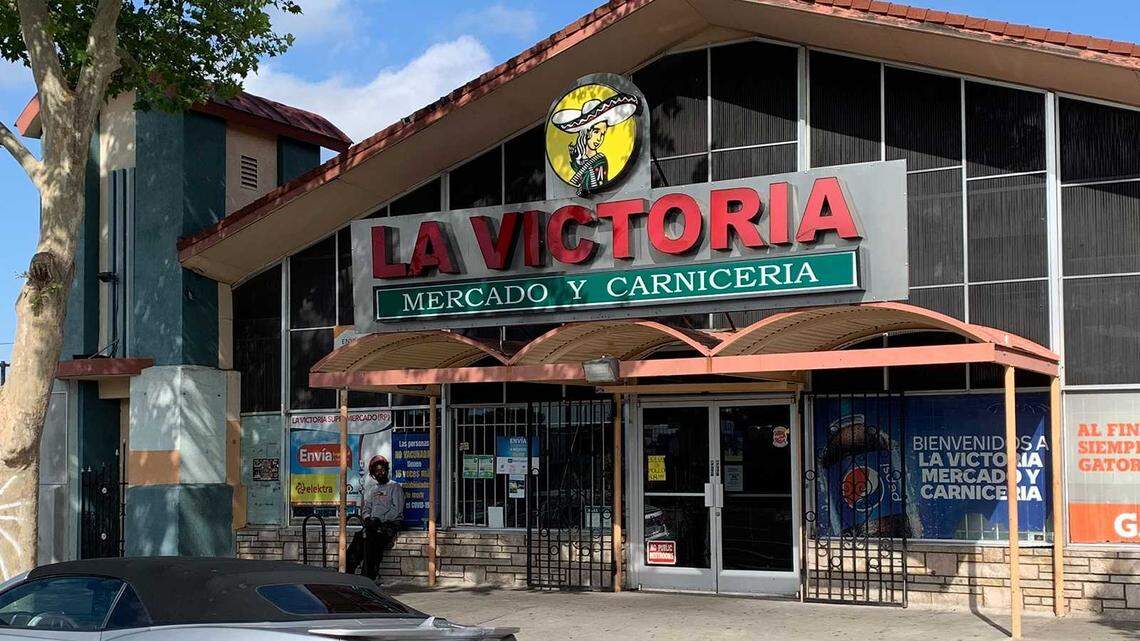
The owner of a small grocery store in Sacramento is among two local men charged last month in federal court, accused in a cocaine trafficking ring with ties to one of Mexico’s most violent drug cartels.
Jose Manuel Chavez Zepeda, 54, was charged in a criminal complaint filed March 14 and recently unsealed in U.S. District Court for the Eastern District of California.
Chavez and Denis Zacarias Ponce Castillo, 37, of Sacramento were each charged with one count of distribution of at least 500 grams of cocaine and one count of conspiracy to distribute cocaine, according to court documents.
Chavez resides in Carmichael and owns La Victoria Supermercado, a Mexican grocery store on Del Paso Boulevard in Old North Sacramento, according to the court filing, which came following an FBI investigation launched in April 2016.
The complaint alleges that Chavez used his store to launder money and managed a network of local “sub-dealers” that included Ponce. It also says Chavez and others would engage in “narcotics related meetings” at the store.
Store, stash house used in Old North Sacramento
The FBI used a confidential informant, and later physical surveillance, to gather information on the activities of Chavez, Ponce and several other alleged co-conspirators including a Ceres man named Mario Naranjo Gonzalez, court documents say.
Chavez used La Victoria Supermercado as a base for cocaine trafficking operations and “to launder proceeds from his narcotic sales,” the complaint says, though he has not been charged with money laundering. The complaint says Chavez laundered this money to “affiliates in Mexico.”
Chavez also ran a “stash house” at a nearby residence in the Old North Sacramento neighborhood, according to court documents, and managed “sub-dealers” in the Sacramento area.
The complaint says one of Chavez’s largest sub-dealers was a man nicknamed “El Ciego” – Spanish for “the blind man” – who works as a mechanic in the Sacramento area. The informant identified El Ciego as Ponce, according to court documents.
Ties to Cartel Jalisco Nuevo Generacion
The criminal complaint says Chavez’s source of cocaine is a person he refers to as “Compadre,” who lives in Mexico.
“Compadre is connected to the Cartel Jalisco Nuevo Generacion, or ‘CJNG,’” court documents say. “The cocaine the (informant) would deliver would be marked with the ‘NG’ (for Nuevo Generacion) stamp on them.”
Jalisco New Generation is considered Mexico’s second-largest drug cartel after the Sinaloa Cartel and is widely known for its use of extreme violence. The cartel is not directly mentioned by name anywhere else in the 68-page criminal complaint, though Compadre is.
The FBI informant said Compadre would arrange for cocaine to be smuggled from Mexico into the U.S. where it was then transported to Los Angeles.
“Once the cocaine reaches Los Angeles, it is then loaded into smaller Nissan trucks and driven to an individual known as ‘Joto’ in Ceres,” whom the FBI identified as Gonzalez, according to the criminal complaint.
The complaint says the FBI informant “ran special errands” for Chavez and delivered cash totaling more than $400,000 to Gonzalez over the course of three trips, which Gonzalez stored “in his garage until he was ready to take it down to Mexico.”
The informant told investigators last July that at one point, Chavez cut out Gonzalez and began to receive cocaine directly from Compadre, according to court documents. Compadre then told Chavez and Gonzalez they needed to work together, and they resumed doing so.
Feds monitored transactions across California
The complaint details numerous transactions of cash and cocaine that allegedly took place from June 2021 through last month, at a variety of locations across California as well as Vancouver, Washington. Agents with the FBI, Drug Enforcement Administration, Homeland Security Investigations and partnering task forces used physical surveillance including court-authorized geolocation data to monitor those transactions.
In June, Ponce and Chavez sold a half-kilogram of cocaine to the informant at Chavez’s grocery store, according to the criminal complaint. The informant, while wearing a recording device, drove to La Victoria Supermercado and gave $7,000 to Ponce from the driver-side window of the informant’s vehicle in exchange for the cocaine, which Ponce delivered in a brown bag, court documents say.
The informant recorded another conversation in July, this one with Chavez, according to court documents.
“Chavez stated he spoke to ‘Compadre’ about the cocaine,” the FBI affidavit summarizing that conversation said. “Chavez made statements regarding the ‘beauty’ and pureness of the cocaine.”
One day after that conversation, Ponce traveled to Gonzalez’s home in Ceres, under apparent instructions by Chavez to pick up 2 kilograms of cocaine, court documents say.
FBI investigators determined Gonzalez would run narcotics and money between Mexico, multiple locations in California including the Sacramento and Modesto areas, and Vancouver, according to court documents.
Hidden compartments found in car during stop
On Oct. 15, deputies with the Sacramento County Sheriff’s Office pulled over Gonzalez during a traffic stop; a search of his vehicle using a narcotics K-9 helped turn up close to $80,000 in a hidden compartment inside his 2021 Toyota Camry. The Sheriff’s Office seized the cash.
Gonzalez was not charged in last month’s criminal complaint despite being a central figure in its narrative. An FBI affidavit in the complaint says the findings from the nearly six-year investigation constitute probable cause to conduct further searches of vehicles and properties associated with Chavez, Ponce and Gonzalez.
Ponce has been in custody at the Sacramento County Main Jail downtown since March 16 on a federal hold. He is ineligible for bail.
Chavez was released from custody in late March after posting $500,000 bail, under conditions including the surrender of his passport and providing a DNA sample, court filings show.
More than 2,400 files related to case
The two defendants had been due to appear in federal court for a status conference this Tuesday, but the hearing was continued to May 24, court records show. A judge granted the continuance to allow attorneys time to review a substantial trove of physical evidence and documents in the case.
“The government has represented that the discovery associated with this case includes more than 2,400 pages of investigative reports, photographs, phone toll records, and other materials,” reads a stipulation signed April 15 by counsel for both sides. “All of this discovery has been produced directly to counsel.
“In addition, the government has made available for review more than 2,900 pages of additional materials, as well as video and audio recordings.”
If convicted, Ponce and Chavez each face up to 40 years in prison and fines up to $5 million, with a statutory minimum of five years in prison.
This story was originally published April 20, 2022 at 11:35 AM with the headline "Sacramento grocery store owner charged in cocaine ring feds say is linked to Mexican cartel."
