
Exclusive: A white Sacramento teacher used the N-word at school. She couldn’t go back to class
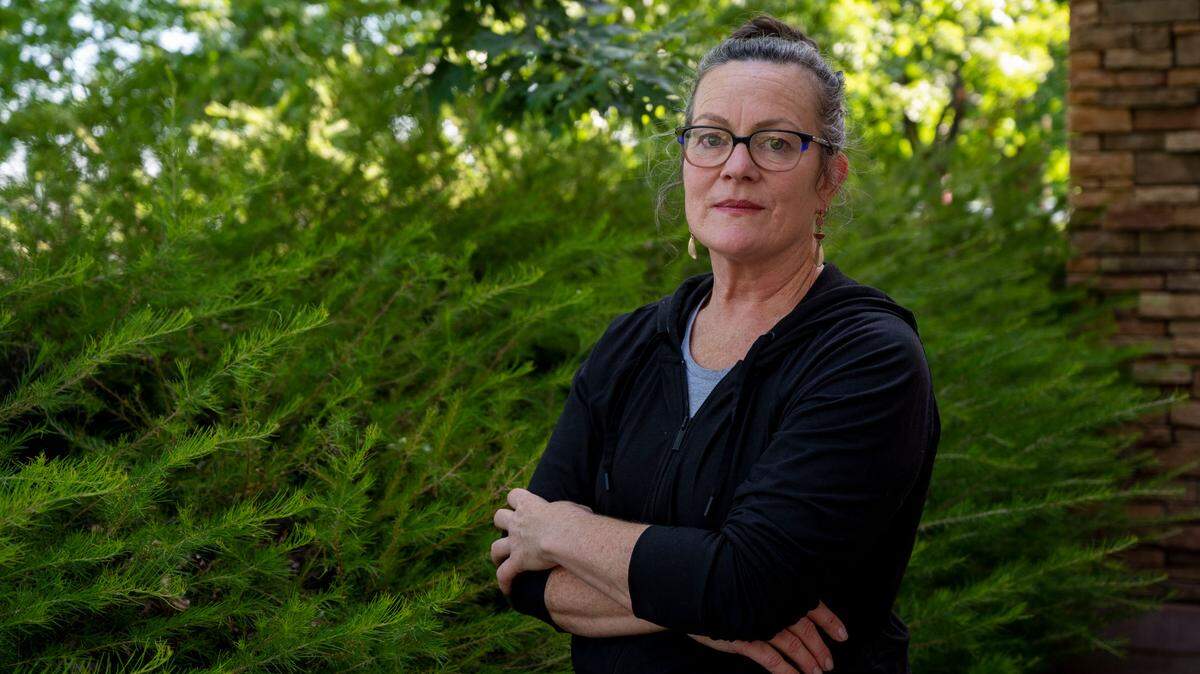
Katherine Sanders understood she made a terrible mistake a year ago when she used a racial slur at a Sacramento middle school during an in-class discussion about the power of words. She stood before her students two days later and tried to apologize.
“We accept your apology,” one student said.
But others in class were not open to her attempt to make amends.
“You can’t accept the apology on our behalf,” a student said, according to documents obtained by The Sacramento Bee through the California Public Records Act.
That night, a TV reporter contacted the Sacramento City Unified School District for comment about Sanders’ using the N-word in a seventh-grade class at Kit Carson International Academy. Sanders, who is white, knew someone had a recording of her saying the slur in class, and it wouldn’t be long until it became public.
Her life wouldn’t be the same after that night.
“I made a very horrible, ugly error,” she said in a sit-down interview with The Sacramento Bee last week. “I know how much I hurt a lot of people.”
Sanders, 56, spoke with The Bee one month after resigning from the school district where she taught for much of her 22-year career. She faced serious professional discipline when she agreed to leave the district, but believed she could have continued to contest her firing.
Her use of inappropriate race-related language preceded a difficult year for the Sacramento City Unified School District in which it repeatedly discovered racial slurs scrawled on buildings, in one case seeming to target a high school assistant principal who is Black.
Schools — administrators, teachers and students — are either tripping over the difficulties in discussing the volatile issues of race and language, or are seeing manifestations of the troubling societal flaws they are trying to address.
Consider the eruptions of problems at the Sacramento City Unified School District and other districts in nearby cities.
▪ Elysse Versher, a vice principal at Sacramento’s West Campus High School decided to resign after a series of harassment. Since November 2021, the district has been investigating and searching for a suspect who wrote the N-word five times near Versher’s parking spot.
▪ McClatchy High School had a vandalism case where a Black student wrote messages over a water fountain promoting segregation.
▪ Two high school students were caught after drawing swastikas on an Abraham Lincoln Elementary School building in March. Later that month, another racist graffiti message was found nearby at Rosemont High School in Rancho Cordova.
▪ A high school Black female student at Folsom High School was bullied with racist remarks and hateful messages on Snapchat in January.
▪ A high school soccer game in El Dorado Hills was interrupted because fans in the audience made remarks about some of the players.
The conflicts grew so serious that the Sacramento district in January hired an outside lawyer to investigate two of the incidents. The attorney, Mark Harris, has been advising administrators and suggesting discipline.
He disclosed earlier this year that the district was prepared to fire Sanders over her use of the N-word in class, and he said she should have known better.
“We’re not saying that you can’t use a term ... but when you’re on this campus, it’s a zero-tolerance policy for everybody,” he said, “particularly for anybody who’s employed by the school district.”
“A lot of this is just straight-up defiance and further privilege,” he continued. “My point is that you ought to have enough judgment to know at some point the adult should be in the room and you should have enough judgment to know you can’t do that.”
Sanders’ remark in June 2021 offended students and ripped into Sacramento’s Black community, where activists demanded her immediate firing.
The district placed her on administrative leave for months while it conducted a deep investigation into the incident and her teaching. It contributed to the district’s decision in February to recommend her dismissal, finding she violated a number of policies regarding conduct in the classroom and created an “unsafe” environment for her students.
“While it is never permissible to use the N-word, it is particularly concerning given the diverse student population in the district,” Sanders’ notice of dismissal reads. “As an educator, you are expected to be mindful of the students you are teaching and understand that your statements have an impact on each of your students.”
Now, as Sanders tries to pick up her life, the Sacramento school district is still finding its way on how to handle the use of the N-word on campus.
It learned this month that Versher, the Black assistant principal who felt targeted by racial slurs on campus and on social media, planned to resign because she felt the district failed to support her through the traumatic incidents.
What Sanders said
Sanders’ use of a racial slur in front of students followed a discussion about a different forbidden word.
On June 15, 2021, the second-to-last day of the school year, two teen girls in her class wrote “f--- the patriarchy” on a piece of paper, according to the district’s investigation. The results of the investigation, obtained by The Bee, are captured in a report of more than 60 pages documenting Sanders’ explanations, witness accounts, text messages and reactions.
Sanders told them that using the F-word was inappropriate. Hoping to create a “teachable moment” for students in the following class period, she asked her students if they thought using the full F-word gave power to a statement.
When some students pushed back saying that it wasn’t a bad word, Sanders said she decided to explain to the class why certain words are hurtful.
“What if that word is offensive to some people?” Sanders asked her class, adding that the F-word has a negative connotation however it was used.
Sanders said she then “made an unfortunate choice of words.”
She asked her students: If the F-word has no power, what about the N-word?
At this point, a student in her class began to record without Sanders’ knowledge.
“I know the F-word is something we hear constantly,” she stated at the time. “It used to be a nasty, ugly word. And now it’s like the word (N-word) which everybody says or (N-word), which used to be a horrible ugly word as well and ... somehow (its) not a horrible word. Where I live, I hear it all the time.”
One student asked, “Who says that’s not a horrible word?”
Sanders told The Bee her point was taken out of context. She was lamenting the fact that both words were used casually among students in her Oak Park neighborhood and at school.
But, in saying this, Sanders used the full N-word. She tried to correct herself, using the word with an “A” ending in the style employed by musicians and entertainers.
“She was trying to say that just because a word is used, or because it may not be offensive to a certain person, that does not mean it is OK to use it. She does not like to hear 10-year-old kids using the N-word,” read the district investigation.
Students shared clips of the conversation on social media, gaining attention from other students, parents and community activists.
Sanders said she first learned of the recording when a colleague told her about it, prompting her to write apology letters to each of her colleagues and administrators the day after the incident.
“I want to assure you the published recording was taken completely out of context, which does not excuse my ignorance of choice of words in that situation,” read one letter.
Teacher discipline begins
Kit Carson Principal Santiago Chapa and Assistant Principal LuTisha Stockdale called Sanders into a meeting on June 16, where she tearfully explained herself, according to the investigation.
But during that meeting, Sanders continued to use the N-word in its entirety as she explained what took place in her classroom, according to documents, prompting the district to charge her with persistent violation and insubordination.
The investigation noted she did not say “f---” to the administrators as she described what led to the discussion.
Sanders said she does not recall using the full N-word in the meeting.
Several community activists and district Superintendent Jorge Aguilar visited the school to speak out about the incident.
“Any comment by the teacher that a racial slur is now somehow ‘okay’ is not a position that is shared by or will be tolerated by this district,” Aguilar stated at the time. “The language used in the recording is inexcusable and the district will be investigating this matter further and offering support to our students and families.”
The district subsequently pulled Sanders from her summer school class. Officials placed her on administrative leave before the start of the next school year, just hours before she arrived at Kit Carson to set up her classroom.
White teachers’ ‘missteps’
Teachers in the classroom should make meaningful efforts to discuss race and the power of language with students, said Sacramento State ethnic studies professor Rashad Baadqir.
But Baadqir, who has led diversity training workshops for educators at Sacramento schools, said that it’s not uncommon for teachers with good intentions to make “missteps,” particularly white teachers who feel uncomfortable talking about race and identity.
“They feel like it’s almost a no-win situation for them, because they seem to be tripping over themselves when they’re trying to explain something,” Baadqir said. “They feel like there’s a big target on them.”
In an effort to appear like an ally to students of color, educators may also feel the urge to “speak how the young people are talking” and casually use racist slurs or other inappropriate language.
But race, and the words people use in racial-cultural groups, is nuanced, Baadqir said. What might be deemed OK for some students might offend and hurt others, even among people from the same community.
And similar to the idea that “you can say something to your sibling, but you’d never let someone else say it,” using the N-word as a non-Black person is “inexcusable,” Baadqir said.
Baadqir teaches educators that having nuanced conversations requires building a foundation of trust and respect with students. He also encourages teachers to let students guide discussions, “empowering the students to be engaged and feel invested in the process” of learning.
“Rather than her just going out and saying the N-word, she should’ve asked students how they felt about non-Black people using the N-word,” Baadqir said.
Teachers and adults should focus on “listening more and saying less,” Baadqir said.
‘She lost her audience’
Throughout the ordeal, Sanders gained support from some colleagues and friends who felt the district overreacted to the incident. Sacramento City Teachers Association Second Vice President Hasan McWhorter, a Black teacher at the Met Sacramento, was one of the first educators to reach out to Sanders.
“She should not have used those words,” he said. “But here’s why: She lost her audience. What she was trying to do was tell truth. Check iTunes, it’s got the N-word everywhere. But when she used the N-word, she lost her audience. If she had just said ‘N-word,’ she could have had a valuable conversation.”
At home, the scrutiny took a toll on Sanders’ personal life. She said her marriage fell apart and she began working a minimum-wage job teaching pilates.
She faced a choice this spring on whether to resign or fight the district’s attempt to fire her.
She said she had the financial support to move forward with a hearing and fight the charges, but when her mother began experiencing heart issues, she settled. The district offered her a payout for the months she was out on unpaid administrative leave.
Sanders said she isn’t sure she can return to teaching.
“I can’t go back into a public classroom and a child comes to me and says, ‘my mom says you’re a racist,’” Sanders said. “I agree that I made a mistake, but I am not a racist for saying it.”
Sanders, who describes herself as a devout Christian, said she must accept the consequences of her actions.
“I made a mistake and my consequences are where I am at today,” Sanders said. “I accept that. We can’t go through life making mistakes and not making amends, not asking for forgiveness, and not taking the consequences whatever they may be. That is what I taught for 22 years.”
This story was originally published May 29, 2022 at 5:00 AM with the headline "Exclusive: A white Sacramento teacher used the N-word at school. She couldn’t go back to class."
CORRECTION: Katherine Sanders resigned from her position as a middle school teacher in Sacramento City Unified School District. A caption accompanying a photo of her incorrectly said she was fired. The story was updated at 10:50 a.m. on May 29 to correct the caption.