California labor leaders made a pact at a ‘bizarre place.’ Will it revive a storied union?
Former Assemblywoman Lorena Gonzalez cut short her family vacation last month to a close deal she considered critical to her new position leading California’s largest union: Bringing a small union with a powerful message into the fold of the state’s labor movement.
She left her family in Big Bear to meet United Farm Workers President Teresa Romero at a San Bernardino County diner off Highway 138.
Over breakfast, they chatted about UFW’s plan to carry out a 335-mile march to the capital from its home in the San Joaquin Valley and their shared interest in persuading Gov. Gavin Newsom to sign a bill that would make it easier for the farmworker union to sign up new members.
“It’s just the most bizarre place for this deal to happen, but I had to have them back in,” Gonzalez said. “We’ve got to be able to provide institutional support for them. That means they have to be an affiliated member…It’s almost like the union movement is not complete without the farmworkers in California.”
At the restaurant, she and Romero cemented their pact to bring UFW back into the California Labor Federation, the umbrella organization that represents some 2 million California union members.
And if all goes according to Gonzalez’s plan, that “bizarre place” might have its place in the history of farmworker rights in California.
The alliance comes 16 years after the farmworker union left the state federation. Since then, it faced a string of setbacks that collectively diminished its headcount and tied its hands in recruiting new members. That run climaxed last September, when Newsom vetoed a bill that would have let farmworkers vote by mail in union elections.
Today, it has about 6,000 members, down from an estimated 70,000 in the 1970s.
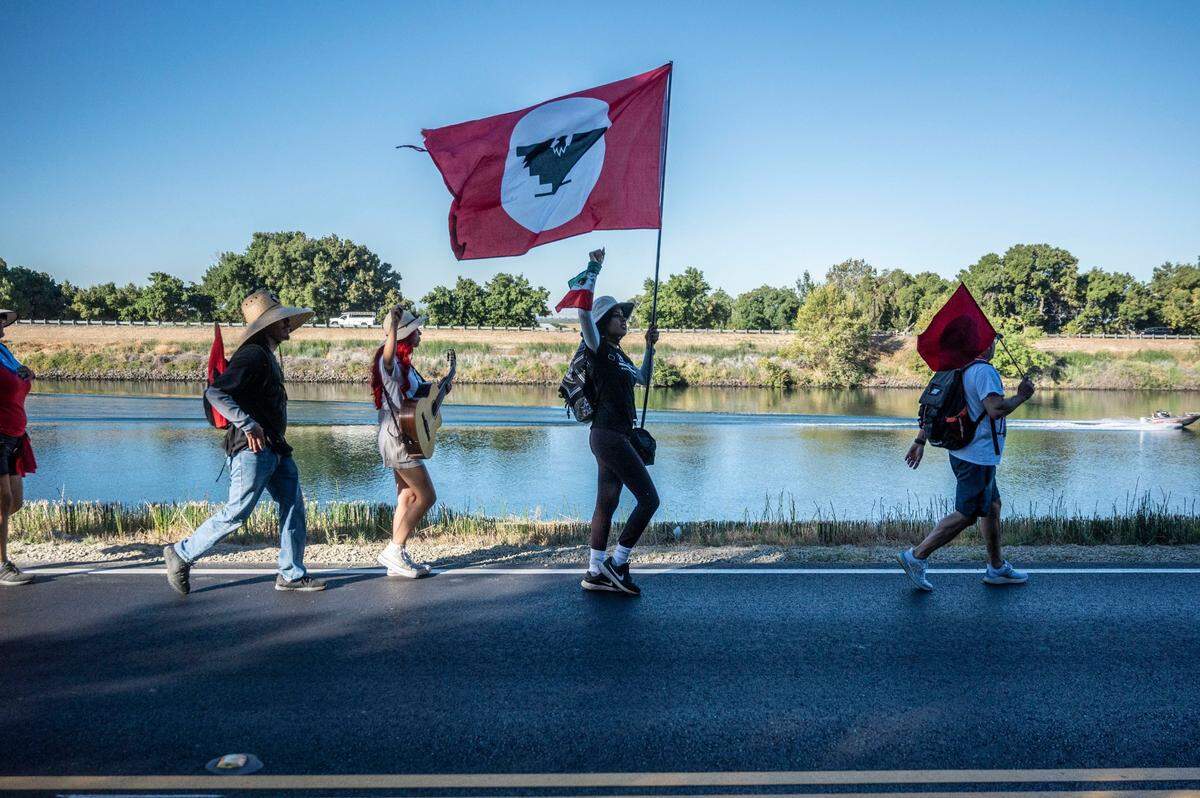
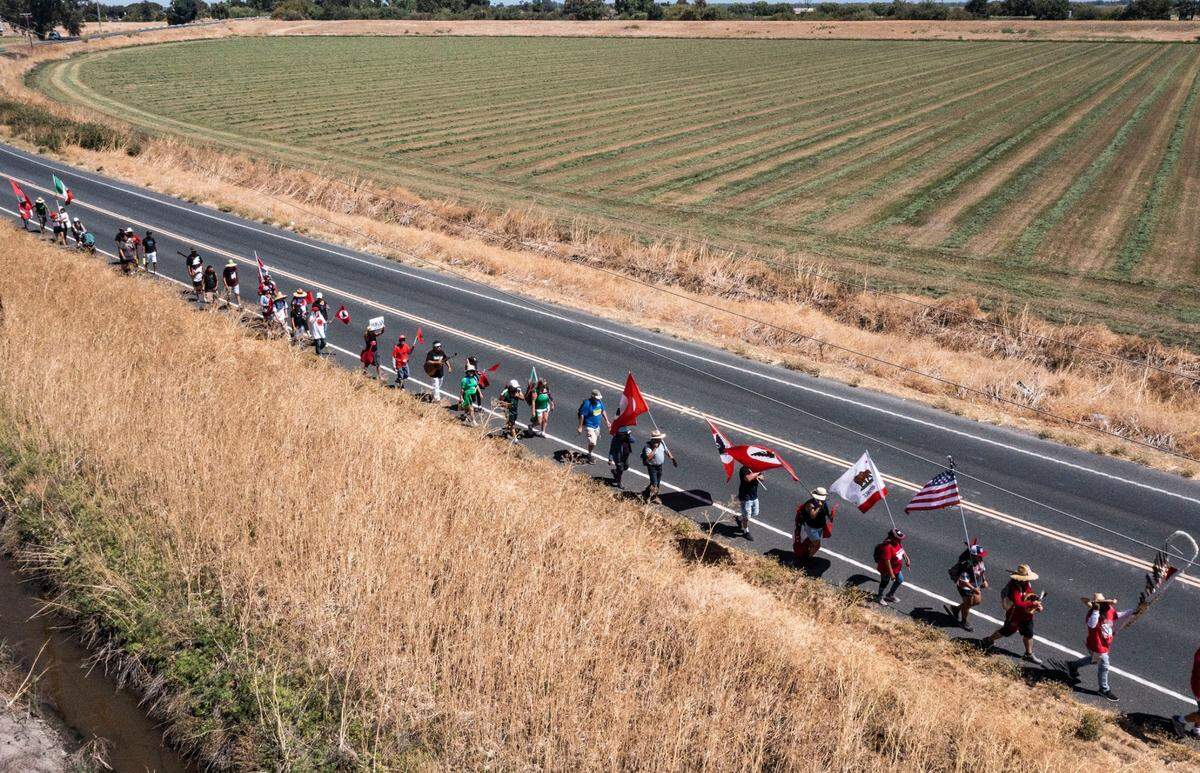
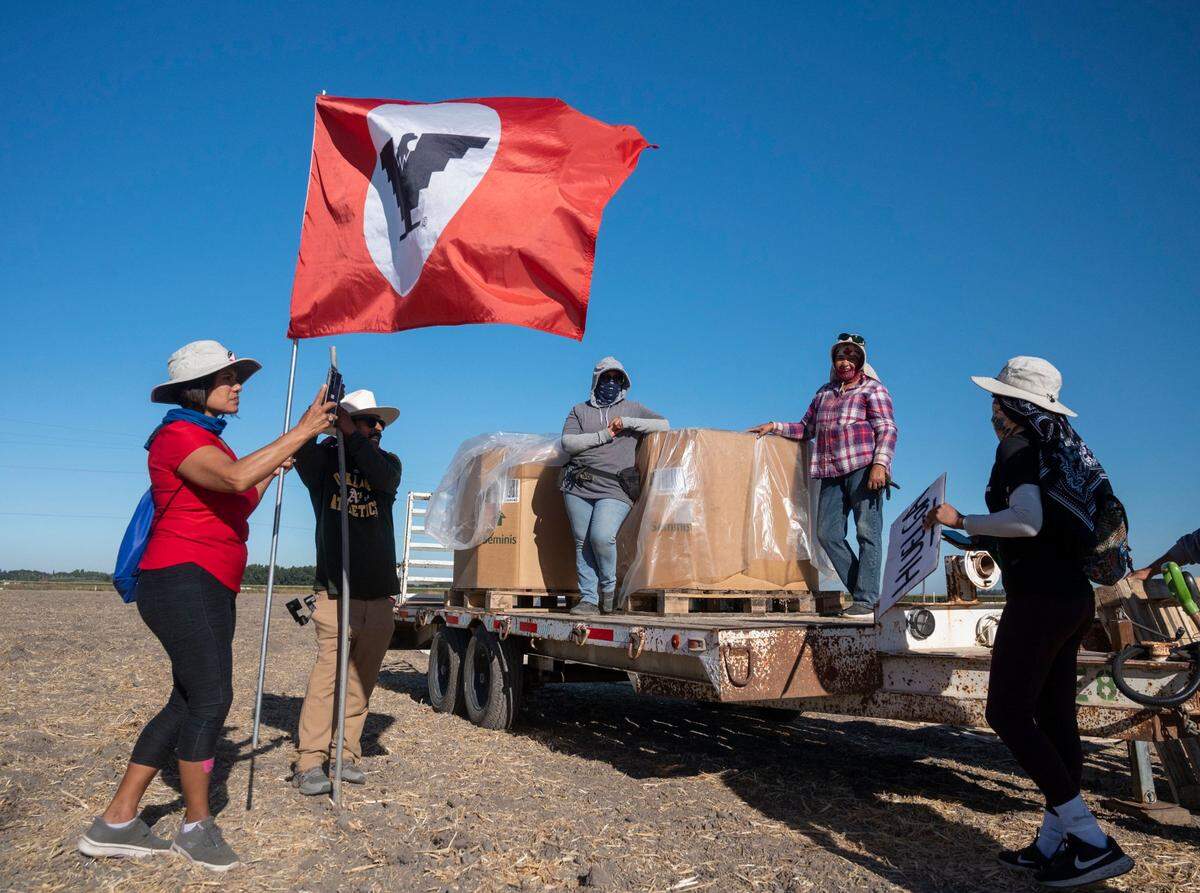
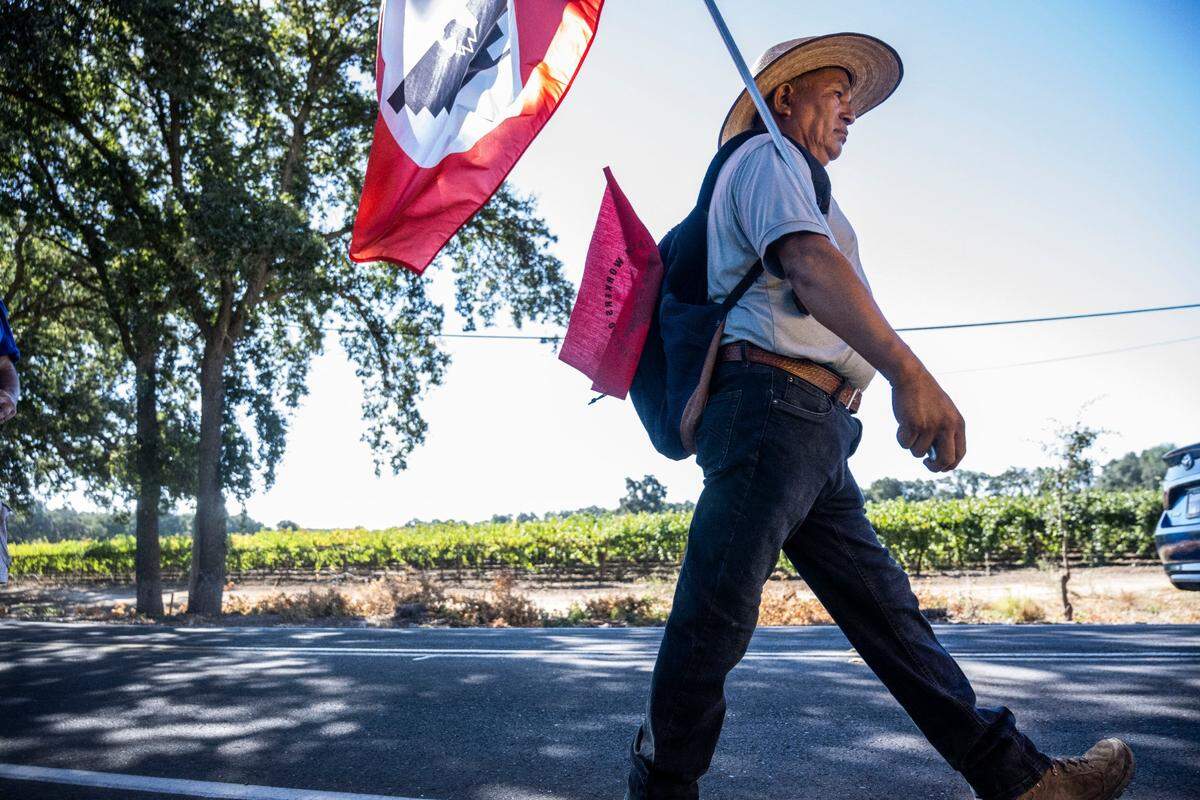
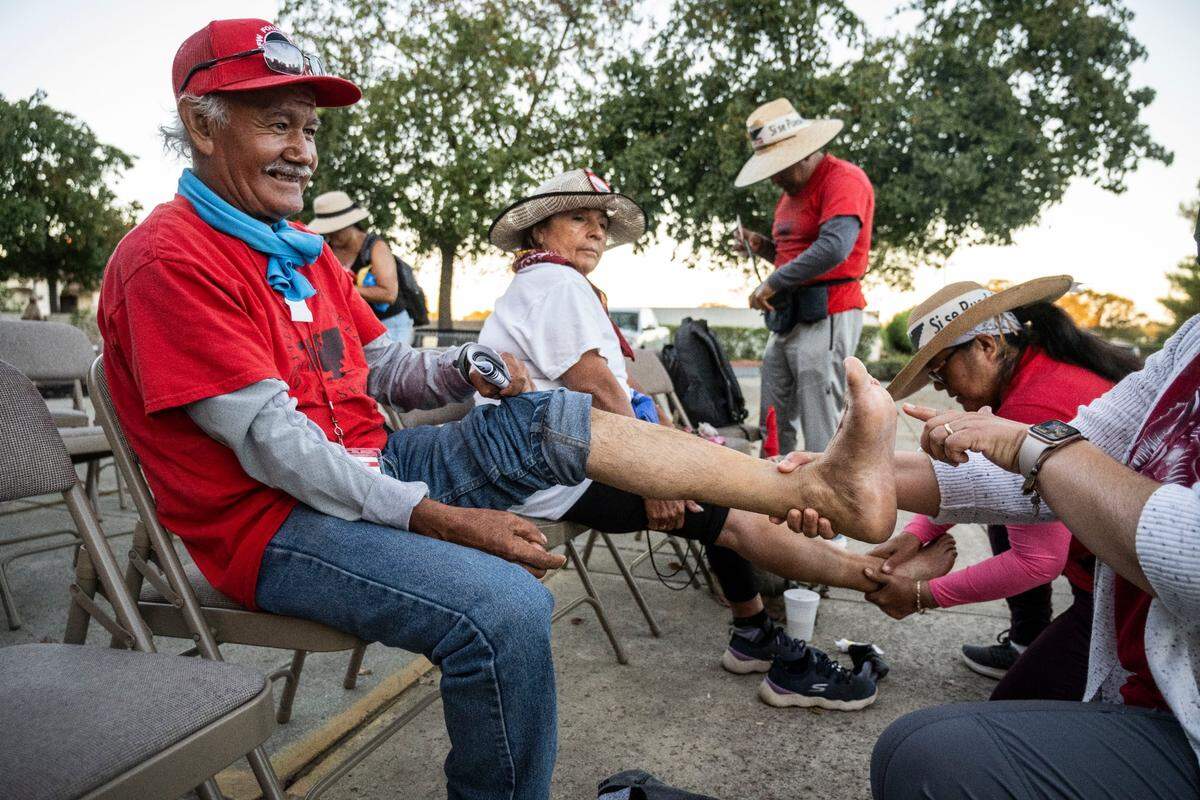
But on Friday, Romero and Gonzalez plan to lead the union in its biggest show-of-force in decades as it completes its march to Sacramento from its original headquarters in Delano. They plan to arrive at Southside Park and then head to the Capitol, where they will present a new demonstration urging Newsom to sign a version of the bill he vetoed last fall.
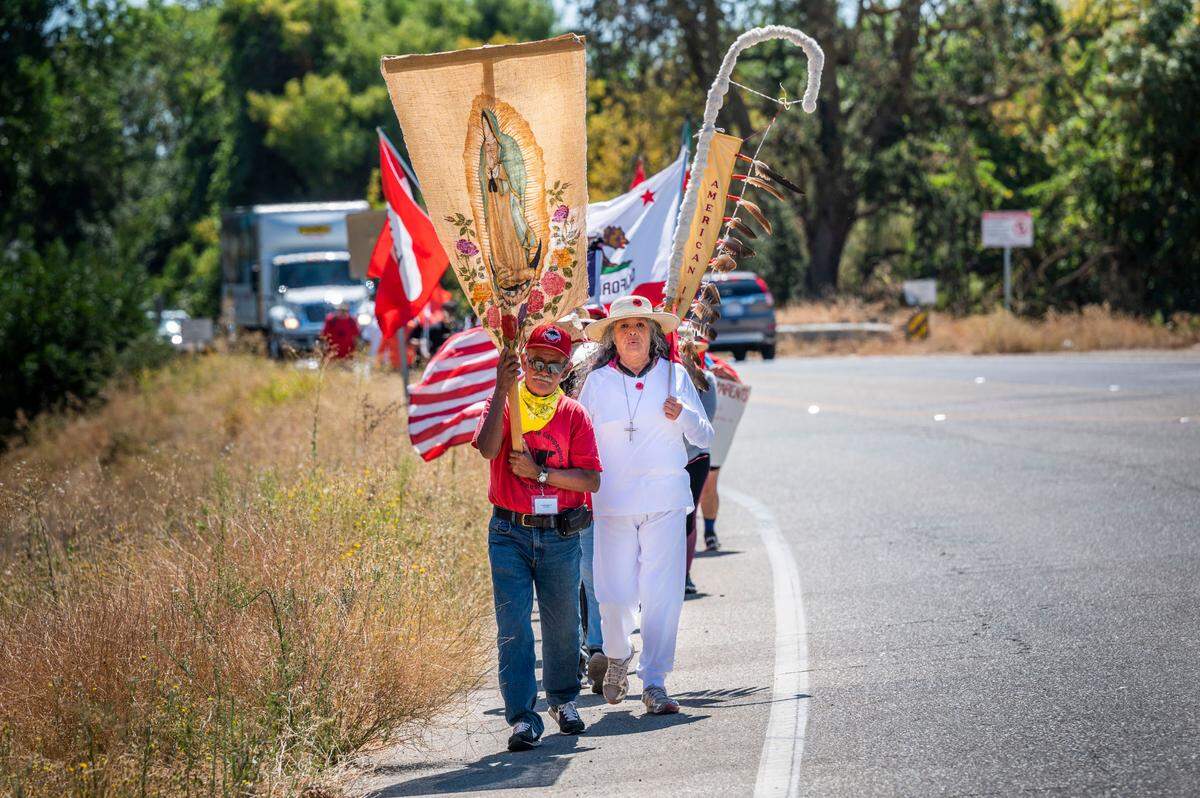
The march echoes UFW’s origins — César E. Chávez famously brought farmworkers on almost the same route to the capital 56 years ago in one of the union’s iconic moments.
UFW today wants the march to signal its resurgence.
“We understand that sometimes we have to fight harder than others, but we also have the si se puede attitude,” Romero said. “And we don’t give up. When we fall, we get up and do it again.”
If UFW can reclaim a piece of its heyday, labor experts say Gonzalez will be a significant force in making it happen. The San Diego Democrat drove labor policy in the Capitol for nine years, carrying laws that restricted companies’ use of independent contractors, expanded sick leave and allowed farmworkers to earn overtime.
That muscle in the Capitol could help the UFW claim new tools to recruit members and revive its membership.
“The politics are clear that the United Farm Workers is refocusing and they need new allies in this political fight and, clearly, Lorena Gonzalez is a formidable ally,” said Gaspar Rivera-Salgado, project director for the UCLA Labor Center.
Gov. Gavin Newsom’s veto
Newsom’s veto of UFW’s voting bill last year came at a low point for the union.
It had already shrank by tens of thousands of members, leading some growers to regard it as ineffective in advocating for better working conditions.
Rob Roy, president and general counsel for Ventura County Agricultural Association, described the farmworkers union as “virtually nonexistent” nowadays. Roy said he believes its return to the labor federation will do little to improve unionization rates among farmworkers.
“I consider the move is probably comparable to a dead person or an almost dead person getting a lifeline,” Roy said.
Then the U.S. Supreme Court in June 2021 struck down a 1975 California regulation that guaranteed the UFW access to workers at privately owned farms. That regulation had its roots in Chávez’s movement, and it allowed the union to visit fields and packing houses to communicate directly with workers.
Agriculture businesses, led by a Siskiyou County farm and a Fresno County packing house, insisted that the regulation infringed on their property rights. Their argument won at the high court.
Just three months later, Newsom shot down the bill that would have allowed UFW to hold mail-in elections to select collective bargaining representatives.
In a veto message, Newsom said the bill contained “various inconsistencies and procedural issues related to the collection and review of ballot cards.”
The UFW responded by showing up at a winery Newsom owns and at the French Laundry, the pricey Napa County restaurant where Newsom attended a lobbyist’s birthday at a time in the coronavirus pandemic when he was asking Californians to stay away from large groups.
“Workers are now marching towards the French Laundry, hoping to finally meet with the Governor,” the union wrote on Twitter.
Gonzalez was one of the bill’s principal co-authors. At the time, she called Newsom’s veto “truly devastating.”
Now at the Labor Federation, she’s throwing her support behind the new version of the proposal, Assembly Bill 2183.
“They have a bill that would be the most impactful organizing bill of this legislative session,” Gonzalez said. “And everything I’m doing at labor is about organizing. That’s why I came back to organized labor, to really promote and push forward unionization and organizing.”
Gonzalez and other state leaders have joined UFW during the final stretch of the march. Senate President Pro Tem Toni Atkins marched a few miles on Wednesday morning alongside a few dozen farmworkers and Assemblyman Mark Stone, D-Santa Cruz, who wrote the UFW bill.
“The work you do is critical for us in California and I recognize our values that we talk about need to match reality... it’s legislation we must get done,” Atkins told marchers in English with Romero translating in Spanish.
As for the legislation’s chances this year, Stone said on Wednesday he expects Newsom to sign the bill. Stone has been working with the governor to address previous concerns.
Erin Mellon, communications director for the governor, said the Newsom administration is not ready to commit to signing the bill.
“We are hopeful that we could come to a place that achieves open and fair elections and making it easier to unionize,” Mellon said. “But we are still not quite there.”
Can UFW capture unions’ wave?
Neither Gonzalez nor Romero remembered why the farmworkers union in 2006 left the California Labor Federation and the national AFL-CIO. Gonzalez had just finished a failed run for San Diego City Council and Romero was running her business of construction projects.
But the move made major headlines at the time as UFW was one of seven former AFL-CIO unions that defected to form their own labor federation: Change To Win. The coalition, later renamed Strategic Organizing Center, claimed it would focus more on organizing new members and less on politics.
“It’s a political decision about their leaders of where they could build a stronger labor movement,” Rivera-Salgado said. “And as with any social movement, people think differently, they have different analyses, different assessments of what they need to do.”
UFW spokesman Marc Grossman said the farmworker union will continue to participate in the Strategic Organizing Center. It’s participation in the Labor Federation does not exclude it from the other group.
Organized labor is garnering public attention and support now. A September 2021 Gallup poll showed 68% of Americans approved of labor unions, the highest rate in 1965. Union membership rates still remain around 10% with a 0.5% decline in 2021.
Between October 2021 and March 2022, union representation petitions filed increased 57%, from 748 to 1,174, according to data from the National Labor Relations Board. Unfair labor practice charges increased by 14% in the same period, which could reflect the preferences of union-friendly President Joe Biden’s appointees to the agency.
Unions are making headway, too, by organizing at big businesses that had long kept labor at bay, like Amazon and Starbucks.
Some question whether UFW can catch that wave given its low membership and recent losses in politics and in the courts.
“They haven’t done a heck of a lot in the agriculture industry over the last few years,” said Roy of the Ventura County Agricultural Association.
But Romero said the UFW’s influence reaches beyond the companies where its members work. Romero pointed to a recent example of UFW successfully advocating for Oregon to pass the country’s strongest farmworker protections for heat and wildfire smoke.
“We don’t see ourselves and we don’t measure ourselves by the numbers of members,” Romero said.
Its return to the Labor Federation nonetheless tells union experts that UFW thinks it’s better off with Gonzalez than without her. She has a reputation for capturing attention by taking on some of the world’s wealthiest companies, like Uber, Lyft and Tesla — making the kind of buzz that can lead to new laws and more union members.
“For the first time, we have a Latina leading the labor world in California,” said Rivera-Salgado. “That is really innovative. Let’s see what new things she brings to the crown in terms of how she thinks about what labor should do to be relevant to these workers.”
This story was originally published August 26, 2022 at 5:25 AM with the headline "California labor leaders made a pact at a ‘bizarre place.’ Will it revive a storied union?."