Bilingual education is growing in California. Rocklin becomes latest city to participate
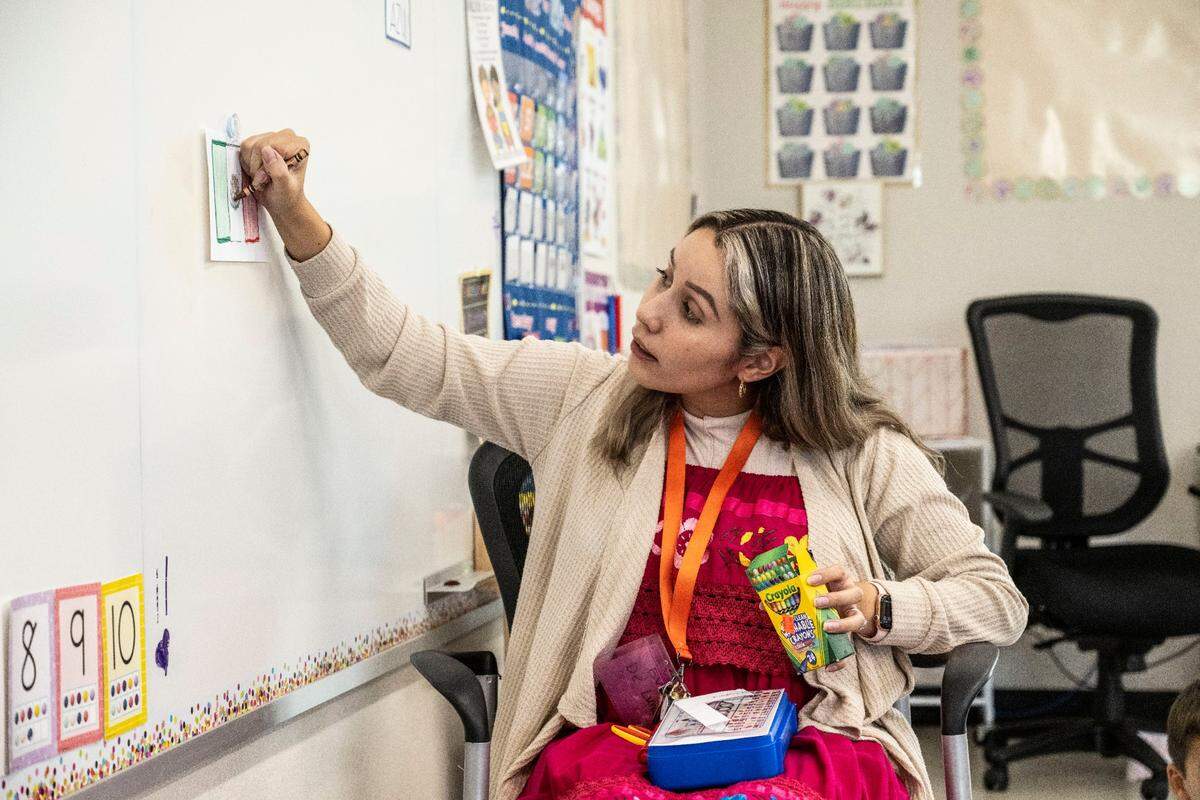
It was snack time at Quarry Trail Elementary in Rocklin, and Transitional Kindergarten Teacher Eva De Luna was trying to tell a young boy where his food remains should go.
“Agarra la basura, con las dos manos, y el basurero está ahí,” said De Luna, asking the boy to use his two hands and pointing to the trashcan in the corner of the classroom.
The boy gave his teacher a puzzled look, struggling to understand her words. De Luna eventually repeated the words and grabbed the boy’s hands to lead him to the garbage. That’s a typical maneuver used on a student, who’s still getting used to hearing Spanish.
Seconds later, De Luna asked a young girl if she was still eating her snack.
“¿Sigues comiendo?,” said De Luna.
The girl, without missing a beat, responded to her teacher in Spanish.
That contrast in language proficiency is expected and even welcomed in Rocklin Unified School District’s first dual-language immersion program, where students are taught in two languages. Although Quarry Trail teaches Spanish, dual immersion schools offer programs in other languages all across California.
But that’s a major change from just 25 years ago when the state limited bilingual education through a divisive initiative. Then, California was not welcoming to its non-English speaking residents.
Nowadays, the state promotes proficiency in two languages and even passed a 2016 initiative that led to immediate growth in the number of bilingual programs. Meanwhile, parents increasingly seek out opportunities for their children to communicate in multiple languages — an asset in the global economy.
As of the latest data in 2018, the state had 747 dual-language immersion programs, according to the California Department of Education. That’s an increase from 407 in the previous year. The current number of programs is likely more than 800, given department projections.
Sacramento County has 15 dual-language programs with one more opening up in Natomas next school year. The county added six programs in the last five years, according to the Sacramento County Office of Education. Elk Grove, the largest school district in the county, will be conducting a feasibility study to potentially begin its first program this year.
“Now is the time, more than ever, to expand, build and help our students be even more successful in California,” said Jan Gustafson-Corea, CEO of the California Association for Bilingual Education. “It’s a time to celebrate our languages. There’s no turning back.”
Bilingual Education Over The Years
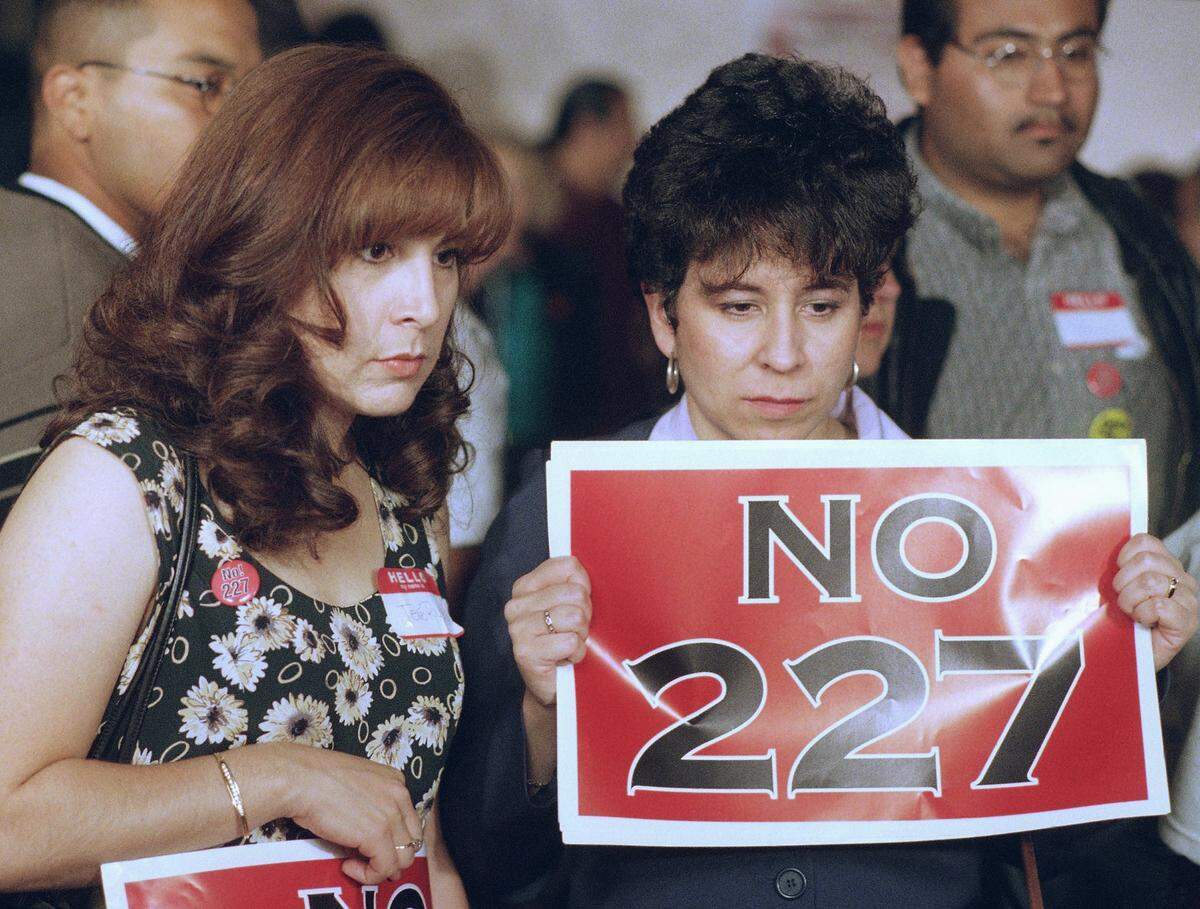
From 1998 to 2017, dual-language instruction was not available unless a student’s parents signed a waiver. The hurdle came from Proposition 227, which required English-learners be taught in English-only classrooms. At the time, some claimed bilingual programs lessened adequate learning of English.
These sentiments were part of a broader anti-immigrant campaign during the time.
In 1994, voters overwhelmingly approved Proposition 187, which sought to ban immigrants from receiving social services, health care and education. Legal challenges prevented the law from taking effect, but opponents viewed it as part of broader racist measures aim at foreign-language speakers.
Studies have since shown that dual-language programs improve long-term academic achievement for English learners and native English speakers. The research, along with growth in California’s Latino population, has led to new attitudes toward bilingual education.
In 2012, the state began awarding seals of biliteracy to high school graduates proficient in two languages. Then, four years later, 74% of voters approved Proposition 58 to repeal the English-only requirement. Supporters said it would modernize language instruction and allowed English learners to gain English proficiency through multiple avenues.
“For over 20 years, that proposition (227) almost eliminated bilingual education,” said Martha Hernandez, executive director of Californians Together, an organization advocating for non-English native speakers. “And of course, we did not end up with good results in many ways. We did not have good academic results. The gap between English learners and English proficient students was getting bigger. And students really lost their identity and sense of belonging.”
Under California’s 2016 initiative, if more than 20 parents from a grade level or 30 parents from an entire school make a collective request for a dual-language program, the school is required to explore at least the possibility of creating one.
The state further pushed to multiply bilingual education in 2019. Under a California Department of Education program, the state announced its goal of enrolling half of K-12 students in programs that lead to proficiency in two languages by 2030. The program also aims for three out of four students to be proficient in two languages by 2040. 35,260 students gained a seal of biliteracy in the last school year.
To reach those lofty goals, the state estimates needing 1,600 dual immersion schools by 2030. But advocates point out that California recently missed an opportunity to expand such programs.
A bill, SB 952, proposing to offer at least 20 districts technical assistance and grants to expand or establish programs failed last month in the Appropriations Committee.
Hernandez said the bill would have helped meet the high demands of districts that want to start bilingual programs.
She cited a dual-language grant program established last year that only gave awards to 27 districts and charter schools. It received 160 applications, according to the California Department of Education.
“The bill did not go forward so there won’t be money for districts to fund those types of programs,” Hernandez said.
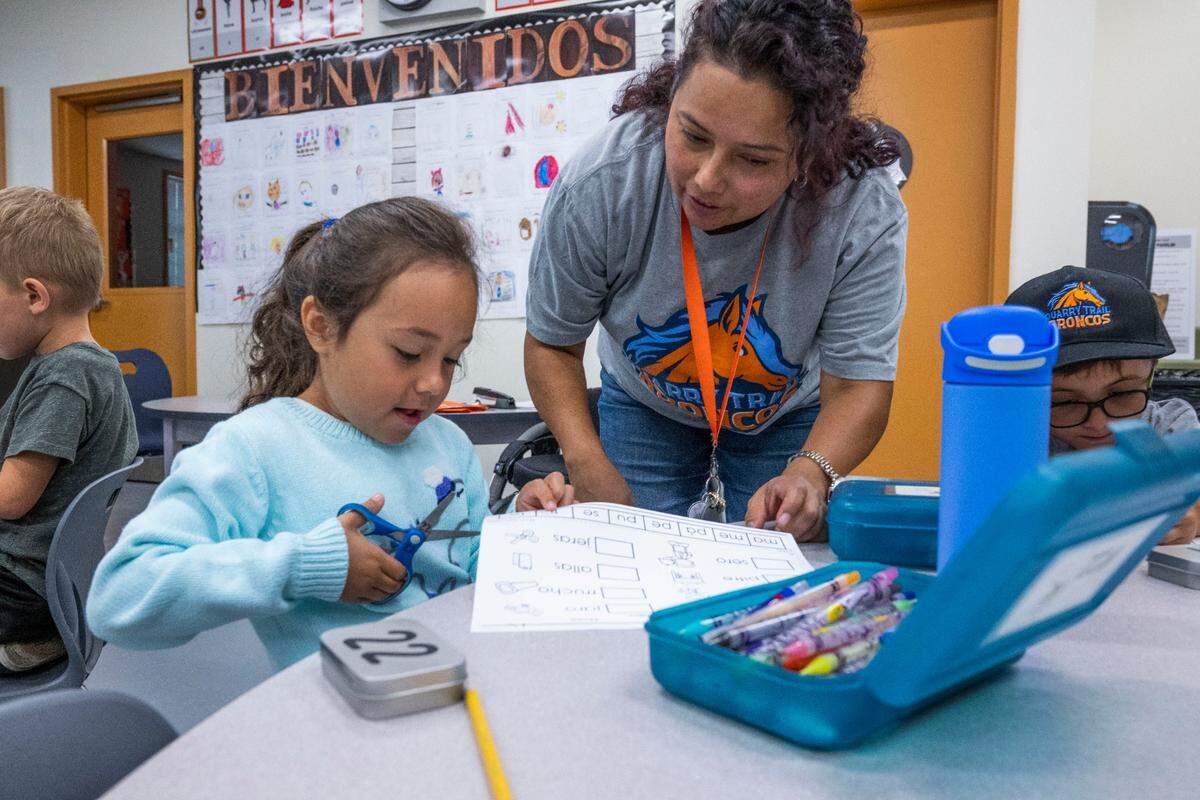
How does dual-language immersion work?
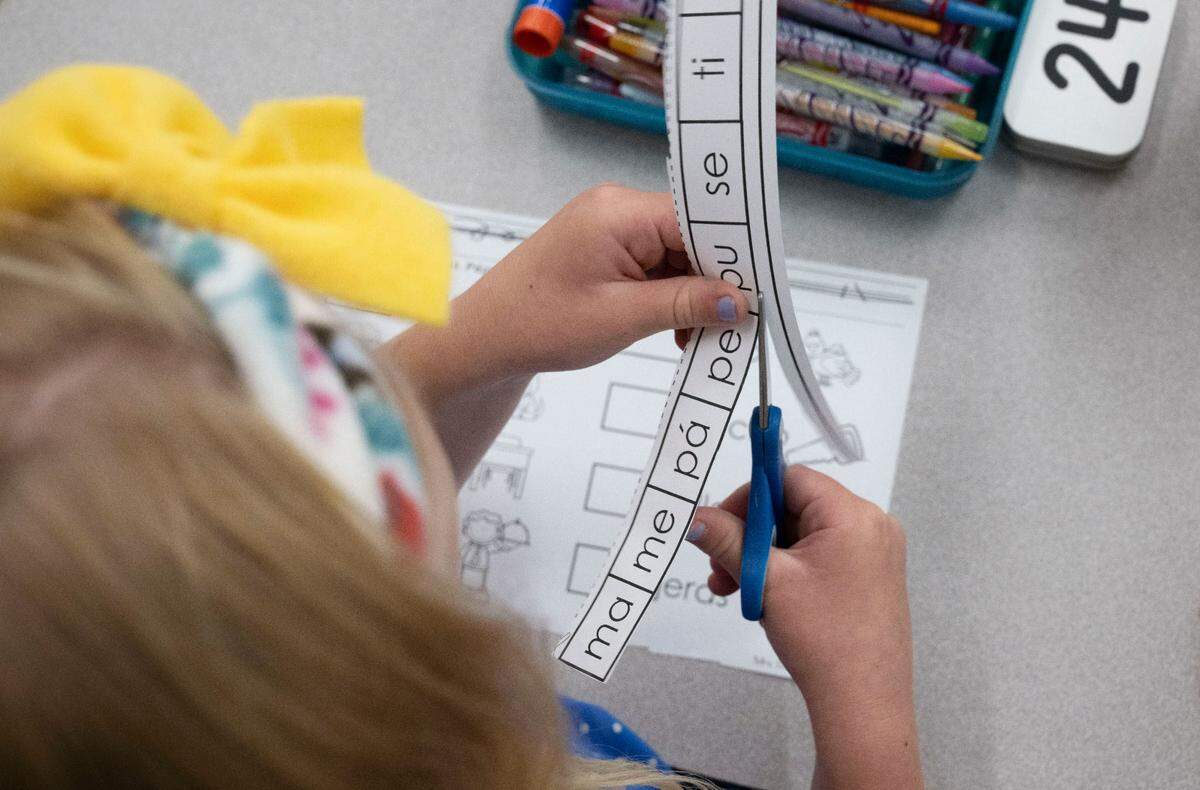
De Luna does not begin teaching in Spanish until after recess as part of the 50-50 model, which teaches students 50% in English and 50% in another language.
During this time she relies more on hand gestures, images and facial expressions. She also has the students hear music, read books out loud and frequently repeats their responses in Spanish. Given their young age, De Luna does not expect the native English speakers to respond in Spanish. But by the end of year, she hopes that they at least comprehend her sentences.
As for the native Spanish speakers, there are currently only two in De Luna’s class.
In total, Quarry Trail’s dual language program is roughly 25% native Spanish speakers. Typically, most bilingual programs have half English speakers and half Spanish speakers.
Principal Melanie Patterson said the school struggled recruiting Spanish-speaking families despite giving them priority. About 19% of Rocklin’s population is Hispanic or Latino, according to the most recent U.S. census.
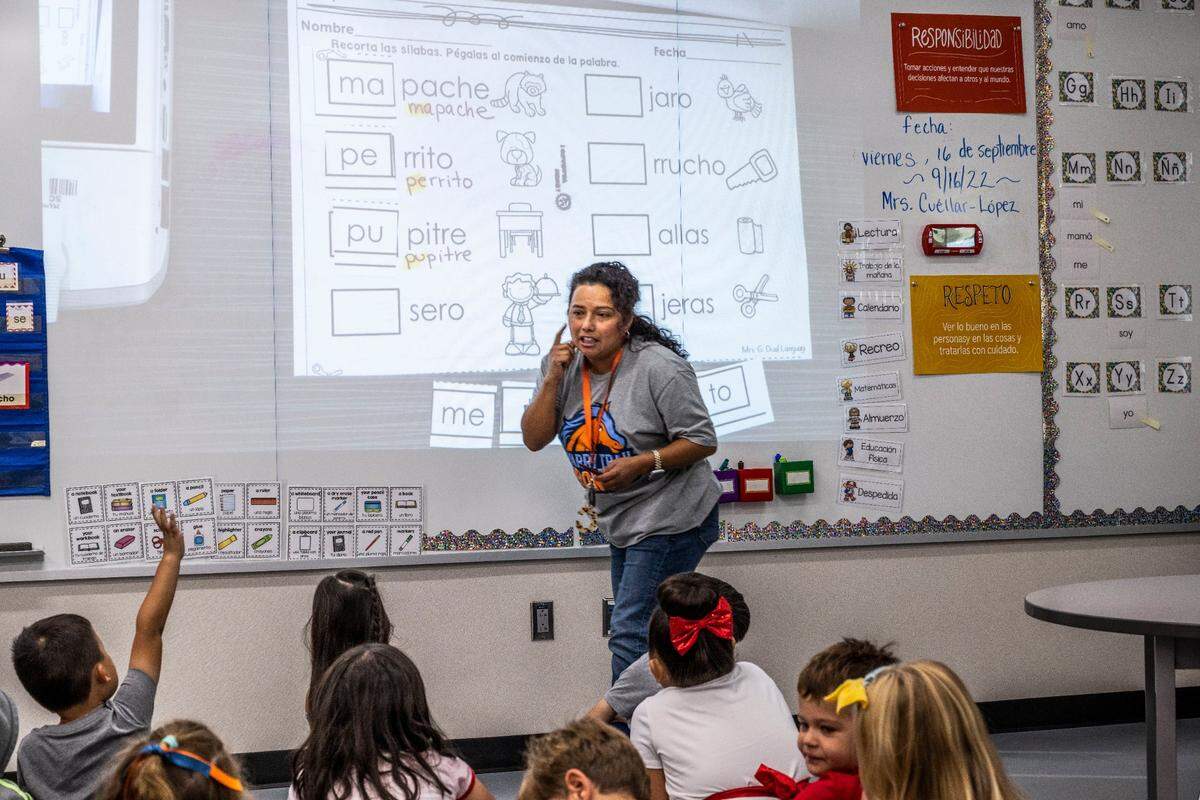
“It’s helpful to have both native and English speakers in the class together so they can help each other…I think as we grow there will be more that come,” Patterson said.
Quarry Trail’s student demographics differ significantly from Cesar E. Chavez Elementary in South Sacramento.
The school’s dual language program, established in 2001, consists of more than two-thirds Spanish native speakers.
“Here in South Sac, there’s lots of us,” said Principal Eracleo Guevara, pointing to himself.
But beyond city demographics, Guevara attributed the larger number of Spanish speakers to constant outreach and persuasion by the school. He said native Spanish parents will often prefer their children primarily learn English in hopes of them succeeding in this country.
They fear they will struggle if learning two languages simultaneously, Guevara said. Many times he and the teachers must explain the opportunities that will eventually come available for bilingual students.
“Those are things that we have to really let them know,” Guevara said. “That their child is going to become such a hot commodity. Just that little component allows them to have a little bit more success in their life.”
This story was originally published September 23, 2022 at 5:00 AM with the headline "Bilingual education is growing in California. Rocklin becomes latest city to participate."