UPDATE: Here’s how the judge made her decision to deny Scott Peterson a new trial
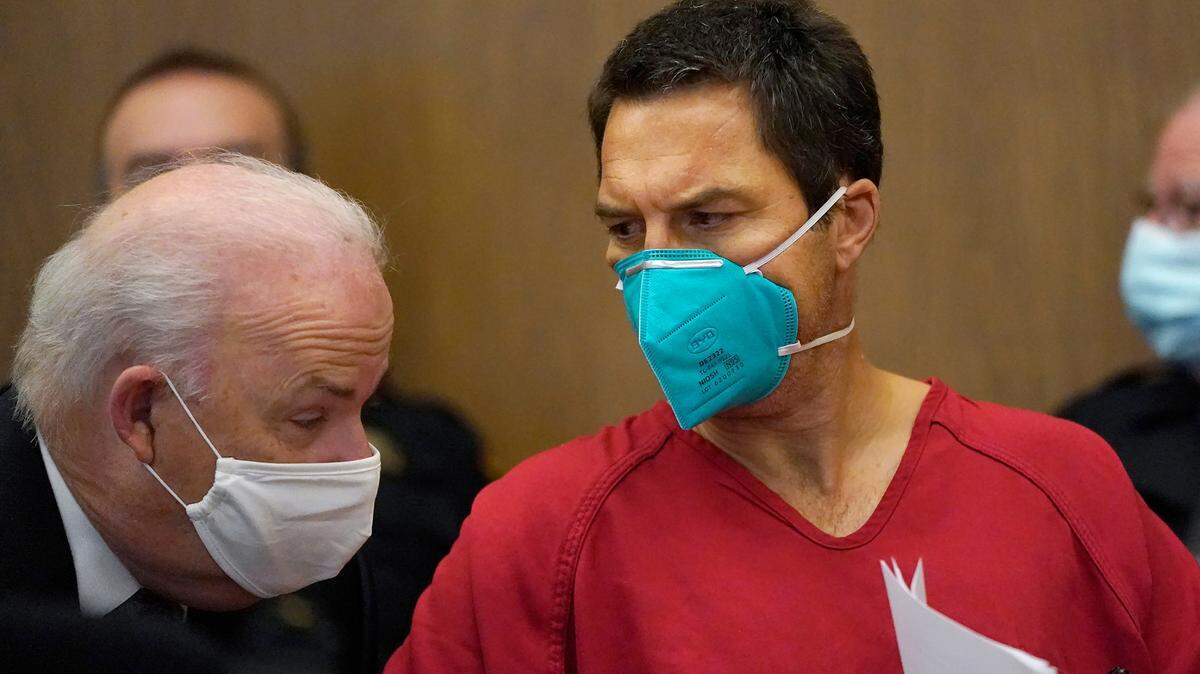
Scott Peterson’s murder convictions will stand after a judge rejected his claim that a juror on his original 2004 trial was biased against him.
In a 55-page written order released Tuesday morning, Judge Anne-Christine Massullo said, “The Court concludes that Juror No. 7’s responses were not motivated by pre-existing or improper bias against Petitioner, but instead were the result of combination of good faith misunderstanding of the questions and sloppiness in answering.”
Laci Peterson’s mother Sharon Rocha issued the following statement in a news release by the Stanislaus County District Attorney’s Office: “We are thankful for the judge’s decision that confirms Scott DID receive a fair trial. We appreciate Juror No. 7 for her courage and honesty during this process. No juror should have to go through what she endured. A special thank you to EVERYONE involved in this case. Laci and Conner are with us every day. We love you.”
Peterson’s sister-in-law, Janey Peterson said, “The justice system has failed Scott, Laci, and Conner every step of the way. We will not stop fighting until we have justice. We will not stop fighting until we solve this crime – something the Modesto Police could have done quickly if they would have followed the evidence.”
Peterson’s attorneys had alleged Juror No. 7, Richelle Nice, was biased against Peterson before ever hearing any evidence that he killed his wife Laci and their unborn son Conner around Christmas 2002.
Their evidence of this centered on several answers on Nice’s juror questionnaire that said she’d never been the victim or witness of a crime or party in a lawsuit.
False answers
Nice was involved in a domestic violence incident with her boyfriend in 2001 and a year prior had filed a restraining order against that boyfriend’s ex-girlfriend after she’d vandalized their home when Nice was three months pregnant.
Massullo disagreed with the District Attorney’s Office assessment that Nice didn’t understand a restraining order was a type of lawsuit because she thought a lawsuit was about money. She testified during an evidentiary hearing in February and March that she understood she was a plaintiff and in the petition for her restraining order, the word “Plaintiff” appears at least 10, the order says.
In addition, Nice testified that she did, in fact, seek monetary damages for lost wages against the boyfriend’s ex-girlfriend in another proceeding after the restraining order.
The restraining order had been obtained as a result of an incident in which the ex-girlfriend kicked in the door of the home Nice shared with her boyfriend and slashed the boyfriend’s tires.
The order says Nice “admitted on the stand that she considered kicking in the front door and the slashing of (her boyfriend’s) tires to be crimes. When asked why she called the police that day, Juror No. 7 conceded that it was because she ‘thought a crime was being committed.’ ”
In the 2001 domestic violence incident with her boyfriend, the police arrested Nice’s boyfriend and he eventually agreed to plea to battery charges.
Massallo said Nice gave false answers but it wasn’t because she was biased against Peterson.
She said, “Understanding Juror No. 7’s testimony needs to be put in the context of “common sense and experience.”
Nice testified that she never considered herself a victim in any of the incidents.
Massallo took into consideration Nice’s history of growing up in a high-crime neighborhood, having a brother in prison for selling drugs and engaging in multiple fights in her life.
The judge also said that she believed Nice’s testimony that she hit her boyfriend, not the other way around. The one person who could refute that, Nice’s boyfriend at the time, was never called to testify.
It is reasonable to conclude that the boyfriend, a Black man, was arrested that night, not Nice, and accepted a plea rather than fight the charges “given both his ‘complicated’ relationship with Juror No. 7 and the existing racial bias in the justice system,” Massullo said.
Out of spite
Nice made a statement on the petition for her restraining order against the ex-girlfriend that she feared for the life of her unborn child. But she admitted on the stand she was untruthful; that she feared her baby could be harmed if she and the ex-girlfriend ended up getting into a fight “and rolled around like some dummies,” but didn’t fear the ex-girlfriend would intentionally harm her child. She testified that she requested the restraining order out of spite.
“After hearing and observing Juror No. 7 during two days of testimony, the Court finds that far from being a traumatic life experience as painted by (Peterson’s lawyers), the incident involving Juror No. 7, (her boyfriend and his ex-girlfriend) can be described, for lack of a better word, as a love triangle,” Massullo wrote.
Not including on her questionnaire the lawsuit for lost wages against the ex-girlfriend was “an honest mistake,” Massaullo wrote.
She said Nice was a credible witness whose “demeanor while testifying was appropriate, respectful, and forthcoming. Although she appeared somewhat nervous when she initially took the stand, given the publicity in the case and the accusation of misconduct, that nervousness was, in the Court’s view, appropriate and justified.”
She said Nice never lost her temper, never disrespected the process, and answered the questions presented in a clear manner despite the passage of time.
Nice was an alternate who, after two other jurors were dismissed, joined the jury that ultimately convicted Peterson of murdering Laci and Conner in 2004. The juror misconduct claim came as part of Peterson’s 2015 petition for habeas corpus, and the California Supreme Court ruled in 2020 that Judge Massullo should examine the evidence and determine if juror misconduct occurred.
Nice voluntarily spoke with an investigator on Peterson’s team while they were preparing the habeas petition in 2015. After the petition was made public, Nice hired an attorney, refused to talk to lawyers from the DA’s office or Peterson’s team, and refused to testify without immunity from prosecution.
Peterson’s lawyers argued this was further evidence of bias but Massullo disagreed, saying they were reasonable actions of someone being accused of misconduct and emphasized that she had already candidly spoken to investigators.
Letters to Scott and ‘little man’
Finally, Massullo concluded that referring to Conner as “little man” and writing letters to Peterson in prison were also not evidence of prejudice or a hidden agenda.
Nice used the term after the trial in media interviews but, according to the testimony of another juror, said it when she first walked into the deliberation room, saying they should convict Peterson because of what he did to “Little Man.”
Massullo said what Nice did was “factually distinguishable” from what occurred in a case cited by Peterson’s attorneys and said there was no evidence Nice “prejudged the case long before deliberations began and while a great deal more evidence had yet to be admitted.”
Massallo said the letters Nice wrote to Peterson “do not support (Peterson’s attorney’s) theory that Juror No. 7 wanted to be on the jury to punish him or that Juror No. 7 was fixated with Conner. At best, the letters demonstrate that Juror No. 7 was emotionally impacted by her participation in the trial.”
“Taken as a whole, the letters demonstrate a person who suffered long term adverse effects from the graphic evidence presented at trials,” Massullo said. Evidence including autopsy photos of Conner that Peterson’s own defense team called, “one of the most disturbing pictures... [they] will see.”
What’s next
The case isn’t over.
Peterson attorney Cliff Gardner issued this statement Tuesday afternoon: “A fair jury trial is the hallmark of the American jury system. It always has been. Jurors who give false answers during jury selection and get on the jury pose a direct threat to this system. The evidence here was overwhelming, and Judge Massullo properly found, that juror Richelle Nice in this case gave repeated false answers under oath during jury selection and made her way onto the jury. While we are disappointed with the judge’s ruling that these lies made no difference, given the importance of honest jurors to a fair trial, we look forward to pursuing this issue in the higher state and federal courts.”
Peterson can bring a new habeas petition with new evidence to the state Court of Appeals and the California Supreme Court on the single juror misconduct claim – a process that can take several more years, Gardner previously told The Bee.
If he lost at every level, Peterson could take the entire habeas petition to federal court; not just on the juror misconduct claim but all 19 claims in the original habeas corpus petition filed in state court, plus any new evidence that has come out since then.
The other claims in his original petition include ineffective counsel by Peterson’s trial attorney, and doubts about the credibility of some expert testimony and aspects of the investigation like a cadaver dog with a poor track record.
A federal habeas petition would start in the U.S. Northern District Court, because the case was tried in San Mateo County. If Peterson lost his case there, it could be appealed to the U.S. Ninth Circuit Court of appeals and finally, he could seek review of the habeas petition by the U.S. Supreme Court.
Gardner said that process can take several years at each level and there’s a low likelihood the U.S. Supreme Court would grant review. The court hears just 80 to 85 cases of the 5,000 to 7,000 it receives each year.
This story was originally published December 20, 2022 at 11:51 AM with the headline "UPDATE: Here’s how the judge made her decision to deny Scott Peterson a new trial."