CA state worker return-to-office order spurs hope, blowback for businesses
When Yoon Cho looked around her downtown Sacramento restaurant during lunchtime last week, it was almost completely empty. A couple days earlier, only about three tables worth of customers had come in all day to eat at BPM, the burger and pizza establishment she opened last year.
“This week is horrible,” Cho said.
She questioned how long she can keep the place open if business stayed like that. But Cho prays that her fortunes will change this summer when many state workers will be required to show up to their offices four days a week after Gov. Gavin Newsom ordered them to do so.
Last month, when asked about the decision, the governor said he wants downtowns to “come back to life” and that he felt for small businesses who are “desperate to see people back on the sidewalks.”
Count Cho as one of the desperate.
“I hope they’re going to come here,” she said.
The impending return of state workers on a more regular basis to downtown Sacramento has lifted the spirits of business owners and managers who are eager to shed, once and for all, the remnants of the area’s COVID-19-related struggles.
“It’s going to help our business to grow,” said Ace Safi, while he was grilling up meat for a cheesesteak sandwich in the middle of a day last month at Ace’s Gyro Shack, near Roosevelt Park.
The inside of the small restaurant he owns was mostly empty while a couple of people sat at one table and another waited for a takeout order.
“We’re hoping for a bigger lunch rush,” said Sitara Farooq, Safi’s wife. Currently, many state workers only have to go into their offices two days a week.
Businesses are hoping that once they have to come in more often that state employees will relish the chance to get out of the office to visit their favorite sandwich maker or barista.
“It’s a community-based thing,” said Sofia Barrios, owner of Barrio Downtown, a coffee shop on N Street near Capitol Park. “I think people will fall back into it, that’s what I’m hoping.”
Many state workers don’t have that same hope. Along with alleging the governor violated state law, holding spirited protests and fundraising to publicly rebuke Newsom with a large billboard, the decision has also fueled calls for boycotts.
While sympathizing with the struggles of downtown businesses, state employees bristle at the implication that part of the reason they’re having to come back more regularly is to help boost their recovery.
Instead of eating out, workers plan to bring their lunch. Instead of going out for coffee, they will bring a thermos of it brewed from home.
Ibyang Rivera intentionally limited how much she eats downtown when Newsom’s administration last year ordered workers back into the office two days a week. And Rivera, a State Water Resources Control Board employee, doesn’t plan to change that.
Rivera was at a protest last week against the new mandate along with other unhappy workers. They yelled and held up signs on an overpass as drivers were in stop-and-go traffic below on Interstate 5 during the late afternoon commute.
“I’m not going to be forced to support the downtown businesses,” said Rivera, who is also a district leader at SEIU Local 1000, California’s largest state worker union.
Roberto Castro, owner of The Philly, a cheesesteak shop on K Street, has already faced the brunt of some of the blowback.
After Newsom announced the order Castro told a local TV news reporter that having workers back in the office four days a week was “probably the best news I could wake up to.”
A series of one-star reviews soon popped up on the restaurant’s Yelp and Google pages, bringing his overall rating down. The Philly was listed as a business to boycott on a popular state employee Reddit group.
“My wife’s a state worker,” Castro said in a recent interview. The couple is also having to figure out child care, parking and other challenges caused by the change, he noted.
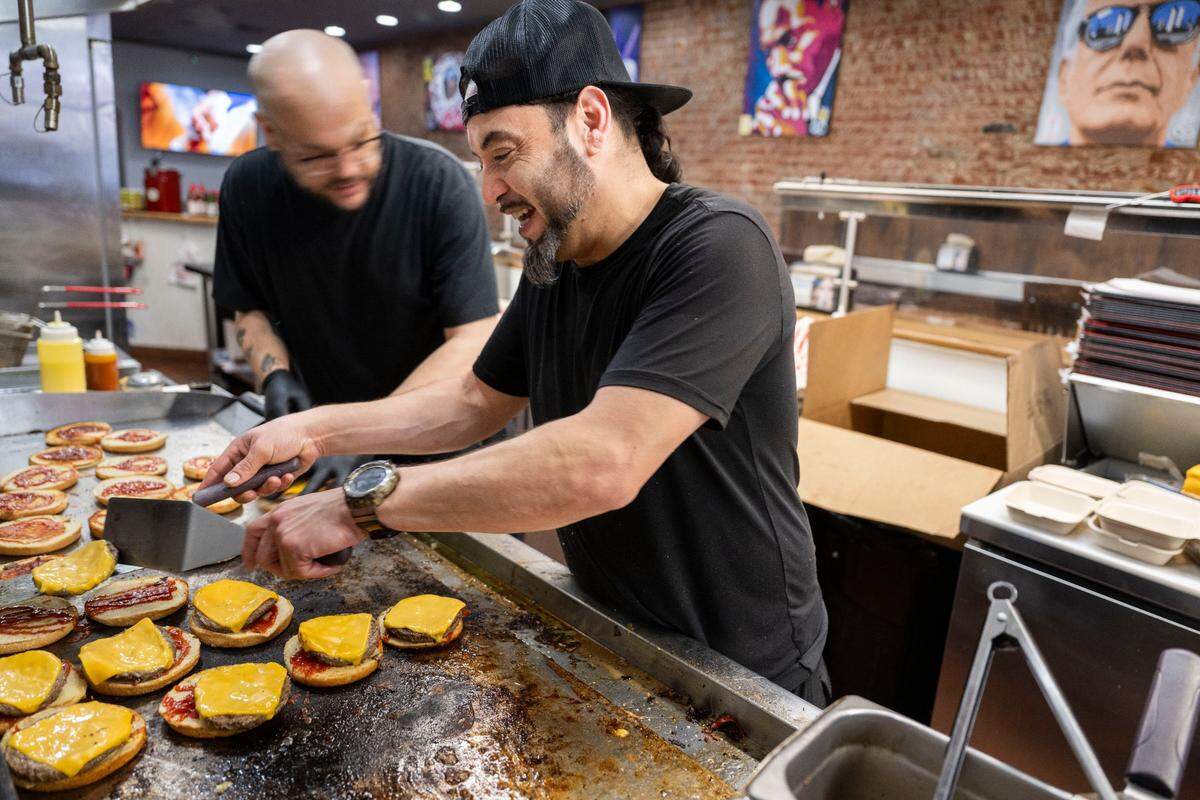
“I feel like I’m getting it double-sided.”
Castro started responding to the negative reviews. “You have never been here! We are not the reason you have to be back in office 4 days/ week,” he wrote after a one-star review that didn’t include any additional description.
“It really hurt me as a Sacramento native for people to hit me back like that,” Castro said.
Scott Ford, a deputy director of the Downtown Sacramento Partnership, understands why workers are frustrated about the mandate and are concerned about the increased costs and longer commutes it will cause.
“I would do the same,” he said.
But Ford is also a downtown evangelist and has big dreams for what the area could become: A densely packed place where people live, work, shop and have fun.
“There’s no question that downtown Sacramento is heavily reliant on the state of California workforce,” he said. “I think there’s a tremendous opportunity to build up on that backbone and diversify.”
On a recent Friday around noon, Ford stood on K Street as a few people walked by. The main downtown artery is where both Cho and Castro have their restaurants.
“K Street is a reflection of the health of the Sacramento region,” Ford said.
By that measure, the area has been sickly. In recent years, K Street has stood out more for its empty storefronts and large number of homeless people than as a vibrant center for activity.
That said, new establishments are still moving in. Sana’a Cafe opened at 9th and K streets in November, a prominent corner across from where Ford was standing.
“It’s a great location,” its general manager Hesham Hussain said. “The business is good, but it can be better.”
The number of customers during the day is unpredictable. Around lunchtime on a Friday last month several people were eating and sipping on drinks.
“The state workers will definitely bring a good wave for the business,” Hussain said.
Newsom is hopeful that is the case. How much of a wave, though, is ultimately up to the employees.
This story was originally published May 8, 2025 at 5:00 AM with the headline "CA state worker return-to-office order spurs hope, blowback for businesses."