Return of wolves sparks fear, strains law enforcement in rural California
AI-generated summary reviewed by our newsroom.
- Rising wolf populations spark livestock attacks and public safety concerns in rural CA.
- Five counties declared emergencies; officials urge easing protections on wolves.
- Researchers link wolves to calf stress, weight loss and rising ranching financial losses.
The wolf was quite literally at the door of the blue house on Highway 49 in Sierra County, tearing apart an elk on the front porch as the college-age son of the owner sat alone inside, listening to the thumps and snarls and hoping the latch was secure.
Sheriff Mike Fisher came out to investigate and he followed a trail of blood to nearby bushes. There he found the elk’s carcass, confirming by working with a state wildlife biologist that the tracks and teeth marks were made by two wolves.
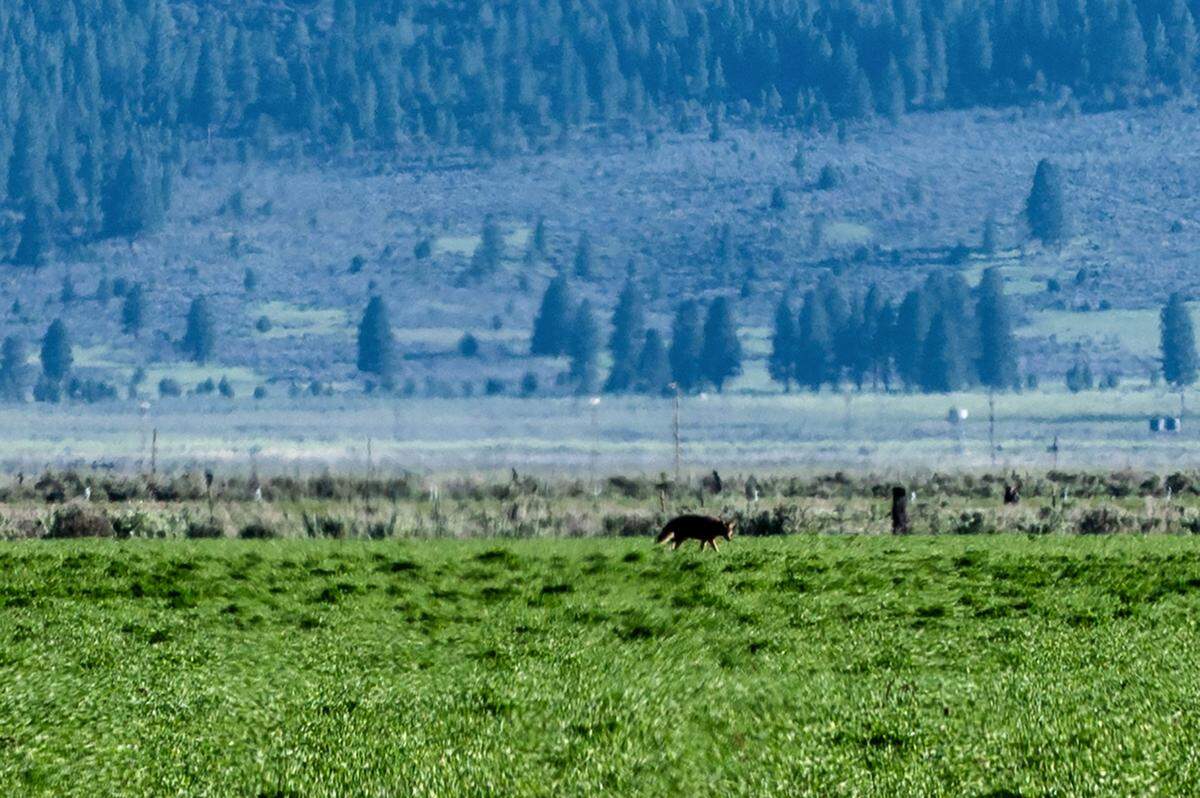
It was the kind of call that Fisher has been getting with increasing frequency as wolves, protected by conservation measures, return to the state after an absence of nearly a century. The canine predators killed or severely injured 27 calves in March and April of this year alone, state records show, alarming ranchers and costing the state millions to reimburse agricultural losses and help pay for fencing and other nonlethal deterrents. They are comfortable enough around humans to show up near houses and community centers, in one case killing a deer in a fenced yard just after a neighborhood spaghetti feed.
And they are sparking the kind of fear that led people to hunt wolves into near-extinction in many parts of the world in the first place.
“I go to the gas station. I go to a school function with my kids and I’m bombarded with questions,” he said. “What’s going on with the wolves?”
.JPG "SAC_0609_RCB_20250506_Wolves (1).JPG")
The wolf sightings and attacks on cattle are stressing rural law enforcement offices like Fisher’s, as he and a small cohort of deputies increasingly respond to those calls along with those involving misbehavior by humans, in this area generally involving drugs, alcohol , or domestic violence. He speaks daily about issues with wolves with his counterpart in neighboring Plumas County, and hears from worried constituents even when he’s off duty.
Five California counties — Sierra, Plumas, Shasta, Lassen and Modoc — have declared public safety emergencies due to wolves, begging the state to allow sheriffs more leeway to harass or, if necessary, euthanize the protected wolves if they pose a danger to people. Today, under state and federal endangered species protections, it’s illegal to kill a wolf unless it presents an immediate threat to a person, and interventions like using rubber bullets against wolves or firing beanbags at them are also banned.
“This isn’t just happening in the ranching lands,” Fisher said. “It’s happening in the communities.”
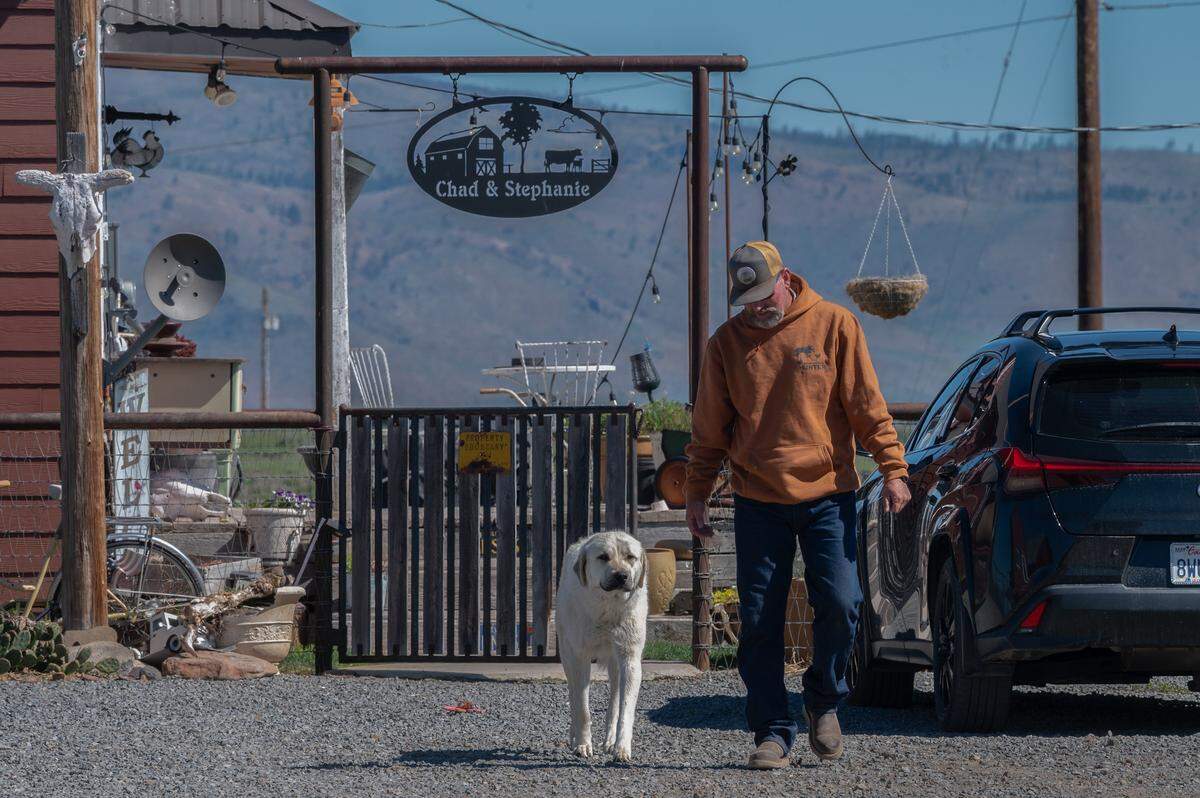
The concerns are palpable to a visitor to California’s northern rangelands, where talk of wolves was overheard in local restaurants and discussed at several ranches visited by The Sacramento Bee.
The state is beginning a process of re-evaluating protections for the gray wolf, triggered by the species’ success in re-establishing itself here. On June 10, wildlife officials said they were starting a pilot program for the summer grazing season aimed at keeping wolves from livestock and people, including a “strike team” comprised of staffers who are available day and night to drive them away.
But the process is likely to be contentious, as environmentalists fight to continue safeguarding the wolves as much as possible, and representatives of rural areas argue for greater leeway to use such methods as shooting rubber bullets to run them off or allowing local law enforcement officers to kill them.
The near-panic about wolves — and disagreement over what to do about it — comes against a backdrop of growing concern about wildlife predators in California, as coyotes, mountain lions and bears — along with wolves — are increasingly coming into contact with human communities.
Terrifying footprints
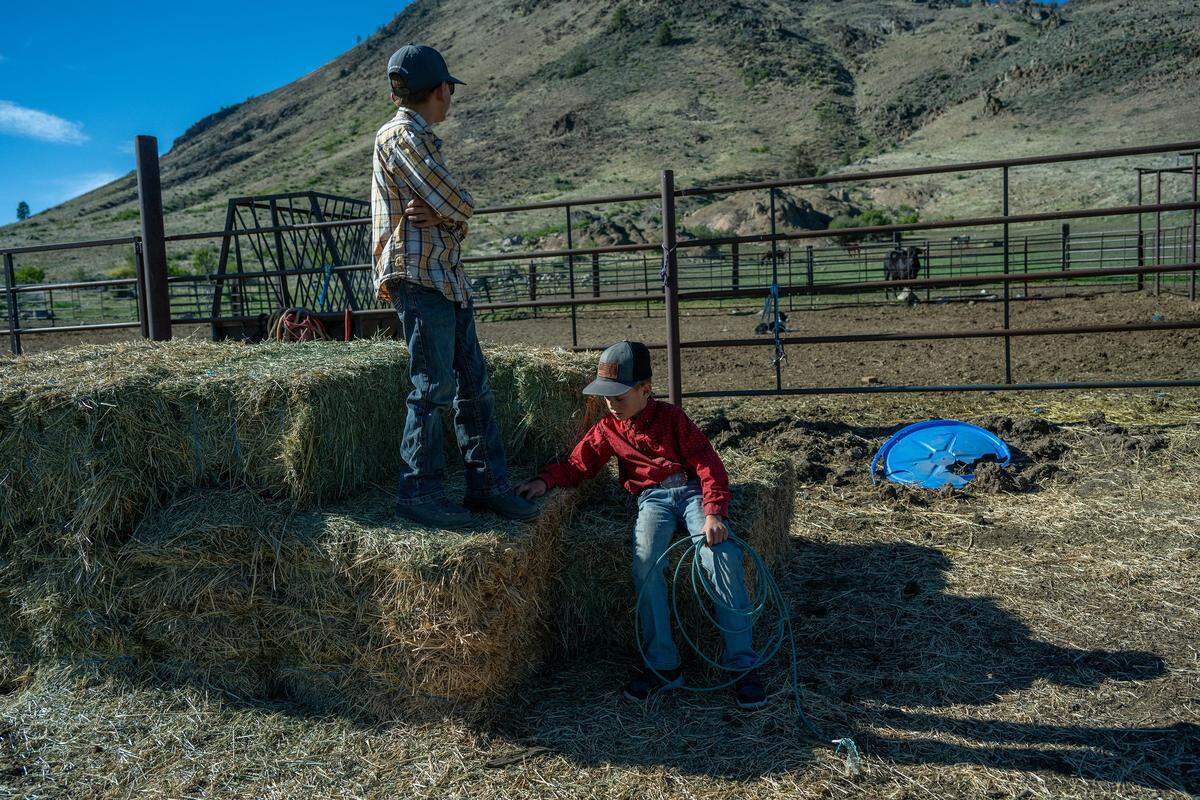
Dan Greenwood watched with pleasure one evening this spring as his three boys played with their cousins at their grandparents’ ranch in Sierra Valley, 100 miles northeast of Sacramento.
Wyatt, 12, Waylon, 9, and Walker, 7, ran and jumped, sometimes practicing their rodeo moves as the adults chatted.
Greenwood came out early the next morning and was shaken by what he saw: the child-sized footprints that dotted the yard were now overlain by paw prints, which, by their large size and the pattern they made, were likely left by wolves.
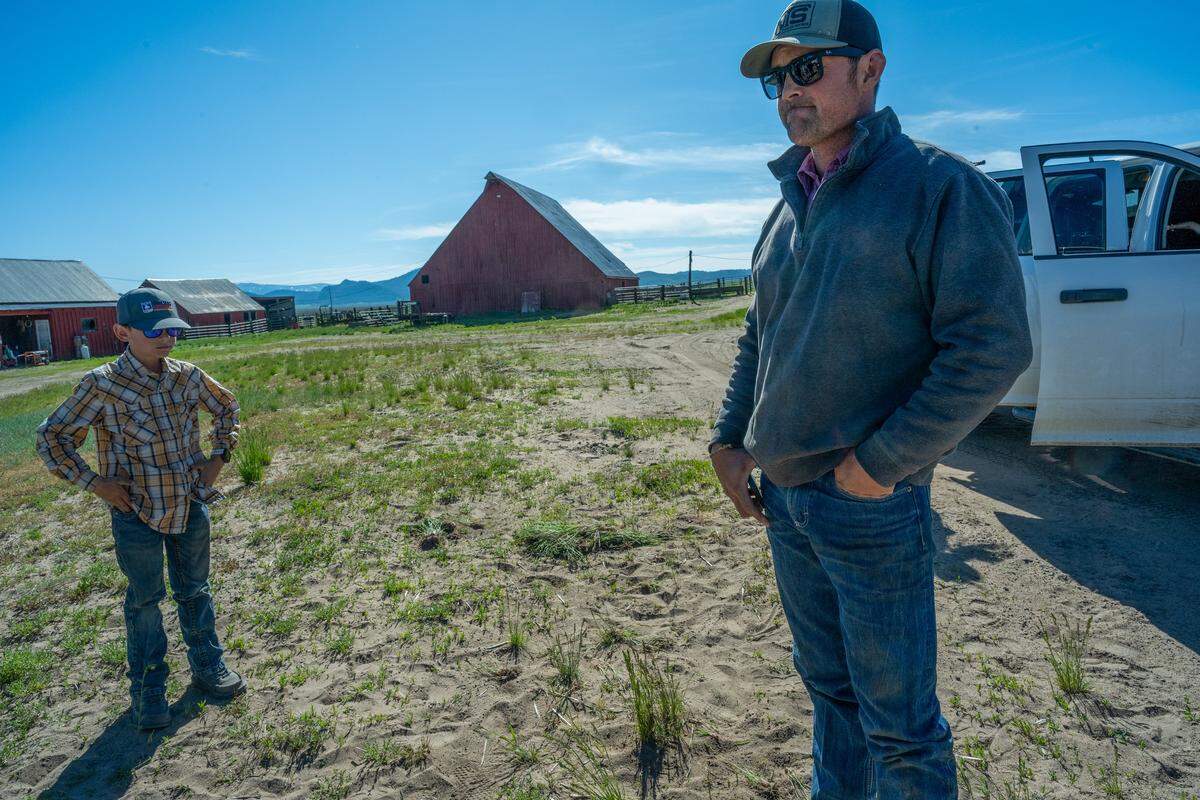
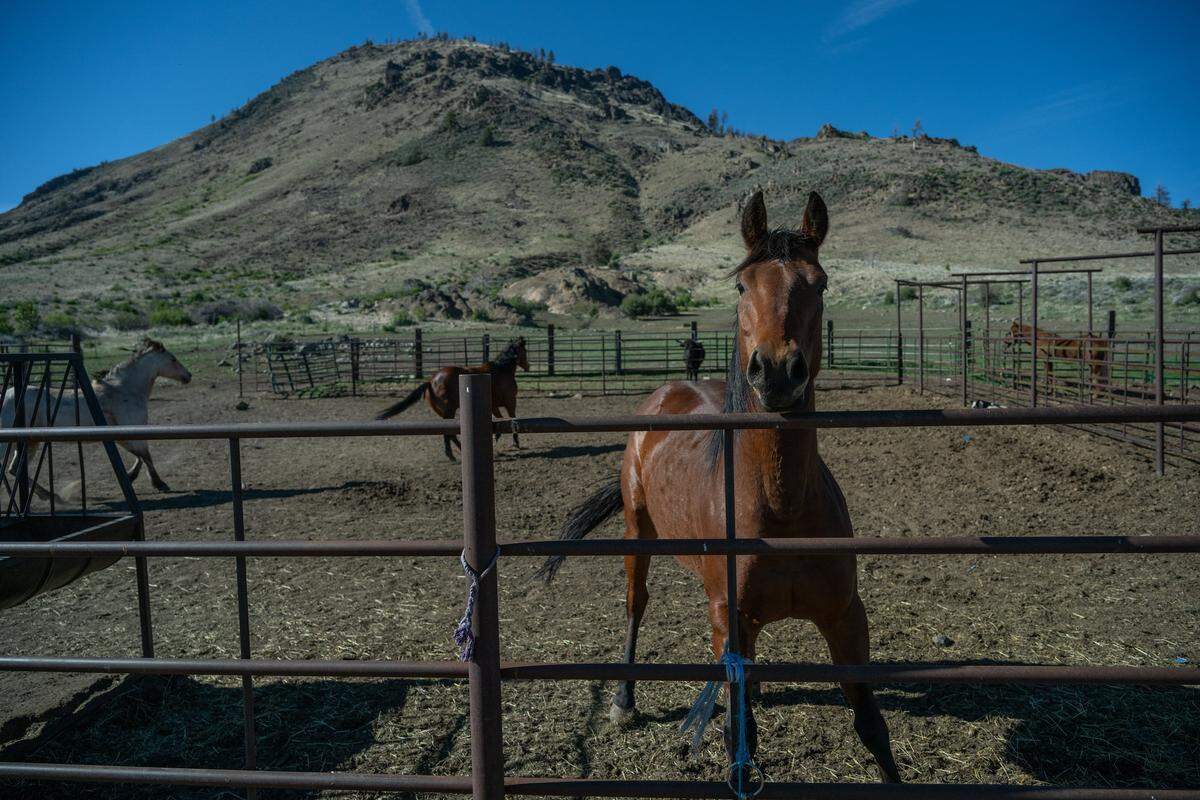
His ranch has lost two calves to wolves, and the boys have seen them several times — once chasing the family’s horses in their corral and once feasting on a dead cow.
“They’re huge, like scary gray dogs,” said Waylon. Wyatt, he said, once chased a wolf down on horseback.
When wolves attack a calf or cow, they essentially eat them alive, ranchers and scientists say, starting with the hindquarters. It’s a tortuous, painful death and disturbing to come upon. Sometimes the calves are still alive, but so badly injured that they need to be euthanized.
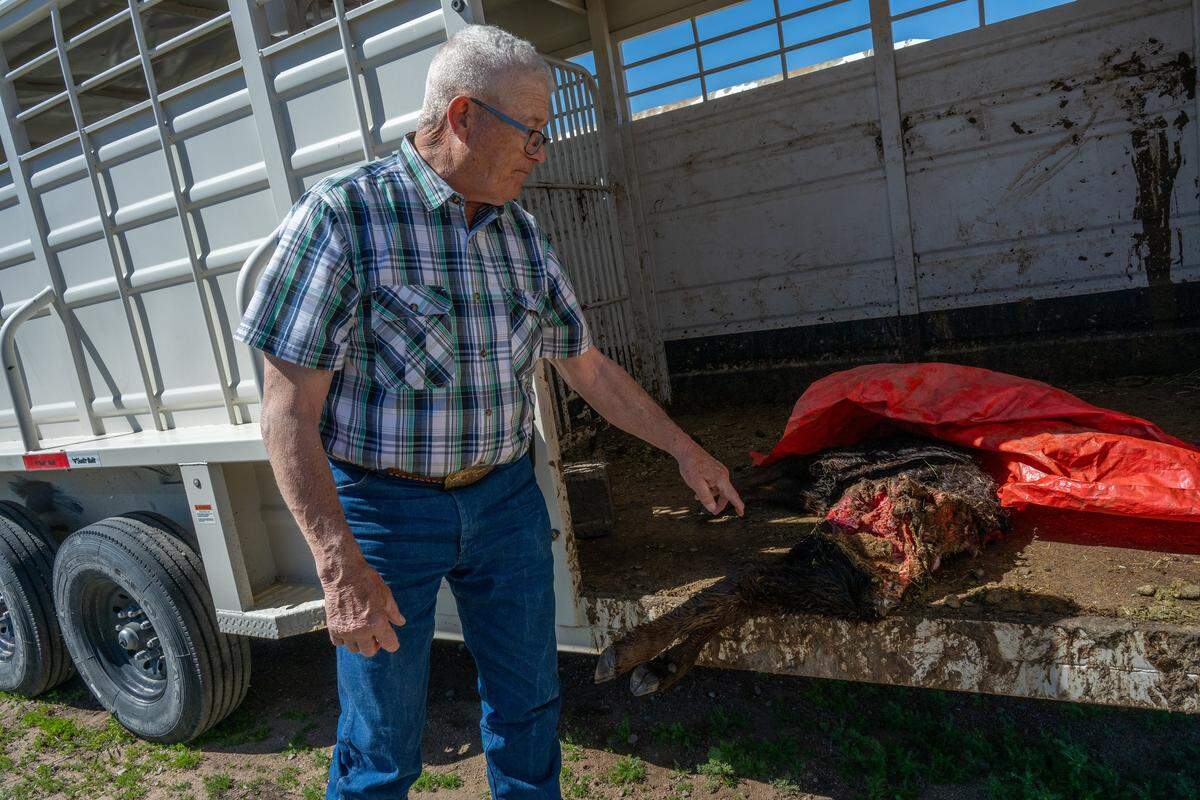
“When we were branding, we started noticing all these calves with big bite marks and big chunks taken out of their hips and backs,” said Deena Edmonston, whose family company operates ranches in Plumas County and Nevada. Two calves died after wolf attacks this year, and the company has decided to cut in half the number of animals brought to the California ranch to graze this summer, Edmonston said.
Rick Roberti, a rancher and president of the California Cattlemen’s Association, said he and his neighbors are conservationists and stewards of both their livestock and the animals that share the range with them.
The cattle raised on the ranch he operates in Loyalton are well cared-for, and sold to feed lots that abide by modern slaughter techniques, said Carolyn Roberti, who is married to Rick.

But the way the wolves attack the cattle amounts to torture, the pair said.
“It’s a terrible death,” Rick Roberti said. “My wife can’t stand it anymore.”
Greenwood said he has stopped himself from shooting at wolves that have attacked his cattle, respecting the law. But it’s very hard not to intervene, knowing the end result.
“Yes, they’re going to be slaughtered, but we try to take the best care of them that we can,” Greenwood said. “We’re not cruel people.”
But if a wolf were to go after one of his boys? “I’d kill it with my bare hands,” he said.
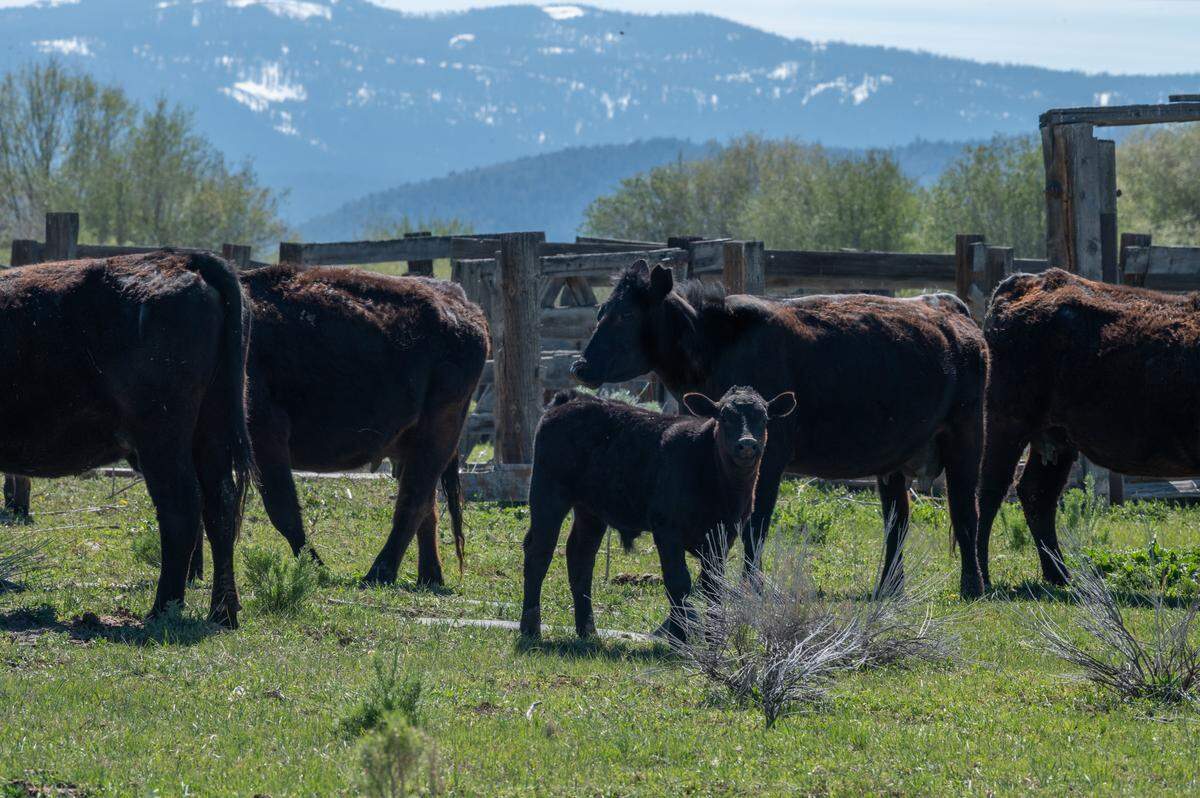
Scientists track cows, study wolves
The wolves are multiplying quickly, a sign of the species’ success under protection from both the federal and California endangered species acts. Two months ago, state wildlife biologists announced they had confirmed three new wolf packs, bringing the total to ten — up from seven just a few months earlier.
Their re-entry is so robust that scientists who study the wolves say that it won’t be long before they will have to go to another part of the state entirely to research what the landscape would be like without them.
A case in point is the research by UC Davis agricultural economist Tina Saitone and her husband, California rangeland scientist Ken Tate. The pair decided to try to quantify the consequences of returning wolves on ranchers, farmers and livestock. They chose a huge area to study — about a million acres in Lassen and Plumas Counties.
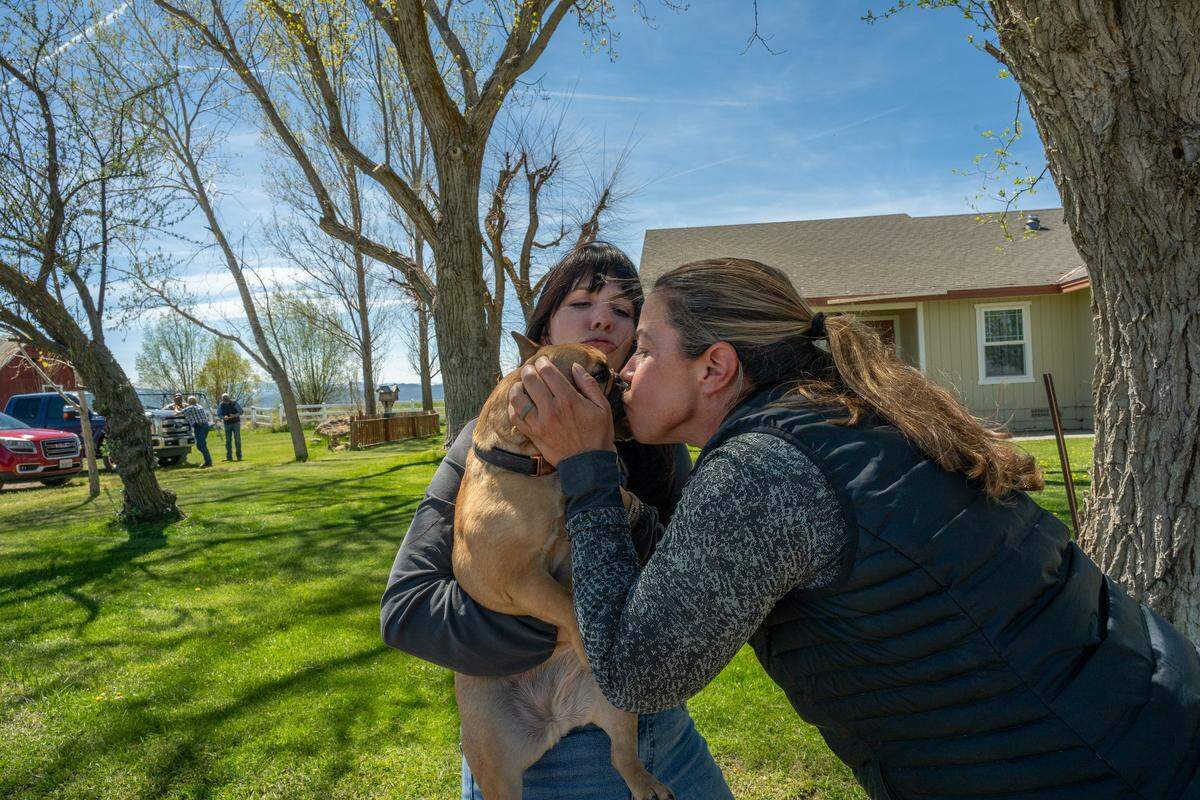
When they began their study in 2021, just three of the nine herds who grazed that vast range were affected by wolves, and the couple expected to use the rest of the grazing land and herds as their control samples — the places they could study where cattle did not interact with wolves.
But within three years, the wolves expanded to nearly all of the territory, with only one herd remaining unaffected, Tate said in May. Tate, a professor in the UC Davis Department of Plant Sciences and a longtime UC Cooperative Extension specialist, died unexpectedly while traveling in Oregon on June 5. He was 58.
“We may eventually have to get our control samples from Central California,” he said. “The wolves are all the way down to Lake Tahoe.”
To understand better the interactions between wolves and cattle, and assess any attendant costs, Saitone and Tate set up a network of 120 trail cameras to spot wolves and cattle as they ranged across the terrain.
They also reconfigured GPS tracking devices meant for shipping containers to fit on a strip of leather used as a collar around the necks of 140 cattle, so they could have a record of their movements.
The results were dramatic. The cameras and the collars showed that cattle were traveling farther than they usually would, often very late at night. One cow ran more than 13 miles in four hours in the middle of the night — trailed all the while by at least one wolf, the pair’s cameras showed.
Cattle exposed to wolves weighed less and had fewer calves, their as-yet unpublished results shared with The Sacramento Bee showed. Analysis of the hair on their tails showed an elevated level of the stress hormone cortisol. As for the wolves, nearly three-quarters of the wolf scat found in the study area contained DNA from cattle.
Each wolf causes from $69,000 to $162,000 in direct and indirect financial damage to ranchers, Saitone concluded. The direct damage includes full-on wolf attacks that kill or maim cattle. But the indirect damage, little studied in the past, comes from the high stress, low fertility rates and other health issues, the researchers said.
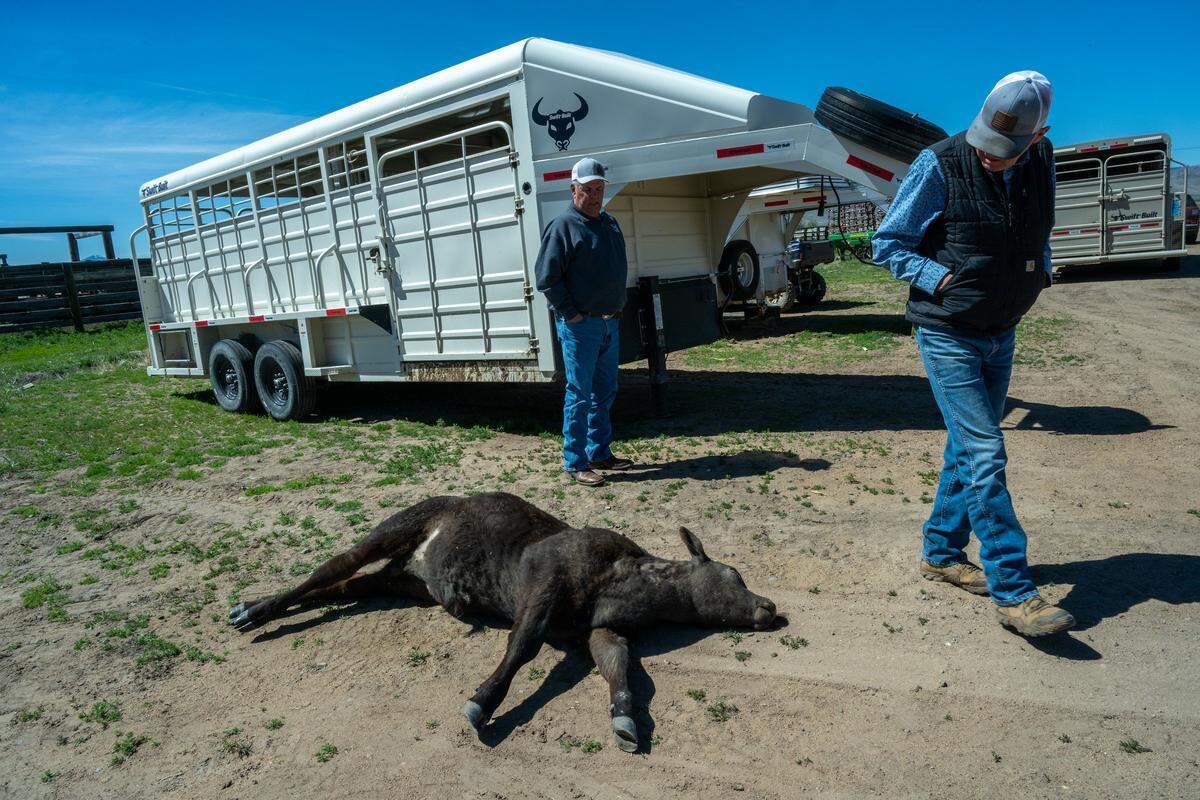
Their conclusions, which have yet to undergo the peer review process that accompanies publication in a scientific journal, have drawn criticism from some environmentalists, who insist that the wolves are being maligned.
Amaroq Weiss, senior wolf advocate for the nonprofit Center for Biological Diversity, points out that not all of the wolf habitat in California is near ranches or livestock. And she said that even though DNA from cattle may have found in wolf scat, the wolves may have scavenged the meat from cows that had already died.
“Disease, dehydration, starvation, birthing complications, eating poisonous weeds, that is what causes the deaths of 90-95% of livestock in any state, whether or not they’ve got wolves,” Weiss said, citing data from the U.S. Department of Agriculture.
And the high levels of stress hormone in the hair of cattle who live in areas where wolves have established themselves could be due to other factors, she said.
“There’s so many factors that can stress livestock,” she said. In addition to the presence of predators, cattle can be stressed by the way they are handled by their owners, and by the conditions for foraging on the range, she said.
But Axel Hunnicutt, the chief wolf biologist for the California Department of Fish and Wildlife, says he understands the concerns of ranchers and local communities who are fearful of the returning wolves. One trend that was not expected when conservation measures were adopted to protect wolves was that the returning animals would settle closer to agricultural areas, rather than in the wilderness that might be considered their more natural home, he said.
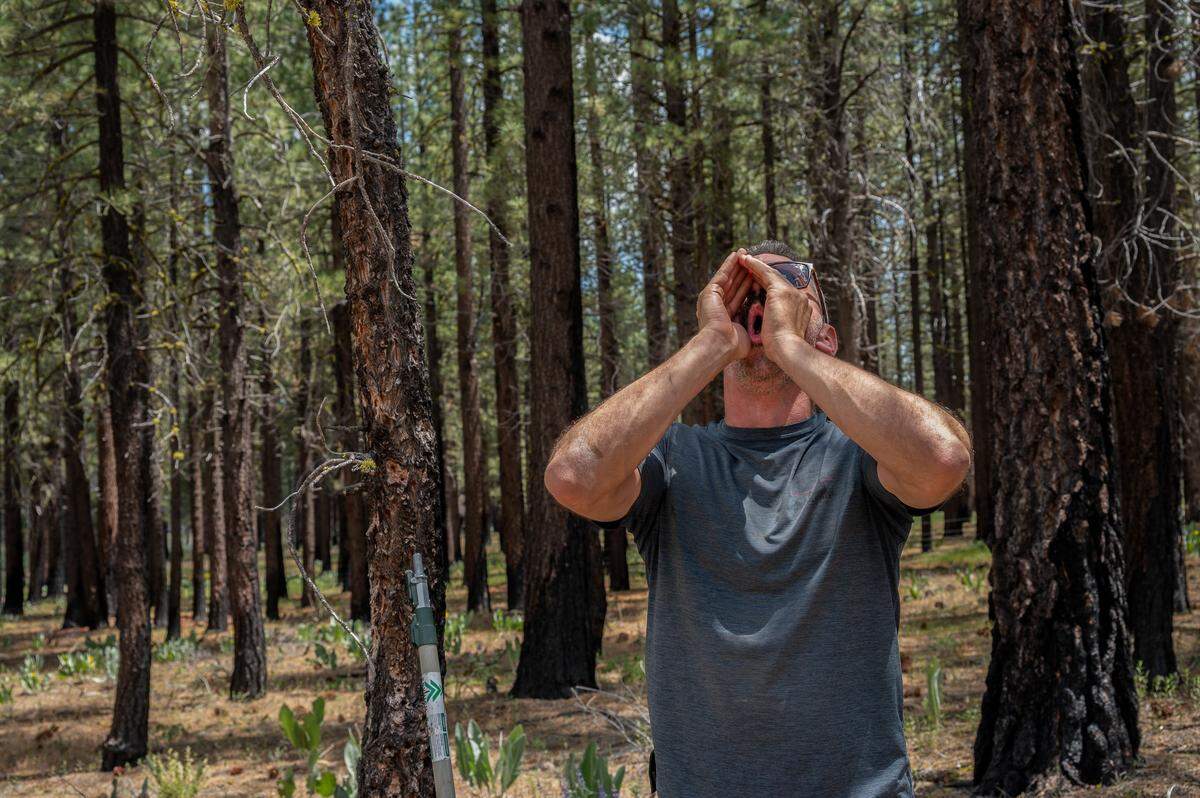
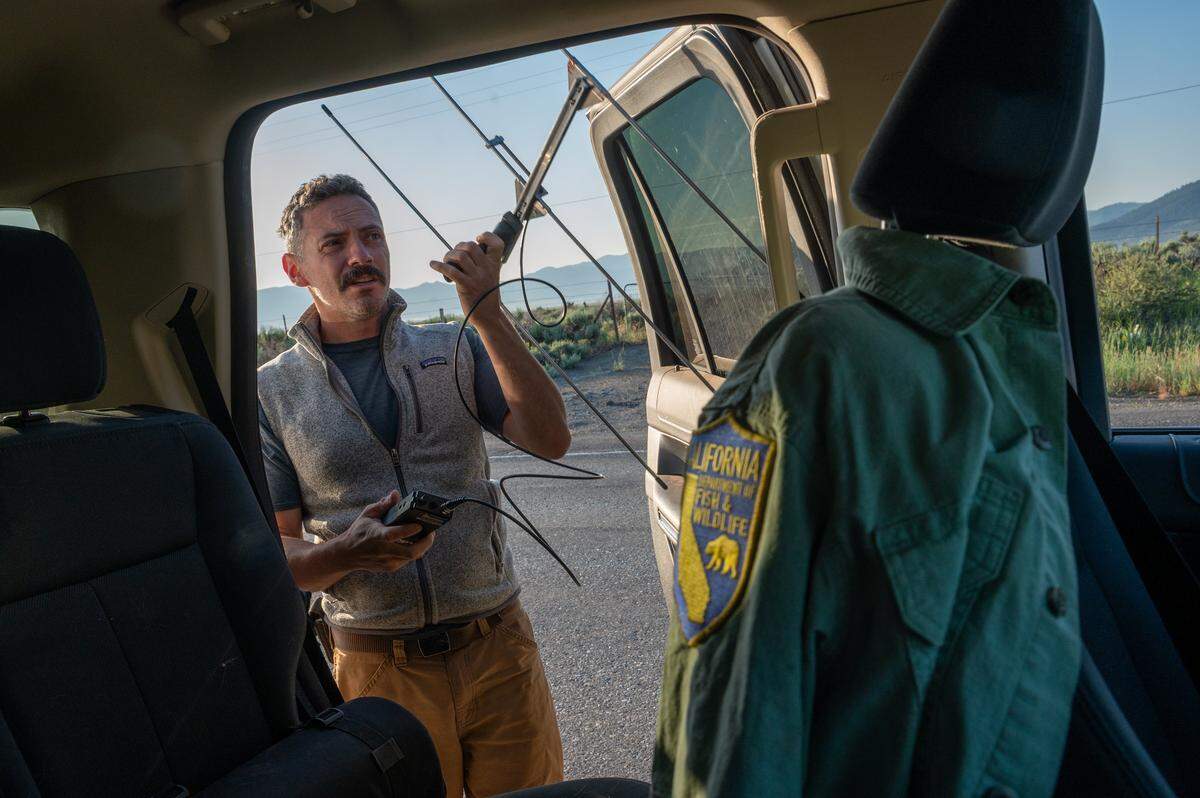
Hunnicutt spends several days a week in the field in the northern part of the state, checking on wolf dens, measuring footprints and clocking the location of wolves that biologists are tracking through GPS-enabled collars.
His job for the coming months and years is to help the state understand how robust the wolf population really is. As of April of this year, the animals had established themselves well enough that California entered what regulators call Phase Two of the state’s wolf conservation plan, triggering a review of their protected status and ushering in a period during which additional methods for controlling them could be allowed.
The catch, he said, is to make sure that wolves can still survive in California, even if humans are allowed more aggressive means of deterring them from attacking livestock or encroaching on towns.
“You want to make sure that you have adequate survival and adequate reproduction in order to say that they are not in danger of going extinct,” he said.

What’s the solution?
Under the rules set up under California’s 2016 gray wolf conservation plan, the animals are considered established enough to warrant more aggressive interventions once scientists have confirmed that there are four breeding pairs in the state, meaning a male and female wolf that have at least two pups that survive through December for two consecutive years. They will move to the next level of protection when there are eight breeding pairs, which in other states has resulted in about 150 wolves, the plan says.
But the details of those interventions, along with the question of if and when the wolves would no longer be deemed endangered, are still being developed.
The process is likely to be combative.
Republicans in Congress, including Rep. Doug LaMalfa, whose sprawling district includes most of the state’s northern ranch land, have proposed legislation that would de-list the wolf as a federally protected endangered species. At minimum, LaMalfa supports giving local law enforcement the power to shoot or trap wolves that have been aggressive toward livestock or people, said Mark Spannagel, his longtime chief of staff.
“Sooner or later one of these things is going to kill a kid,” Spannagel said. “They are hyper-aggressive and they are not afraid.”
But environmental groups are likely to fight any move to remove endangered species protections for wolves without strong evidence that they are no longer threatened, including a larger and more robust population in California.
When the first Trump Administration moved to de-list gray wolves in 2020, several organizations, including the Center for Biological Diversity, Sierra Club, Defenders of Wildlife and the Humane Society of the United States, sued in court to stop the move.
A judge put the action on hold, and the incoming administration of former President Joe Biden reinstated protections for most wolves in the United States.
Methods that ranchers can currently use to control wolves include making loud noises to frighten them off, building fences to keep them out of pastureland and increasing the presence of humans on ranches at night as a deterrent, the state’s guidelines for non-lethal ways to control wolves say.
Under the new strike team program, enforcement officers with the California Department of Fish and Wildlife can take stronger measures, shooting at them with beanbags or rubber bullets and harassing them with drones and all-terrain vehicles, officials said.
Weiss, of the Center for Biological Diversity, said any move to allow more aggressive hazing of wolves by civilians, such as shooting at them with beanbags or rubber bullets, would have to proceed very carefully and include significant training or risk seriously injuring the animals.
“You could break a wolf’s rib if the rubber bullet bangs off their rib, or you can certainly bruise them from that,” she said.
Allowing people to shoot them, she said, won’t solve the larger problem and could lead to the very conditions that caused wolves to become extinct in California the first time around.
If they’re killing livestock, she said, perhaps the ranchers need to feed their cattle better and make sure they are not weak. She dismissed the doorstep elk attack in Sierra Valley, saying that photos of the bloody aftermath showed paw prints that were more like those of a dog, even though Fisher said he and a state wildlife biologist determined they were made by a wolf.
Strain on local law enforcement
The slow pace of navigating the competing concerns of wolf conservation and community fear of harm has been excruciating, said Sierra County Supervisor Paul Roen, who with his colleagues in April unanimously voted to declare a public safety emergency regarding the wolves.
“We’ve been forced to deal with a lot of this stuff at the county level or with our local law enforcement,” Roen said. “So we’ve been pushing back, trying to get assistance.”
The emergency declaration, he said, was a way to try to force the state to the table to find a better way for local law enforcement to respond to a problem that has been thrust upon them, he said. The counties, he said, are paying for trappers and to respond to incidents, but their sheriffs still don’t have the authority to engage in the enhanced control techniques, much less actually killing a dangerous wolf unless it is actually attacking a human being.

State Fish and Wildlife officials said last week that it was able to haze, or engage in behaviors to drive wolves away, 21 times so far this summer and said its staff had spent 6,000 hours so far working to find and contain wolves in ranch country. But Fisher said the strategy is unsustainable, and simply pushing wolves from one ranch to another.
Rogue wolves who are known to be subsisting entirely on livestock should be “removed,” he said.
With most Californians living in cities far from wolves and supportive of environmental protections for endangered species, crafting a response will likely be tricky for Democrats who dominate state politics.
Residents cheered when the first wolf, known as OR7, crossed into California from Oregon in 2011. People watched him via webcams and kept up with his progress as he crossed back into Oregon, eventually fathering pups that came into California and stayed.
But ranchers and others living near the resurgent predators say the problems they cause can’t be ignored.
“We have a real challenge here, and not acknowledging it on either end doesn’t allow us to start to find a solution,” said Tate, the UC Davis rangeland scientist, in May. “We have to deal with what’s in front of us.”

This story was originally published August 1, 2025 at 4:58 AM with the headline "Return of wolves sparks fear, strains law enforcement in rural California."