What’s the kissing-bug disease? 100,000 Californians could have it and not know
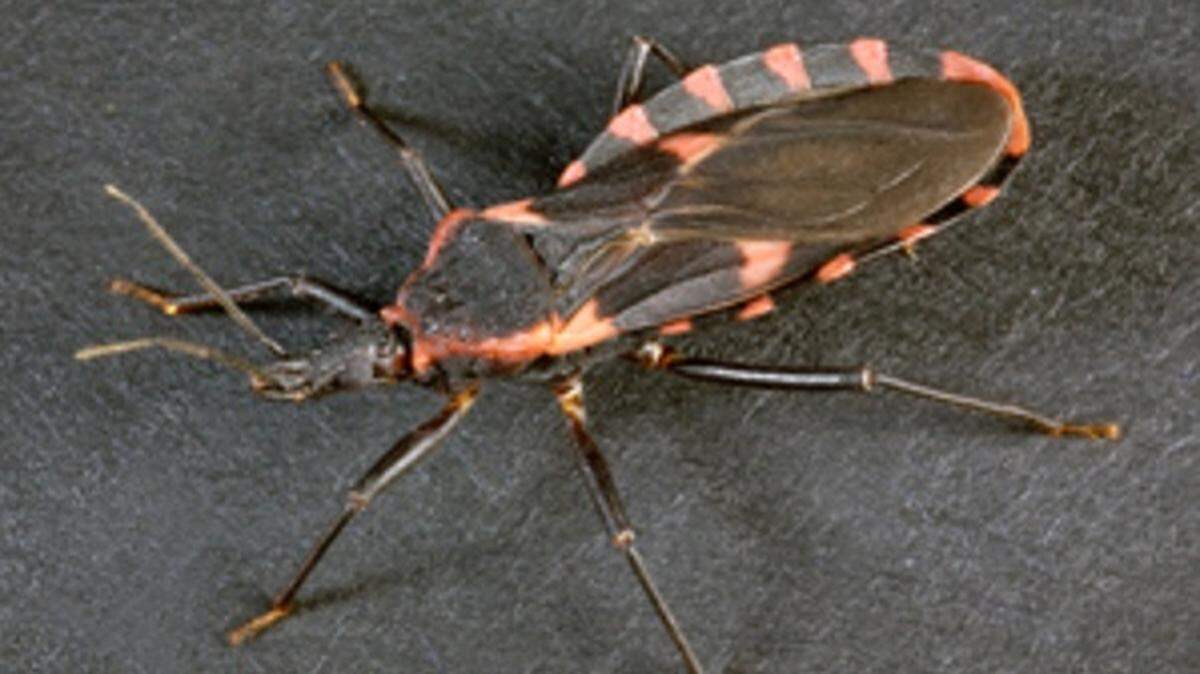
Nearly 100,000 Californians could have a deadly disease — and not even know about it until it erupts in serious cardiac and gastrointestinal issues, researchers say.
The illness, known as Chagas disease, is caused by a parasite that lives inside infected blood-sucking insects called triatomines but more widely known as kissing bugs, a team of researchers wrote in a paper published this week by The Centers for Disease Control and Prevention.
The researchers are affiliated with the University of Florida College of Medicine, Texas A&M University, the University of California Berkeley, and the Texas Department of State Health Services.
The illness can lie dormant for years, undetected until it causes the host to keel over in a heart attack or stroke — either of which could be deadly. And it was long considered only a threat abroad, even though the disease is well-established in California and about 30 other states, the researchers wrote.
Here’s what to know about the disease in California:
What is Chagas disease? How does it spread?
Chagas disease is caused by the parasite Trypanosoma cruzi and usually spreads through contact with feces from infected triatomine insects — more commonly known as kissing bugs.
Kissing bugs “become infected by biting and sucking blood from animals or people carrying the T. cruzi parasite,” according to the CDC.
“After feeding, these bugs pass the parasite in their feces. If the feces enter a person’s body through a cut or near the eyes or mouth, it can cause infection,” the agency said. “Infection can occur if someone unknowingly scratches or rubs bug feces into their bite wounds, eyes, or mouth.”
As of 2016, it reportedly affected more than 5 million people worldwide and was most common in rural areas of continental Latin America, where the disease is considered endemic — meaning it is consistently present, according to a paper published in the National Library of Medicine at the time.
It’s considered endemic to 21 countries excluding the U.S., even though there is an estimated 300,000 cases of chronic Chagas disease present in the country, the researchers said.
“Increasing evidence of T. cruzi parasites in the United States in triatomine insects, domestic animals, wildlife, and humans challenges that nonendemic label,” the researchers said in the CDC paper.
“Labeling the United States as non–Chagas disease–endemic perpetuates low awareness and underreporting,” the researchers said. “Classification of Chagas disease as endemic, in particular as hypoendemic, to the United States could improve surveillance, research, and public health responses” and “is crucial for achieving global health goals.”
It is one of “five neglected parasitic infections”tes in the U.S., “targeted for public health action because it causes serious illness in a large number of people, but many U.S. health-care providers are not familiar with identifying those at risk or managing the disease” because monitoring for it is not required in most state). Currently, it’s mandatory to report in seven U.S. states: Arizona, Arkansas, Louisiana, Mississippi, Tennessee, Texas and Massachusett;added
Researchers are calling on the World Health Organization and the CDC to label it as endemic, hoping the updated label will lead to greater awareness and funding to study it as a public health investment.
Why is Chagas prevalent in California?
Between 70,000 and 100,000 people in California are likely unknowingly infected with Chagas disease — the most of any state, according to the Center of Excellence for Chagas Disease.
“Most were infected while living in Latin America, but there are examples of local transmission as well,” the organization said. “This is because the kissing bugs that transmit the disease are native to California, and the infection has likely existed here for thousands of years.”
California and specifically Los Angeles are also home to a large population of people born in Latin America, the organization said.
The bugs can live both indoors and outdoors, hiding in cracks in the walls and roofs during the day and coming out to “bite and feed on blood,”ded according to the CDC. Outdoors, they usually live:
- Underneath porches
- In between rocky structures
- Beneath cement
- In brush piles, under bark and in rock or wood piles
- Inside rodent nests or animal burrows
- In dog houses or kennels kept outdoors
- And in chicken coops
“We had a kid from the Hollywood Hills who got it,” Salvador Hernandez, a cardiologist with Kaiser Permanente in Northern California, told the Los Angeles Times. He told the news outlet the child hadn’t traveled out of the country and likely got it from his “leafy, affluent neighborhood”ded where kissing bugs are common.
The parasite has been found in local wildlife, including wood rats, skunks, bats, black bears, and raccoons and mice in Griffith Park, the outlet and the organization said.
The bugs are not only partial to mammals and have been detected feeding on “ocelots, bobcats, coyotes, birds, reptiles and amphibians,” the LA Times reported.
California doesn’t require physicians and health systems to report and track Chagas disease the way it does with influenza, Lyme and malaria, the outlet reported. But it’s considered a reportable disease in San Diego and Los Angeles counties, which was the “first county in the state to mandate reporting the disease,”ded according to the publication.
This story was originally published September 4, 2025 at 5:00 AM with the headline "What’s the kissing-bug disease? 100,000 Californians could have it and not know."