As ICE worry persists, CA department asks employees to verify work eligibility
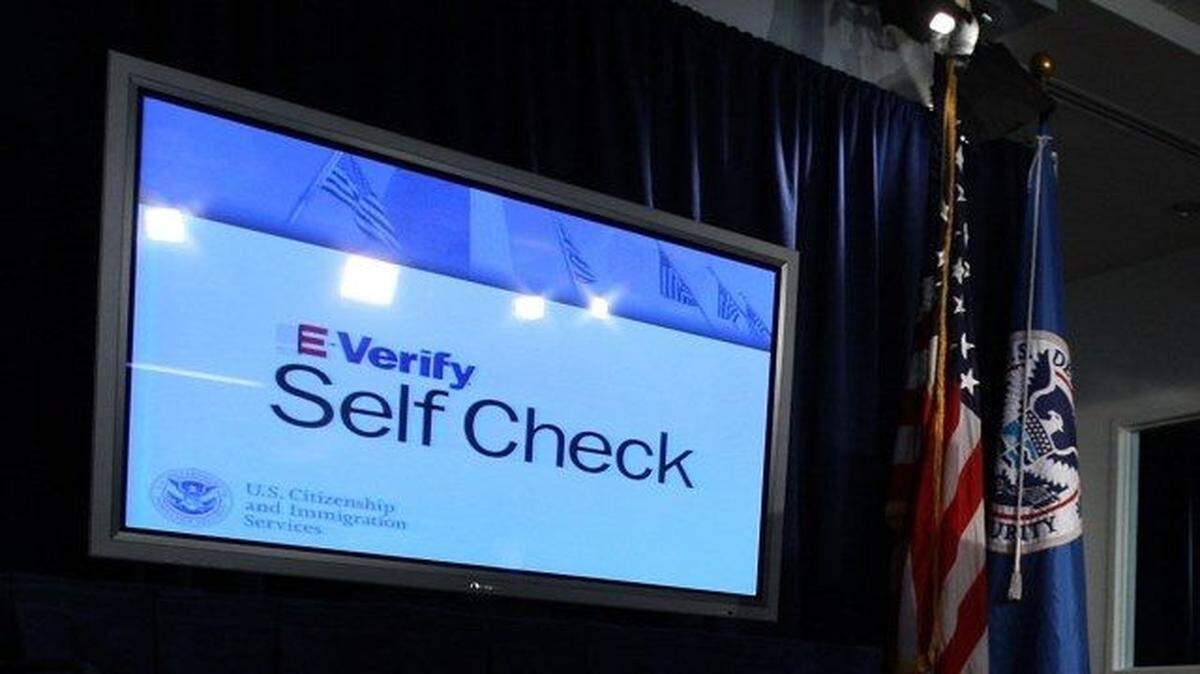
The California Department of Public Health recently directed its employees to reconfirm their eligibility to work in the United States using E-Verify, a federal employment eligibility verification system, to prevent the loss of federal funding.
The public health department, which has over 4,500 full-time employees, said the new system E-Verify+ would help modernize the agency’s human resources process. In a document shared with employees earlier this month that was obtained by The Sacramento Bee, the department noted that proving employment eligibility “is necessary to maintain federal funding and avoid penalties or disqualification from future contracts.”
While the requirement that federal contractors verify employees’ ability to work in the country is not new, this request by the public health department alarmed labor groups representing state employees in light of the aggressive immigration enforcement tactics pursued by President Donald Trump’s administration.
“Most of the concern is about data privacy and whether or not this is going to encourage ICE to show up at work sites,” said Jacqueline Tkac, the president of the California Association of Professional Scientists.
At least one California department has issued a notice to employees about what to do if Immigration and Customs Enforcement or Customs and Border Protection agents come to state government offices and demand to enter private areas. Tkac said her union has requested guidance from state officials about how workers should respond, but the response from departments has varied.
“Our office continues to fight federal overreach that would endanger and target vulnerable communities,” Tara Gallegos, a spokesperson for the Governor’s Office, said in response to a request for comment.
A public health department spokesperson said the E-Verify program uses the same information that the department requires for the paper Form I-9 process and that employees may opt out of the verification system.
Anica Walls, the president of the state’s largest representative of civil service employees, including roughly 3,000 public health department workers, said members have concerns about how this information is going to be shared among federal systems.
“Given the time that we’re in… both citizens and immigrant workers are understandably concerned about how employment data is being accessed and used,” the SEIU Local 1000 president said.
Walls said she has not heard of federal agents attempting to conduct immigration enforcement on state government property, but she has heard reports of ICE agents being present near state offices in Southern California.
Federal contractors required to verify employees’ eligibility
The public health department learned in August last year that the Centers for Disease Control and Prevention updated its contract for the National Death Index, which serves as a source for researchers to obtain mortality data, according to the memo that was first reported by CalMatters. The renewed agreement included language that “agencies with certain federal contracts must use E-Verify to confirm the work eligibility of employees assigned to those contracts.”
The state department directed employees to use E-Verify+, a modern version of E-Verify produced by the federal government that allows employers to electronically submit the Form I-9, a legal work authorization document, to check if workers are legally eligible to work in the United States.
State employees are required to submit the Form I-9 when beginning their civil service careers, a spokesperson for California Department of Human Resources said in a statement. Individual departments, not CalHR, are responsible for confirming new hires’ eligibility to work in the U.S.
In response to questions about the National Death Index contract, a spokesperson for the federal agency said that the CDC includes standard contractual language in regard to employment eligibility verification.
The requirement that federal contractors use E-Verify to confirm employees are legally allowed to work in the United States has been a rule for over a decade, said Robert Wagman, the head of the government contracts practice at the law firm Bracewell LLC.
Wagman said that the requirement to verify workers’ employment eligibility differs for federal contracts and grants. Roughly 13% of awards California receives from the federal government are contracts, which totaled over $62 billion, according to the latest U.S. government spending data.
“A lot of state agencies get money through federal grants where this would not necessarily apply,” he said.
According to E-Verify’s database of enrolled employers, several California departments have opened accounts with the federal service in the last year.
In addition to CDPH, the California Department of Corrections and Rehabilitation and the California Department of Housing and Community Development both enrolled in the employment eligibility verification system last year. CDCR had previously enrolled in the verification system in 2023, according to the federal database. Neither department responded to a request for comment.

Announcement spreads fear among employees
Tkac expressed frustration with how the public health department, which employs members of CAPS-UAW, communicated this new requirement that spread fear among some state employees.
Some CAPS-UAW members who have begun the E-Verify process have received “tentative nonconfirmation” notices due to mismatches between the information entered and federal records, Tkac said. But those mismatches can stem from something as simple as a typographical error or someone changing their last name after getting married.
Employees who receive a mismatch have eight federal workdays to resolve the issues directly with the Social Security Administration or the Department of Homeland Security, the memo sent to state employees said. It’s not clear what could happen to employees who don’t resolve these mismatches, Tkac said.
The public health department said using E-Verify will improve onboarding of new employees and reduce errors. The memo noted that the information being requested as part of the E-Verify process, such as Social Security numbers, visas or passport information, is already held within federal systems. The memo noted employees can opt out of the E-Verify system, but they would have to verify their employment eligibility in person.
“While we understand concerns about data privacy, please know that CDPH takes data security seriously and is committed to protecting employee information by ensuring a secure process is used for all aspects of the employment verification process,” the document stated.
Expanded immigration enforcement under Trump
The request to confirm public health employees’ eligibility to work was unnecessary, Walls said. It sparked further anxiety around the federal government’s aggressive immigration enforcement activity, which among other things has resulted in the detainment of U.S. citizens and the deaths of several Americans.
In November, the California Department of Health Care Services sent a memo to its employees informing them of steps to take if federal immigration agents show up at government buildings. The department advised workers to immediately contact the legal services division of the department and collect the information about the agents and purpose of their visit.
“If federal immigration agents seek access to private or nonpublic areas of DHCS, inform the agents you are contacting legal counsel, and are not authorized to grant entry or answer questions,” the memo read.
The department did not respond to questions about whether federal immigration agents had shown up at state offices in the past year. In a statement, department spokesperson Anthony Cava said, “Federal immigration enforcement has expanded and changed in the past year, thereby making it important for DHCS employees to understand applicable federal and state laws as well as proper protocols in the event of such visits to effectively communicate with federal immigration agents and reduce disruption to state operations.”
In light of the increased presence of ICE agents across the state, SEIU Local 1000 hosted a “Know your rights” training for members last summer to educate state employees about what to do if federal agents come to their workplaces.
“We’re trying to make sure that we arm our employees, our members, with the information that they would need to hopefully stay as safe as possible in those situations,” Walls said.
This story was originally published January 31, 2026 at 5:00 AM with the headline "As ICE worry persists, CA department asks employees to verify work eligibility."