
Home fires killed more than 100 people in California. Are you prepared for one?

A fire inside a home can be terrifying, even deadly. But there are ways to easily prevent and prepare for one. The easiest, cheapest and most effective way is to have a working smoke alarm.
In California, 113 home fire deaths were reported by news media last year, according to the U.S. Fire Administration. Nationwide, the number was 2,129.
In addition to the many steps you can take to prevent a residential fire, knowing what to do during one could save your life.
What to do during a fire in your home
The most common piece of advice fire experts give on what to do when a house fire breaks out is simple: Get outside and call 911.
It might seem like instinct, but sometimes it’s not. Attempting to put out the fire, trying to save sentimental objects or panicking could delay escape. And time is usually not on the occupants’ side.
According to the Fire Administration, a small flume can turn into a major fire within 30 seconds. In minutes, thick black smoke and toxic gases can fill the home, killing more people than burns do.
While attempting to get out of the building and call 911, it’s important to remain as close to the ground as possible. Room temperatures in a house fire can be 600 degrees at eye-level, but 100 degrees on the floor. Crawling also can prevent inhaling toxic fumes.
A gray area of advice from fire experts is whether an occupant should try to put out the fire from the interior, or if it’s too late. Capt. Justin Sylvia, a spokesperson for the Sacramento Fire Department, said if the fire isn’t immediately responding to what you’re doing, leave.
Jeff Santos, a deputy marshal for the Modesto Fire Department, said some people might be overconfident in their abilities and cause further harm. Having a fire extinguisher and a fire blanket (a specialized material designed to put out small fires) is great. But if there’s a clear exit, get out of the building and let the professionals handle it.
“That’s why you have a fire department, that’s why they’re trained, that’s why they have specialized equipment and that’s what they do for a living,” Santos said.
Before opening a door, feel it and touch the doorknob. If either is hot, or there is visible smoke, don’t open the door — find another way out. If necessary, open it slowly and be prepared to shut it if there’s smoke or fire. Experts recommend closing doors behind you as you exit a home, to deprive the fire of oxygen.
If there’s someone you can’t reach, leave the building and call 911. Tell the emergency operator where the person is. The same goes for pets.
When trapped with no way to escape, close the door, cover its cracks with cloth or tape, cover any vents and call 911. Through a window, signal arriving firefighters by using light-colored cloth or a flashlight.
If your clothing catches fire, stop, drop, roll and cover your face with your hands. If you or someone else cannot do this, smother the flames with a blanket or towel. Pour cool water on burns and cover them with clean, dry cloth.
Preventing a fire
Your actions during a fire can mean the difference between life and death, but preparedness may keep you out of a deadly situation to begin with.
Having smoke and carbon monoxide detectors that work is the single most important thing to prevent death or injury during a fire. As a fire burns the home’s contents, deadly gases including carbon monoxide are released.
“That’s when bad things happen because you don’t have any notification,” Santos said. “You might not get woken up, period. You might not know anything.”
Most fire departments, including Modesto’s, offer free smoke alarms for those who can’t afford them. The American Red Cross also offers free smoke alarms for several counties in California, including Madera, Fresno, Kern, Inyo, Mono, Tulare, Kings and San Luis Obispo.
It’s easy to forget about them, but making sure they work on a monthly basis is important. It’s also best to not ignore the high-pitched “chirp” it makes when the battery is low. A detector with a low battery isn’t guaranteed to work.
Smoke alarm tips from the Fire Administration and the Red Cross include:
- Install the right number of smoke alarms. The National Fire Protection Association advises they be installed in every sleeping bedroom, outside each separate sleeping area and on every level of the home. Test them once a month and replace the batteries at least once a year.
- Replace batteries twice a year, unless you are using 10-year lithium batteries.
- Replace the entire smoke alarm unit every 10 years or according to manufacturer’s instructions.
- Never disable a smoke alarm while cooking – it can be a deadly mistake.
- Alarms are available for visually impaired people, and smoke alarms with a vibrating pad or flashing light are available for the hearing impaired.
Smoking, cooking and other common causes
Nationally, smoking caused the largest share of residential fire deaths from 2019 to 2023. The Red Cross says to smoke outdoors only, use deep ashtrays and douse butts with water to prevent travelling embers.
Cooking was the leading cause of home fires and injuries during the same time period, according to the National Fire Protection Association. Do not throw water on an oil fire. Instead, move the pan or pot off the burner and try to smother the flame with a lid, baking soda, flour, a fire blanket or fire extinguisher. Turn off the burner.
Other cooking tips from fire experts include:
- Stay in the kitchen when you are frying, grilling or broiling food.
- Turn off the stove if you leave the kitchen for even a short period of time.
- Wear short, close-fitting or tightly rolled sleeves when cooking.
- Position barbecue grills at least 10 feet away from siding and deck railings, and out from under eaves and overhanging branches. Keep a fire extinguisher available.
Sylvia, the Sacramento fire captain, said a common home fire cause in his jurisdiction is sparking lawnmowers when a rock is run over and ignites dry brush. Hot weather is right around the corner and the growth brought by rain can result in tall, flammable fuel.
The captain recommended mowing the lawn to keep the height under control, but doing so in the early morning hours when it’s cool and dew is present to prevent ignition.
Other common fire causes include home appliances and electrical issues. Frayed wires can cause fires. Worn, old or damaged cords should be replaced. Cords should also not be run under rugs or flammable furniture.
If an appliance cord has three prongs, do not use an adapter to fit it in a two-prong outlet. It may short circuit. Light switches that are hot to the touch or produce flickering lights should be turned off immediately. Then they should be professionally replaced.
Space heaters, another common cause of home fires, should be evaluated by a nationally recognized laboratory and say so on the label. Do not buy any that don’t. Make sure the heater has a control mechanism that switches it off automatically if it falls over. Do not place any flammable objects within three feet of it.
According to the National Board of Boiler and Pressure Vessel Inspectors, gas water heaters can also be dangerous. Although contrary to popular belief, it is very rare for them to explode.
However, the area around the tank needs to be clear of dust, dirt, paper or any flammable liquids. Paint thinners, cleaning materials and gasoline should never be near them. If the heater is in the garage, ensure it’s 18 inches above the floor. This prevents the ignition of fumes from a car.
Carbon monoxide detectors are necessary if there is a gas-powered heater in the home. Poisoning from the gas kills 200 people a year and hospitalizes 10,000, according to the Board of Boiler and Pressure Vessel Inspectors. Ensure the heater is cleaned once a year. Have someone inspect the flues and vents for cracks or loose connections, which could leak deadly fumes.
Preparing for a home fire
Having an escape plan is crucial, experts say. The Red Cross even offers sample maps for single-family houses, multi-family houses and high-rise apartments.
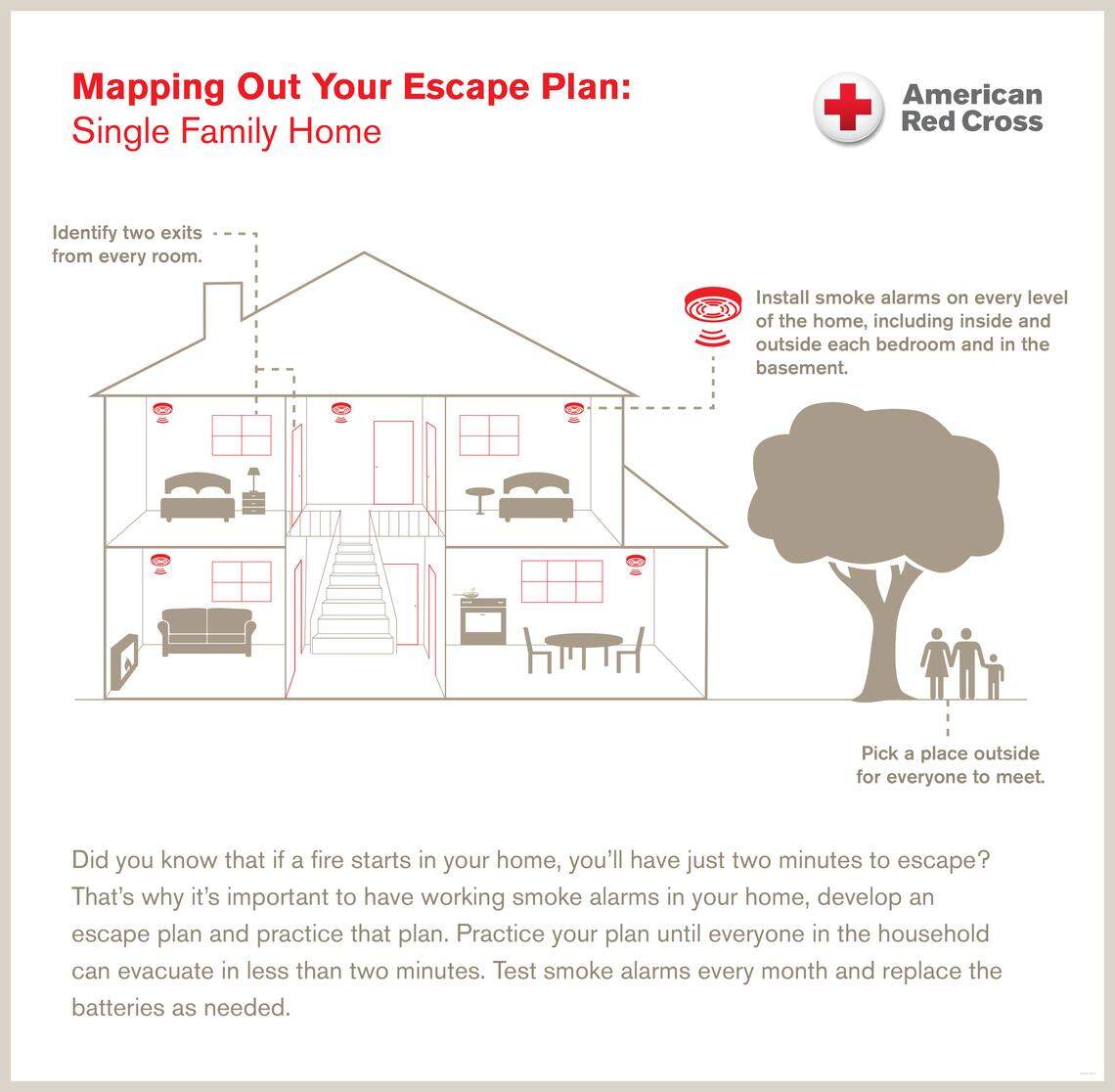
A plan typically includes mapping escape routes, designating a meeting point to do a head count in case phones are left behind, and making sure everyone in the home is on the same page. Mapping how to escape a home can mean everyone in the household knows what to do and reduce panic in the event of a fire.
Children especially should be taught what a smoke alarm sounds like, how to announce there is a fire (such as yelling, “Fire”) and not to hide, particularly from firefighters. Practicing an escape route with everyone is also beneficial, so that safe practices are the reflex to danger.
Other preparations include digitizing important documents in a cloud-based system, so that escape can be a top priority during a fire. Having them saved this way also ensures they won’t be lost if a hard drive is destroyed.
A so-called go bag — a backpack with essentials, cash, medications, etc. — also is recommended, but if it’s not easily accessible, escape is always the priority. The common thread among all advice is to have working smoke alarms and to get out of the building.
“Always have an escape plan with your family. That’s something you want to discuss,” said Santos.
This story was originally published April 2, 2026 at 2:00 PM with the headline "Home fires killed more than 100 people in California. Are you prepared for one?."
