The United Farm Workers built its political power around Chavez. Now it faces a reckoning
Long before findings that Cesar Chavez sexually abused women and minors for years, the California-based labor union he co-founded had already endured a long and painful decline in its organizing power.
At its peak in the early 1970s, United Farm Workers touted about 70,000 members. In recent years, membership has hovered just above 5,000.
Yet even as its membership shrank, UFW continued to wield influence in California politics far beyond its size and resources in part due to Chavez.
The union repeatedly drew on his name, mythology and moral authority over the years to advance landmark — and often controversial — laws for farmworkers. Now, in the wake of shocking revelations about Chavez earlier this year, a new question hangs over the union: How does the union retain its political and cultural influence while also distancing itself from perhaps the most famous U.S. Latino in history?
Interviews with nearly 20 political strategists, labor experts, farmworker advocates and lawmakers suggest the fallout will be felt less among workers in the fields — where organizing has long been difficult and Chavez’s name carries less weight — than in the Legislature, where he was synonymous with the farmworker movement. There is also a reality that the union, which has minimal assets, could face major financial and legal implications from potential civil sexual abuse claims.
“It’s going to make it more difficult for them,” said Gaspar Rivera-Salgado, project director at UCLA Labor Center. “How can you ask people to believe in a movement when the leader was engaged in such monstrous behavior.”
One of UFW’s first major tests in a post-Chavez era will be its effort to create a statewide minimum wage for certain agricultural employees. The bill, which was introduced earlier this year, is the first of its kind for farmworkers and sponsored by UFW.
The legislation would apply to people working in California on a seasonal basis and comes as President Donald Trump’s administration has moved to cut wages in the federal H-2A temporary agricultural worker program. Legislative leaders have declined to state a position on the bill thus far.
UFW declined multiple requests to interview union President Teresa Romero, the organization’s first leader who is a woman and not related to the Chavez family. In response to a list of questions about the potential effects of the Chavez findings on the union, a UFW spokesperson sent a written statement by Romero.
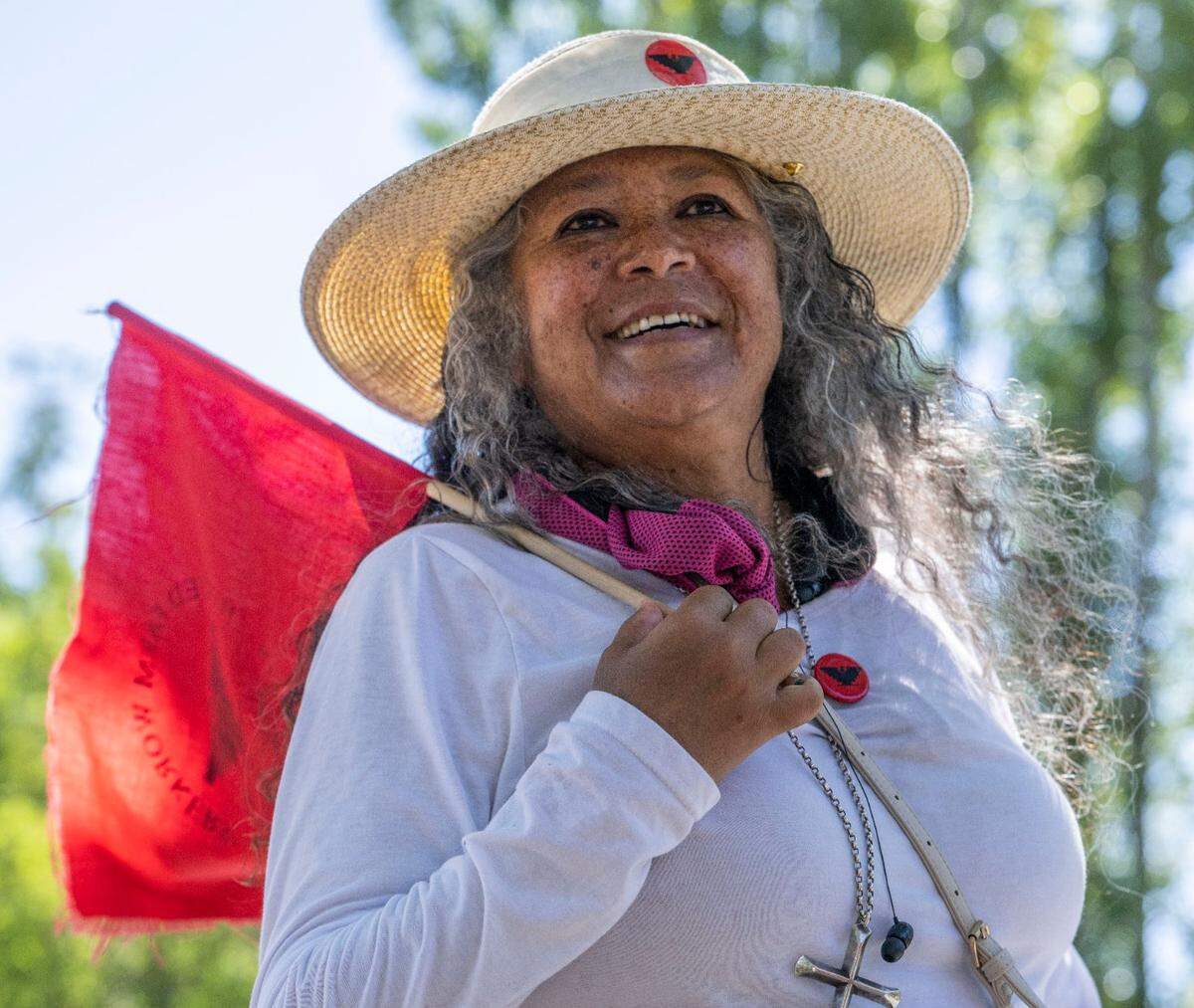
The statement cited decadeslong challenges for farmworkers to achieve fair wages, adequate working conditions, labor rights and the protections of citizenship while acknowledging some will “cynically attempt to use this moment of pain and healing to block progress.”
“We invite those who want to help farmworkers achieve these things to join us in our fight for justice in the fields,” Romero said. “Farmworkers want better for themselves and their coworkers. They wanted it yesterday, they want it today and they will want it tomorrow.”
‘He helped them’
Political advocacy has been central to UFW’s identity.
In 1975, Chavez alongside then-Gov. Jerry Brown helped champion the California Agricultural Labor Relations Act which created a state board to oversee disputes between workers and growers. It was the first law guaranteeing collective bargaining protections for agricultural employees, who were excluded from the National Labor Relations Act of 1935.
But with waning membership, UFW’s influence has largely been confined to politics in the last 25 years. The union has successfully lobbied for legislation on increased pesticide protections, overtime pay and heat protection for farmworkers.
In many instances, though, the bills have taken years to pass.
Former Assemblymember Lorena Gonzalez authored UFW’s overtime law that passed in 2016 after it was killed twice in years prior. She said the prolonged efforts reflected the reality of a group representing low-income and vulnerable workers battling for protections against California’s multibillion-dollar agribusiness industry.
“In the political sphere that’s a natural imbalance,” Gonzalez said.
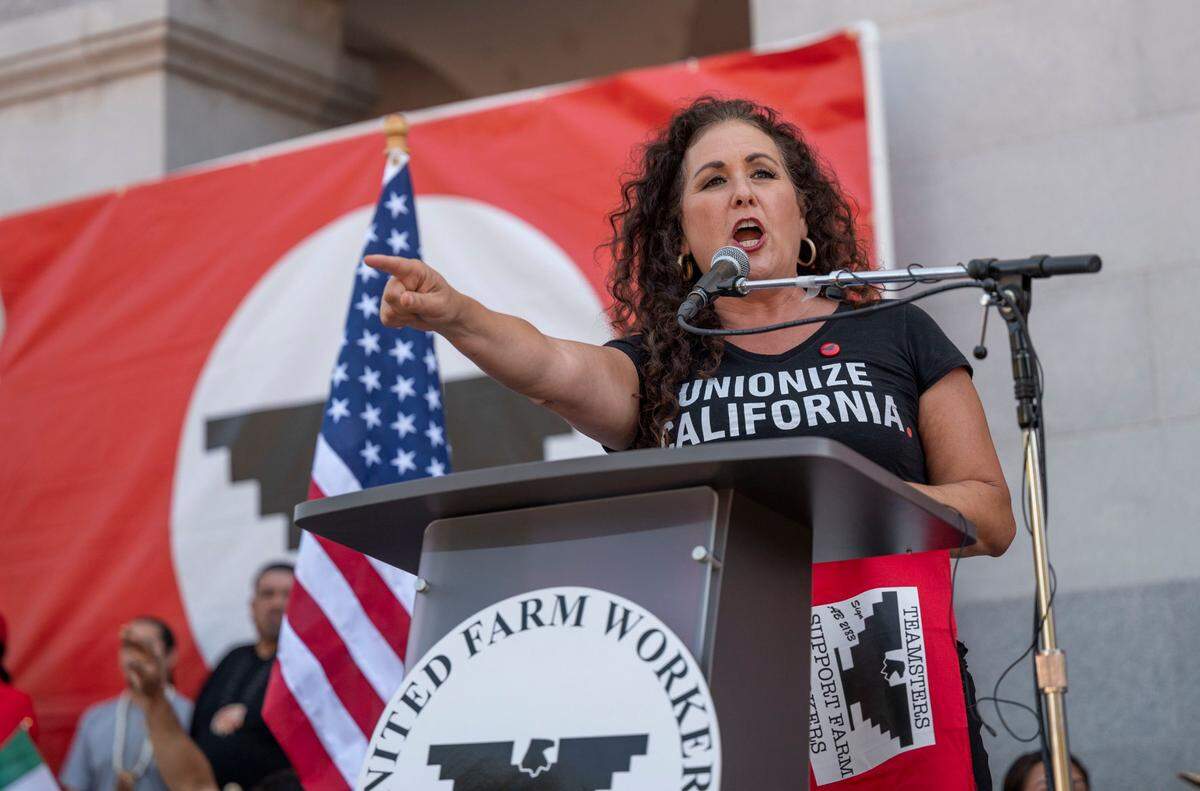
Mike Madrid, a longtime Republican political consultant, said UFW’s ability to pass legislation despite their organizing and financial limitations stemmed from the resonance of Chavez’s legacy with lawmakers, particularly within the California Latino Legislative Caucus. The influential group of Latino lawmakers, many of whom have immigrant or farmworker backgrounds, accounts for nearly a third of the Legislature.
“He helped them,” Madrid said. “There’s a whole persona. There’s a whole narrative. There’s a whole story of the struggle for farmworkers, very legitimate, that has been wrapped around the persona of one person.”
Sen. Melissa Hurtado, a Democrat who is the daughter of immigrant agricultural workers, said the farmworker movement was undeniably built around Chavez in both politics and public perception.
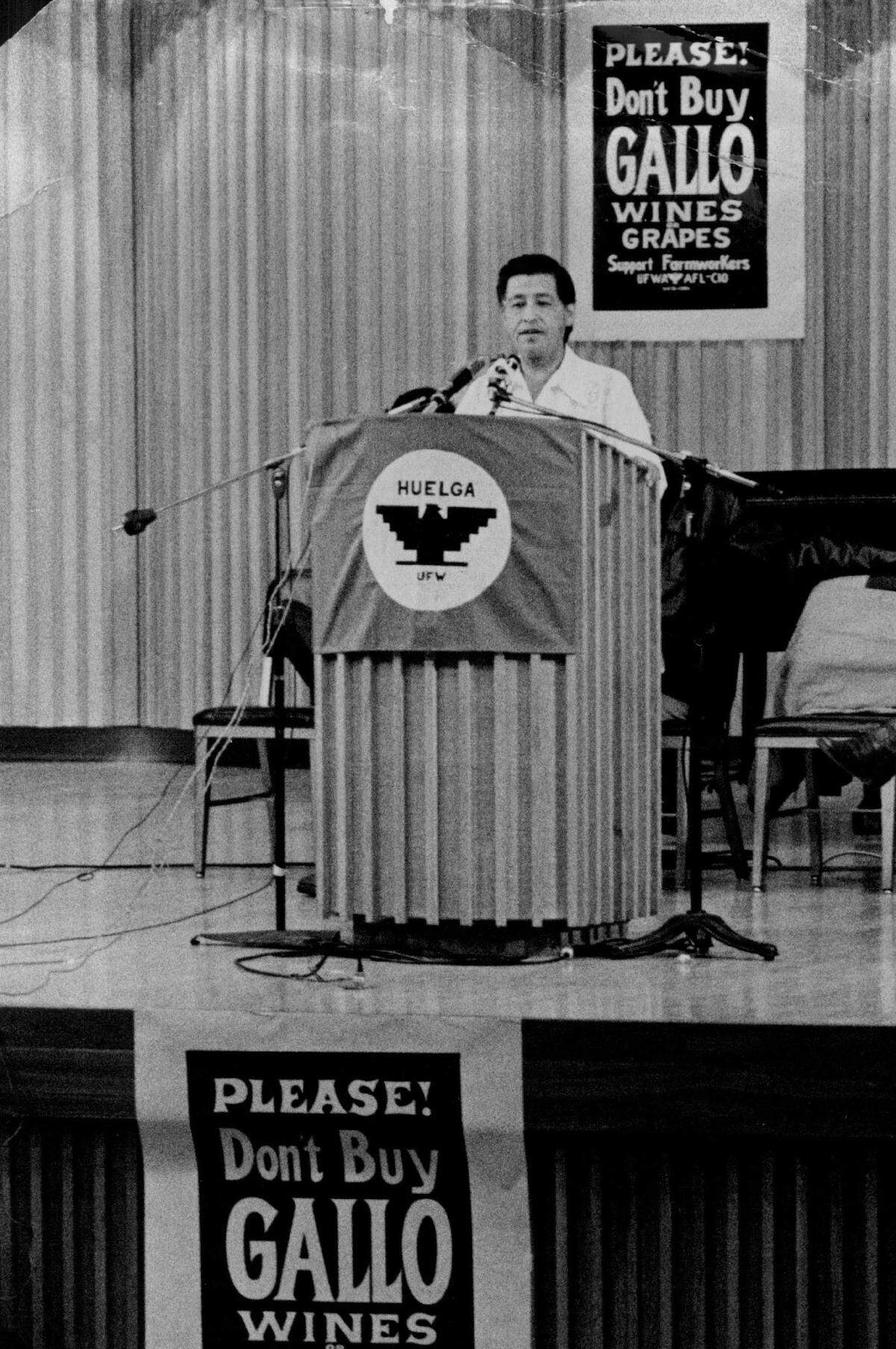
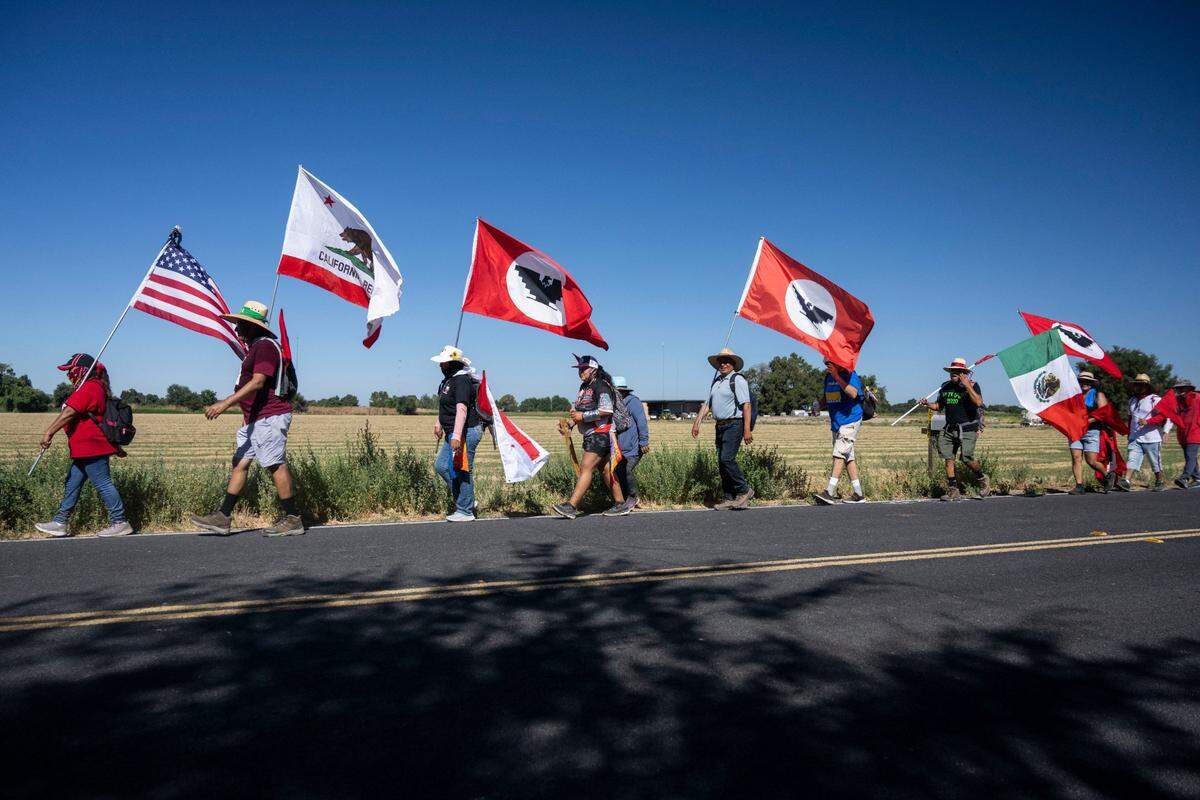
A 1983 poll by the Los Angeles Times found Chavez to be the most admired leader of Latinos. The UFW flag, which shows a black Aztec eagle on a red background, is routinely used in social justice movements including among younger Latinos unfamiliar with its origins.
“People recognize the two as being almost one,” Hurtado said.
The power of such a legacy was clear in 2022 when the union successfully passed legislation to allow farmworkers to unionize through signed authorization cards, a process known as “card check.” Versions of the proposal had circulated through the Legislature for more than a decade, but were vetoed repeatedly by Govs. Arnold Schwarzenegger, Brown and Newsom.
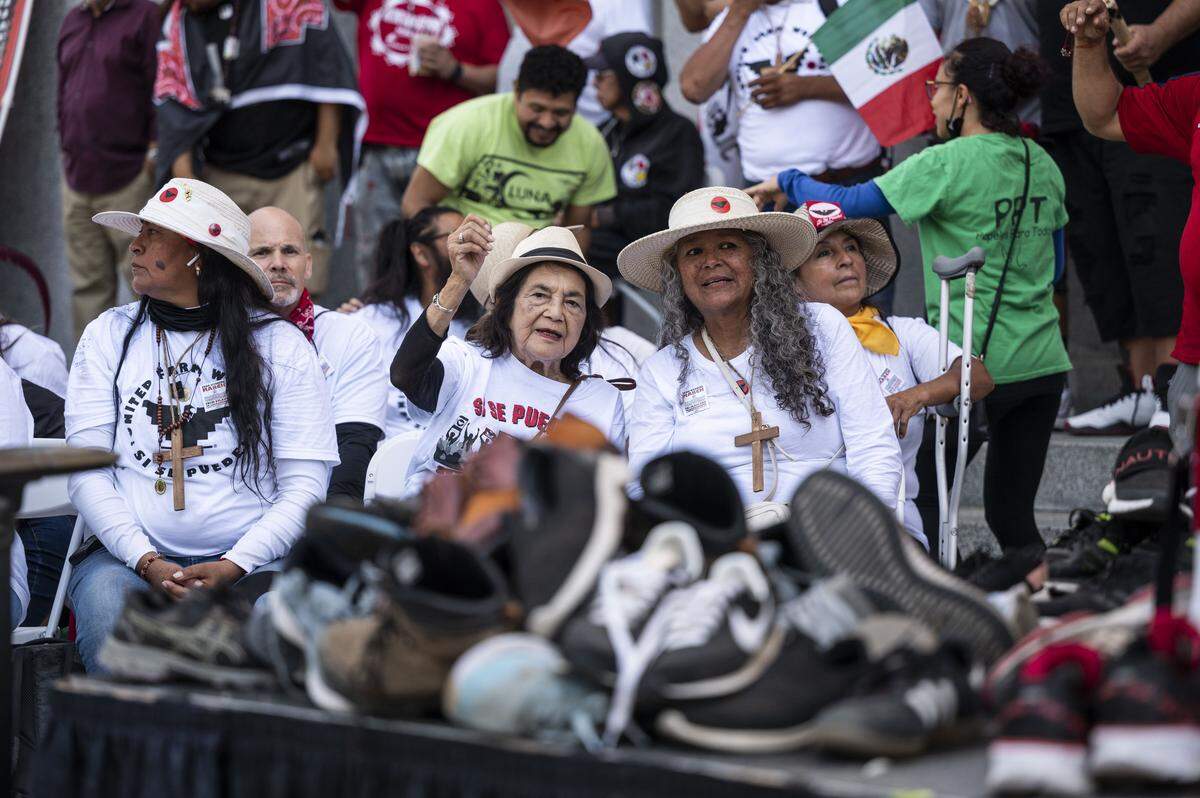
Newsom initially signaled he would veto the legislation a second time before UFW capped off a 24-day, 335-mile march in Sacramento with thousands of supporters. The march was reminiscent of the organization’s origins 56 years earlier when Chavez led farmworkers on a similar route.
Days later, Biden took the unusual step of inserting himself into state politics and publicly backed the bill. Former Vice President Kamala Harris and then-House Speaker Nancy Pelosi also voiced their support.
Biden had made headlines a year earlier after placing a 22-inch bronze bust of Chavez behind his desk in the Oval Office. At the time, Julie Chávez Rodriguez, Chavez’s granddaughter, also served as Biden’s White House director of intergovernmental affairs
Days after Biden’s intervention, Newsom signed the legislation.
“Our state has been defined by the heroic activism of farmworkers, championed by American icons like Cesar Chavez, Dolores Huerta and Larry Itliong,” Newsom said at the time.”
‘Impediment to progress’
The findings about Chavez’s sexual abuse, first reported in March by The New York Times, prompted swift condemnation of the labor leader. Cities and communities across the country have already begun removing his name from the dozens of parks, schools, streets and events in his honor.
Some people believe that California politicians should now sever its ties with UFW altogether.
“UFW is an impediment to progress,” said Matthew Garcia, a professor of Latin American, Latino, and Caribbean Studies, History and Human Relations at Dartmouth College.
Garcia, who faced backlash after publishing a book about the history of the UFW and Chavez in 2012, argued that Democratic lawmakers have treated UFW as the singular voice of farmworkers for years, even as the union’s organizing strength declined and debates emerged over the effectiveness of some of its policy priorities.
He cited the group’s push for overtime expansion, which remains debated among farmworkers even a decade after its passing.
Two analyses, from UC Berkeley and UC Merced, found different results on the financial impact of the law. Earlier this year, governor candidate Katie Porter described the law as “well-intentioned” but ineffective before walking back her comments.
Luis Magaña, a longtime farmworker advocate based in Stockton, expressed optimism that the scandal would weaken UFW’s dominance over the farmworker movement. He said the moment could create opportunities for newer groups to organize in the fields and shape policy debates without competing against Chavez’s symbolic power.
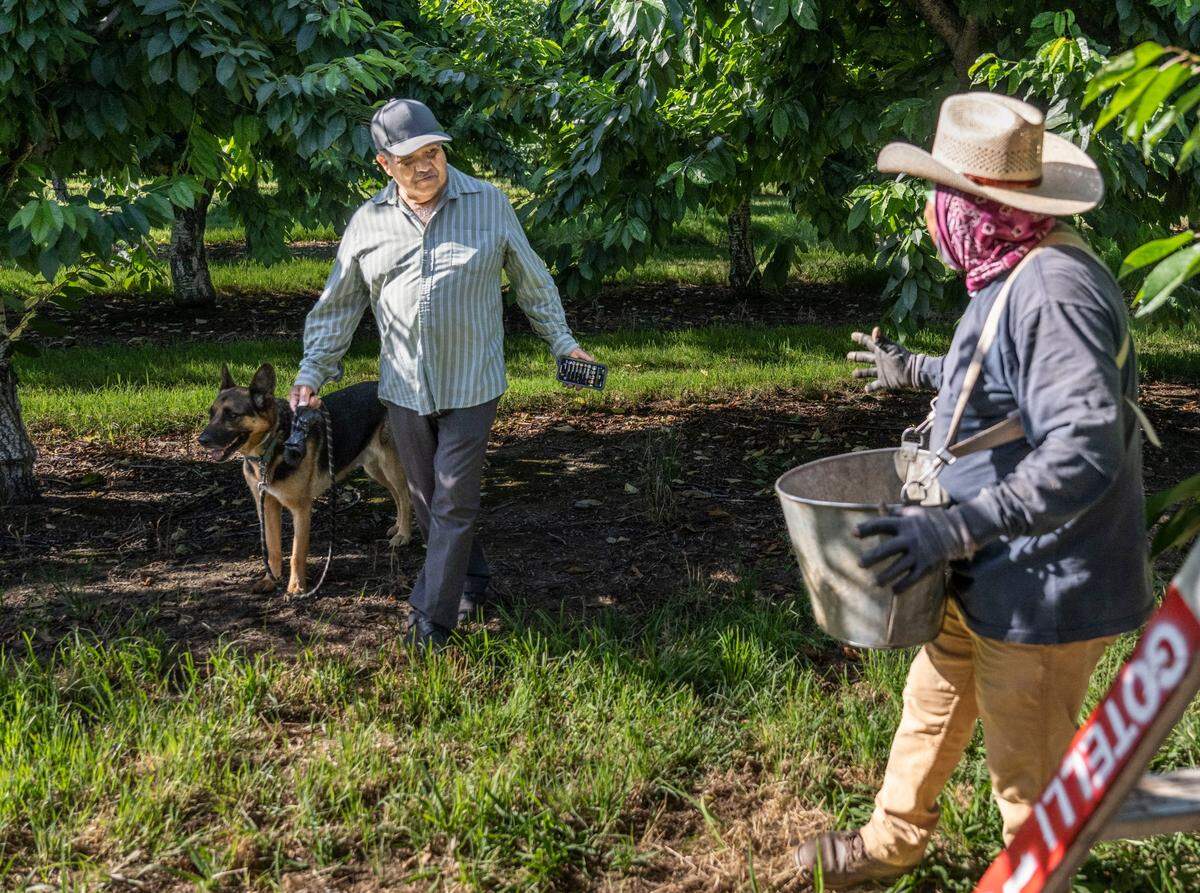
“The farmworker is now liberated from that name,” said Magaña, who participated in strikes with Chavez before a falling out with the labor leader. “The vein that gave them life has been cut.”
Many former current and former California lawmakers were hesitant to comment on the record about whether the revelations about Chavez would weaken UFW’s ability to advocate for farmworker legislation in California. Hurtado said “time would tell.”
Others, including former Assemblymember Darrell Steinberg, said over time the Legislature would distinguish between the plight of low-wage workers and Chavez’s actions.
“The terrible, terrible, terrible thing doesn’t change the importance of the cause,” said Steinberg, who authored multiple UFW sponsored bills.
The revelations also carry the potential for a financial blow, not just a reputational one, according to legal experts. California has recently expanded the statute of limitations for sexual abuse victims, particularly in older cases.
“I wouldn’t be surprised if there are lawsuits filed,” Luis Carrillo, a sex abuse attorney who attended Chavez’s funeral.
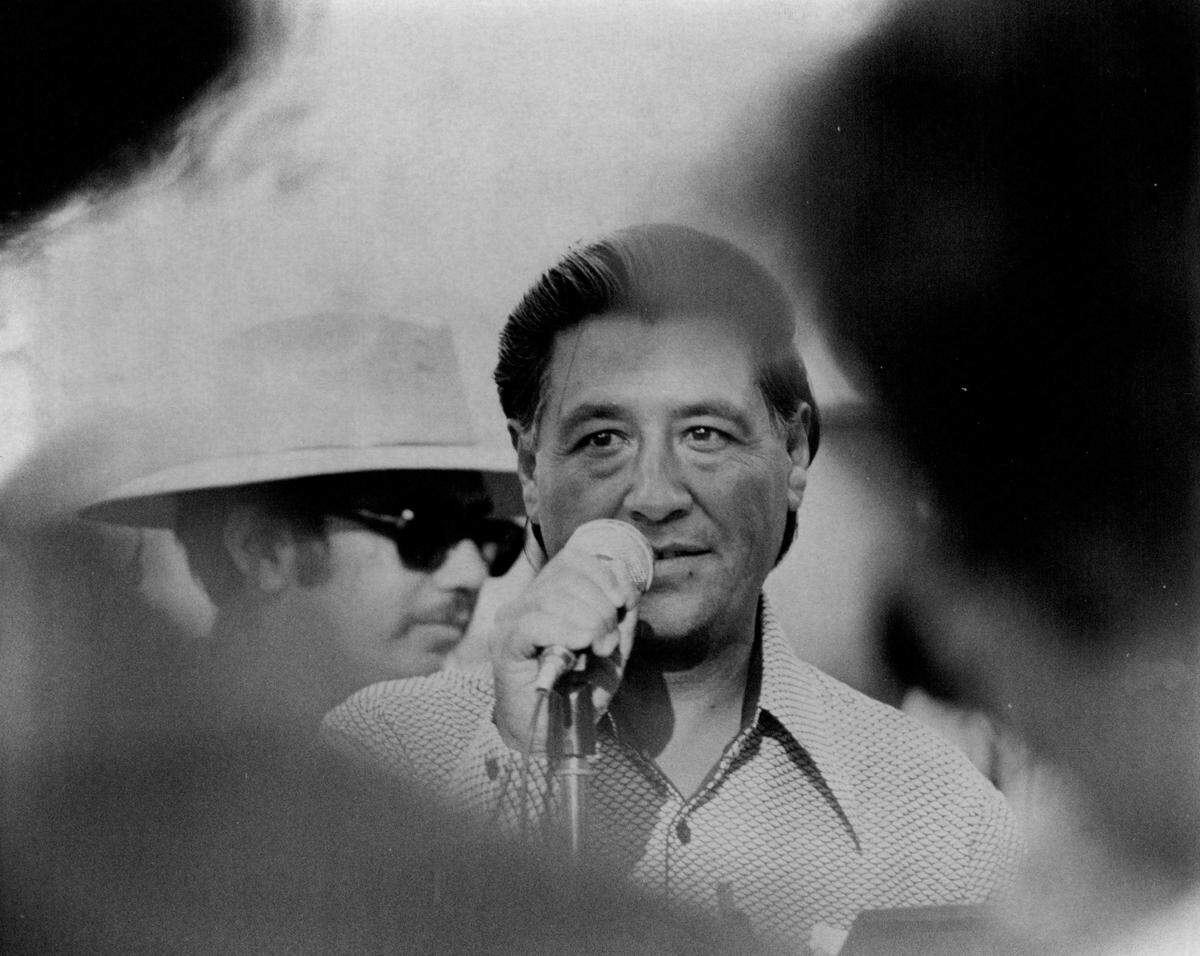
Carrillo said the union could be held liable if there’s evidence that union leaders “turned a blind eye” to the abuse. Exposure would increase depending on the number of people or witnesses involved. California school districts have paid billions of dollars to settle sexual abuse lawsuits.
UFW reported net assets of $5.6 million and revenues of $9 million in a 2024 IRS filing. The organization did not respond to questions about potential litigation.
Desiree Rojas, whose sister was among the women abused by Chavez, declined to comment when asked whether her family was considering legal action against the union.
“My family is still very devastated,” Rojas said.
‘Live experience of farmworkers’
There is widespread acknowledgment among lawmakers and labor experts that UFW continues to take on fights few other organizations have been willing — or able — to lead.
UFW is one of only three known unions in California that organize farmworkers for collective bargaining. One of the others, United Food and Commercial Workers, represented roughly 400 California farmworkers as of this month. The third known union, International Brotherhood of Teamsters, did not respond to repeated requests for comment.
Estimates for the number of farmworkers in the state generally range from 400,000 to 900,000.
UFW reported 5,138 active and retired members as of December 2025, according to the U.S. Department of Labor, though the union has long argued the annual federal count fails to capture the full size of the seasonal workforce. Experts generally attribute the union’s decline since the 1970s to a combination of leadership decisions, demographic shifts toward a more undocumented workforce and growers adapting to UFW’s organizing tactics.
“If it was easy, anyone could do it,” Rivera-Salgado said. “But I think we need to understand the challenges that organizing farmworkers pose, and on top of that, unions are not perfect.”
The union has nonetheless made modest gains under California’s card check law.
Between October 2023 and November 2025, the Agricultural Labor Relations Board certified UFW to represent more than 2,000 workers at eight California growers. Four of those workplaces also secured collective bargaining agreements.
The union’s highest-profile victory against The Wonderful Company, one of the world’s largest agricultural businesses, sparked a years-long legal fight over the validity of the card check law.
UFW has also positioned itself as one of the leading advocates for immigrants during Trump’s presidency.
Last year, UFW and the American Civil Liberties Union sued the U.S. Border Patrol over warrantless immigration stops in California. In November, UFW and 18 farmworkers across the country filed another lawsuit after federal officials moved to reduce wages for H-2A guest workers. The union later approached Assemblymember Maggie Krell to author legislation establishing a statewide minimum wage for H-2A workers.
Major agricultural groups fiercely oppose the proposal, arguing it would significantly increase labor costs for growers.
Senate President pro tempore Monique Limón and Assembly Speaker Robert Rivas declined to say whether they supported the bill. Spokespeople for both leaders said the measure remains under legislative review. The bill is expected to be voted on by the Assembly next week.
Krell, who largely declined to discuss UFW directly, said her focus remains on the workers affected by federal wage policies.
“I value the lived experience of farmworkers.”
This story was originally published May 26, 2026 at 4:45 AM with the headline "The United Farm Workers built its political power around Chavez. Now it faces a reckoning."