After generations apart, Northern California tribe regains 450 acres of ancestral land
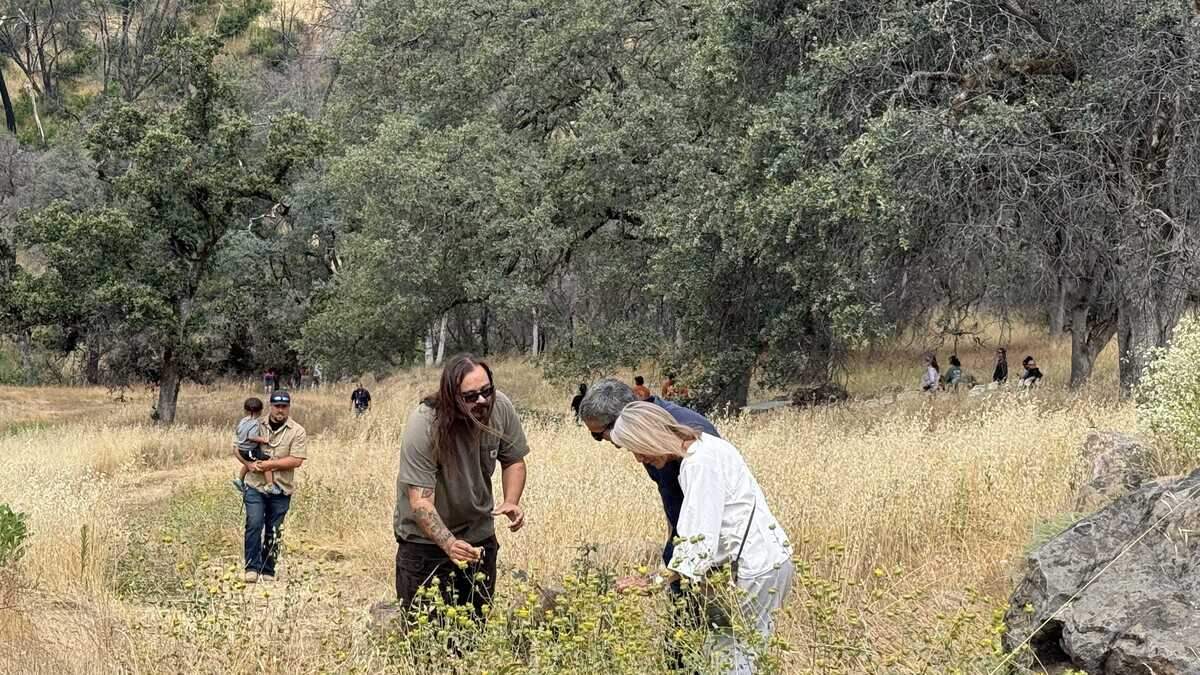
The Mechoopda Indian Tribe of Chico Rancheria has reclaimed 450 acres of ancestral land in Butte County, marking one of the tribe’s largest land returns and a major step in restoring its historic land base.
The completion of the land return, which had been in the works for about seven years, marked a significant moment for the tribe, which lost ownership of the land during the late 19th and early 20th centuries, according to Kyle McHenry, the Mechoopda Tribe’s cultural director.
“This particular landscape co-evolved with the Mechoopda’s stewardship, traditional ecological knowledge, and is very much intertwined with Machupta’s not only governance, but culture, ceremonies, connection to place,” said Geneva Thompson, the California Natural Resources Agency’s deputy secretary for tribal affairs.
The tribe only recently began to reestablish its land base. In 1996, it purchased 40 acres, and since gradually acquired homes in Chico. In 2023, an agreement with Chico State Enterprises returned 93 acres in Butte Creek Canyon.
Monday’s reclamation marked a key milestone in reestablishing the tribe’s ownership within the watershed.
“In that area there’s archaeological sites and things connecting our people to this place for, you know, thousands of years,” McHenry said. “It’s a special thing for our people to be reconnected to that place.”
The returned land is within the Big Chico Creek watershed, a region known as Ótakim Séwi in the Mechoopda language, and is central to the tribe’s heritage. The return also contributes to the state’s new Tribal Stewardship Program, launched in March, which aims to expand tribal stewardship across 7.5 million acres in California.
The project was spurred by Gov. Gavin Newsom’s signing of his so-called nature-based solutions executive order, which aims to conserve 30% of California’s lands and coastal waters by 2030, and the corresponding Pathways to 30x30 plan released by the Natural Resources Agency outlining strategies to reach that goal.
One key component of the effort is supporting tribally led conservation.
“They really wanted to push to make sure tribes had a seat at the table,” said McHenry. “We were one of the first tribes to get to be part of that initiative.”
The Mechoopda Tribe also received support through a $101 million grant program launched by the Natural Resources Agency in 2023 to support tribal land purchases and workforce initiatives tied to the nature-based solutions executive order. The tribe worked closely with previous landowners and partners, including Chico State and the Big Chico Creek Ecological Reserve.
At the beginning, tribal leaders were reluctant to be overly hopeful that the land return would succeed.
McHenry recalled visiting the property and seeing the landscape.
“The beauty of it, just striking, the views,” he said, describing the forest and steep canyon.
“It’s hard to bank on things like that,” he recalls thinking about the reclamation project. “You don’t want to hold your breath for things because it’s like so many things fall through or you know, don’t work out.”
The challenges the tribe anticipated eventually materialized. There were years of back-and-forth negotiations just to get the project underway, McHenry said.
Then, in July 2024, a wildfire swept through the canyon, destroying buildings and damaging much of the landscape. For the tribe and its partners, the fire reaffirmed the need for tribal management of the land.
“It was definitely an eye opener, and you’re like, ‘OK, this is why we’re doing this work, and this is why we need the tribe in this space, and caring for these, these landscapes,’” Thompson said.
Because of the damage, the property had to be reassessed to reevaluate its value.
“At times we all felt like it was never going to happen,” McHenry said.
The tribe plans to reduce future wildfire risk by removing hazardous trees, reseeding and replanting the forest, and conducting controlled burns.
The environmental goals of the land reclamation also include continuing the tribe’s watershed protection efforts.
The Big Chico Creek watershed connects to the Sacramento River and provides critical habitat for native salmon, which have drawn increased attention in recent years because of historic population declines.
The Mechoopda Tribe has already participated in salmon conservation efforts.
In April, the tribe announced a collaboration with CalTrout, the Big Chico Creek Ecological Reserve and the city of Chico on the Iron Canyon Fish Passage Project, which will restore a nonfunctioning fish ladder that blocked salmon from reaching water cold enough for their survival. The project will restore 8.5 miles of habitat.
After the land return was completed, McHenry and his wife took their children to the property.
“We were always holding our breath until the finish line,” he said.
It was only then that the significance of the project fully “sunk in,” reminding him of the land’s importance to his family’s history.
Seeing his children playing in the creek resurfaced memories of his grandmother: “My grandma always said, ‘I loved taking my kids to play in Chico Creek and my grandkids to play in Chico Creek because I know my grandma did it before me and her grandma before her.”
This story was originally published June 11, 2026 at 7:51 AM with the headline "After generations apart, Northern California tribe regains 450 acres of ancestral land."