California bill wants to tell you what’s in a diaper that your nose can’t detect
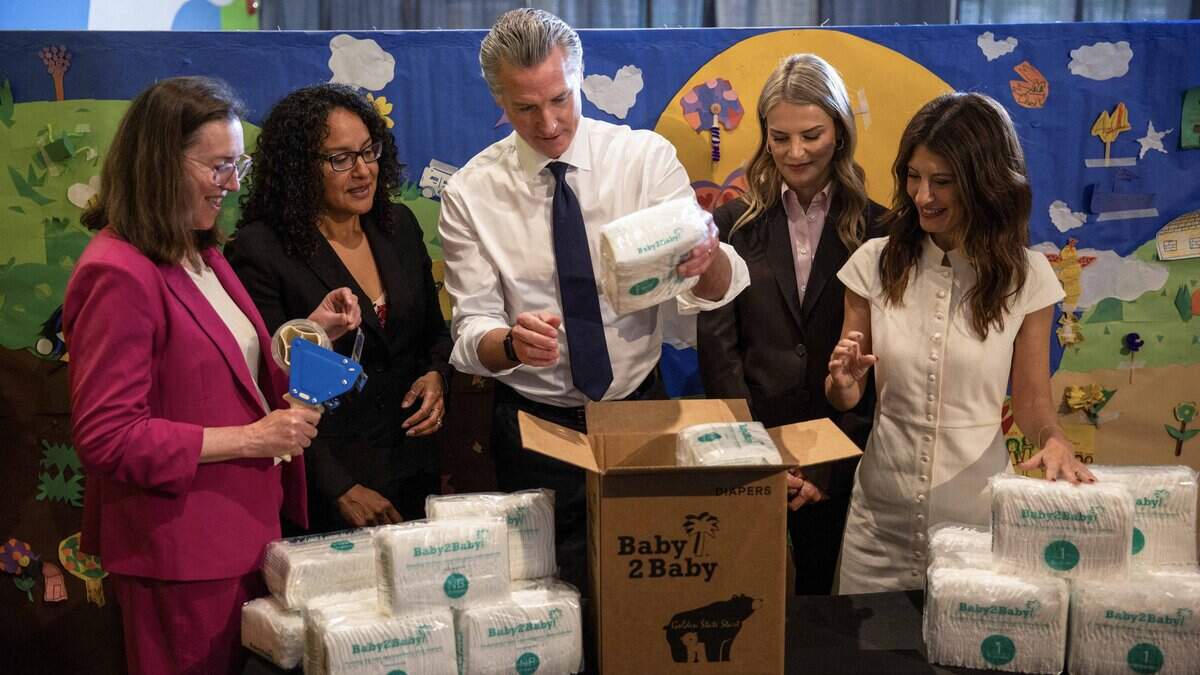
A few months after becoming a new dad last year, Assemblymember Marc Berman said he heard about a New York law requiring diaper manufacturers to disclose their ingredients on packaging.
The Democrat from Menlo Park then looked at the ones his son Kaiden, who was born last July, was using. There was no such information on the box. They were the same brand of diapers he and his wife had received from the hospital where he was born.
“When you’re a new parent and you don’t know what the hell you’re doing, you don’t think about this kind of stuff,” Berman said. “You’re just surviving.”
Diapers are synonymous with babies, who are born with highly absorbent skin. And research has shown that the garments can be the source of potentially harmful chemicals that are used to make them more waterproof, prevent leaks and create designs. The companies that make them are not required, under federal law, to disclose what substances they use.
Assembly Bill 1901, which Berman authored, would force diaper manufacturers to list their ingredients on a website and to display the link to that webpage by 2029 on their packaging for products sold in California. If not, the Department of Toxic Substances could issue fines of up to $10,000.
“It’s just a disclosure bill,” said Susan Little, California legislative director for the Environmental Working Group, an organization that researches chemical use in food and products and makes recommendations on what it views as the safer options to buy. It is a lead supporter of the measure. “It’s not telling manufacturers to not use ingredients or to not add fragrance or wetness indicators or dyes to their diapers, but it is simply giving parents the information they need to make as informed choices as they can.”
Industry trade groups said they are committed to safety and transparency around the ingredients used in diapers but don’t agree on the measure’s approach.
“As currently drafted, the bill requires manufacturers to disclose ingredient information on retailers’ product webpages, even though manufacturers do not control or have the ability to update those websites,” Giovanna Komst, the deputy director of the Center for Baby and Adult Hygiene Products, said in an emailed statement. Komst added the measure does not give diaper makers enough time to update packaging and online ingredients when products change.
“We remain committed to working with the Legislature on a bill that advances transparency while providing clear, consistent, and practical requirements that manufacturers can successfully implement,” the statement said.
Representatives for the American Chemistry Council and Fragrance Creators Association, other groups opposing the measure, declined to comment.
Berman said he is “wide open to legitimate concerns that are raised by industry on implementation on the bill” but also felt like “goalposts are moving, and different arguments are being made at different stages of the legislative process.” Opponents of the bill have also raised concerns that disclosing ingredients could put confidential business information at risk.
The measure isn’t universally opposed by diaper makers. Stephanie Davis, president of HealthyBaby, told senators during a hearing last month that the company supports the bill. It easily passed the Assembly and is in the Senate Appropriations Committee. It must pass the Legislature before Sept. 1 to be considered by Gov. Gavin Newsom.
Kaiden might be out of diapers by the time the measure goes into effect, if it passes. But Berman said he and his wife have already moved to using diapers with disclosed ingredients and without certain chemicals that could be harmful.
“There are enough unknowns as a new parent,” he said, “so to the extent that you can eliminate some risk, for us, at least, that’s something that we’re trying to do.”
This story was originally published July 15, 2026 at 11:09 AM with the headline "California bill wants to tell you what’s in a diaper that your nose can’t detect."