DHS $1.5 billion California ICE detention facilities purchase may limit oversight
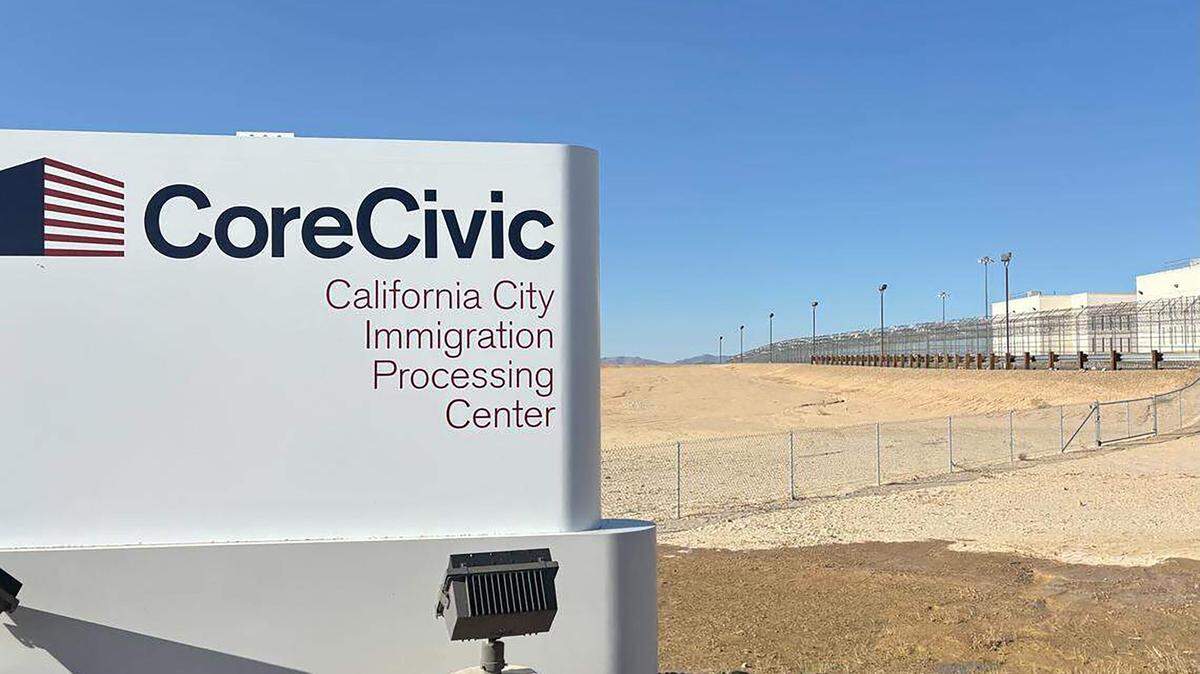
The Department of Homeland Security’s purchase of two privately-run immigration detention facilities in California is likely an attempt to circumvent current and future state oversight, according to legal experts, lawmakers and immigration advocates.
DHS bought the two facilities, the California City Immigration Processing Center and Otay Mesa Detention Center, earlier this month from private prison operator CoreCivic for $1.5 billion. The company will continue operating both centers under contract with U.S. Immigration and Customs Enforcement.
The purchase comes as California has emerged as one of the nation’s most aggressive states in trying to regulate state detention centers.
California is one of only a few states that requires independent inspections and periodic reports on detention conditions. Democratic lawmakers have introduced at least nine detention-related bills — among a slate of measures focused on immigration — during this year’s legislative session, according to a review of the CalMatters Digital Democracy database.
The facilities have also faced years of legal scrutiny. Multiple lawsuits have alleged unsafe conditions, interference with public health inspections and an illegal opening of a center.
By now taking ownership of the detention centers, the federal government could argue the facilities are entitled to broader immunity from some state oversight efforts and lawsuits.
“It’s not an accident that this is happening in a state that does allow for state oversight of detention facilities,” said Alexa Van Brunt, director of the Illinois office at the MacArthur Justice Center, a national, nonprofit civil rights organization. “Not all states have that provision in their local legislation. So this strikes me as an intentional way to evade.”
Whether those arguments ultimately succeed would likely be decided by the courts. But the purchase raises questions about whether — and to what extent — California’s existing and proposed laws governing federally-owned detention centers will remain effective at curbing abuses amid President Donald Trump’s immigration crackdown.
“How far states can push back against this kind of behavior is very much up in the air,” said Anya Bidwell, a senior attorney at the public interest law firm Institute for Justice.
In response to questions, a DHS spokesperson said ICE cannot rely on “local, state and county partners for detention space in California.”
“The state’s sanctuary politicians continue to push legislation to outlaw or make private prisons financially infeasible,” the spokesperson said in a written statement.
The agency did not respond to a question about whether more purchases would follow in the state, though The Washington Post reported earlier in March that ICE was targeting the acquisition of at least three facilities in California. Recent earning calls by private prison companies that own the centers also signal the government is moving toward federal ownership of the facilities.
‘More onerous to hold DHS liable’
California largely began its regulation of state immigration detention centers in 2017.
Among the most noteworthy legislation passed that year was Assembly Bill 103, which granted the California Department of Justice oversight authority to regularly inspect and report on the conditions of facilities operating in the state.
The DOJ has produced five reports since that time. In its latest 175-page report published in May, the DOJ found that conditions had largely worsened as the federal administration’s mass deportation campaign led to “overcrowding and strained resources.”
“I hope this report will generate the rightful outrage and urgency necessary to improve conditions and protect detainees’ civil rights,” said Attorney General Rob Bonta at a press conference announcing the report.
But such detailed reports may no longer be possible at the two DHS-owned facilities in California, said Van Brunt. She noted that AB 103 language states that the attorney general can engage in reviews of “county, local or private locked” — not federal — detention facilities.
Van Brunt said inspection reports by a state attorney are crucial in lawsuits alleging constitutional violations. Without these reports, evidence is harder to obtain and show.
“To that point, it will make it more onerous to hold DHS liable,” she said.
Bonta’s office did not respond to a request for comment on whether DHS ownership of the facilities could limit the state’s ability to enforce its oversight laws, including AB 103.
The legislation is set to expire, though state Sen. María Elena Durazo, D-Los Angeles, has introduced a bill to make the inspections permanent. That bill also uses similar language.
Durazo, through a written statement, called it “unacceptable” if the federal government is purchasing facilities to “place them beyond the reach of state inspections.”
“Californians deserve to know what is happening inside detention facilities within our borders, regardless of who owns them,” she said. “We will continue to push for every tool available to ensure that transparency does not disappear.”
‘Still need to follow state health and safety standards’
Even with federal ownership, Bidwell said the state will have some legal authority for oversight as the private contractors are still operating the sites in California.
The management contract for the California City facility expires in August 2027, and the management contract for the Otay Mesa facility expires in December 2029 with a five-year extension option.
Bidwell pointed to a lawsuit last year in Washington in which Tacoma detainees sued the private prison company GEO Group over minimum wage violations. The 9th Circuit Court of Appeals supported its finding in favor of the detainees by saying that the detention center “is not a ‘federal facility.’ ”
“It doesn’t get you there because as long as facilities are not authorized by the federal government, the lawyers on the other side will always be able to at least up the view that these are still contractors who are doing those jobs, and they’re subject to regulation,” Bidwell said.
Many of the California bills related to detention facilities introduced in this legislation cycle specifically name the involvement of private operators as part of the definition of a center in the state. Among them are efforts to impose a 50% tax on a private detention operator’s gross receipts from ICE and a requirement for local agencies to release records of 911 calls from private detention facilities.
State Sen. Sasha Renée Pérez, D-Alhambra, said her SB 995, which would authorize the California Department of Public Health to inspect facilities, was crafted to regulate private contractors of the facilities. The bill could not target the federal government because of its constitutional protections, she added.
“CoreCivic is still the private contractor doing operations in these facilities, and as a private contractor, as a company, they still need to follow state health and safety standards,” Pérez said.
The Sacramento Bee’s Andrew Graham contributed to this story.
This story was originally published July 17, 2026 at 5:00 AM with the headline "DHS $1.5 billion California ICE detention facilities purchase may limit oversight."