
Did COVID pandemic help the climate? Here’s a look at California carbon emissions in 2020
The COVID-19 pandemic created one positive outcome in California: It helped shrink the state’s carbon footprint, at least temporarily.
Carbon dioxide emissions fell by 9% in 2020, the California Air Resources Board said Wednesday, marking the largest one-year drop since California began measuring its man-made output of carbon dioxide emissions.
But air board officials acknowledged the results were skewed by Gov. Gavin Newsom’s stay-at-home orders in the early months of the pandemic, when offices, shopping malls and freeways largely emptied out and the economy came to a standstill.
Steven Cliff, the board’s executive officer, called the 2020 results “an outlier” and said greenhouse gas emissions have surely increased in the past two years as economic activity has improved.
“With economic recovery from the pandemic, emissions will increase over the next several years,” he said. The state Employment Development Department says California has regained 99.1% of the jobs that disappeared in the first two months of the pandemic.
The 2020 figures also omit a significant contributor of carbon emissions: smoke from that year’s record wildfire season. Researchers from UCLA and the University of Chicago, in a study published last week, said carbon from wildfire would have increased the state’s total greenhouse gas output by about one-third.
Air board officials acknowledged the effect of wildfires on climate — and said they underscore the need for California to work even harder on greenhouse gases. “This report points out the need for continuing reductions,” Cliff said.
A central element of California’s fight against climate change, the air board’s annual greenhouse gas inventory only counts emissions from exhaust pipes, smokestacks and other human activity. The accounting — a laborious process that takes two years to complete — shows that carbon emissions totaled 406 million tons in 2020. That was a decline of nearly 39 million tons from the year before.
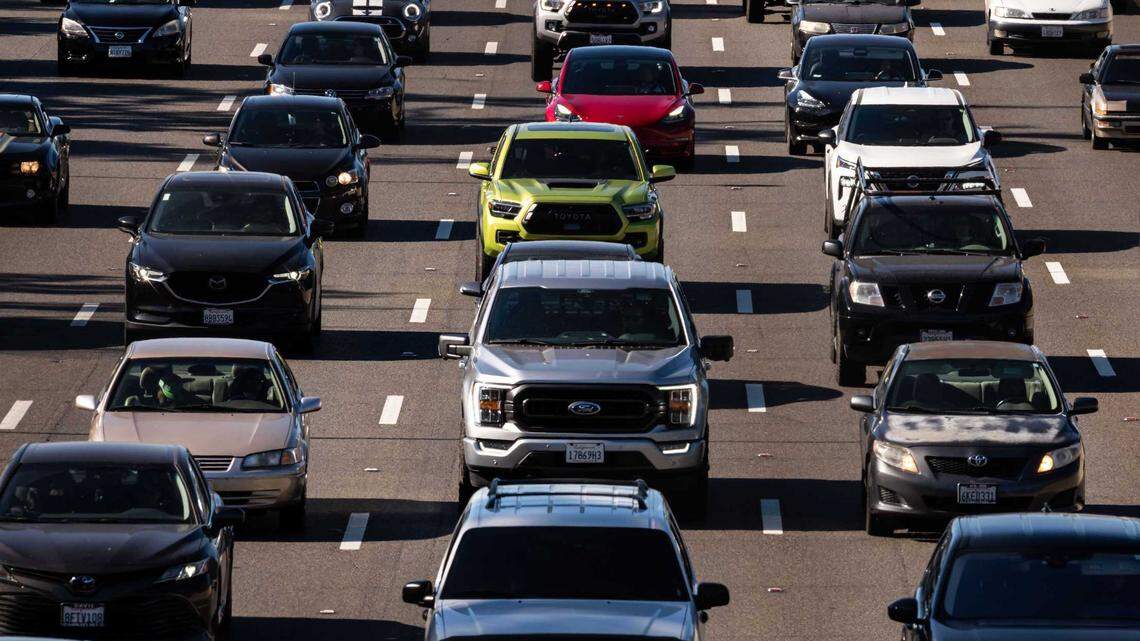
The most dramatic drop was in the transportation sector, where emissions fell 16%. Nicole Dolney, who oversees the annual inventory, called the decline “significant and notable.” Even though vehicle traffic has largely bounced back from the pandemic, she said many Californians are continuing to work from home.
Dallas Burtraw, an energy expert who chairs a committee that advises Cal EPA on carbon emissions, believes Californians can reduce their time spent on the road. The figures from 2020 suggest “an encouraging, enduring effect on behavior,” he said.
California has imposed multiple regulations to reduce carbon emissions, including renewable-energy mandates on electric utilities and a cap-and-trade program that requires industrial polluters to purchase credits if they can’t meet certain emissions targets.
State law says that by 2030, total emissions must fall to 40% below levels recorded in 1990. To get there, the state has to reduce its greenhouse gas output by another one-third in the next eight years. Under a separate law Newsom signed this year, emissions have to fall even further by 2045.
Cliff said he believes California can meet those mandates.
“The policies are continuing to work,” he said.
This story was originally published October 26, 2022 at 10:00 AM with the headline "Did COVID pandemic help the climate? Here’s a look at California carbon emissions in 2020."