COVID-19’s seismic impact on Merced County jobs, economy detailed in latest state data
For many Merced County residents, stable employment was one of myriad losses sustained in 2020 due to the COVID-19 pandemic.
The California Employment Development Department’s latest numbers for December employment underscore how tumultuous the job market was over the last 12 months.
Merced County kicked off January 2020 with 9.8% unemployment. But the year average — January through December 2020 — ended significantly higher at 12.4%, largely due to the pandemic. In 2019, Merced County’s average overall unemployment was 8.1%.
Merced County ultimately closed out 2020 with unemployment worsening to 11.5% for the month of December, according to EDD data released on Friday. That means the county’s 113,600-person labor force had 13,100 unemployed as of December. Local joblessness was notably lower in December 2019 at 7.9%.
Statewide unemployment also rose to 9% from 8.1% in November.
Snapshots of the last year show Merced County’s economy had a strong start in late 2019 and early 2020, when unemployment rates hit record lows. The local job market kindled an air of short-lived economic optimism for a county that, along with counties throughout California, would soon be walloped by the pandemic’s impacts.
The virus’s effects were first felt slowly in March, when Merced County unemployment rose slightly higher than typical to over 13%, according to EDD Labor Market Analyst Steven Gutierrez. By the next month, the economic shock wave was unprecedented.
In April, state-mandated orders attempted to control the virus’s snowballing spread by shutting down businesses deemed nonessential. Merced County’s joblessness bolted sharply to 18.7% — the highest monthly figure in years.
The increase marked the largest month-to-month unemployment spike in the county’s recorded history.
Business owners, workers and county leaders reeled at the economic toll, with some demanding that the local economy reopen in defiance of state orders.
Since then, many businesses throughout the county and state have cycled through reopening and closing again, depending on the state of the virus and changing shutdown orders.
One bright spot amid a dark year was that at times, Merced County employment fared better than the statewide average. That is notable, as the county’s joblessness historically tends to as much as double California’s average.
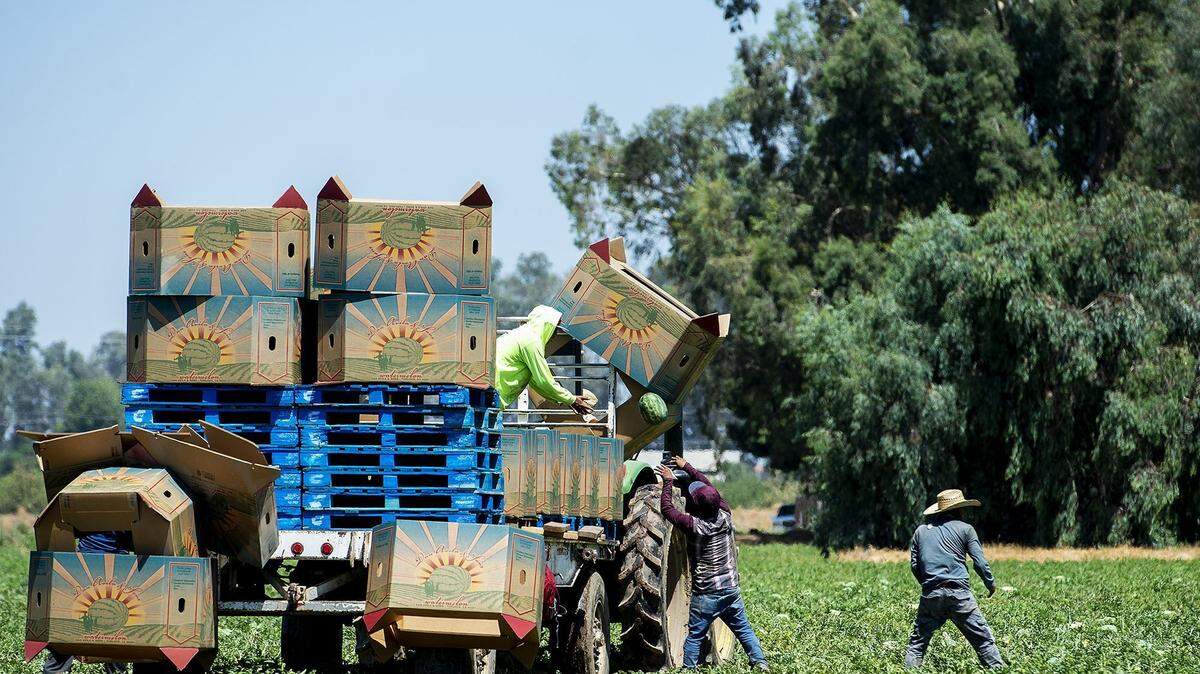
Labor experts pointed to the resilient agricultural industry as buoying Merced County’s economy throughout summer and fall.
Merced County employment worsens in December
Merced County employment has slowly but steadily improved throughout most of 2020.
But December was the first month since April’s big jump that local joblessness grew.
“While we have seen some recovery in 2020, it has not gotten all the way back to where it started and we still have a ways to go,” Gutierrez said.
Every economic sector in Merced County except one lost jobs or remained stagnant in December 2020 compared to the same period the previous year. Sectors hit hardest by the pandemic include government and the leisure and hospitality industry.
Government jobs in Merced County showed the largest year-over decrease, down by 2,400 compared to December 2019. Leisure and hospitality took the second biggest hit with 1,300 lost jobs.
“With people working remotely, there’s less people at bars, restaurants and coffee shops,” Gutierrez said.
It was also in December that Merced and the 11 other San Joaquin Valley counties were placed under regional stay-at-home orders due to low intensive care unit capacity at strained area hospitals. The orders triggered another round of strict closures for bars, wineries, restaurants and other businesses.
Only the mining, logging and construction industry saw year-over growth with 100 jobs added in December.
Gutierrez said the gain is likely due to a strong winter season for construction jobs throughout the Central Valley. Considered essential work, construction has avoided both pandemic-caused and weather-related layoffs, he said.
The recent uptick in joblessness can also be attributed in part to predictable shifts in seasonal employment.
“During the winter months is when we see the (unemployment) incline,” Gutierrez said, noting that much farm-related work temporarily vanishes in the Valley. “Agriculture is just such an influence on the local economy.”
Farm jobs were down by 1,200 between November and December of 2020 due to seasonal job loss, while the year-over decrease between December 2019 and December 2020 was less drastic at 200 fewer jobs. Gutierrez said employment could continue to worsen until agriculture work picks up again in spring.
“Overall, we’re kind of normal in regards to what (unemployment changes) we would normally see, but we just wouldn’t be seeing the numbers as high as they are,” he said.
Similar patterns were seen in neighboring counties in the central San Joaquin Valley.
The Fresno Bee contributed to this report.
This story was originally published January 23, 2021 at 5:00 AM.