
Courthouse Museum to present ‘Portraits of Merced County Women’ exhibit
%20Harriet%20Russel,%20Lydia%20Kahl,%20Wong%20Shee,%20and%20Emma%20Bedesen%20Conley%20.jpg "The Courthouse Museum’s new exhibit, titled “Beyond Appearance,” will feature 40 Merced County women from the Victorian era to 1920, including from left to right Harriet Russel of Snelling (former slave from Louisiana), Lydia Kahl of Plainsburg (pioneer farmer), Wong Shee of Merced (Chinese immigrant), and Emma Bedesen Conley of Madera (Merced native whose husband helped organize Madera County).")
Let’s celebrate Women’s History Month with a preview of Courthouse Museum’s new exhibit, titled “Beyond Appearance: Portraits of Merced County Women.”
Opening on Thursday, March 12, this exhibit is Part II of the “Celebrating Women in Merced County” project and will feature 40 Merced County women from the museum archives.
Look beyond the physical appearance, look beyond the facial expression, and look beyond the expected role as a devoted wife, nurturing mother, and moral guardian, what do you see? You see a woman yearning for freedom, independence, or just a moment of solitude. You see a face of strength, determination, and perseverance.
In this exhibit, by tracing the footsteps of the housewives and following the paths of pioneer working women and their immigrant counterparts, you will walk away with a greater appreciation of their daily struggles and sacrifices that paved the way for the rights and privileges we enjoy today.
.jpg "3 McInerny, Margaret 92-122-13 (1899-1900).jpg")
Sacrifice may have been one of the most important virtues of the Victorian women as they were perceived as the embodiment of selflessness. The moment a woman entered a marriage, she gave up her individual identity, traded her freedom for economic security, and committed to the tasks of childrearing and housekeeping. In addition to managing the domestic affairs, the majority of Merced County housewives, like Abigail Barnett Halterman, had to balance their roles as homemaker and farm help.
In the early 1870s, Abigail and Joseph Halterman had a ranch in Hopeton while living in Snelling where they raised 10 children. Abigail was 50 years old and her youngest child was only 6 when Joseph died in an accident in 1877. Abigail moved her family to Hopeton and managed the ranch for the next three years until her sons could take over. Her strength and determination defied the stereotype of women as the weaker sex and the husband as the only source of economic security.
To Margaret Frances McInerny, marriage was not the only ticket to economic independence. A Chicago native, Margaret came to Merced with her parents in the 1880s. She attended the newly organized Merced Union High School and became a member of its first graduating class in 1898. After receiving her teaching certificate from San Jose State, she taught in Merced schools for 47 years. A very significant number of college-educated women, like Margaret, remained unmarried partly because they valued individual freedom and profession over marriage.
One of the watershed moments in California women’s history was the passage of Proposition 4 in 1911 which granted women the right to vote. In Merced County, Prop. 4 was narrowly passed on Oct. 10, 1911. A year later, 2,134 Merced County women registered to vote, and one of them was Stella Jacobs. Born to German immigrants in Plainsburg, Stella was actively involved in democracy, serving as a clerk for the Merced No. 1 Election Board from 1914 to 1916 and as a member of Merced County’s first all-female jury in Justice F. H. Farrar’s court in 1917.
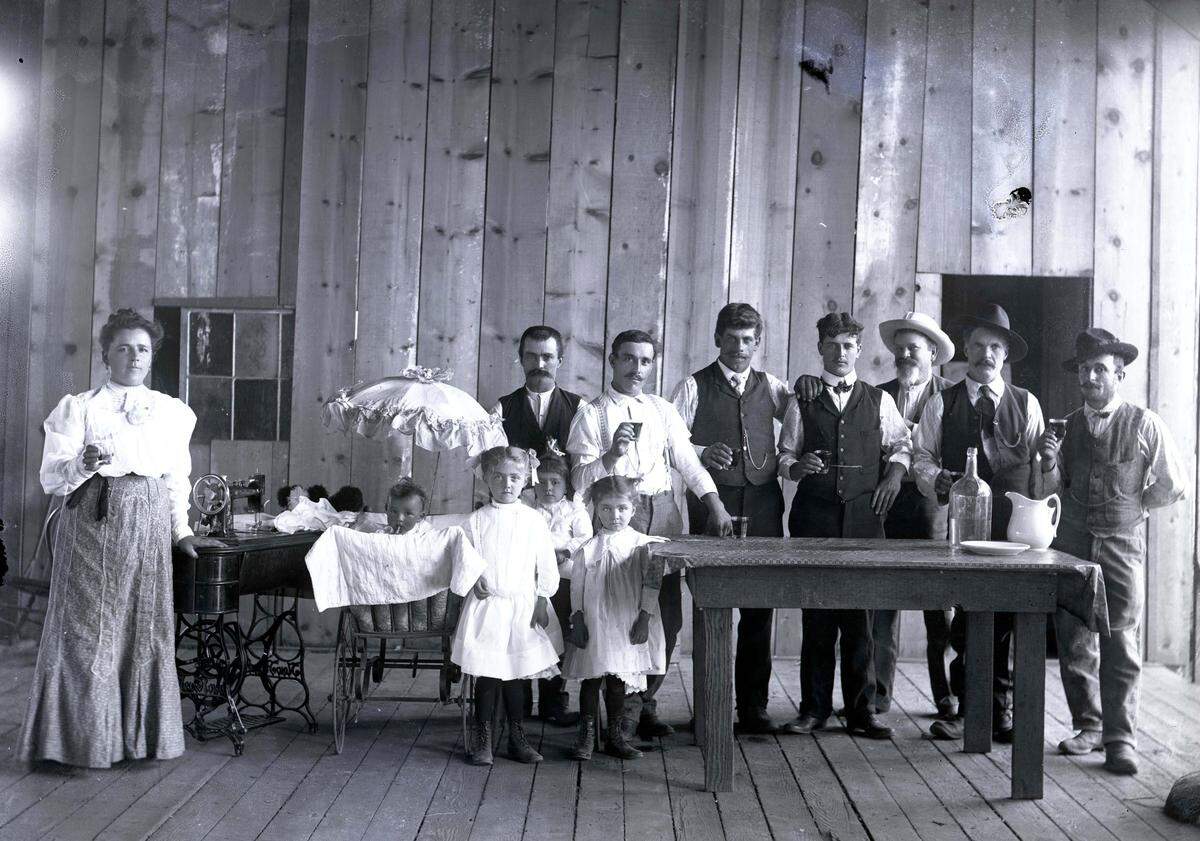
With the newfound political freedom, many Merced City women voters, like Stella Jacobs, exercised their voting rights for the very first time in the April 1912 election. The Merced Citizen Anti-Saloon League was largely responsible for the registration of women voters who successfully delivered a “dry” Merced to the prohibitionists. One of the 582 registered women voters in the city was Martha Ann Hall who may have cast her first ever ballot at the age of 84.
Achieving economic independence and gaining political freedom were important to American women, but these privileges and rights were often beyond the reach of their immigrant counterparts. To Marietta Bertaina of Italy, Wong Shee of China, and Maria Perezchica of Mexico, there was another layer of struggle, i.e., cultural, language, and racial barriers. The very common thread in the success of many immigrants, like these three, was perseverance.
Coming to the United States in 1905, Marietta Bertaina joined her husband farming first in Merced Falls then in Merced. While busy raising their four children in Merced, Marietta ran a dance hall on the corner of 16th and R Streets in “Spaghetti Acres,” an Italian neighborhood. She must have been a very tough lady since the dance hall was called “The Bucket of Blood” due to the many fights there.
Wong Shee was tough too, enduring long hours in the laundry. Settling in Merced in 1912, Wong Shee and her husband, Hong Chee, ran a laundry on 16th Street outside of Chinatown. Despite discriminatory city ordinances that restricted Chinese laundry operations, they never gave up and were able to expand to a grocery business by purchasing Lincoln Markets #1 and #2 as well as a Food Center on Main Street.
Maria Perezchica, a Mexican immigrant, made Merced her permanent home in 1916 and worked tirelessly with her husband, Manuel, to build their American dream. Starting from planting tomatoes on Franklin Road, Maria and Manuel saved enough money to establish their own ranch on Gurr Road where they raised ten children. Unfortunately, Maria died at childbirth in 1935.
This story was originally published March 9, 2020 at 12:03 PM.