After Merced City Council rejects Black Lives Matter mural, here’s what could come next
In the aftermath of the Merced City Council turning down a proposed street mural that would have painted the words “Black Lives Matter” in downtown, some community members hope to create a project in its place.
Whether anyone will formulate a proposal that most community members can agree on, however, remains an open question.
The City Council turned down the Black Lives Matter mural by a 5-2 vote last month, with most council members arguing the mural near Bob Hart Square would have been too political.
The idea for the mural was backed by the NAACP’s Merced chapter, the Hispanic Chamber of Commerce, WeCed and United Way of Merced County. It was recommended to City Council by the Merced Arts and Culture Advisory Commission.
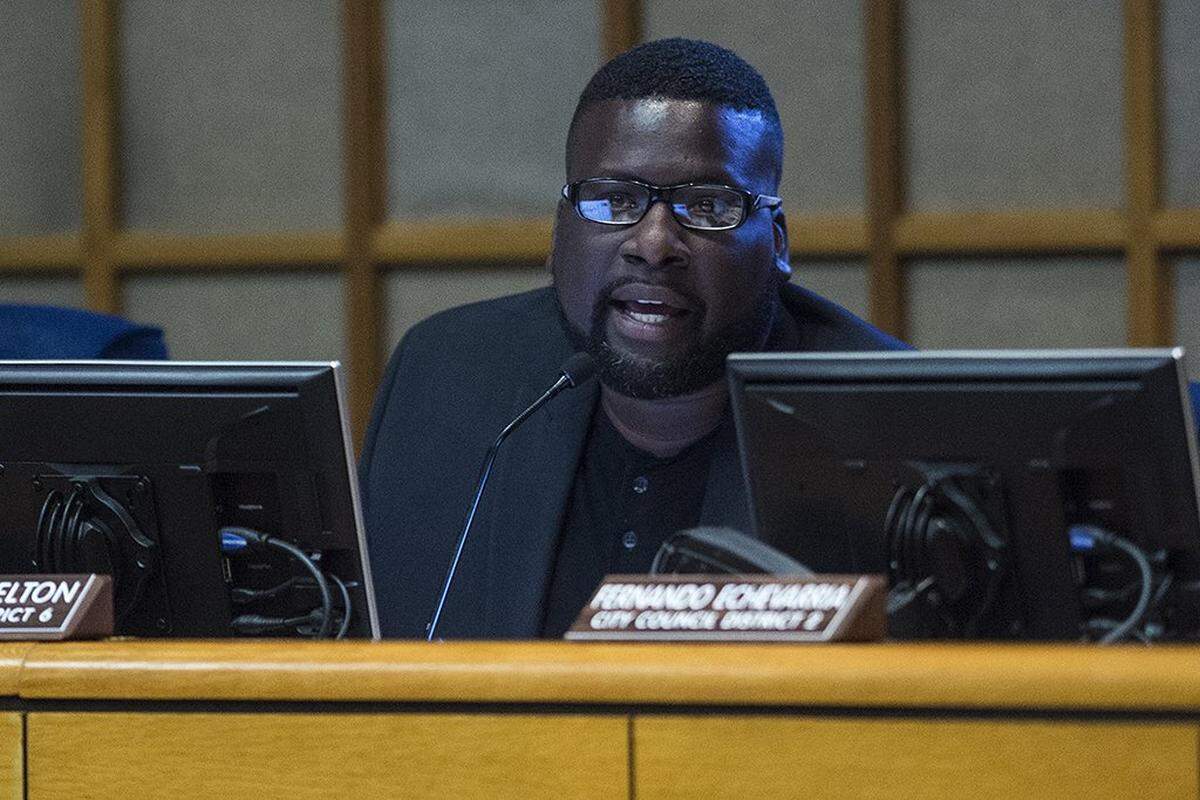
District 6 City Council member Delray Shelton recently said he’s moving forward to pitch an alternative list of projects aimed at cultural inclusion that city officials believe may be more widely accepted by the public.
On that topic, Shelton said he’s working with City Manager Stephanie Dietz to finalize a City Council agenda item, so the community can formally discuss the idea. Dietz said she is hopeful to have something on the council’s schedule by the Sep. 21 meeting.
Possibilities on the list include:
1. Two murals — one showcasing prominent contributions from Black community members and the other highlighting Merced’s overall cultural diversity.
2. Banners throughout the city in high-trafficked areas that promote inclusivity. Also, a literacy program with the library to encourage reading programs on culture and historical heritage.
Shelton, who voted against the Black Lives Matter mural, said he understood that the group behind the initial proposal wasn’t aiming to be political with the message.
“We cannot say ‘all lives matter’ until we rectify some of the missteps and wrongdoings in certain communities of color,” Shelton said.
While Shelton said he believes the majority of the Merced community stands behind the sentiment of the original mural project, he noted that the particular words “Black Lives Matter” have a polarizing effect with some residents.
But ultimately, Shelton said his dissenting vote came down to a personal belief that public streets shouldn’t act as a billboard for messaging of any kind, other than safety and directions.
Shelton said he hopes the spirit of the rejected mural project will carry through in his proposed alternatives.
“I am very confident that the things we come up with will be palatable and widely accepted,” he said. “I really believe this is a project of unity, and I hope the people can see that this is from a very organic, and genuine and sincere place.”
BLM mural advocates looking toward new options
While details for the city’s proposal continue to be worked out, groups involved with the terminated mural project are also formulating plans in a new direction.
United Way of Merced County CEO Manuel Alvarado described the city’s scrapping of the project as only a minor setback.
The backers of the original project — Merced NAACP, the Hispanic Chamber of Commerce, United Way and the Multicultural Arts Center — haven’t formally reconvened yet on that issue. Still, they are actively brainstorming alternatives, Alvarado said.
One proposed idea is working with the Merced Field of Honor organizers to have flags specifically for Black veterans on the Merced College lawn during the annual week-long event this Veterans Day.
Another idea being floated is putting up billboards around the city that say “Black Lives Matter” and renaming a local building after a prominent Black member of the community. Logistics are being worked out and the timeline is fluid, Alvarado said.
A crucial point to the groups’ goal is explicitly maintaining the words “Black Lives Matter.” And keeping those words appears to be the primary point of friction between the mural’s advocates and the city.
The disagreement raises questions about how — and whether — the city and groups will collaborate on the new projects.
“The messaging should not be changed because it changes the entire tone and tenor of it,” Alvarado said. The mural’s advocates received an influx of community support toward keeping the words after it was rejected by the city, he said.
Shelton said he hopes members of the groups participate in the conversation once the alternative projects come before City Council.
Colton Dennis, chair of the Merced Arts and Culture Advisory Commission, said he sees the city’s new proposals as a valuable extension of what the community groups intend to do.
“I think there’s a majority of people in Merced who are in support of this,” Dennis said. “But it also shows how much work there is left to do in our city.”
Controversy behind project
In communities across the nation, the words “Black Lives Matter” have become an emotional flash point at the crossroads of how issues of race, politics, poverty and policing are debated and discussed in American society.
Merced, in that regard, is no different from other communities, as residents during last month’s City Council meeting aired strong opinions on the proposed mural.
Advocates spearheading the project said it would act as a humanitarian message, and show where Merced stands in terms of supporting the lives of Black Americans — particularly amid the national outcry sparked by the deaths of people like George Floyd, Stephon Clark, Breonna Taylor and others at the hands of police nationawide.
But the mural sparked a high level of opposition, with some opponents espousing the common refrain “All Lives Matter.”
Others argued if the city approved a “Black Lives Matter” mural, it would create a slippery slope where any group could trumpet its message on a public street — regardless of the message content.
Still, the proposed Black Lives Matter project certainly had its supporters, made evident by a petition signed by about 500 individuals at the time of last month’s council meeting.
But at the council meeting itself, the opposing chorus of voices appeared noticeably louder.
“It was a hard night for us to listen to a lot of those voicemails from our community,” said Dennis. “To us it was never a political statement.”