Report shows ICE detentions in Merced County down recently, says sheriff
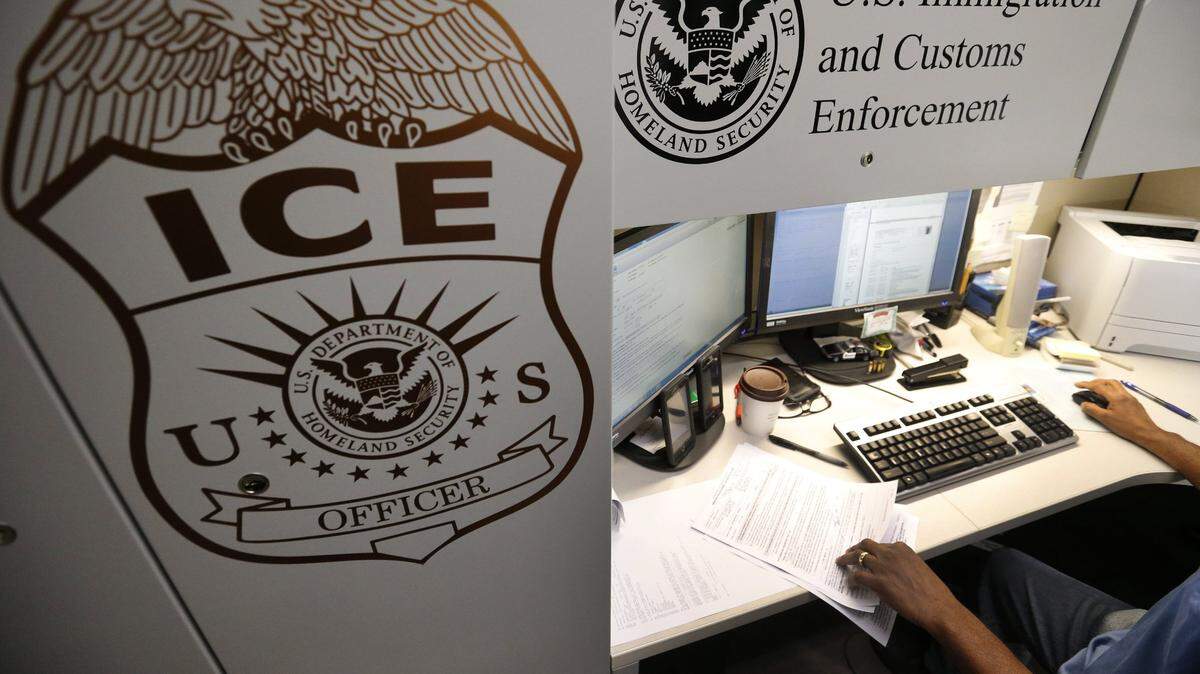
The number of people detained and arrested by Immigration and Customs Enforcement in Merced County dropped notably last year compared to 2018, Sheriff Vern Warnke reported Tuesday before the Board of Supervisors.
Still, some Merced County residents told the board the number of detentions is still too high.
Warnke was presenting the report to supervisors because of the TRUTH (Transparent Review of Unjust Transfers and Holds) Act. Under the state law, which took effect in January 2018, law enforcement must hold at least one public forum yearly to inform the community about ICE’s local activities.
During his Tuesday presentation Warnke reported ICE in 2019 requested 138 suspected undocumented individuals be detained in Merced County for alleged criminal charges. Of those, 12 people were arrested by ICE agents. That compared to 214 detainer requests by ICE in 2018 and 40 arrests.
Data for 2020 will not be available until next year.
The nonprofit Building Healthy Communities in 2016 estimated 25,000 undocumented people resided in Merced County.
The most recent U.S. Census Bureau estimates put the county’s total population of all residents at 277,680.
Sheriff Warnke explained inmates’ scanned fingerprints are sent to California Department of Justice and the FBI as part of the booking process.
“The Department of Homeland Security uses the FBI submission to look into matches for persons in the United States illegally,” Warnke said. “If they find a match, a detainer request is sent to the classification unit via email.”
Detainer requests are issued by ICE to local law enforcement when a person suspected to be undocumented is placed in custody for criminal charges.
Warnke, who expressed that he wanted to dispel some “myths” ICE’s activities in Merced County, said the Sheriff’s Office doesn’t collaborate with ICE on operations. Warnke said the Sheriff’s Office doesn’t supply equipment and personnel — nor does his office conduct investigations into an individual’s immigration status.
Inmates are not held without a federal warrant, Warnke said, and ICE interviews don’t take place within the county jail. Also, ICE isn’t notified before the public when an inmate is to be released, he added.
Warnke said ICE doesn’t have office space in the Merced County jail system, or access to computer systems, including the jail management system.
Forum draws some critics
Critics of law enforcement and immigration activists in Merced County — and other counties throughout the state — have made their presence known at TRUTH Act forums in recent years.
Some on Tuesday urged county leadership to stop using words like “illegal” to describe undocumented people — a population local activists say not only pays taxes, but provides essential work in the agriculture-rich San Joaquin Valley.
“We do benefit from this community,” said Blanca Ojeda, a community organizer with Faith in the Valley, who has advocated against ICE deportation in the past.
“Sometimes it feels like we come to these meetings and we’re still not heard,” she added.
Others want increased dignity and respect for undocumented people, especially from law enforcement.
“The reason for my concerns are more the separation of families, the injustices happening at the border,” said community organizer Gloria Sandoval. “Still, the children are being separated from their families and at times deported when they know they have been impacted by COVID-19.”
Still, there were also those who expressed support for ICE. “When people get in trouble, if they’re not from the land there’s consequences,” said one anonymous speaker.
Format disappoints some
The TRUTH forum’s format allows law enforcement to give a report and for the public to comment. However, it’s not designed for dialogue among community members and leaders.
Some speakers were disappointed Warnke left the Board of Supervisors chambers Tuesday immediately after his presentation.
“I doubt he will watch this,” said Sheng Xiong, a Merced resident and policy advocate with Leadership Counsel for Justice and Accountability.
“That just goes to show the kind of care he has for undocumented folks here . . . It’s upsetting that our sheriff left, and hardly anyone is participating in the conversation.”
Members of the board, with the exception of Chairman Rodrigo Espinoza, didn’t comment during the forum.
“It’s his discretion whether he wants to take questions, and he decided not to,” Espinoza said. “We’re a separate body from him, so we can’t make the sheriff do what he doesn’t want to do. We respect his decisions.”
More on 2019 ICE statistics
Of the 138 detainer requests, 39 followed alcohol-related booking charges. Domestic violence and nonviolent crimes led to 21 of the requests. Narcotics-related crimes were the precursor to 17 detainer requests, while assault and battery led to 14 requests and property crimes 11, Warnke said.
All other alleged crimes led to less than 10 detainer requests each. These include: weapons related (7), violent felony (3), gang crimes (2), sex crimes (2) and manslaughter (1).
People of Hispanic/Latino descent accounted for 124 of all detainer requests. Asian/Pacific Islanders made up 14 of the. No other racial/ethnic groups had detainer requests issued in 2019.
Sixty of the requests were for individuals age 31-40, 43 for ages 18-30, 29 for 41-50-year-olds and six for ages 51-60.
This story was originally published November 19, 2020 at 5:00 AM.