Merced County home prices are approaching pre-recession levels. What you need to know
It’s getting more and more expensive to buy a house in Merced County.
Selling prices for single-family homes are at or near their highest level ever in Merced and the surrounding central San Joaquin Valley. Now the average price in Merced County is approaching what was observed in the mid-2000s, before a monumental collapse of the residential housing market created a forest of foreclosures and stopped most home construction in its tracks.
In the Merced County housing market, the median selling price of a single-family home – the point at which half of homes sell for more and half for less – has grown by more than $93,000, or more than 41%, over the past four years.
“In the simplest form, it’s supply and demand,” said local real estate agent Andy Krotik, who works for American Realty. “The demand is very high and the supply is very low.”
According to Krotik, there were 295 single-family homes on the market a year ago in Merced. Now there are only 56 currently for sale in Merced. There were 75 homes on the market in Atwater a year ago and now there are currently only 13 houses for sale.
On average, Krotik says houses would sit on the market for 40 days a year ago. Now homes are sold in about eight days on average.
In January 2017, the median home price in Merced County was about $225,500, according to historical data from the California Association of Realtors. In February 2021, the median selling price was $318,750.
That’s still less than a peak of $342,000 in mid-2006, before the housing boom turned into a bust. But February was the ninth straight month in which the median price settled at more than $300,000. That’s something that hasn’t happened in 15 years – a period in which the median dipped to less than $100,000 for several months in early and mid-2009.
Terry Ruscoe, an agent for Better Homes and Gardens, Everything Real Estate says low interest rates coupled with the historically low housing inventory is driving the current housing market in Merced. .
At the of the end of December 2021, housing inventory stood at just 1.07 million homes for sale on a national level, according to the National Association of Realtors. That’s the lowest number of available homes since 1982.
“These shortages continue to worsen in 2021, especially in our Central Valley where significant numbers of metropolitans have chosen to work remotely at a lower cost both financially and in terms of proximity stressors resulting from the pandemic,” Ruscoe said.
“This reduction of inventory resulted from a perfect storm of a historically high number of wildfires that wiped out housing throughout our western states, severe reductions in building materials resulting from COVID-19 and pent up demand for better housing during a home quarantined pandemic.”
The rising prices are not warding off would-be buyers. In fact, in neighboring Fresno County there are more buyers out there than homes to be sold, real estate agents told The Bee.
“In my 44 years in the business, I have not see a market this hot,” said Don Scordino, past president of the Fresno Association of Realtors, a broker associate with Realty Concepts and host of a weekly radio show on the Fresno real estate market. “And many of the homes are selling inside of three or four days with multiple offers.”
Annie Foreman, a Realtor with Guarantee Real Estate and current president of the Fresno Association of Realtors, noted that the average time that a listed house sat on the market at the beginning of 2020, before the COVID-19 pandemic, was about 50 days. Now, she said, “the statistics tell you it was 21 days in February, but it’s even less than that.”
“We joke with clients that if (their house) hasn’t sold within a couple of days, it’s overpriced,” she added.
‘Inexpensive,’ not necessarily ‘affordable’
The Valley as a whole generally remains less expensive for buyers and renters in comparison to larger metro areas of California – but depending on a household’s income, “inexpensive” does not necessarily equate to “affordable” in a region where average wages tend to be lower than most of the state.
How does the median home price in Merced County stack up with other parts of California?
- California average: $699,000.
- San Francisco Bay Area: $1,151,500.
- Los Angeles metro area: $649,000.
- Riverside County: $519,500.
- Sacramento County: $463,000.
In fact, among California’s 58 counties, Merced County had the sixth-lowest median home price in February.
Still, in the Valley’s current housing market, there are more buyers than there are houses for sale. That means the simple principles of supply and demand are creating a seller’s market.
The local real estate market seems to have defied the coronavirus pandemic that has weighed like an anchor on much of the economic activity in the San Joaquin Valley and across California.
“If you had asked me in the beginning of April 2020, when we were all on a complete lockdown, I would have looked at a crystal ball and thought, ‘Oh, boy, this is going to be a tough year,’” Foreman said. “But that turned out to be an incorrect prediction.”
“The pandemic positively affected the market because people wanted to move after we got out of the initial lockdown.” she added. “In large part, people found themselves stuck in their homes and thought, ‘I need someplace bigger, somewhere I truly love.’”
“Demand increased, and inventory did not increase along with it,” Foreman said. “That caused price increases and the frenzy that’s out there.”
Scordino offered a similar opinion. “The pandemic and shelter-in-place orders made people appreciate their home more,” he said. “It’s not only where they go to sleep at night. It became where they go to work, where they go to school, it became their playground.”
“We saw a lot of people this past year sell their smaller home and buy their larger ‘forever home’ and know they’re going to stay there.” he added.
And there’s another factor: buyers coming into the Valley from other parts of California and finding a relative bargain, both in home costs and the overall cost of living, compared to where they were living, particularly people in jobs that allowed them to work remotely, from home, no matter where they lived.. “Someone who was living in an 800-square-foot loft in San Francisco can get 3,000 square feet in Fresno,” Foreman said. “We’re seeing some more migration here into town” that’s adding to demand.
The frenzy that Foreman described continued into March. A comparative market analysis report of properties listed and sold in the Fresno-Clovis area shows that some homes sold for more than the owners listed as their asking price – as much as 10% higher than the listed price.
But Foreman and Scordino said sellers cannot simply expect to list their home and expect to have a buyer immediately.
“It’s still a price-driven market,” Foreman said, suggesting that buyers aren’t inclined to overpay relative to the market. “But good homes in good areas, and that are priced well are going to move very fast.”
Scordino noted that almost one in five homes currently listed have been on the market for more than 30 days, underscoring the need for sellers to have realistic expectations. “That means they have to do it right,” he said. “They have to clean it up, they have to present the property well, and they have to price it right.”
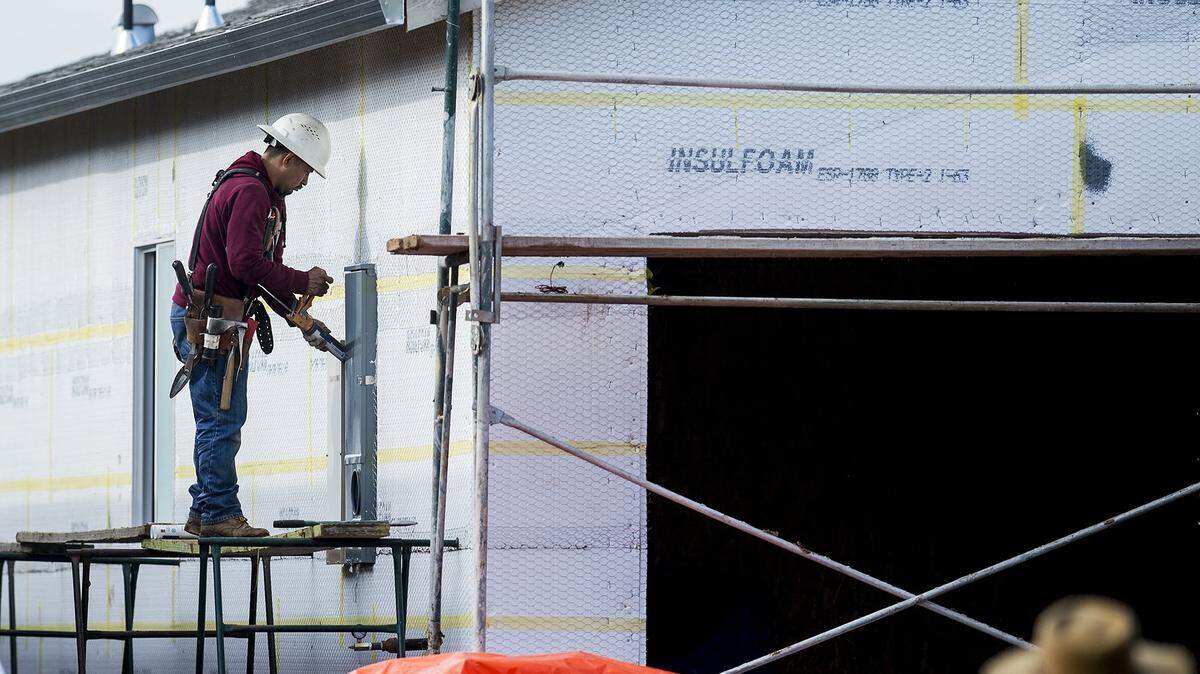
In addition to existing single-family homes, developers and builders are back in earnest creating new housing projects across the Valley, Scordino said.
“Back in the early 2000s, builders were overbuilding because there was so much demand, because anybody could get a loan,” he said. When the housing market collapsed in 2007, however, “builders pretty much just stopped building, and a lot of them left the area.”
“We had almost no building for several years, and then they came back a little bit at a time,” Scordino added. “Hence we have the housing shortage. Builders have not been able to build enough in the last 15 years to keep up with the growing demand.
Another real estate bubble?
The rise in home prices raises questions about whether the market is sustainable, and there are worries that perhaps this is another housing bubble that could burst as it did in the late 2000s.
“I think it’s questionable whether it’s sustainable,” Krotik said. “A lot of it is tied to the pandemic and the historically low interest rates.
Ruscoe also questions whether the market is sustainable.
“We want a marathon opposed to a 50-yard dash and with proper restrictions remaining in place we can achieve something in between,” Ruscoe said.
“There will always be easing and corrections in any market, just like developers always over develop. Higher interest rates will inflict more gravity on appreciation and inflation increases, interest rates must respond accordingly… Housing is a necessity and so long as we have far too little it will remain far too expensive.”
Floyd also noted the shortage of housing inventory in the market, as well as near-historic low mortgage interest rates, as factors driving demand and, thus, prices. In early March, there were about 80 homes listed in what he described as relatively affordable $340,000-and-under range, adding that “there are literally thousands of buyers in that range.”
Mortgage rates for homes on March 31 were in the range of 3.25% for a 30-year fixed-rate loan, or 2.59% for a 15-year fixed-rate loan. And lower rates mean lower monthly mortgage payments for buyers, even when prices are escalating.
“I believe we need to be cautious about where we are even with low rates,” Floyd said. “People are buying (based on) payments and not price. That’s a dangerous scenario.”
Scordino and Foreman, however, said they believe the housing and banking environment behind today’s market are far different than the collapse that led to a nationwide recession 14 years ago.
“The major difference is that the lending world was very different in the early 2000s compared to what it is now,” Foreman said. “You didn’t even have to have a pulse to get a loan” as there were cases of lenders approving home mortgage loans for people who had died.
“Now the pendulum has swung the other way – they check everything for eligibility,” she added. “The economics now are very different from what they were then.”
Scordino also noted the more lenient lending patterns two decades ago. “Back then it was more of a mortgage crisis than a housing crisis,” he said.
“They had a loan called the NINJA loan, a no-income, no-job application,” he said. “All you had to have back then was a decent credit score, and with no down payment they’d give you an adjustable-rate mortgage with a balloon payment in three years.”
The rapid rise in prices in the mid-2000s also artificially inflated the amount of equity that home owners had in their property, and the ease with which people could get a home-equity loan – essentially treating their home like a piggy bank – contributed to the mess when prices collapsed and owners found themselves owing more money than their house was worth.
“Now, a lender is not going to make a loan unless the borrower demonstrates the ability to repay,” Scordino added. “Those are the key words – ‘ability to repay’– that was not in the loan at that time.”
The improved qualifications of buyers, Scordino said, is why he believes prices are more sustainable now. “I don’t see very many similarities between today’s market and 15 years ago other than prices are rising,” he said.
This story was originally published April 9, 2021 at 11:11 AM.