
‘Toxic work environment.’ Valley PBS’ revolving door of CEOs, turmoil threatens station
Former employees and executives of Valley Public Broadcasting Station say a revolving door of CEOs and an exodus of staffers fleeing a “toxic work environment” in recent years have compromised the financial strength and programming quality of the San Joaquin Valley’s largest public media outlet, a Fresno Bee investigation has revealed.
The Bee’s probe into the inner workings of Valley PBS, more commonly known as Channel 18, raised questions of conflict of interest and compliance with public broadcasting policies. Former executives said the station’s board is failing.
“What’s at risk is the confidence of the community,” said Colin Dougherty, the station’s founding general manager. “When you do that, you undermine the programming and the funding, and those are the two pillars that you stand on.
“You’re asking people to give money to your organization to provide them programming and insight into their community,” Dougherty said. “If you’re not doing that, they’re not going to watch you, which is what television is.”
Current Valley PBS leadership denies any wrongdoing. While acknowledging missteps in recent years by former executives, they say the ship since has been righted.
“Valley PBS, in its entire history, has never had the leadership in place to produce local content at the level we have now, backed up with an ability to raise funds to support it,” said Jeff Aiello, co-owner of 18Thirty Entertainment and the newly appointed Valley PBS interim CEO, in the station’s last board meeting.
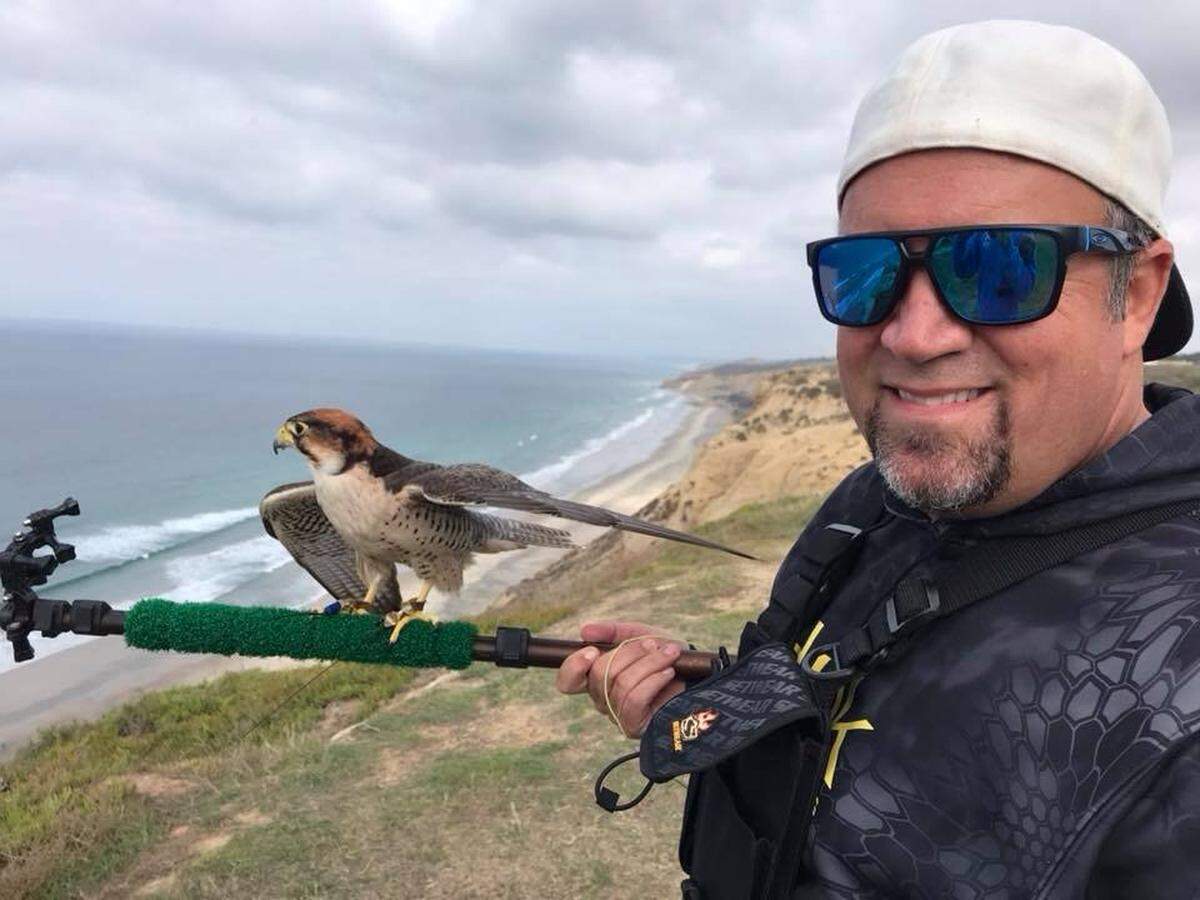
He and Nancy Borjas, the new chief operating officer, are hiring staff and planning new programming. Aiello and the station’s board chair, Karen Musson, insist original programming has maintained its balance and they’ve taken the steps to prevent any conflicts of interest.
Work also is being done to bring the station’s board of directors and community advisory board up to capacity after participation dwindled, leaving more control to a handful of directors.
Valley PBS first went on air in 1977 and is the only licensed public television station in the San Joaquin Valley. The station reaches 94% of households with a television and broadcasts over 70 hours of children’s programming weekly. Additionally, the station airs national PBS content and locally produced documentaries. Nearly half of the station’s funding comes from about 10,000 members, according to its website.
Both the critics and new leadership share one thing in common: They’re calling on viewers and communities to support the station to ensure a prosperous future that carries out the station’s mission to enrich, educate and strengthen the diverse Valley.
Turnover at the top
In the seven years since Paula Castadio left the station’s top post in 2014 for a job at Fresno State, Valley PBS has seen five chief executives.
When she left the station, Castadio said she felt it was in a healthy place.
“I left knowing there was strong leadership in place to carry on and that the station was financially sound and thriving,” she said.
After Castadio left, longtime financial officer Phyllis Brotherton took the helm as interim CEO and led a national search for a permanent leader. Phil Meyer was hired in 2015 but abruptly left the station in 2017. Brotherton again acted as interim CEO before Jenny Toste was hired in 2018. The board ended Toste’s contract in 2019 after only seven months.
Meyer and Toste declined to comment for this story.
After Toste’s departure, the station hemorrhaged staff, who were either fired or left on their own because morale plummeted. Then, another new CEO and former board member, Lorenzo Rios, came on board in 2019. He laid off another handful of employees in March 2020 because of the coronavirus pandemic.
The latest change in leadership occurred in April, when Rios left the station after serving as interim CEO for under a year. Now, it’s led temporarily by Aiello.
That change is what prompted Dougherty and others to band together and write a series of op-eds in multiple publications, including The Bee, calling for community action and board accountability.
The board of directors just this week hired Denham Resources to begin a national search for a CEO.
Toxic work environment
While the reason for Rios’ departure remains unclear, former employees in interviews with The Bee described the U.S Army veteran’s leadership style as draconian and militaristic.
Rios also was the CEO of the Clovis Veterans Memorial District while holding the top job at the station, an unusual arrangement for any CEO, but one Musson said she cleared with the board of the veterans memorial district. Musson said she and the veterans memorial board believed Rios had a fitting skill set to lead Valley PBS’ digital transformation.
However, former Valley PBS employees said Rios was not qualified to lead a public broadcasting station.
“People were afraid to speak up in the meetings. It was a toxic work environment,” said Oscar Speace, who worked at the station for nearly four decades before he was laid off.
Plus, some expressed concern that the board placed Rios in the position with no public search and after he himself served on the board.
Kadidia Cooper, a former chief financial officer, said Rios demanded loyalty.
“He wanted to run Valley PBS like a military unit,” she said. “He kept telling us how we needed to apprise him of literally every single thing that was going on at the station because we needed to build trust. Yet at the same time, he would go to people and either threaten them or try to pull them onto his side by going behind people’s backs and trying to build some sort of special relationship.”
When Rios first took the helm, employees were confused about his role, said Theresa Soares, former corporate development director. Rios first told staff that he was a liaison for staff and the governing board. It was unclear if there would be another CEO search.
“We didn’t know who was in charge,” Soares said.
Musson told The Bee the board from the beginning understood Rios’ role would be interim.
Soares left the station in September 2019 after her job duties had multiplied and the work began affecting her health. Cooper described similar work conditions.
“It was unfortunate, but you have to do what you have to do,” Soares said.
When Rios came on board, he asked employees to sign a contract pledging they’d be loyal to the station and that “duty to God and country are demonstrated in our actions every day.” The Bee obtained a copy of the contract as well as a recording of the meeting in which Rios presented the contract to staff.
At least one employee objected to signing the contract, saying it went against his religion. Rios allowed that employee to strike out the “God and country” part of the contract but wouldn’t remove the phrase.
“In a way, yes I signed it. But I also put down that I was signing under protest to avoid firing,” said one former employee, who asked not to be named fearing it would harm future employment opportunities.
The contract also repeated the Rotary Club’s four-way test that serves as the founding principles of that organization. Rios was club president of the Clovis Rotary from 2020-2021. Rios also began staff meetings with a prayer, former staffers said.
Cooper said Rios and Musson both also inserted themselves in human resources issues.
Cooper said she was fired a day after she refused to give the temporary administrative assistant access to personnel files and all Valley PBS bank accounts, a request from Rios that Cooper believed was inappropriate.
She found out she was being fired because Musson accessed the station’s payroll system and issued a final check to Cooper. Cooper was still the main contact for the system and received a notification. She turned in her badge and company credit card and said goodbye to the staff.
Musson said she issued Cooper’s final check on the advice of an attorney in order to meet a deadline.
“It would not have been my druthers,” she said. “I would have preferred that check to come from the people who do the payroll, but I am an authorized signer, and I’ve not done anything without the direction of an attorney.”
Musson said she couldn’t discuss the details of Cooper’s termination, other than that the station’s finances weren’t timely.
“I wish I’d acted sooner,” she said.
Musson said she respected Cooper and wished her well, but she, Aiello and Borjas also called into question Cooper’s ability to manage the station’s complicated finances. Other former employees and executives said Cooper was more than qualified for the job.
In March 2020, Rios laid off about half a dozen employees, including Speace, who said a number of other people quit because of low morale. Staffing dwindled to the lowest numbers in years, he said.
The Bee reached out to Rios so he could respond to the allegations, but Rios declined to answer specific questions and interview requests, saying, “I am no longer in a position to provide any information regarding the station and its future.” He’s no longer a board member.
Rios said in an email that his role at the station was always intended to be temporary and never permanent. He defended the station’s performance under his leadership and despite the hardships created by the coronavirus pandemic.
“The team at Valley PBS lost 80% of its funding as it entered the COVID crisis because so many events were in person, and subsequently, 60% of the staff turned around and increased production by 300%,” Rios said. “Valley PBS was one of the only public television stations that produced original content during a challenging period.”
Musson said she was surprised to hear former employees thought Rios’s leadership style was toxic. She said he brought in employees who chose to leave when he did.
Finances
Valley PBS financially survived the pandemic due to lower staffing costs, CARES Act money and funding from the Corporation for Public Broadcasting, station finance reports show.
In 2020, Valley PBS received $500,000 of CARES Act money and $500,000 from the CPB. Without these funds, it appears the station would’ve lost money.
Membership for the station remains strong and increased 4% in the last year.
Brotherton, the former chief financial officer, said the station’s financial reports tell a story: “The station made it through the pandemic due to huge staff reductions, most never replaced, and government funding, leaving it well-poised financially for now,” she said. “The station’s future, its sustainability and robust services to the community, lay squarely at the feet of the four members of the board executive committee.”
In the July board meeting, a financial summary made it clear the station is relying heavily on Aiello to raise money for production and the station in general. Aiello said that should be part of any CEO’s job for the station.
Castadio attended that meeting and pointed out the station’s funding streams over the last few years concentrate more on production.
“My concern is that post-COVID, the station will not have the benefit of one-time federal funds and the buffer of multiple revenue sources to sustain the station resulting in a precarious future,” Castadio said in a statement to The Bee.
Aiello in that meeting defended the station’s finances, noting that NETA Business Services, which is well acquainted with public broadcasting stations, is now handling the accounting.
“We are in great shape to do great things for our viewers,” he said.
Conflicts with programming?
Former station executives expressed concern in op-eds and interviews that corporate agricultural interests are shaping programming and pose a conflict of interest for executive board members.
The concerns center primarily with Musson, the board chair, and her company GAR Bennett, a farm chemical and irrigation management company. Castadio invited Musson to join the board six years ago, and Musson’s two-year term as board chair will end in September.
The station’s financial reports show the Gar and Esther Tootelian Charitable Foundation pledged about $50,000 to the station in both 2019 and 2020.
GAR Bennett sponsors the show “American Grown: My Job Depends On Ag.” Valley PBS also hired Aiello to produce a miniseries called “Tapped Out” exploring the history of water in California.
Musson said she has never asked — or been asked — for input on the content of programs.
“It would be wrong,” she said. “I support the show because they’re stories about agriculture, and I think they tell important stories about agriculture. In the frame of things, we’re (GAR) just a tiny little company that does crop care and water.”
The Public Broadcasting Act mandates that public broadcast stations use diverse sources and strictly adhere to objectivity and balance in all programs and series that are controversial.
“There’s nothing more controversial right now in the Valley than the situation with the water — the tug of war between farms, cities, natural resources and the fish interests,” said Doug Morris, a member of the Valley PBS Community Advisory Board. “To me, a PBS program that covers that would be much more objective than what ‘Tapped Out’ became.”

Dougherty agreed.
“There’s a responsibility to look at the programming and see if it has all the elements of looking at a story. For the water issue, there’s environment, ag, urban and inequality of water. There’s areas in the Valley where people are still getting brown water,” Dougherty said. “They have the obligation when they’re doing a story on water to make sure all of those elements are looked at and it’s not just a one-sided conversation on who should get water.”
Brotherton said the locally produced content in recent years shows a shift in priorities from servicing parents and children to agriculture.
“This isn’t wrong, per se, just unfortunate in my opinion,” she said.
Aiello defended both programs.
He said the “American Grown” show has evolved over the years, and so have his skills and sensitivities as a filmmaker.
“I wouldn’t make ‘Tapped Out 1’ today like I did four years ago,” Aiello said. “Go look at my current work. …I’m not the boogeyman. I’m actually arguably more balanced than most of the local media in this market. At this station, we are.”
Former employees also questioned how Aiello could work as the CEO while also producing shows through his private business for Valley PBS.
Previously, Aiello raised the money for “American Grown” himself. He kept 75% of the money, and Valley PBS kept 25% and managed the money and the contract. But under Rios’ leadership, negotiations for a new agreement broke down. Aiello decided to raise money and produce the show himself, and Valley PBS will continue to air it without raising money or keeping a cut.
Now that Aiello is CEO, he will continue to raise money for “American Grown” and “Outside: Beyond the Lens,” a travel-photography series, and Valley PBS will air the shows. To show good faith, 18Thirty Entertainment will make a $20,000 donation to Valley PBS this year for “American Grown,” Aiello said.
Furthermore, Aiello will air a Creek Fire documentary on Valley PBS that he originally raised money for with 18Thirty. That documentary, “Afterburn: The Creek Fire Documentary,” is scheduled to air on Channel 18 Sept. 30.
Going forward, Aiello said he will not sign any contracts with Valley PBS and 18Thirty. If any contract comes to Valley PBS that may be a conflict for him, Borjas will step in to make decisions.
“No one was more concerned about the optics of conflict of interest than Jeff Aiello,” he said in an interview with The Bee. “I care about my community. I have a good reputation in this town. I love my community.… There’s no way I’m going to work my butt off for all these years doing good work and serving my community and then try to hustle that community with some sort of scam because I own a business that makes TV shows and now I’m the CEO.
“We’re not doing that. I would never. It’s not worth it,” he said.
Valley PBS still airs mostly children’s programming and only one ag show a week. Aiello said he would pursue additional ag content because he believes it’s important. He also outlined plans for new shows highlighting a local comedian and the food scene, the arts community and programming produced by locals, in addition to multiple documentaries, including the one about the Creek Fire.
It’s important to stay committed to children’s programming and outreach work, Castadio said, because many Valley families rely on those services.
“Valley PBS is the most-watched children’s channel and the only children’s programming lineup that is produced to advance the intellectual, emotional and behavioral well-being of the children watching. Many parents co-watch these programs with their children, and credit Valley PBS for helping them learn to speak English as a second language,” she said. “I ask the board and current CEO to remember that there is more to public television than producing national content to reach high acclaim, also accompanied by very little net financial benefit to the station.”
Speace also called for the addition of a public affairs program, which hasn’t been done in seven or eight years, he said. Under Dougherty’s leadership, Valley PBS produced a number of public affairs shows, including “San Joaquin Illustrated,” “Consumer Line” and “Valley Press.”
“The main core principle of public television is to cover public affairs,” he said. “That’s one of their stipulations.”
Since his op-ed for The Bee, Morris talked to Aiello about programming and feels confident and hopeful future episodes of “American Grown” and other content will be balanced.
Soares said the station leadership has a choice: “They really need to take a look at those content production guidelines at the national level and see if they want to reflect that at the local level for their productions.”
Multiple employees said they were surprised that the Corporation for Public Broadcasting or PBS at the national level weren’t getting involved with Valley PBS or enforcing any regulations. At least three former employees told The Bee that they personally knew complaints were made to those organizations and someone was investigating.
PBS President Paula Kerger and Senior Vice President for Station Services Jim Dunford declined to comment for this story.
Officials with the CPB’s Office of Inspector General said in an email to The Bee the office does not confirm whether it has received complaints or whether it is investigating complaints, citing confidentiality reasons. If any kind of audit, review or investigation is underway, the Office of Inspector General will release a report when the work is completed.
Forging ahead
Many have called on the executive board to step up and forge a new course for the station, starting with bringing the governing board and community advisory board up to full membership and holding regular meetings.
The community advisory board reviews content and provides feedback from the Channel 18 audience to the station’s leadership. The board of directors hires the CEO and sets the budget for the station.
Dougherty said both bodies should reflect the diversity of the Valley.
In his op-ed, Morris called on the community to get involved to bring the boards up to full membership.
“Like many boards do in times of challenge, they shrink in numbers, deciding to stay small until the organization finds stronger footing. In theory, this seems like a good idea, but it can lead to board overreach and control,” Castadio said. “A healthy board culture is one that reflects the public it serves, is founded on trust, is fully transparent, and actively invites, listens to and shapes solutions with its board members, for the best interests of the organization.
“In contrast, an unhealthy board culture is controlled by a few who are making major decisions behind the scenes,” she said. “I agree with Mr. Dougherty that it is time for the Valley PBS board to grow its ranks and to conduct a wide and transparent CEO search, not just a cursory one to check a box to satisfy public outcries.”
Already, those things are happening, Aiello said.
Since he came on board, there’s already been a community advisory board meeting where programming was discussed.
“They’re (CAB members) here to provide feedback. They’re here to tell us how the community is receiving our content,” Aiello said. “It’s usually just been a parade, show and tell — here’s what we’re doing — and not really giving the opportunity for the feedback.”
But at the last CAB meeting, members brainstormed with station staff on programming ideas. The meeting ended with hugs and high-fives, Aiello said.
He’s also recruited six governing board nominees from Bakersfield, Fresno, Merced and Madera, who the board plans to announce this week. That will double the size of the board of directors, but it still won’t quite bring it up to full capacity of 16 members. Aiello said that goal is a priority.
Aiello also wants the station to become more involved in Kern County.
Just this week, the board began the national search for a new CEO.
Aiello said he will throw his hat in the ring, but he’s happy to pass the baton to a new CEO.
“If the board can’t find someone, and they need me to do the job, I’ll do the job,” he said.
Morris said Valley PBS is “irreplaceable” and called on the community to show its care for the station.
“There’s a lot of commercial television stations, but there’s only one public television station,” Morris said. “It is critical that we have a locally managed and supported television station here. It’s like the antiques on ‘Antiques Roadshow.’ They’re not making any more of them. They’re irreplaceable, so take care of them.”
How you can help
- Become a member or make a donation online: valleypbs.org/donate.
- Companies or organizations can learn more about partnerships by contacting development@valleypbs.org.
- Those interested in joining the board of directors or the community advisory board can email ceo@valleypbs.org for an application.
Valley PBS board of directors
- *Karen Musson
- *Jonathan “Jody” Graves
- *Celeste Barron
- *Deborah Lagomarsino
- *Andy Souza
- James Shekoyan
*Executive Board Members
BEHIND THE STORY
MOREHow we reported this story
The Bee first began reporting this story in early May after Valley PBS announced Lorenzo Rios was no longer the CEO.
The reporter interviewed by phone or in person over a dozen former Valley PBS employees and executives. The Bee also spoke to at least half a dozen more former employees and executives who spoke off the record. The reporter obtained audio recordings and copies of contracts through an anonymous source and confirmed their authenticity through former employees.
The reporter attended via Zoom the station’s July board meeting and toured the station in late July.
The reporter also reviewed documents such as the station’s most recent financial reports, regulatory reports, PBS policies, Corporation for Public Broadcasting policies, and the Public Broadcasting Act.
The reporter reviewed Valley PBS content, including episodes of “American Grown: My Job Depends on AG,” “Tapped Out,” “Valley’s Gold” and “Outside Beyond the Lens.”
This story was originally published August 25, 2021 at 8:32 AM with the headline "‘Toxic work environment.’ Valley PBS’ revolving door of CEOs, turmoil threatens station."