‘We just want to be kept together.’ Merced residents air concerns on redistricting maps
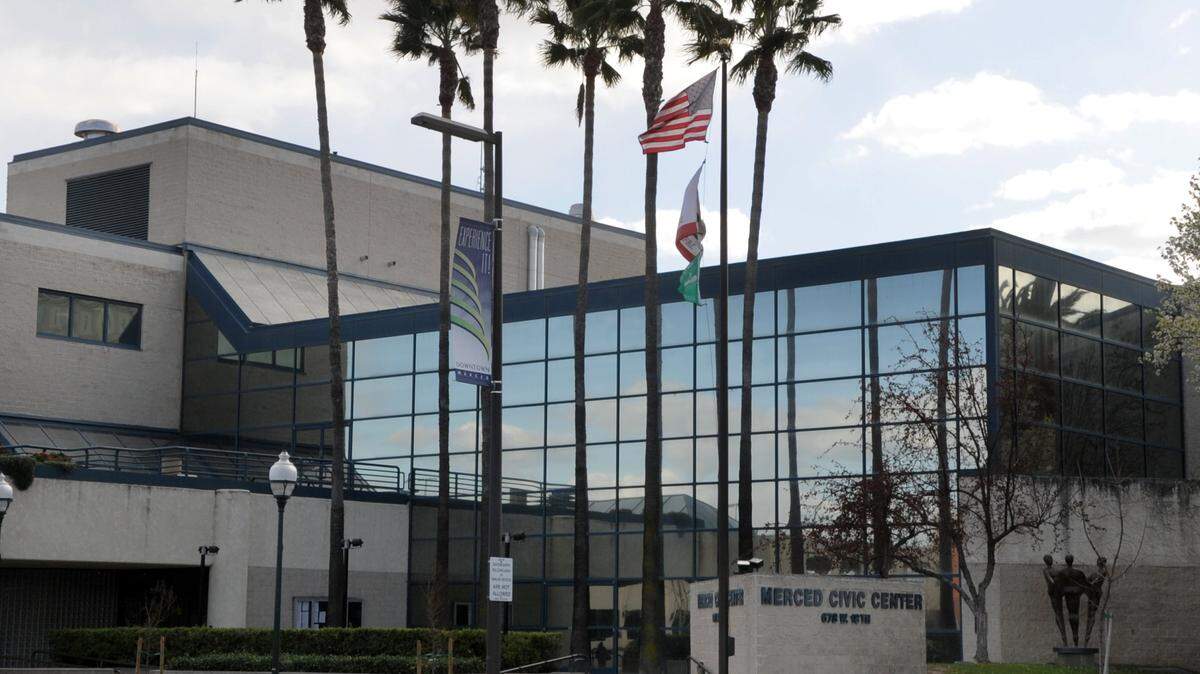
With just one month left before the Merced City Council considers final redistricting map submissions, new voting district boundaries that will shape elections for the next 10 years are getting closer to being finalized.
The community’s last chance to comment on draft maps will be during the March 7 City Council meeting, when the council will consider final map selection following a redistricting public hearing.
The timeline for Merced City Council members to vote on a final map is growing short, but Monday’s City Council meeting showed that the community is a ways off from agreeing on which set of boundaries is best.
Two maps recommended by the Redistricting Advisory Committee elicited strong praise as well as ardent criticism in nearly equal measure on Monday. Tensions became heated enough at one point that Mayor Matt Serratto ordered a five-minute recess to breathe and return to the conversation to relative calm.
There’s little surprise that the map boundaries prompted impassioned protestations on Monday, as the stakes those maps represent are high.
Redistricting is crucial to the democratic process by reflecting changing demographics of a city or county over a decade.
Using the latest U.S. Census data, redistricting determines how city, county and state electoral districts will be mapped out over the course of the subsequent decade. It also informs how local and state governments allocate resources across jurisdictions, which affects who voters see on their ballots and ensures each district is represented fairly in elections.
The U.S. Census Bureau reported in its most recent count that Merced County’s population went up by 9.9% since 2010, bringing total residents to 281,202. The City of Merced’s population tallied 86,681.
Divided by six city districts, that amounts to about 14,447 people in each. New district boundaries, according to federal law, must parse residents into roughly the same amount of people in each district.
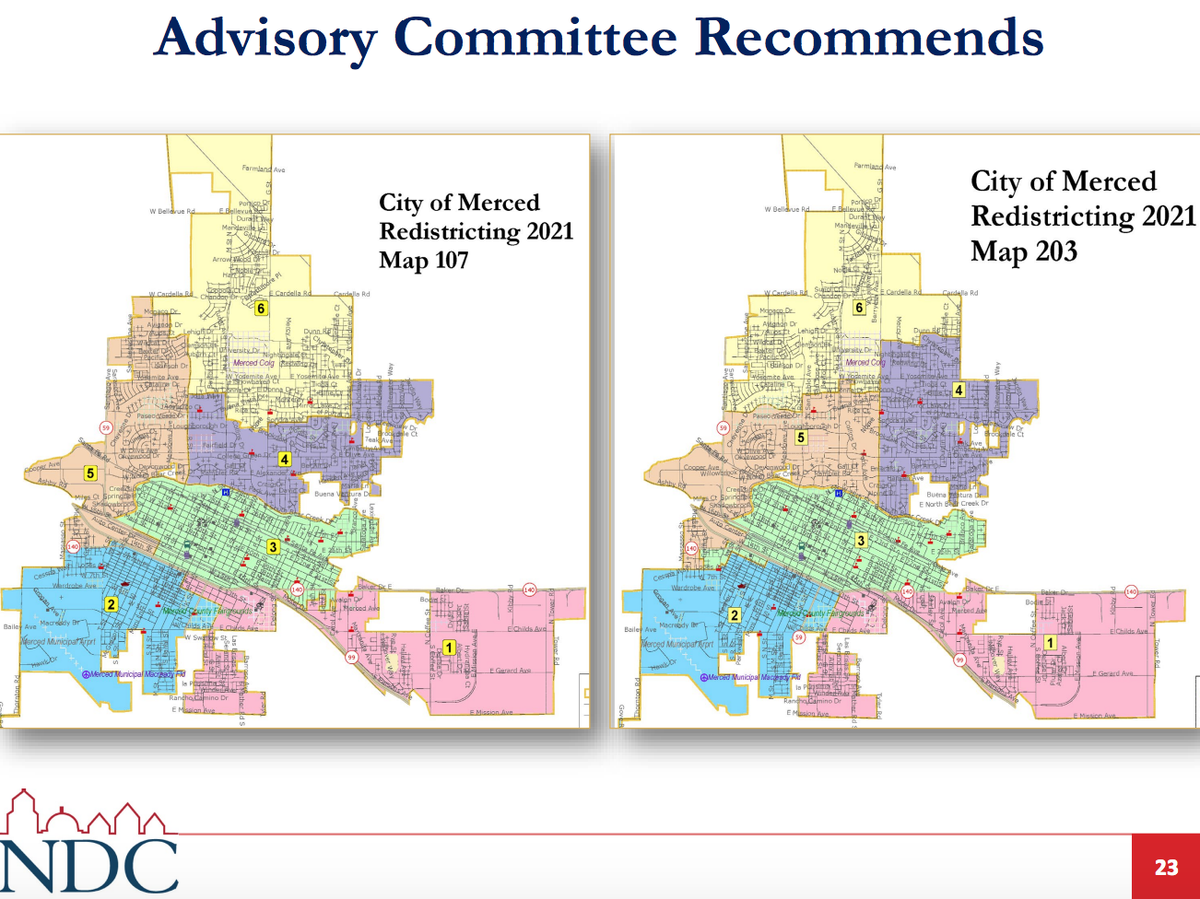
Maps must also be free of racial gerrymandering and should be compact, geographically continuous, keep neighborhoods and communities of interest together, and have easily identifiable boundaries, according to state and federal law. Of 11 maps meeting those qualifications, two were recommended to the City Council.
Redistricting maps draw support, criticism
As it has in the past, the redistricting process elicited emotionally charged testimony from both elected officials up at the dais and members of the public speaking from the podium during Monday’s council meeting.
The city first drew electoral district lines six years ago after accusations that the city’s Latino residents weren’t fairly represented on the City Council.
Similar allegations were levied Monday by City Councilmember Fernando Echevarria, who stated the Redistricting Advisory Committee’s members should better reflect the city’s high Hispanic and Latino population, which accounts for over half of the city’s total residents, according to census counts.
“We should have at least three or four Latinos on the committee,“ Echevarria said of the nine member committee. “Diversity is something that I cherish and I honor. We did not have diversity.”
Sheng Xiong, a local policy advocate with the group Leadership Counsel for Justice and Accountability, echoed other residents comments in urging the City Council to consider other draft maps than the two recommended by the redistricting committee.
Xiong, Councilmembers Echevarria, Jesse Ornelas and Bertha Perez, and several other community members each voiced interest in considering a third option, numbered draft map 106.
Known as the “Merced Forward Together” map, its version of district boundaries has been championed by organizations Power California and Communities for a New California. Proponents of the map told the City Council that it keeps communities whole, promotes little population deviation between districts and takes the growth of District 6 in north Merced into account.
“I think that it’s important to be fair in considering this and making sure that there are real options. Because the two options that you’re getting are essentially the same,” Xiong said of the Redistricting Advisory Committee’s suggested maps.
Those two maps submitted by the redistricting committee, numbered 107 and 203, do appear similar, noted committee chair Ryan Heller on Monday. This is because the recommended maps reflect themes that were evident in nearly all of the public testimony heard by the committee, he said.
Those themes include utilizing Bear Creek as an appropriate boundary between the northern and southern three districts, maintaining development patterns and preserving communities of interest as well as traditional neighborhood boundaries, Heller said. Communities of interest include populations with common social or economic interests.
Retired city planner and former Merced City Council member Michael Belluomini voiced his support of draft map 203 for similar reasons. Compared to the other suggested boundaries, map 203 best fits the state and federal mandates, he said.
Representing the Merced Downtown Neighborhood Association, resident Diana Odum Gunn also stated support for the committee’s two recommended maps.
Some community members accused the Downtown Neighborhood Association of overly influencing the redistricting process so that downtown is more prioritized than other Merced communities.
“Centering the voice of the communities of color, making sure they’re equal throughout all the districts should be the focus,” Ornelas said. “The downtown area, specifically the Main Street area, they get things rolled out to them with shiny bows and pretty wrapping paper. It’s time that we also put forth that same energy toward different communities.”
Odum Gunn refuted the accusations, stating the association should not be faulted for showing up to every redistricting meeting. “That’s us working hard,” she said. “We just want to be kept together.”
A motion by Perez to disclose which individuals or groups submitted draft maps was considered, but ultimately failed due to a lack of sufficient votes, meaning map authorship will remain anonymous.
Additional draft maps can be submitted through Feb. 18. Following the March 7 City Council meeting and public hearing, the redistricting process must be complete by April 17.
Information about the redistricting can be found on the City of Merced’s website.
This story was originally published February 8, 2022 at 3:35 PM.