
‘Jaws v. Leviathan’: UC Merced Professor to be featured on this year’s ‘Shark Week’
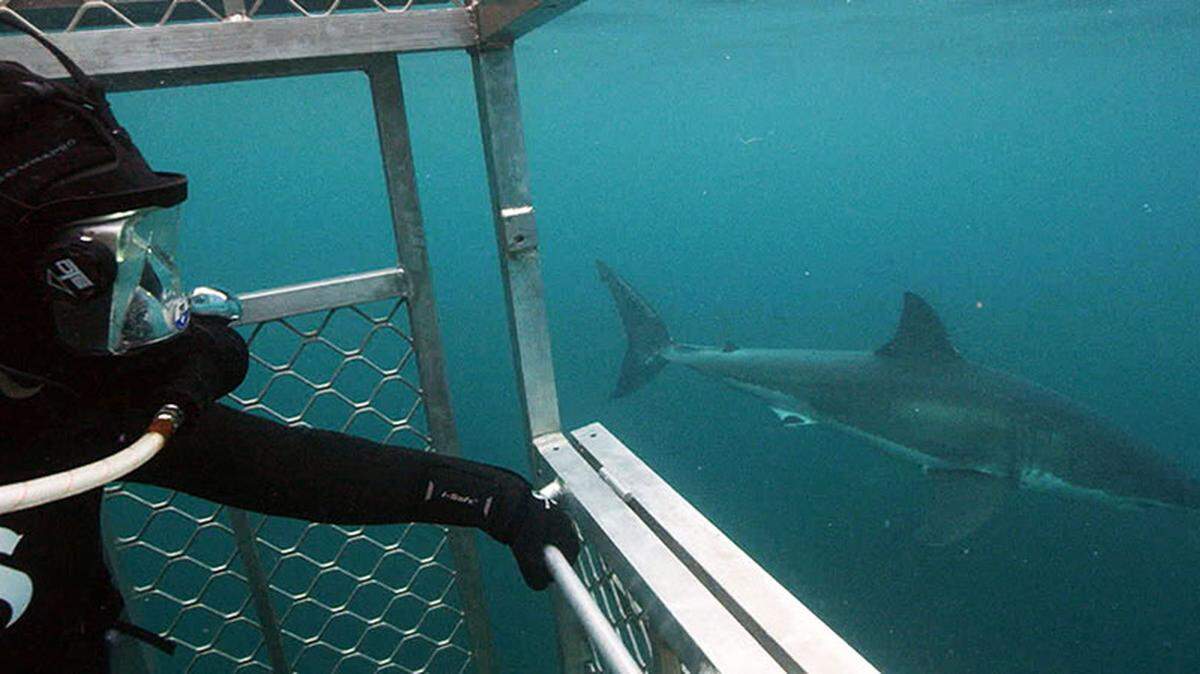
One day while walking around her alma mater Dartmouth University, UC Merced professor Sora Kim got a phone call. This call would lead her back to be featured on an episode of this year’s “Shark Week” on the Discovery Channel.
Last year, Kim was part of the “Jaws v. The Meg” episode, and will now be featured in the premiere night episode “Jaws v. Leviathan” at 9 p.m. Sunday, July 7.
Getting called back for a second time, Kim had to weigh a lot of factors when making her final decision.
“First and foremost was sort of, can I actually spare the time. Time is the hardest thing for me in my day-to-day. I have two young kids and my husband also has a very full-time job so like can I leave the kids and will everything be okay,” Kim said.
“The other part of it is I do teach a class and so it turned out that the timing of when they wanted me in New Zealand perfectly lined up with UC Merced’s spring break which was very convenient and useful. And then my husband was sort of like yeah this is a great opportunity you’ve got to go.”
Kim has experience in scuba diving and snorkeling with sharks, but this was her cage-diving debut
Kim shared that she has had opportunities in the past but turned them down due to feeling as though they were changing the ecology of the shark in the water.
What made this instance different for Kim was the way sharks were brought to the water. Tuna, which serves as a more natural diet for the sharks, was used and is not as invasive or intrusive to the sharks’ space.
“I was a little bit nervous, but then once I got in the water it was just so awe-inspiring and beautiful and the animals really are sort of elegant and majestic and their very agile in how they can turn and move. It was really incredible,” Kim said.

In college, Kim pictured herself working in outdoor education or with the National Parks Service. It wasn’t until she started her work with stable isotope analysis that she wondered if this method could be applied to fossils and modern sharks.
Kim explains that our diet has carbon and nitrogen, which is used to create bones, teeth, and muscle tissue. Through the chemistry of this carbon and nitrogen, Kim is able to relate it back to what was eaten.
For sharks, Kim said, most people analyze the muscle tissue, which works for modern sharks but for ancient sharks a lot of this carbon and nitrogen is in proteins. This does not last in the fossil records, creating difficulty in studying fossil sharks.
“Especially for sharks. They don’t have bones, they only have cartilage so that doesn’t sort of preserve in the fossil record and we just have their teeth. So I’ve been trying to develop other methods to look at, the diet or like where sharks are on the food chain using different isotope methods,” Kim said.
Her research with Megalodons led to her discovery and featured work in “Shark Week 2023”
Kim doesn’t necessarily love the camera but the No. 1 reason she agreed to the opportunities is to bring representation into these spaces.
She belongs to “Minorities in Shark Sciences,” or M.I.S.S.
Its mission is to: advance the field of shark, ray and other marine sciences by challenging the status quo of underrepresentation of gender minorities from historically-excluded communities of color and the Global South and providing accessible and equitable pathways to research, conservation, and education.
Recently Kim partnered with M.I.S.S. and the Monterey Bay Aquarium to lead a workshop called “Diversifying Ocean Sciences”.
This program helped early career scientists gain exposure to different research methods and professional pathways related to ocean sciences.
“There’s so many times that people are like, ‘I want to be a marine biologist when I grow up, or I want to be a scientist when I grow up’, but when you don’t see yourself represented in those spaces, it’s really hard to keep that dream going,” Kim said.
Last year’s “Jaws v. The Meg” was one of the highest-watched episodes with about 1.8 million viewers
With this year’s episode, “Jaws v. The Leviathan,” viewers can see many different views of great white sharks in the water.
Other scientists featured on the episode include Dr. Tristan Guttridge (behavioral ecologist), Kina Scollay (underwater cinematographer), and Odette Howarth.
“To have that many shark experts/scientists together in an episode and to be able to talk about, and bring up, and highlight some of the actual concrete scientific components I think is really cool and sets it apart from potentially other shows,” Kim said.
The name leviathan refers to a mythical monster that has been described as a gigantic water dragon. A livyatan refers to a toothed whale that actually existed.
According to Kim, the livyatan is an ancient whale related to a modern sperm whale. Its skull is about nine feet long and its teeth are about a foot long from tip to root. With its huge head, mouth, and teeth it was considered a formidable predator in the water, said Kim.
The Leviathan is believed to have lived 12 million to 13 million years ago, and ultimately became extinct 5 million years ago.
Shark Week starts Sunday at 8 p.m. and will end Saturday July 13. Here is the 2024 schedule.
This story was originally published July 6, 2024 at 6:00 AM.