
Grapes, melons, sweet potatoes targeted by thieves in Central California. What law says
Motorists driving through the heart of the nation’s richest farmland might be tempted to pick a melon or some almonds, but doing so is frowned upon by farmers and the law.
But farmers and the law are powerless in their efforts to prevent people from ignoring “No Trespassing” signs and absconding with some free fruits, nuts or vegetables.
Merced County Sheriff’s Department spokesman Michael Domingue said the office receives few reports of such incidents. This can be due to factors such as the difficulty of proving the crime was committed, does the farmer know the crime occurred and proving the items belong to the farmer.
Said Ryan Jacobsen, CEO of the Fresno County Farm Bureau, said: “I’m going to say for as long as there has been agriculture here in the Valley that this has been one of those issues that we’ve dealt with.
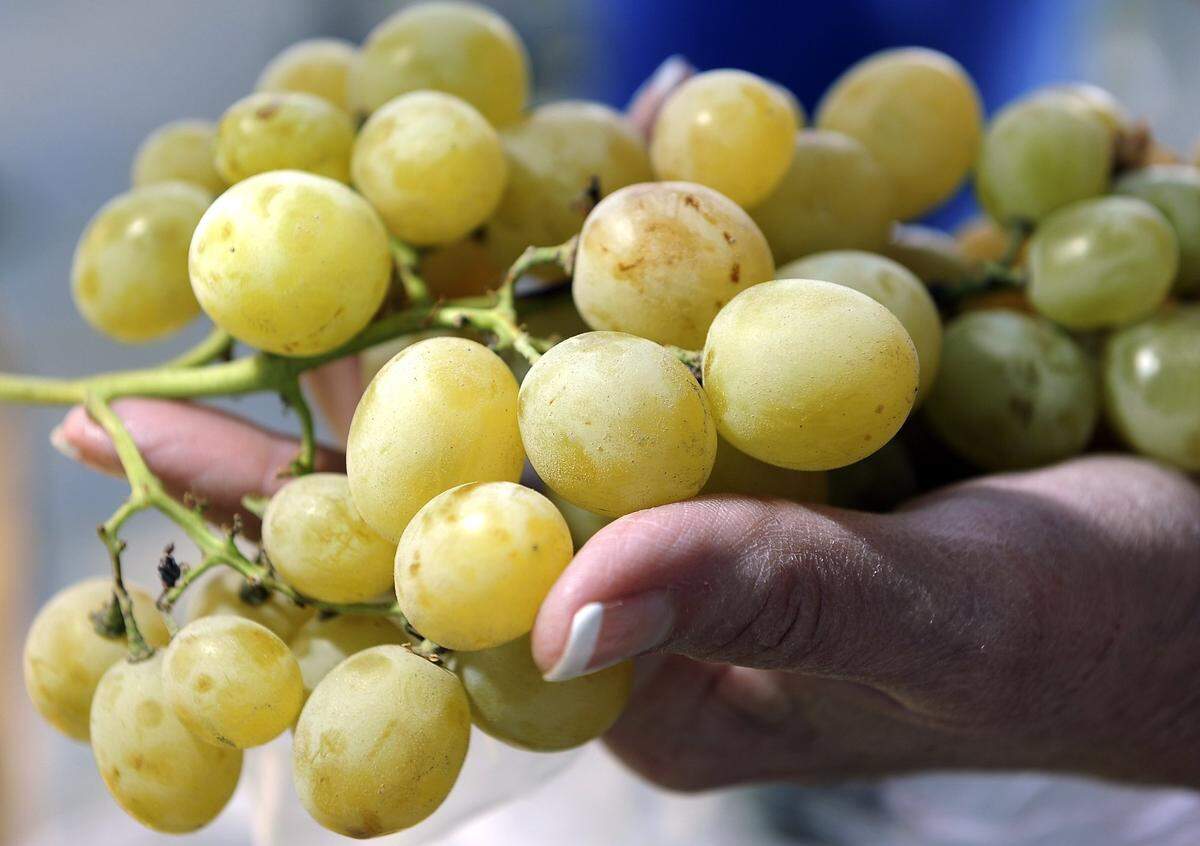
“When I talk about commodities that are probably the most likely stolen here locally it’s particularly fresh fruits, peaches, plums, nectarines, as well as table grapes.”
California law states that grand theft is committed: “When domestic fowls, avocados, olives, citrus or deciduous fruits, other fruits, vegetables, nuts, artichokes, or other farm crops are taken of a value exceeding two hundred fifty dollars ($250).”
Fresno County farmers worry about melon and nut theft as well, said Jacobsen.
Due to the rural nature of farming, Jacobsen said it makes theft easier, and people take advantage of that.
Loren Scoto of Merced-based Scoto Brothers Farming Inc. experiences illegal picking all the time and it’s almost impossible to prevent it.
“It’s not just the crop. The year before last I had people that pulled off to the side of the road and actually dug up a whole plant and just took the whole plant before they even had food on them to put in their own garden,” Scoto said.
Some people take sweet potatoes for the seeds
Brian Escobar, director of Organic & Safety Operations for A.V. Thomas Produce, Inc., in Atwater, shared a similar experience.
After harvesting sweet potatoes in each field, some of the product gets left behind on the ground. Individuals will then disregard “No Trespassing” signs and grab these leftovers, oftentimes using containers to gather them, Escobar said.
“We have been growers, packers, and shippers of organic sweet potatoes since 1960 and we invest millions of dollars each year into attaining the highest quality seed for all varieties and to maintain our patented varieties in our seed program.”
Escobar said the sweet potatoes that are left behind are unmarketable but can be used as seed for next year’s crop.
“Many of the people who are stealing the product from the fields are using it for this purpose and only a few are taking them home to eat,” said Escobar. “We don’t want this to happen because first of all, it’s stealing, and secondly, it allows an outside entity to monetarily benefit from all the hard work we have done.”
The company, he said, has called law enforcement in the past, but individuals tend to leave before they arrive and ultimately move to another field or come back another day.
When it comes to ag-related crimes, farmers work with the Ag Task Force in their area, but this is typically for larger and more expensive crimes.
Preventative measures that farmers implement may include no trespassing signs, gates, fences, and other barriers. But these can only do so much.
“It may not seem like a big deal, but if everybody starts taking from what the farmers are trying to produce it doesn’t just hurt the farmer themselves. It hurts the guys that have to work to go pick those products,” said Cannon Michael, president and CEO of Bowles Farming Company.
Instead of illegally picking these crops, people can buy these same products in their local grocery stores.
“One of my greatest encouragements is here in the Valley we’re so blessed with an incredible amount of roadside stands, farmers markets that give folks access to this fresh produce. Take advantage of those rather than walking onto a farm and taking it,” Jacobsen said.
“But in addition to that, we’re always appreciative of the community members that are out there being our eyes and ears. If they do see something happening either reporting it to law enforcement or to their local farmer, neighbor who may be experiencing that theft.”
The total value of agricultural products in the San Joaquín Valley is an estimated $36.5 billion. The industry employs about 250,000 workers.
This story was originally published July 24, 2024 at 10:30 AM.