
Merced City Council approves first reading of public encampment ordinance. What changes?
An ordinance that would provide stricter penalties for unlawful camping on public property was moved ahead by Merced City Council on Monday.
If approved, the ordinance prohibits anyone from camping in public spaces and using their belongings, such as tarps or blankets as camping gear or storing their belongings on public property. This ban includes parks, streets, sidewalks, parking lots and within 1,000 feet of a school.
City-sponsored camp events are an exception.
“I gotta say, this ordinance moved a lot and reflects very diverse viewpoints up here, but I think it’s the consensus,” District 4 Council member Shane Smith said after the majority of the council approved the ordinance for a second reading. District 6 Council member Fue Xiong cast the sole dissenting vote.
“I disagree with an ordinance that, although we’re not punishing status, we are doing that because we know who is going to be camping in the parks,” Xiong told the Merced Sun-Star, describing how the ordinance was approved to target behavior, not people.
The unhoused, who would be most affected by the proposal, disapproved of the change.
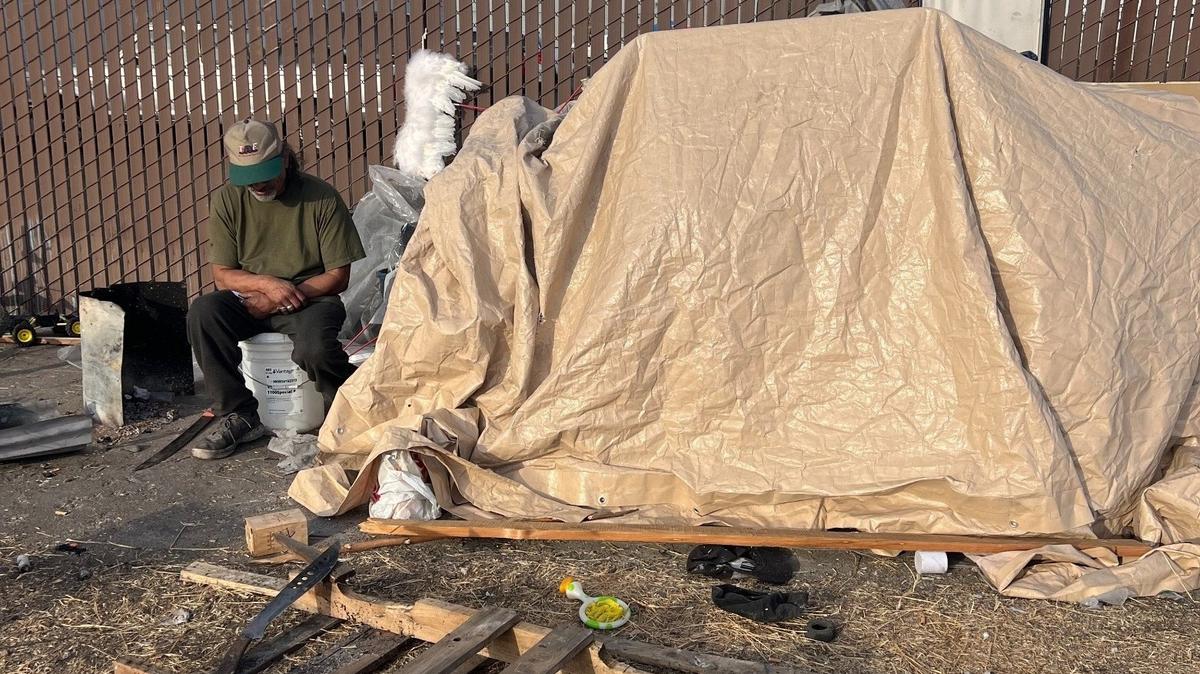
Mike, who goes by “Wizard” in his community, fell into difficult times after his wife passed away in 2020. He’d been camping out by the railroad tracks near the In-N-Out on 15th Street and Martin Luther King Jr Way for a few days. He said he believes that stricter penalties for public camping will lead to increased tension between police and unhoused residents.
“All they do is harass us, take our stuff,” the 57-year-old unhoused resident said, describing his previous experiences with city police. “They take all the stuff that I need to live in everyday life: my toothbrush, my toothpaste, everything, my deodorant, my clothes, my blankets, my food,” Mike said.
According to Chief of Police Steve Stanfield, officers are required to keep confiscated belongings for 30 days. “We don’t just throw things away,” Stanfield said.
The proposed ordinance returned to council members for discussion a third time, and amends the existing “Camping and Storage of Personal Property”ordinance which prohibits public encampments and storage of personal belongings on public property.
The initial proposal would have made it illegal to sleep in public. That language was removed after review.
Penalties include fines of $50 first offense, $150 second offense within 12 months of the first offense and $300 for each additional violation within 12-months of a first offense.
Repeat offenders also may be banned from certain areas for up to 30 days of a violation, charged with criminal trespassing and jailed for up to 30 days.
Stanfield said the ordinance won’t likely change how local law enforcement enforces unlawful public camping.
“We are going to continue to treat our citizens with dignity and respect and offer every service imaginable. But as a last resort, we have a law on the books that we could use.”
Earnest Chism, 44, drove up to the area where Mike camped and offered him a homemade chicken sandwich wrapped in tin foil. He said he believes stricter penalties for public encampments are unnecessary.
“People are struggling,” Chism, who experienced homelessness decades ago said. He occasionally visits street encampments to offer unhoused residents food. “I might be homeless myself. My rent just went up.”
The recent approval of Grant Pass by the Supreme Court, which granted cities increased power to regulate unlawful camping, triggered a review of the city’s unlawful camping ordinance.
The ordinance goes onto a second reading and becomes effective within 30 days after adoption.
This story was originally published November 5, 2024 at 9:11 AM.