Merced students’ reading proficiency scores fell during COVID. What is district doing?
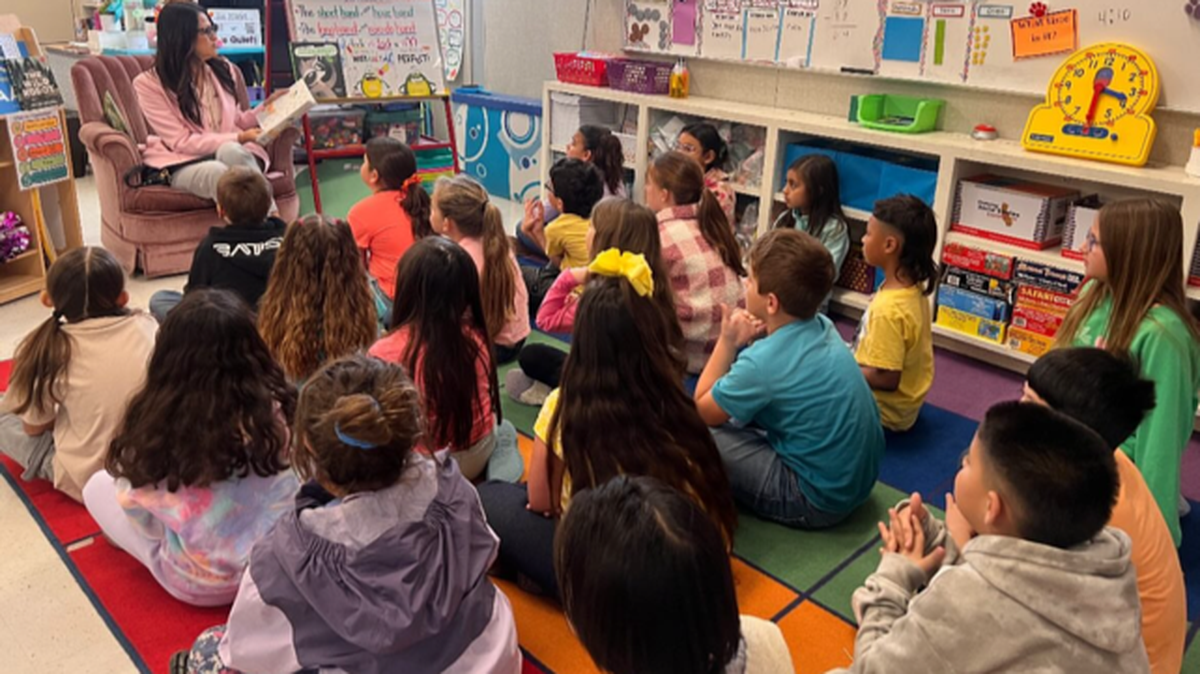
Literacy proficiency scores for elementary school students in Merced fell by 8 percentage points during the pandemic. Five years later, those scores remain low, which has led Merced City School District leaders to re-evaluate teaching methods, training and other tools to help students learn how to read.
“Our reading scores based on the state assessments, have been stagnant for the past few years, since COVID, much like the rest of the county, and much like the state,” said Sergio Mendez, MCSD Assistant Superintendent, Educational Services. “So our district, along with other districts and the state, have prioritized literacy for that very reason.”
Reading skills have dropped
Pre-COVID, 41% of MCSD students met grade level literacy proficiency standards, according to the district. That number trailed the state average of 51%.
The district grade level literacy proficiency numbers fell to 33% during the 2021-22 school year and has held stagnant since with 32% and 33% in 2022-23 and 2023-24, respectively.
This isn’t just a Merced problem. Schools around the state and the country have struggled to bounce back in literacy proficiency since COVID.
“For the first time in 2022, no state improved their literacy proficiency, according to the National Assessment of Educational Progress,” Mendez said. “I believe 22 states stayed the same and the rest declined.”
In California, grade level literacy proficiency fell from 51% prior to COVIDto 47% in 2021-22 and has remained the same the past three years.
Studies have shown that when aren’t profecicient in reading by third grade it’s tough for them to catch up as they progress through school.
The district uses I-Ready, an online assessment and instruction tool, to help teach reading skills to students. According to district I-Ready data, 61% of the 3,292 K-2 students in the district are at least a grade below reading level. and 13% of those students are two grades below reading level.
Tackling the problem
Julianna Stocking was hired as superintendent and started in July. Stocking is the district’s fifth superintendent since January 2020.
The constant change has made it difficult to improve literacy in the district, which includes 11,500 students, 1,400 staff members and 18 schools, officials said.
“The leaders have changed so much that it’s just taken a long time for us to get to where we needed to be a few years ago,” said Merced City Teachers Association President Diane Pust, who also serves on the 20-member literacy committee.
Pust saids when she started teaching in 1998, teachers weren’t really taught how to teach children to read.
“We were taught that that reading just happened,” said Pust, who works as a librarian. “It was natural, you surround them with books and read with them, and that it’s just going to absorb into their brain.”
She said took it upon herself while staying at home during the pandemic to learn more about teaching kids to read. From watching videos, listening to podcasts and learning different teaching techniques she had a better understanding on how children learn to read.
Teachers have been given new tools and literacy materials in recent years to help students build a strong phonetic base and phonemic awareness through resources like Heggerty and UFLI.
The district has also started offered LETRS (Language Essentials for Teachers of Reading and Spelling) training this year. LETRS is a two-year literacy training program that really builds capacity and teachers to be literacy experts, according to Mendez.
“This is the program that we are implementing, and it is based on the science of reading along with LETRS,” Stocking said. “This is something we’ve seen throughout California. Teachers and support staff have asked for them so we’ve been very fortunate to be able to bring that to our staff.”
There are 105 teachers taking part in the LETRS training this year with another 80 teachers expected to start the program next year. Mendez said by the end of next year 45% of the teachers in the district will have taken part in the program.
Mendez said the district has also partnered with the Merced County Office of Education, and they’re experts with regard to reading and literacy brought them in to assist the district into creating a literacy plan.
How can parents help
Reading is a subject where parents can help their children. Reading at home helps children improve their language, vocabulary and comprehensive skills, officials said.
“One of the barriers that we have found is access to books,” Mendez said. “Also we set up a reading environment at school, and we’re working with parents and families to ensure that they set the reading environment at home.”
Mendez said it’s important for families to have access to public libraries and students utilize the school libraries.
It’s important for parents to limit screen time with technology for kids. Introduce children to books and read with them.
“I think one thing parents need to do for sure is actually listen to their child read out loud,” Pust said. “It’s very easy as parents, for us to say, you know, go do your 10 minutes of reading or whatever, and the child could sit there in their chair and not say a word. We think they’re reading, but do we really know? They’re very good at faking it, or just looking at the pictures.”
Pust says if parents hear their kids struggling to sound out words they should contact their teacher and let them know what they are seeing at home.
After seeing the reading proficiency numbers remain stagnant, the district has changed gears to help student improve their reading skills. The ultimate goal of the district is to have every student proficient in reading by by the end of second grade or by the beginning of third grade, according to Mendez.
Stocking says district leaders have listened to teachers, support staff and the literacy committee to help address the issue.
“Everyone, collectively, is giving their thoughts on how our programs are working, what instructional practices we want to focus on, and really listening to our teachers who are providing instruction and seeing learning happening day-to-day,” Stocking said. “We want be responsive to the needs of our kids and to our staff in training.”
Seeing progress
“I’m very excited about what I’m seeing happening in classrooms,” said Pust. “I’m happy to see what’s happening in libraries, because from from my point of view, I now see kids coming into my library really reading, not just sitting there quietly.”
Merced City School District has been hyper-focused this year on improving literacy proficiency in younger students with 1,337 K-2 students beginning the year at well below benchmark reading level, according to MCSD reading data. Another 418 K-2 students began the year at below the benchmark reading level.
According to the district, 23% of the 1,337 K-2 students who started the year at well below the benchmark reading level have grown at least one reading level to at least below the reading level. Additionally, 49% of the 418 K-2 student who were at below the benchmark reading level have improved to at least reach the benchmark reading level.
Additionally, a high percentage of students who began the year at the benchmark reading level or above have maintained those levels.
Mendez said the district is seeing that the professional development and alignment work is trending toward improving student outcomes.
“We are showing small but significant progress, and it’s something we hope to continue,” Stocking said.
Pust said she’s hearing positive feedback from teachers.
“We have finally given the teachers the materials they need to create strong, foundational readers,” she said. “And from what my friends — who are in the classroom are showing me — it’s working. They are seeing results that they have never seen in their entire time of teaching.”
“It’s significant because it’s progress, and we have been stagnant for so long,” Pust added. “To see this early in the year, that they’ve already made that growth is quite exciting to me, because I anticipate they’re going to continue on that path.”
This story was originally published March 13, 2025 at 9:35 AM.