
How Merced traffic technicians work to ensure safe intersections for motorists
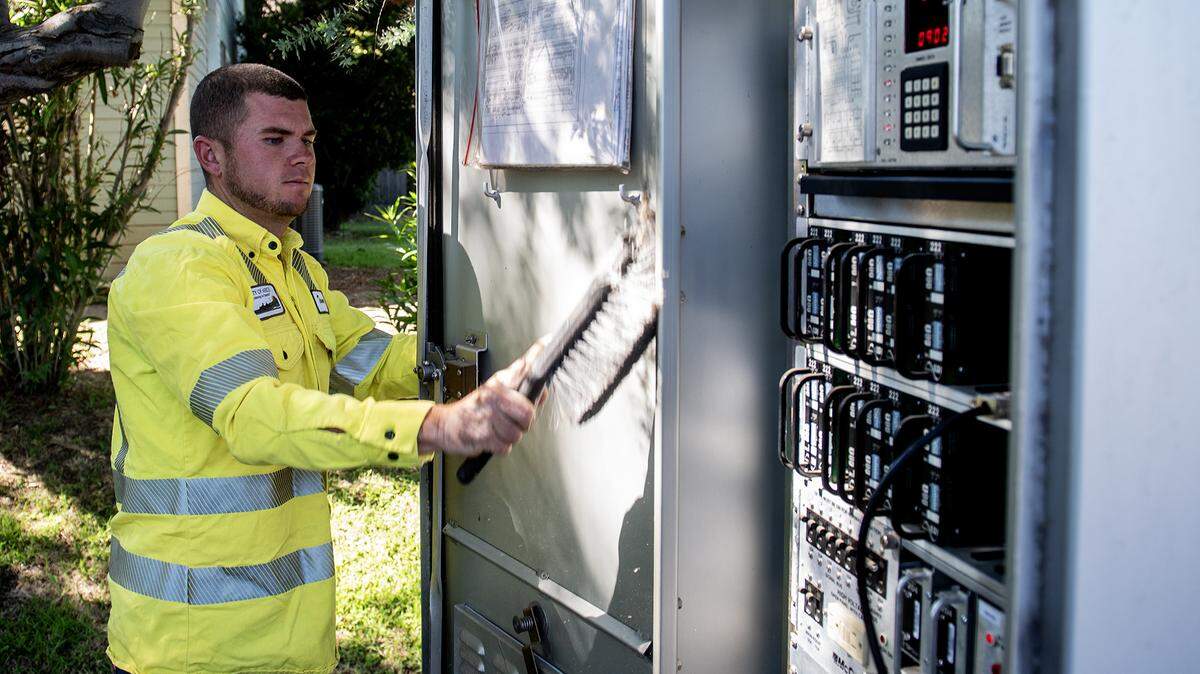
For City of Merced public works lead traffic light technician Tanner Harkreader, diagnosing and solving traffic light problems is part of what it takes to keep the city’s traffic signals operating properly and keep motorists safe when navigating roadways.
Harkreader performed preventative maintenance on a traffic signal cabinet at the corner of Olive and Parsons avenues Thursday. Harkreader said crews do the work on the cabinets about every three months to make sure they’re functioning properly.
Harkreader said he also activated the systems battery backup, as cycling the batteries helps to maintain their life. Checking the cabinet’s thermostat and timing is an important step to make sure the cabinet does not get too hot and that the system’s timings are operating correctly.
According to Harkreader, everything looked OK in the cabinet and there were no visible issues or damage to the electrical box; all the traffic signals were operating normally. All of the routine maintenence performed on the traffic signal cabinet is logged so the city and workers can reference where and when what work had been performed. The traffic signal cabinet Harkreader was working on that day was initially activated in 2007.
Thursday’s maintenance involved cleaning the inside of the cabinet, making sure the signals were working, tightening screws and removing any signs or graffiti from the cabinet, traffic signal poles and light poles at the intersection.
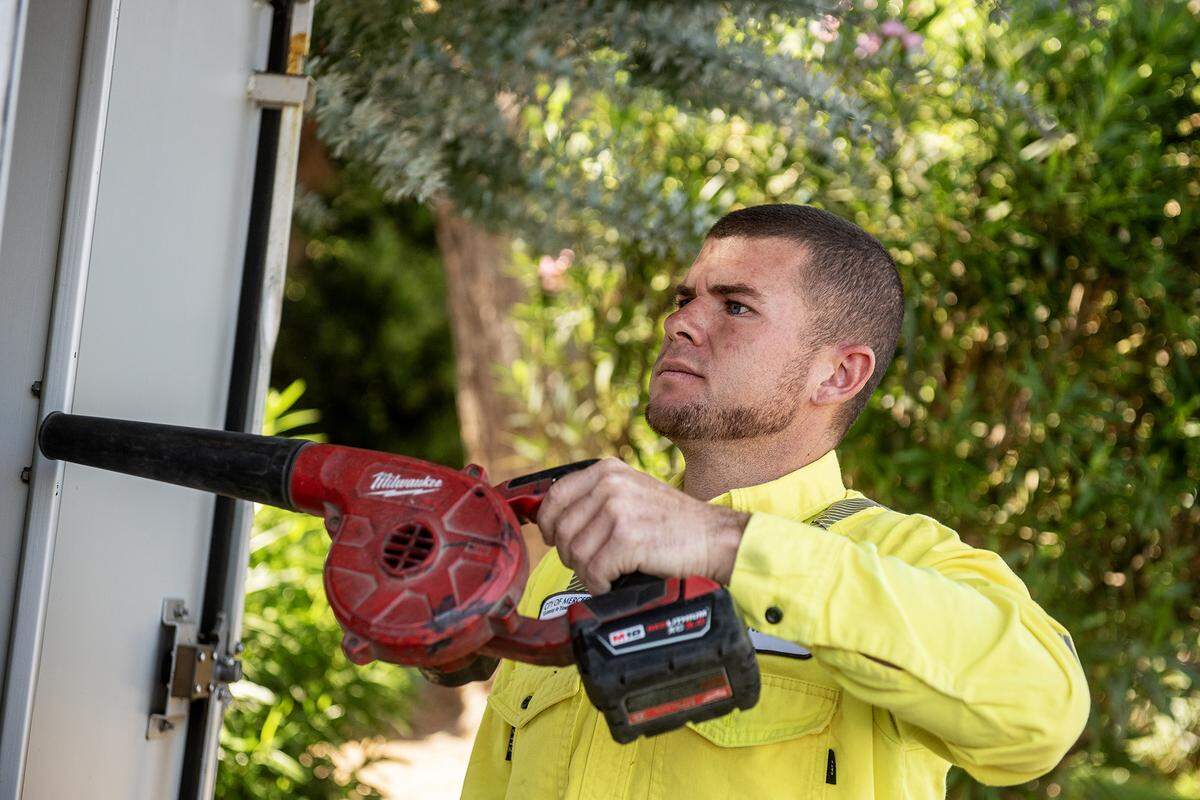
Harkreader said a normal day for him begins with responding to USA 811 calls to locate and mark underground wires and conduit. From there, Harkreader said he and colleagues respond to any areas to repair or replace equipment damaged from accidents, or tend to any special projects. They also respond to work orders for street light inspection and repair or replace any street light bulbs that have gone out.
“And then we’ll work on preventative maintenance,” said Harkreader. “So we’ll do this type of stuff. Sometimes if there’s contractors around town doing work or something, we’ll go meet contractors and make sure they’re doing what we want them to do.”
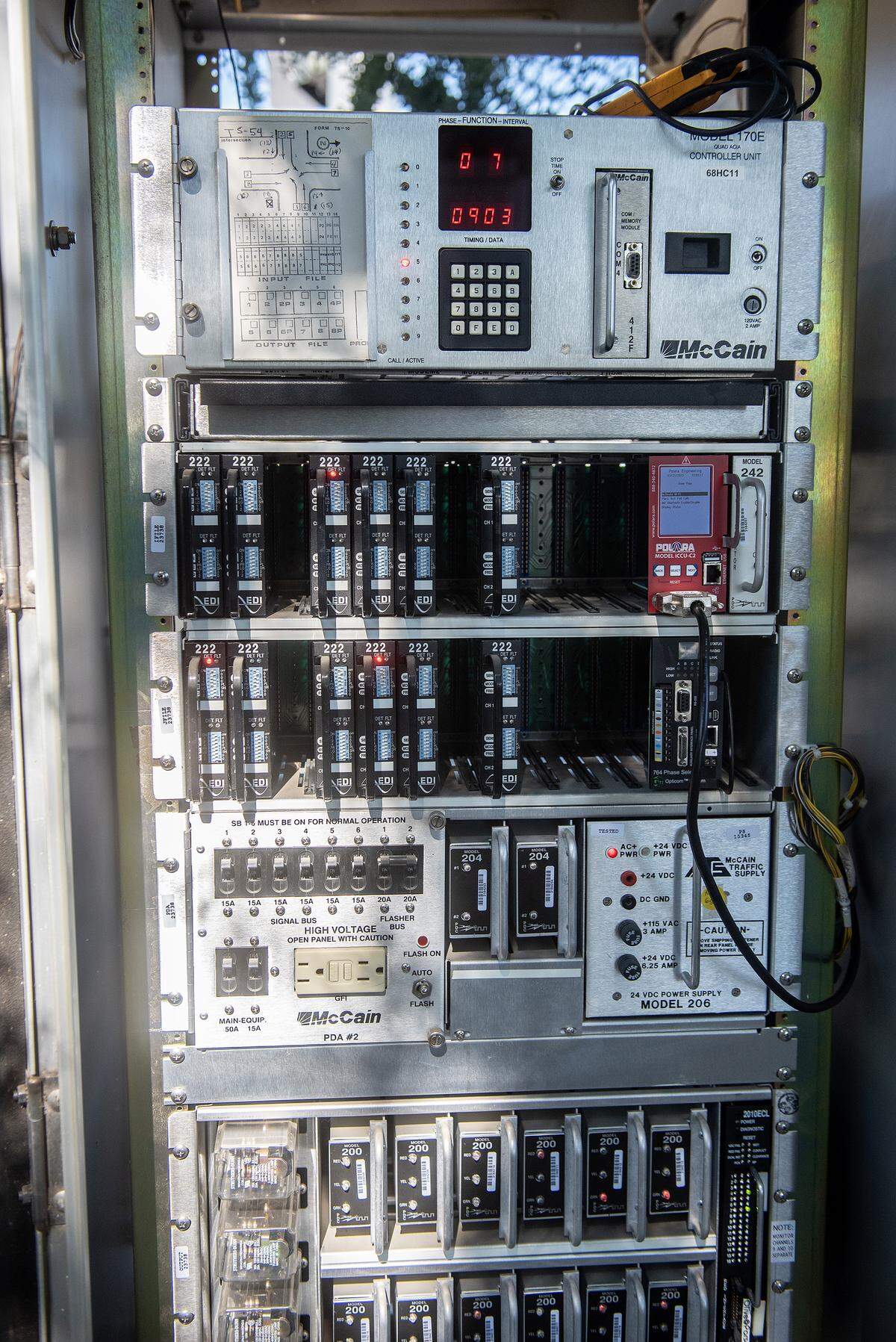
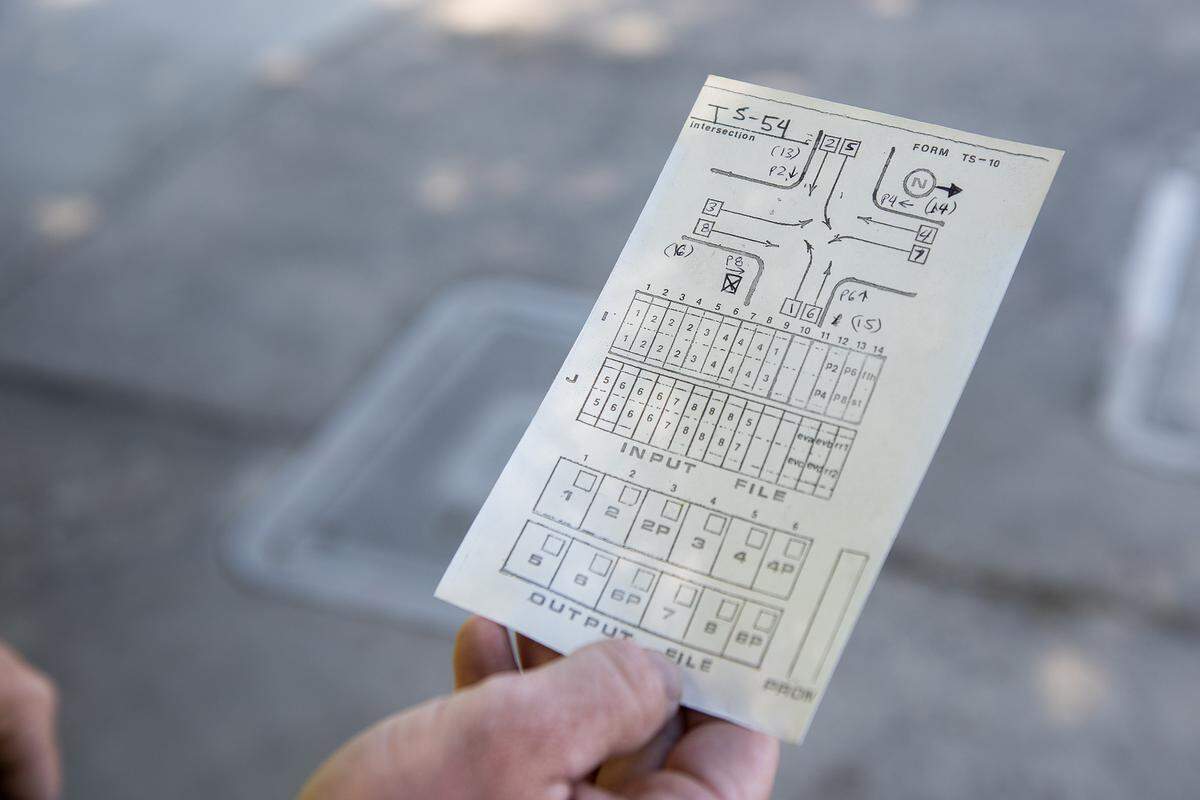
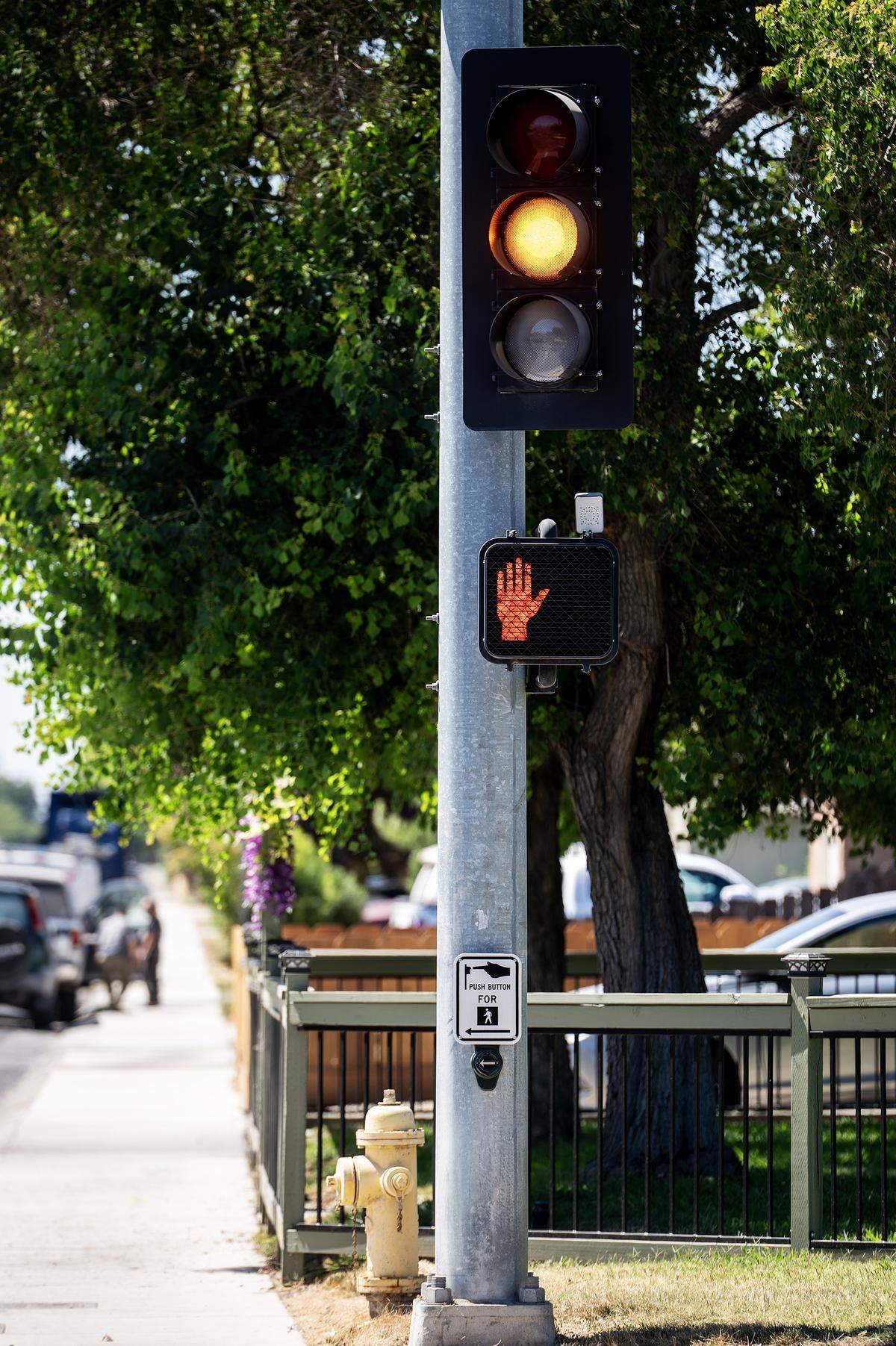
The traffic signal cabinet Harkreader was working on Thursday includes computer systems that are constantly responding to traffic at the intersection. That includes the loops set into the roadway that detect when a vehicle pulls up to the intersection, the crosswalks that are activated when a pedestrian pushes the walk button, and the sensors that detect emergency vehicles approaching the intersection.
Even with an extensive knowledge of how the systems work, Harkreader said troubleshooting problems remains difficult, as the systems are very complex.
“It could take a while, it takes a lot of knowledge to be able to figure out a problem,” he said.
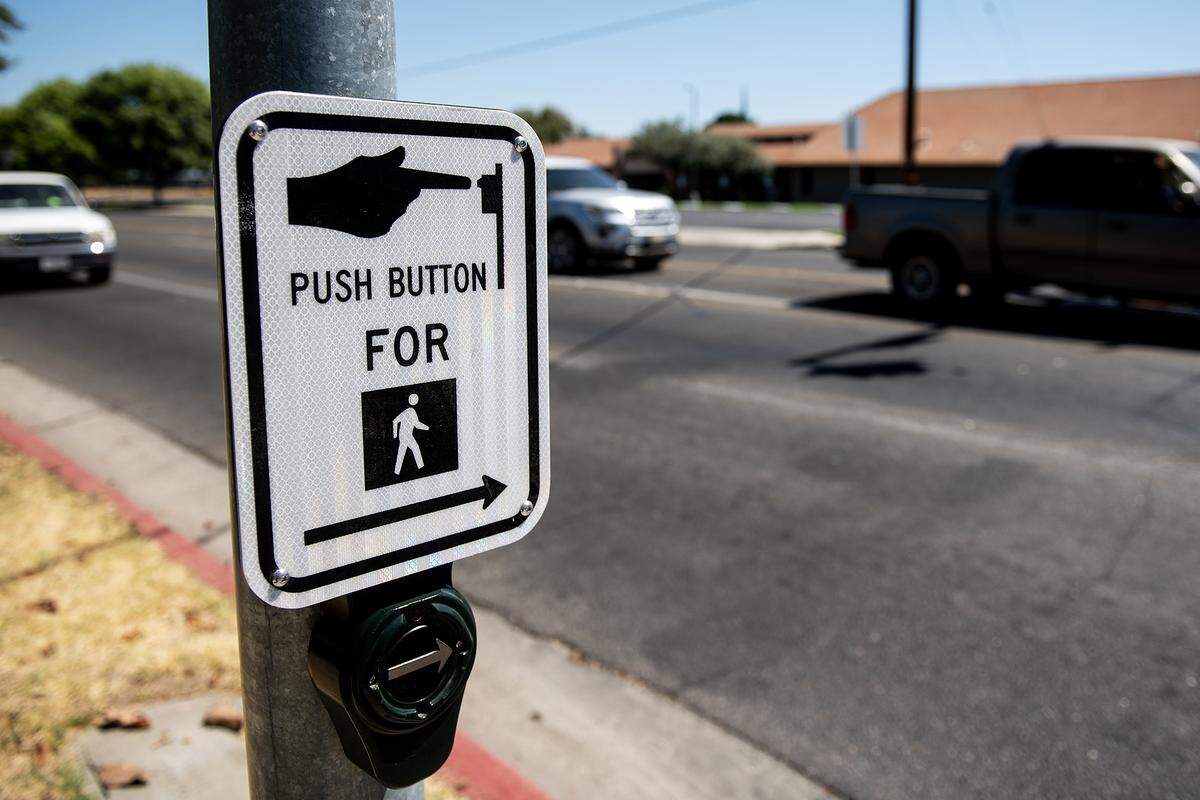
Harkreader said that one thing he has had to learn and adapt to is the programming for the audible push-button crosswalk signals at intersections. These systems, when activated, announce to pedestrians that the crossing signal has been activated, as well as the direction of which crossing signal is activated.
“So there’s a programming learning curve,” said Harkreader. “We’re getting a new camera system so there’s a learning curve with programming stuff like that.”
Learning new software and products is one aspect of the job that Harkreader said he has to keep up on, but that the rest of the tasks and programs use a lot of standardized and older technology.
“Once you learn it, it’s pretty standard,” he said. “Once you figure out what everything does, every cabinet in town is like that and there’s not really much new changes.”
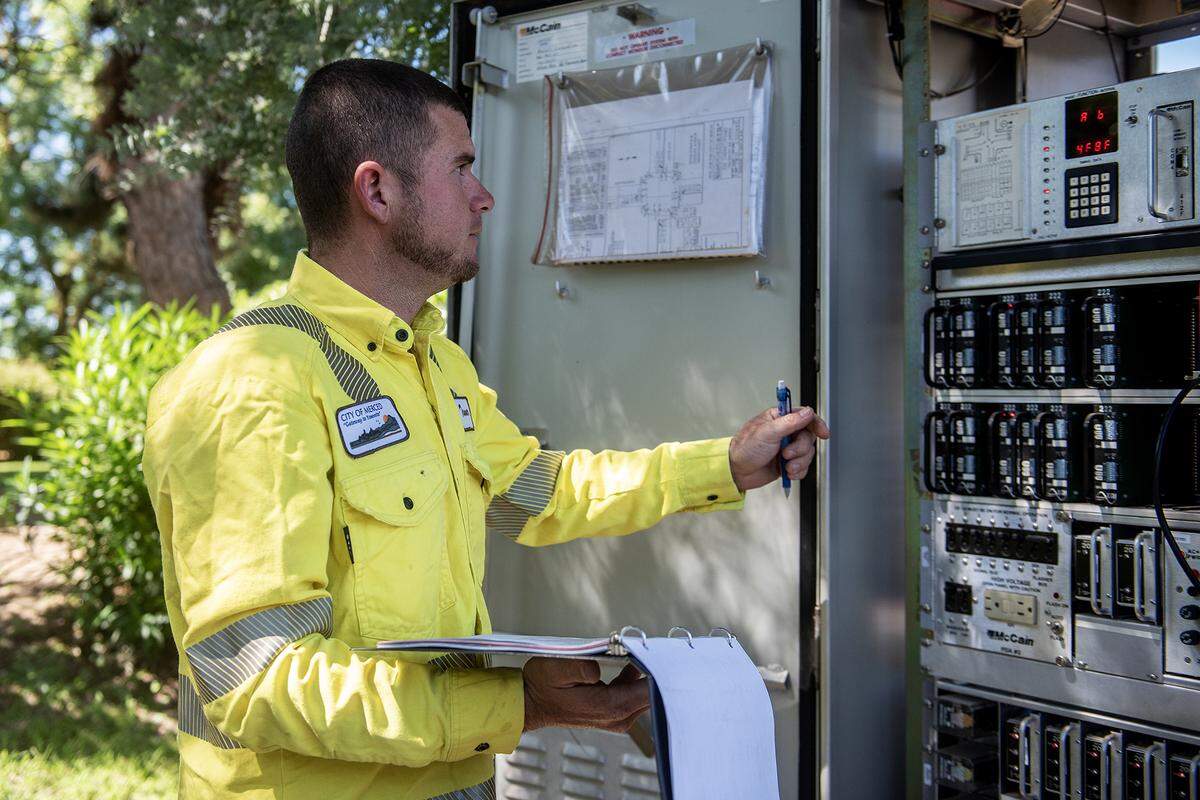
A short in the system can cause the traffic signals to start flashing, Harkreader said, as the system detects a conflict with another phase of the operation. A short could trip a specific breaker and a direct short could trip the main breaker. If a main breaker is out, it could be difficult to diagnose the problem.
“With the knowledge of being able to isolate, it takes time to isolate stuff, to find it,” he said.
The career is not something Harkreader said he pursued, but rather happened into. After starting as a temp worker with the city in 2015, he then secured a full-time job in the street department. He ran the city’s sign shop for three years before moving into a position dealing with the traffic signals, which led to his current position as lead worker.
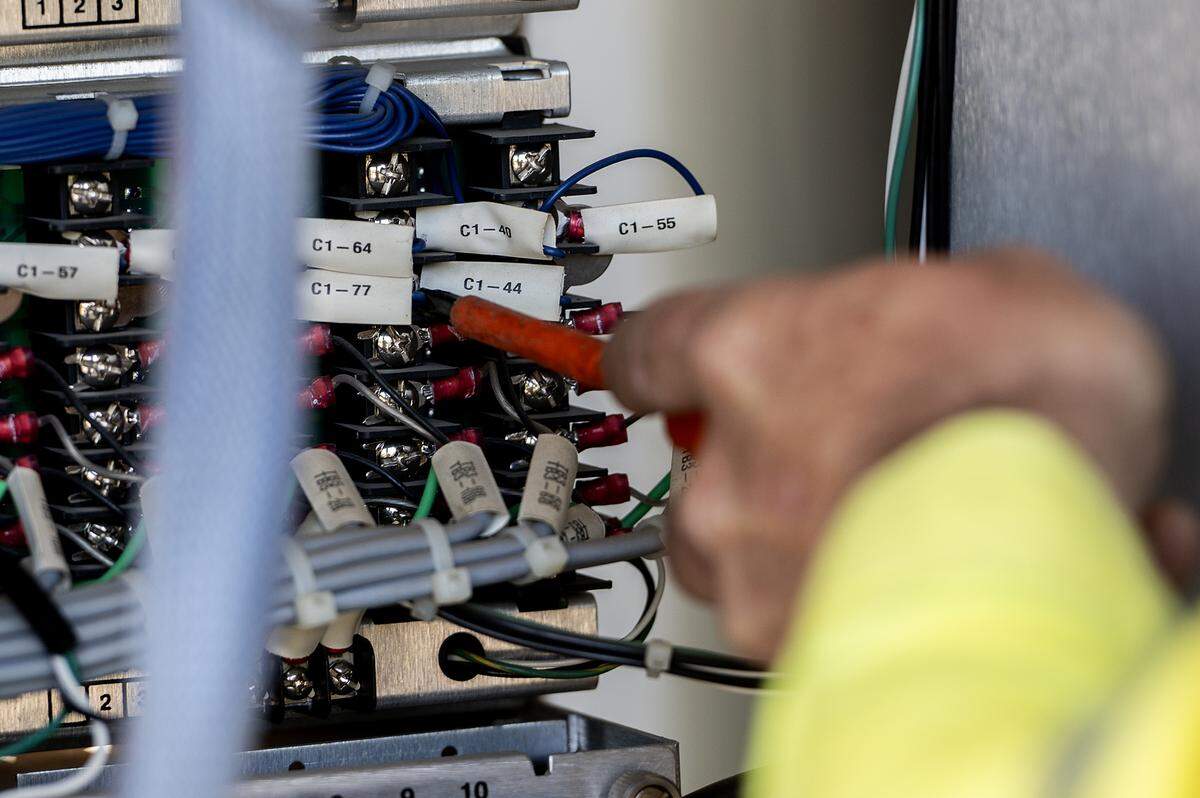
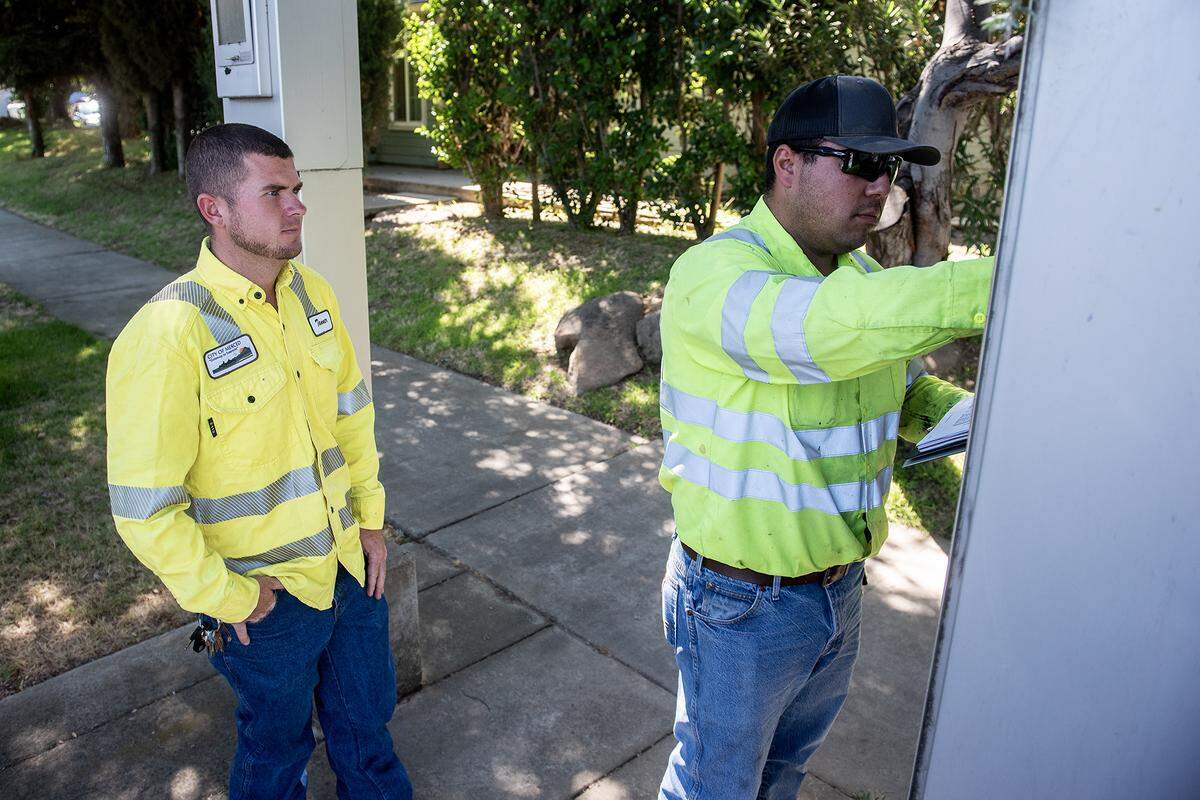
Rafael Prado, who has been performing the job under Harkreader’s lead for about a month, said some intersections contain about 15,000 feet of wire. So if there is a nick or cut in one of the cables that are part of the system, workers must locate it from among thousands of feet of cable.
Harkreader said he has developed his own methodical approach to the job, which helps him complete the tasks and troubleshoot any issues he encounters.
“I have my own way of doing it to where I have a routine,” said Harkreader. “So that way I know if I miss anything, I always do everything the same. I have a way that I like to troubleshoot too, but obviously it depends on the issue.”
Although he could earn more money working in the private sector, he said he enjoys his current position. One part of the job he finds enjoyable is that every day is different.
“One day you could be troubleshooting something, and the next day you’re fixing lights, or you’re always in different spots. You’re always doing something,” he said.

This story was originally published August 6, 2025 at 5:30 AM.