Merced police stops nearly doubled in 2024. Who was stopped and why?
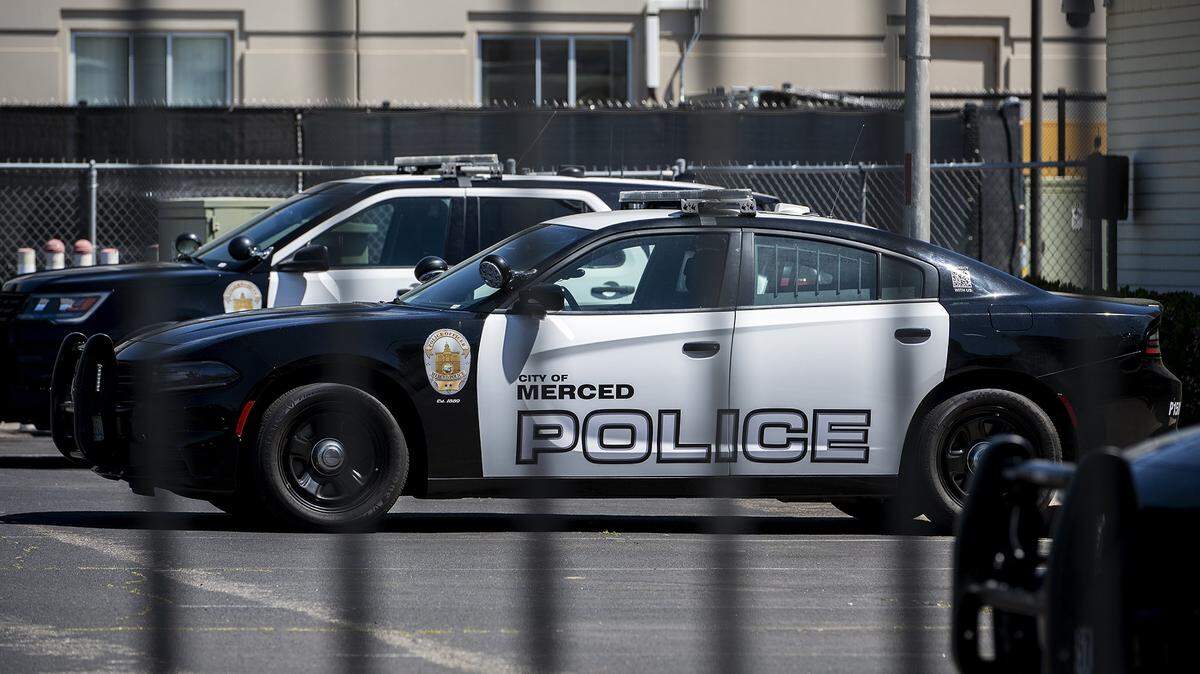
The Merced Police Department conducted 6,455 stops in 2024 — almost double from the previous year.
The figures come from the Racial and Identity Profiling Advisory Board’s stop dataset, which compiles information on police stops across California.
Under Assembly Bill 953, all state and local law enforcement agencies that employ peace officers are required to report data on every stop to the California Attorney General annually.
The dataset is detailed, including each stop’s date, time, reason, response and actions taken. It also contains information about the perceived identity characteristics of the person stopped.
Compared to previous years, the form used in 2024 asked officers to be more specific, by identifying whether a stop involved a vehicle, pedestrian or bicycle, and whether the person stopped was unhoused. It also distinguished between force and non-force actions taken by officers.
The department also has a Transparency Hub, where it publishes its RIPA data.
MPD did not respond to requests for comment as of Friday afternoon.
Here’s what the 2024 data revealed for the department.
Race and ethnicity
Officers perceived the majority of individuals they stopped to be Hispanic. Black individuals were stopped at double their population size in Merced.
Five percent of individuals were perceived to have limited or no English fluency.
Time and place
The highest number of stops occurred in September, while January had the fewest. The majority of stops took place around 8 p.m.
Most people were stopped in their cars.
About 3.4% of stops occurred during a welfare, wellness check or community care taking and 24 stops were of unhoused individuals.
Gender and sexuality
This year’s dataset includes six gender categories: cisgender man/boy, cisgender woman/girl, transgender man/boy, transgender woman/girl, nonbinary person and multigender. Overall, most individuals were perceived as cisgender male (73%) or cisgender female (26%).
Individuals categorized as LGB by MPD made up 1.5% of stops.
The 2022 RIPA report noted that LGBTQ identity is not always visibly apparent, meaning an officer’s perception may be shaped by context. For example, an officer might assume that a driver and passenger are same-sex partners based on social cues or conversation. An individual’s gender expression, including how they dress, behave and interact with others, may also influence how their gender is perceived.
Age and disability
The largest proportion of individuals stopped were perceived to be between ages 25 and 34, making up 40.4% of stops. Those perceived to be between the ages 1 and 14 represented the smallest proportion.
Additionally, less than 1% of individuals stopped were identified as having a disability.
Reason for stop
Only 30 of the stops were made in response to calls for service, such as 911 calls, radio calls or dispatch. That means officers initiated stops a majority of the time.
RIPA regulations require officers to report the primary reason for initiating each stop. If multiple reasons apply, officers must choose the main factor that led to the stop. The most common reason given for a stop was a traffic violation (98.5%).
Result of stop and action taken
The majority of stops resulted in a citation, (28.6%). About 45.6% of stops did not result in any official action. More than half of the stops of Black individuals led to no action.
There were 167 instances of force used, with the most common being handcuffing or flexcuffing the individual. A firearm was pointed six, but was never discharged, according to the data.
Searches and seizures
The primary basis for searches was on condition of parole, probation, postrelease community supervision or mandatory supervision. The most common reason for property seizures was evidence.
The majority of property, contraband or evidence found and seized were drugs.