
Salute to Veterans: World War II flight engineer recalls a lot of hard work
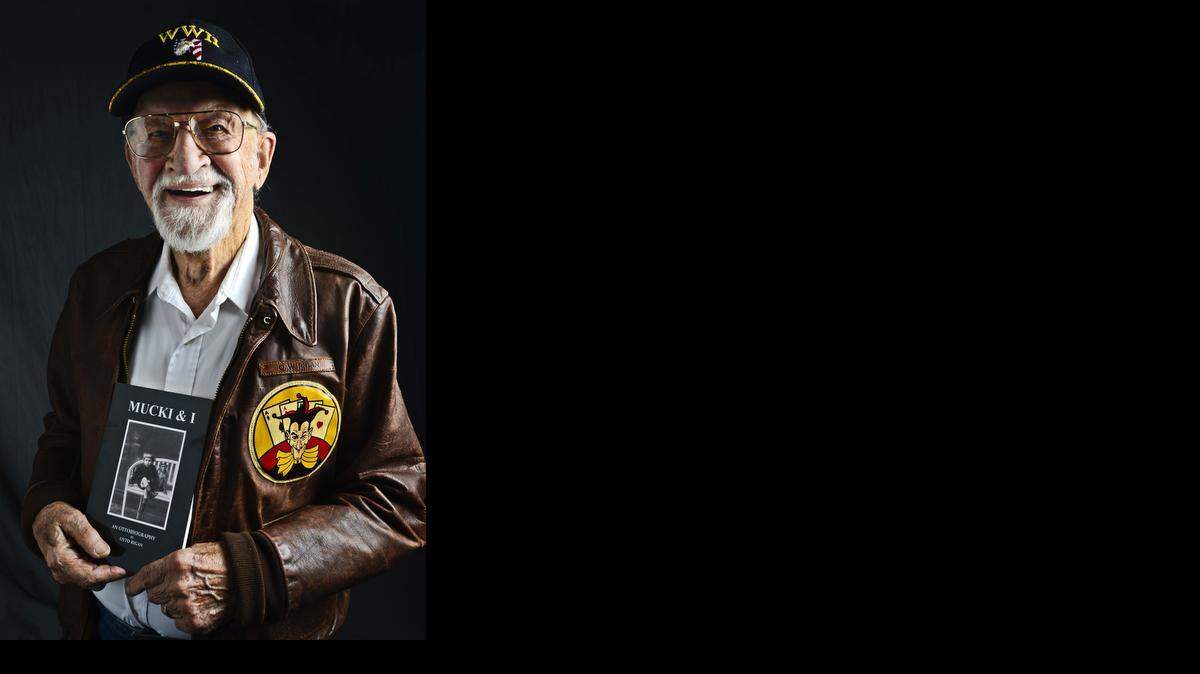
Otto Rigan remembers World War II meant a lot of work, especially if you were in the service.
In wartime you worked seven days a week, Rigan recalls, and everybody helped each other. With him, that entailed fixing the turrets on B-17 aircraft and then helping load bombs on airplanes.
The 92-year-old Atwater resident spent 24 years in the Army Air Corps and then the Air Force, retiring 50 years ago. He then became a navigator for Seaboard World Airlines, an all-cargo operation. He was there for four years until GPS, or global positioning satellites, took his job.
Since that time Rigan has been the owner of an Atwater antique mall, a Merced mobile home park and involved in several other pursuits – including an exercise class three days a week at a health club. He also has written a 155-page autobiographical book entitled “Mucki & I” which details his young years in his native Vienna, Austria, before he moved to the United States as a 6-year-old.
“I volunteer for everything,” Rigan said. “I don’t know why; curiosity has kept me alive.”
Rigan originally joined the Army Air Corps to become an airplane mechanic and has always been fascinated with the workings of aircraft. He single-handedly built a couple of airplanes, a sports car and the five-bedroom house he has lived in for more than four decades.
“I liked the military experience. You follow orders,” Rigan said. “I lived through it; if I had regrets, I would have died.”
He was a captain when he retired.
When Rigan joined the Army Air Corps in July 1940, a serviceman could exercise a “buyout” for $200 at the end of a year’s time; when a year elapsed, Rigan didn’t have the money and stayed in the service. In the following year, World War II intervened and all buyouts were off.
When he joined the service, he liked the fact one could change jobs often, something that’s not possible now.
A flight engineer in the service, Rigan designed a quick-release apparatus for the ball turrets found on the belly of B-36s, something that saved many airplanes having to make emergency belly landings when their landing gear failed.
Rigan remembers many of his service comrades were always grumbling; they didn’t like the chow, the hours or the barracks, but his outlook has always been very upbeat.
Rigan’s last duty station was at Beale Air Force Base northeast of Sacramento. After multiple moves as an Air Force wife, Lorraine Rigan told her husband she wasn’t moving again from Atwater and he commuted to the base for his last year. His wife died a year and a half ago. The Rigans had six children, 12 grandchildren and 10 great-grandchildren.
Rigan said he was stationed mostly at California bases and was attached to the Strategic Air Command for the entire time. In the Air Force, he was a navigator on a KC-135 Stratotanker refueling plane. That meant refueling the SR-71 spy plane, something that was top secret at the time.
A year ago, Rigan was part of the first Central Valley Honor Flight from Fresno to Washington, D.C., a program where World War II veterans spend three days in the nation’s capital touring the memorials.
Sun-Star staff writer Doane Yawger can be reached at (209) 385-2407 or dyawger@mercedsunstar.com.
This story was originally published November 10, 2014 at 4:00 PM with the headline "Salute to Veterans: World War II flight engineer recalls a lot of hard work."