
DA Morse, sheriff’s detectives at odds over timecards
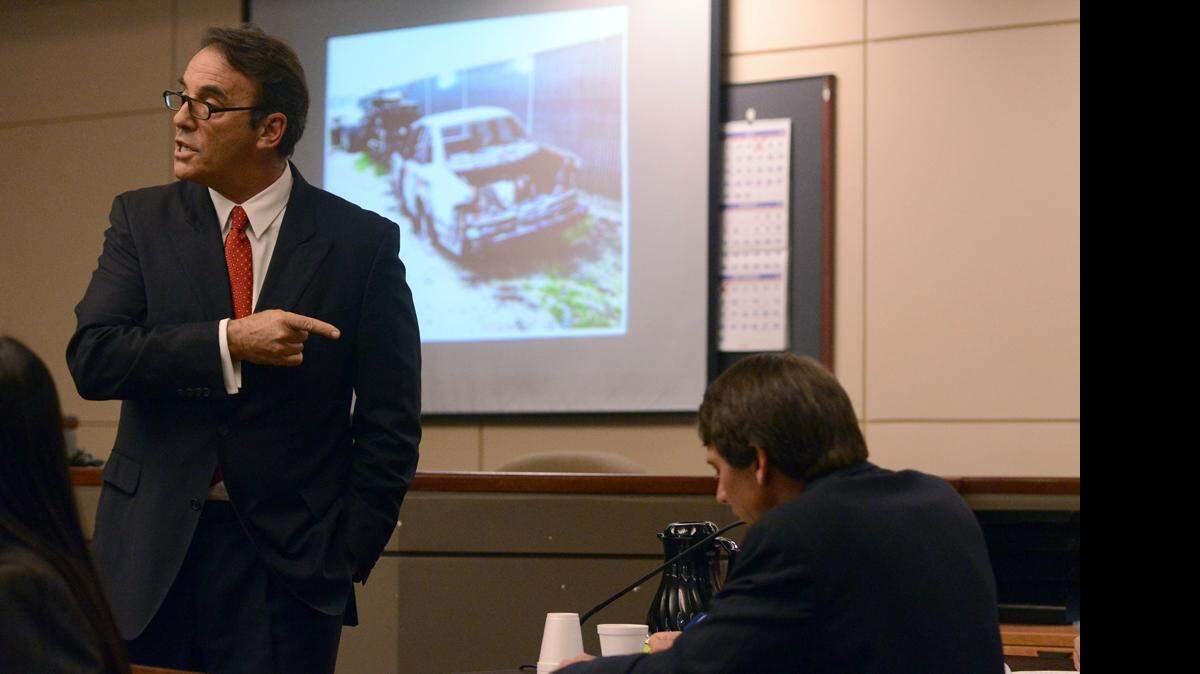
Merced County District Attorney Larry Morse II may place the detective who arrested his son earlier this year on a list of law enforcement investigators whose credibility can be questioned in court, the Merced Sun-Star has learned.
Morse said the detective was paid out of a fund used exclusively to investigate agriculture crimes, but was actually working on unrelated cases, including taking Ethan Morse into custody on suspicion of murder.
Morse, additionally, asked the California Office of the Attorney General to evaluate whether the deputy, Detective Roy Tighe, and his supervisor, Detective Sgt. Chuck Hale, broke any laws when they submitted six inaccurate timecards over the last year.
Morse denied having any vindictive motives, saying he was not seeking reprisals against the detectives for arresting his son, but that the timecard issue could speak to the credibility of the detectives when they testify in future cases.
“This is only about (documents) signed under penalty of perjury,” Morse said. “There is absolutely no personal motivations in this whatsoever.”
Sheriff’s deputies stopped short of accusing Morse of retaliation, but several people, including Tighe, Hale and Sheriff Tom Cavallero, described the timing of the audit as “strange,” “troubling” and “suspect.”
Morse’s son was released from custody Nov. 14 after Judge Ronald W. Hansen ruled that Ethan Morse and his co-defendant, Jacob Tellez, were not responsible for the March 30, 2013, shooting death of Bernabed Hernandez-Canela.
The senior Morse criticized the state attorney general’s office, which prosecuted the case against his son, saying they rushed to judgment and failed to thoroughly investigate evidence in the case.
The fallout from the arrest sparked tension between Morse and the detectives from the Merced County Sheriff’s Department’s Major Crimes Unit who built the case against his son, both sides have acknowledged.
The arrest triggered an audit of Tighe’s employment timecards by the District Attorney’s Office, according to a copy of the Aug. 19 audit report obtained exclusively by the Sun-Star.
Tighe said the audit prompted reviews by the Sheriff’s Department and the state attorney general’s office. “They confirmed I’d done nothing criminal or dishonest,” Tighe said.
David Beltran, spokesman for the state attorney general’s office, also confirmed the findings. “We did review a matter related to Detective Tighe’s timecard and concluded that no crime or impropriety was committed,” Beltran said
Timecards questioned in five cases
The audit conducted by the District Attorney’s Office one month after the arrest of Ethan Morse outlined five cases in which Tighe billed the rural crimes grant program for time he claimed was spent working on agriculture crimes, but was actually spent investigating violent crimes.
Hale, the supervisor of the Major Crimes Unit, approved all of Tighe’s timecards before they were submitted for reimbursement.
Tighe has never been accused of billing the program for hours he did not work. The issue, according to the district attorney, is that Tighe claimed hours were spent working on cases that were outside the parameters of the program.
Tighe, 52, is the longest-tenured detective assigned to the sheriff’s Major Crimes Unit. His involvement with the Ethan Morse investigation was limited to placing the district attorney’s son in handcuffs and driving him to the Sheriff’s Department.
“It took only about 10 or 15 minutes out of my time,” Tighe said in a recent interview with the Sun-Star.
However, the report says, Tighe reported on his timecard that he worked a full eight hours on agriculture crimes, despite the fact that the arrest of Ethan Morse was part of a gang-related homicide case with no relation to rural or agriculture crimes.
“In my efforts to verify the accuracy of the time study, I discovered that other expenses unrelated to rural crime investigation may have been claimed by the Sheriff’s Department to the Rural Crime Prevention Fund,” Jeanenette Pacheco, the district attorney’s administrative services director, wrote in the report.
The report goes on to list five more cases – two homicides, two attempted homicides and a gang-related assault weapon case – that Tighe investigated while billing the rural crime fund.
The exact amount of time reported could not be verified. Public records requests made by the Sun-Star were denied by the Merced County counsel’s office on behalf of the Sheriff’s Department and District Attorney’s Office, citing personnel issues. The attorney general’s office also denied a request for records, citing a need to protect the investigation.
Sheriff’s Department officials said the issue was, at most, a record-keeping oversight by a detective who spent a small amount of his time working on violent crimes during a year in which Merced County has reached a record number of homicides.
The district attorney said the issue was possibly a case of a detective falsifying time-keeping documents under penalty of perjury, which could speak to the detective’s credibility when testifying in court in future cases.
Morse: Not bound by earlier decision
The Sheriff’s Department believed the issue should have been settled when the Attorney General’s Office determined no wrongdoing occurred.
“All allegations of dishonesty were unfounded and no criminal action was needed,” Hale said. “The whole entire thing was completely, totally unfounded.”
Morse said he was aware of the attorney general’s ruling in the case, but said the issue is not settled.
“We don’t feel bound by the (attorney general’s) decision,” Morse said. “We have not taken a position yet and are going to continue to review that matter.”
Morse said he strongly believes the matter could be a Brady issue. Brady law forces prosecutors to disclose any information to the court that could potentially affect the outcome of a trial, including evidence that could possibly impeach an officer’s credibility, legal authorities have said.
The attorney general’s office appears unlikely to intervene should Morse place Tighe and Hale on the Brady List.
“We do not use our supervisory power to control the wide range of day-to-day decisions a DA’s office must make, such as what information should be disclosed pursuant to the Brady rule,” Beltran said.
“Our job as prosecutors includes providing the defense (attorneys) with any evidence or information that could be favorable to their client and the credibility of investigators is one of the primary issues considered when evaluating Brady law.”
Morse said there was no timetable for when he would decide whether Tighe would be placed on the Brady List. “I’ll be canvassing a cross-section of prosecutors around the state, possibly defense attorneys as well, to help evaluate the decision,” Morse said.
Cavallero said he could not comment on the “personnel issue,” but said he completely supports both Hale and Tighe.
“I think we were surprised that the Brady issue came up when it did,” Cavallero said. “I think Roy (Tighe) has a completely unblemished career of nearly two decades and a long history as a good investigator working with the District Attorney’s Office.”
Morse said he understands some may view his actions as vindictive. “I cannot prevent what people with an agenda and a conspiracy-theory mindset are going to say,” Morse said.
“All I can say is that the law is very clear what our obligations are when disclosing information on any witness. Any prosecutor would have to disclose this information to protect this office and the integrity of our trials,” he said.
The Rural Crime Prevention Fund
For more than a decade, Merced County received funding from the state to combat rural area crimes, such as theft and vandalism of farm equipment.
The grant money, which came from the Central Valley Rural Crime Prevention Program, was divided between the Sheriff’s Department to pay for a full-time detective dedicated to investigating those crimes and the District Attorney’s Office to prosecute those cases. The District Attorney’s Office also administers the grant funds, authorities said.
Tighe, as the detective assigned to investigate rural crimes, submitted his timecard to the District Attorney’s Office, which in turn, reimbursed the Sheriff’s Department from the grant funds.
In June 2013, the state formally ended the grant program but continued to send money to the county to combat rural crimes. The new money was not part of any grant program, so the state no longer required the county to conduct time studies to verify how the funds were used, Capt. Greg Sullivan said.
Jeanenette Pacheco, the district attorney’s administrative services director, said that while the state penal code does not specifically outline how those funds should be claimed for reimbursement, state law does map out how the Legislature intended those funds to be used.
Pacheco and Sullivan did not comment on the audit.
The District Attorney’s Office in 2009 began requiring the Sheriff’s Department’s submitted timecards to be formally certified as accurate “under penalty of perjury.” The requirement for formal certification was prompted, Pacheco said, after the Sheriff’s Department billed the program for “activities that were not related to rural crimes.”
This story was originally published November 28, 2014 at 3:56 PM with the headline "DA Morse, sheriff’s detectives at odds over timecards."