
UC Merced takes step in growth toward 2020 goal
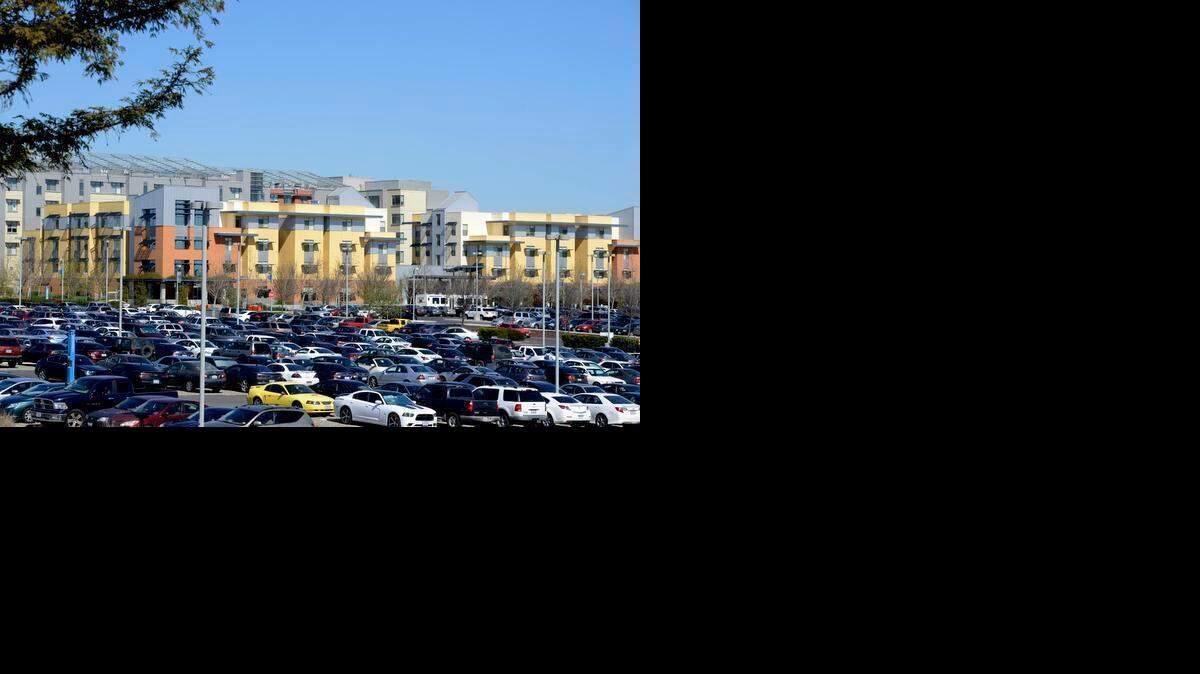
The University of California Board of Regents on Wednesday approved $1.3 million for the design of UC Merced’s downtown Merced office space, part of the university’s push for growth in enrollment by the end of the decade.
UC Merced’s Downtown Center project, which will consolidate administrative offices, will be about 75,000 to 100,000 square feet. The building also should free up space on the Lake Road campus as the school works toward enrolling 10,000 students by 2020.
Chancellor Dorothy Leland, who was at the board meeting in San Francisco, said the building will help the university consolidate offices from six locations in and out of the city.
Leaders also have said the building’s presence downtown could help improve the connection between the university and the city.
The building, which is to be built at 18th and N streets, highlights one part of the plan to expand classroom, office, housing and other UC Merced spaces to accommodate growth goals. The university calls it the “2020 Project.”
“Without growth, there will be a pipeline of historically underserved students with no place to go,” Leland said.
Despite a 14 percent increase in undergraduate applications this fall – the highest in the UC system – the campus has been forced to slow enrollment growth because of a lack of capacity. UC Merced received 17,000 applications for fall of 2014 but had seats for fewer than 10 percent of its applicants.
About 62 percent of the enrolled students come from parents who never earned a four-year degree, and nearly as many come from low-income families.
Leland said adding housing is particularly important, because students who live on campus during their freshman year have a higher graduation rate. And reaching the 10,000-student mark could give UC Merced better financial stability. “We are eager to stand on our own two feet,” she said.
The plans for expansion at the main campus drew more scrutiny than the Downtown Center during the board’s meeting.
The plans are to employ a team of private developers and a faster-than-normal construction model to add nearly 1 million square feet as rapidly and cost-effectively as possible to the campus.
UC Merced has requested proposals for designs from six qualified teams.
Nathan Brostrom, chief financial officer for the UC system, said the model would be efficient, but it comes with its own risks. The university would team with private developers for a longer amount of time than usual, potentially 35 years. “That’s a long time to be in a relationship with a private developer,” he said.
The university could make provisions that would allow it to cut ties with the developer for an unforeseeable reason, he said, such as if the developer went bankrupt.
Members of the board questioned whether the unusual method would really save any money, and whether it would be wise to support an untried method.
Regent Hadi Makarechian, the chairman of the board’s Committee on Grounds and Buildings, said the plan needs further scrutiny. “This concept has never been proven or never been done before,” he said.
He said breaking ties with a developer would certainly lead to litigation and could rack up legal fees for the UC system in the long run.
According to estimates from UC Merced, the 2020 Project could create 10,800 construction jobs in the San Joaquin Valley and pour an estimated $1.9 billion into the region. The expansion project also would increase the university’s number of employees, the university said.
Construction could begin in late 2016 or the first half of 2017, with buildings built in phases through as late as 2020.
Leaders reviewed plans for the 2020 Project, but took no official vote on it. They are expected to look at it further in the coming months.
Sun-Star staff writer Thaddeus Miller can be reached at (209) 385-2453 or tmiller@mercedsunstar.com.
This story was originally published March 18, 2015 at 4:15 PM with the headline "UC Merced takes step in growth toward 2020 goal."