
Merced Irrigation District alleges state ‘water grab’ will hurt residents, asks for support
As the State Water Resources Control Board moves forward in its plan to divert water away from the Merced River, Merced Irrigation District officials are trying to get the public involved in preventing what they are calling a “water grab.”
Bay Delta Water Quality Control plan is the subject of a lawsuit filed in Merced County Superior Court in Dec. 2018, which the irrigation district said was the only recourse they had after years of failed negotiations with state water officials.
“This is a setup as far as I’m concerned,” said John Sweigard, the general manager of the Merced Irrigation District. “They want water from this part of the state to go into other parts of the state and they’ve been clever and crafty in how they make this happen.”
The Bay Delta Water Quality Control plan was introduced by the State Water Resources Control Board several years ago to improve salmon populations and water quality in the Bay Delta.
But MID officials say the plan will take up to half of eastern Merced County’s water supply from Lake McClure and send it north to the Bay Delta, according to an MID news release.
From there the water can be exported to other farms and cities throughout the state.
“This is very real. (The state) said they’re not going to negotiate it,” said Mike Jensen, MID spokesperson.
Calls Friday by the Sun-Star to the State Water Resources Control Board were not immediately returned.
If the water diversions move forward as planned, MID officials said residents in the regions of Atwater, Merced and Livingston will feel the impacts.
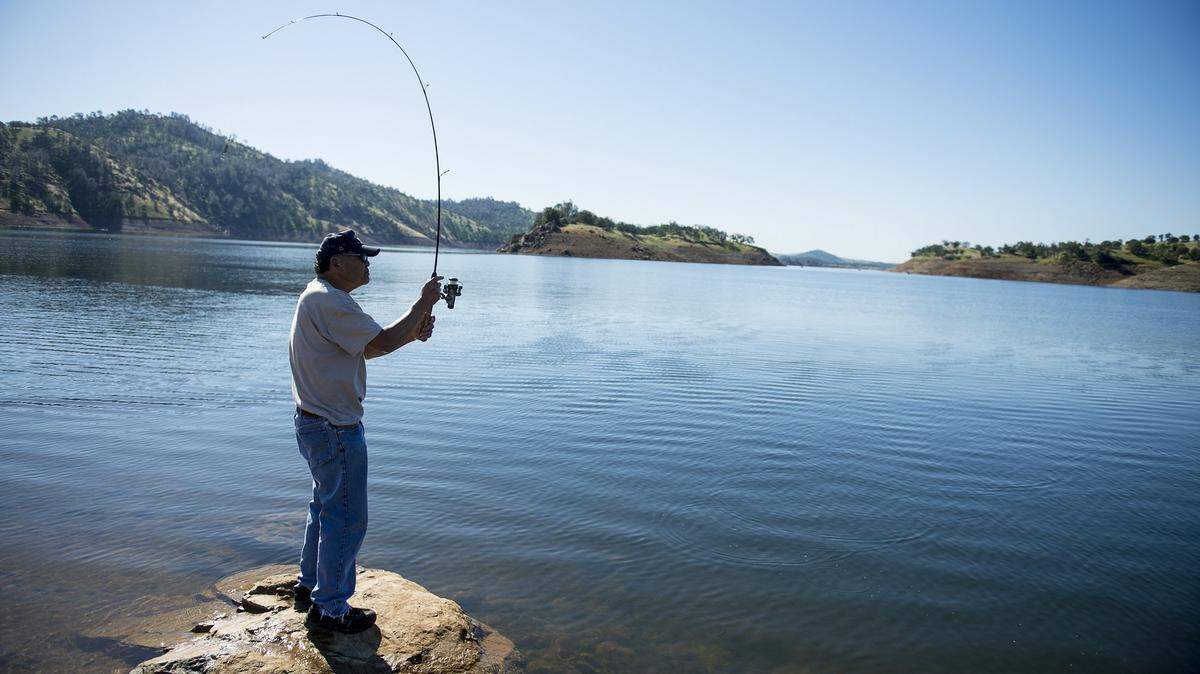
That could include a reduction in drinking water quality and supply, less water in local streams — plus less opportunities for recreation at Lakes McClure and McSwain, including camping, fishing and boating, the release said.
MID officials have said the water reductions could also negatively impact the economy and jobs.
As a result, MID officials have set up a “Save Merced’s Water” website to gather signatures from residents to stop the diversions from moving forward.
Residents can also write a letter to the governor at the site.
Plan is supposed to protect habitat
According to the State Water Board’s Dec. 8 meeting agenda, the Bay Delta Watershed is a crucial part of the state’s water system and provides habitat for multiple species of significant economic, cultural and ecological importance.
The plan is supposed to protect fish and wildlife in the Lower San Joaquin River and three main salmon tributaries in the Stanislaus, Tuolumne and Merced Rivers.
At this point, it is unclear just how much water, in acre-feet, the state would take from the Merced River.
The plan is also supposed to institute protections for salmon in the Sacramento River, the Delta east-side tributaries, including the Calaveras, Consumnes and Mokelumne Rivers.
MID says they previously told State Water Board officials that taking the flow of the Merced River isn’t going to improve the salmon runs.
Much of the Merced River’s natural floodplain was carved into cities and farms, MID officials said. MID says salmon spawning and rearing habitat was destroyed in decades past by state-sanctioned mechanical mining.
District officials say they made efforts to restore salmon habitat in eastern Merced County in recent years, and offered an alternative settlement agreement with the state to support salmon habitats on the Merced River, which former Gov. Jerry Brown and Gov. Gavin Newsom said they welcomed.
One of the irrigation district’s solutions, the Salmon, Agriculture, Flows and Environment Plan (or the SAFE Plan), introduced in 2016, would immediately increase water flows down the Merced River during key salmon lifecycle events, according to MID.
The SAFE Plan also advocated for restoring five miles of salmon habitat on the river, put forward solutions to cut down juvenile salmon consumption by bass, and made investments in the Merced River Salmon Hatchery.
However, the State Water Board rejected the plan, saying the plan didn’t free up enough water.
The State Water Board went on to approve the plan in 2018. Merced Irrigation District officials then got word from the state, saying the State Water Board was done trying to negotiate settlement agreements and were moving forward with the Bay Delta Plan.
“The proposed voluntary actions by water agencies on the San Joaquin River tributaries had fallen short of needed flow and habitat improvement,” said State Water Board Chair Joaquin Esquivel.
Local irrigation officials disagreed with that assessment. “The Bay Delta Plan and its water grab from eastern Merced County have been talked about and planned for years,” said Sweigard.
“It became clear the planning is over and the actions to take your water are about to begin.”
Jensen went on to say the Bay Delta’s water quality problems aren’t caused by the eastern Merced County residents, and that pollution and illegal diversions are some of the main problems the Bay Delta faces.
“Our perspective is we didn’t create their water quality problems,” Jensen said. “It shouldn’t be our responsibility to bear the brunt of fixing them.”
Still, the state’s plan does have its supporters. Some speakers at the Dec. 8 State Water Board meeting urged the board to move forward with it, saying existing protections for salmon don’t go far enough.
“The current water quality control plan objectives aren’t adequately protecting fish and wildlife beneficial uses,” said Gary Bobker, program director at The Bay Institute, which is headquartered in New York City.
“I hope there’s a sense of urgency at the board to get this done. One of the most magnificent ecosystems in this country is at risk.”
Residents can visit MID’s “Save Merced Water” website by visiting mercedid.org/index.cfm/water/save-merced-s-water/